

Kirjahaku
Etsi kirjoja tekijän nimen, kirjan nimen tai ISBN:n perusteella.
1000 tulosta hakusanalla Edmundo LLAMAS ALBA
Although he held only minor offices in Parliament, politician and political writer Edmund Burke strongly affected contemporary opinion, and his ideas had a profound impact on the future. He supported the American colonists in their quarrel with Britain, played a conspicuous part in the impeachment of Warren Hastings for alleged misgovernment in India, and advocated religious toleration, the abolition of the slave trade, and other reforms. A bibliography of his life and career, the book includes a biographical essay and chronology, and provides a complete list of Burke's writings, as well as books and articles about him up to the present. Important contemporary portraits and cartoons and comments of his contemporaries add to this volume.The book's opening essay describes the life of Edmund Burke, showing how his writings and actions related to the main issues of the time, where the chronology lists events important to this situation. Section one, Manuscript and Archival Resources, sites the location of relevant collections, indicates those of greatest importance, and lists both guides to collections and contemporary periodicals. Bibliographies, biographies, and studies of Burke's political thought appear in the second section, while the tertiary section covers Burke's own writings. Contemporaries of Burke are covered in section four. His political background is examined in the fifth section, and the following chapters cover places associated with Burke, his speeches, contemporary portraits and caricatures, periodicals, and his life and career. Author, artist, and subject indexes conclude the work.

Edmunds' Pharmacology for the Primary Care Provider
Constance G. Visovsky; Cheryl H. Zambroski; Rebecca M. Lutz
Elsevier - Health Sciences Division
2022
nidottu
Master the pharmacologic principles and drug information you need to safely and effectively prescribe drugs for primary care! Edmunds' Pharmacology for the Primary Care Provider, 5th Edition is written for Nurse Practitioners, other Advanced Practice Nursing prescribers, and Physician Assistants. Unlike other pharmacotherapeutics textbooks, it focuses on the drugs most commonly used in primary care settings. A new chapter format and body-system approach make learning easier, and standardized clinical guidelines ensure best practices in pharmacotherapeutics. Updated and impeccably accurate drug content includes the latest drug classes, specific drugs, and therapeutic uses in primary care. Continuing to emphasize health promotion strategies, this new edition includes new chapters on pharmacogenetics, drugs for ADHD, nutritional supplements, and more. Comprehensive pharmacotherapeutics content is written specifically for Nurse Practitioners, other Advanced Practice Nurses, and Physician Assistants. Focus on key drugs highlights the most commonly prescribed and most representative drugs of each major drug class - with particular emphasis on the top 100 prescribed drugs. Emphasis on patient teaching helps you communicate with patients and family caregivers to promote adherence to the drug regimen. Emphasis on health promotion describes how to help patients stay well and improve their health, including coverage of vitamins, weight management, immunizations and biologicals, and smoking cessation. Complementary and Alternative Therapies tables highlight significant dietary and herbal interactions with FDA-approved drugs. NEW! Thoroughly updated content reflects the latest drug information and current thinking on pharmacologic management. NEW macro- and chapter-level organization is based on body systems rather than drug classes, for better coverage of the medications prescribed for the health problems affecting specific body systems. NEW and UNIQUE! Chapter format begins with an overview of anatomy, physiology, and disease processes - as opposed to drug classes or drug types - and then follows the World Health Organization's Process for Rational Prescribing, using a six-step approach to drug selection and discussing first-, second-, and third-line treatments for each specific problem. NEW! Practical learning aids include: Black Box Warning boxes that draw attention to critical drug safety precautions. Clinical Guidelines: Bookmark This features that identify websites where updated clinical guidelines can be found. Medication Dosages tables that include dose ranges, maintenance doses, and, where appropriate, plans for dose escalation and de-escalation (e.g., corticosteroids). Practice Pearls boxes that highlight good prescribing practices, safety measures, follow-up recommendations, serum blood level monitoring, referrals to specialty providers, and other key prescriber tips. NEW! Prescribing Considerations unit addresses issues of medication adherence, prescription writing, cost, and quality assurance. NEW! Updated coverage of pain management reflects the current realities of substance use and the opioid crisis.

Gary Waller surveys Spenser's career in terms of the material conditions of its production - the often overlooked material factors of race, gender, class, agency - and the resonant 'places' which influenced his career - court, church, nation, colony. The book includes an original account of the gender politics of Spenser's work and his difficult position between Ireland and England, the 'homes' about which he held ambivalent feelings. Waller also discusses the 'place' the biographer occupies in writing a literary life.
Gary Waller surveys Spenser's career in terms of the material conditions of its production - the often overlooked material factors of race, gender, class, agency - and the resonant 'places' which influenced his career - court, church, nation, colony. The book includes an original account of the gender politics of Spenser's work and his difficult position between Ireland and England, the 'homes' about which he held ambivalent feelings. Waller also discusses the 'place' the biographer occupies in writing a literary life.
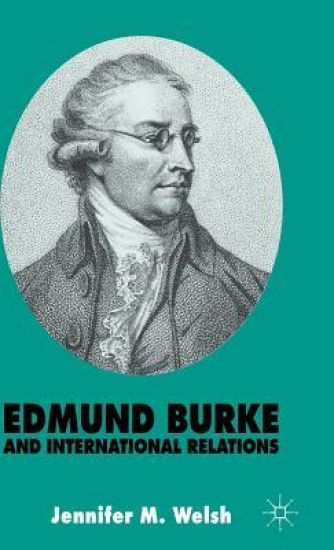
The mind of Edmund Burke has attracted the attention of countless political theorists, historians, and biographers. Nonetheless, one aspect of Burke's thinking has been neglected: his perspective on international relations. This book seeks to address that gap, by analysing Burke's reaction to the international events of his century. The book argues that the tension between Burke's constitutionalism and crusading is ultimately reconciled by his broader conception of international legitimacy and order. It is only by widening the definition of international theory to include domestic as well as international politics that one can resolve this tension in Burke's theory and arrive at a richer understanding of the nature of international order, both historically and today.
This edition first published in 1960. The revival of interest in the thought of Burke was one of the justifications for the publication of a second edition of Professor Cobban’s study of the political and social ideas of Burke and his closest disciples, the Lake Poets. Burke’s thought has both historical and permanent significance: fundamentally his works are as relevant today as when they were first written. In this book Burke’s ideas are discussed without the uncritical adulation they receive in some quarters, and those of the Lake Poets without the undue depreciation from which they used to suffer. This title will be of great interest to students of politics, philosophy and history.
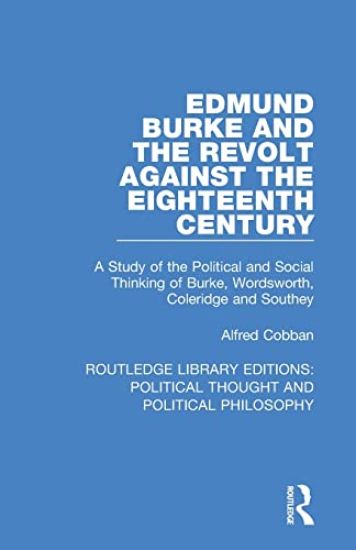
This edition first published in 1960. The revival of interest in the thought of Burke was one of the justifications for the publication of a second edition of Professor Cobban’s study of the political and social ideas of Burke and his closest disciples, the Lake Poets. Burke’s thought has both historical and permanent significance: fundamentally his works are as relevant today as when they were first written. In this book Burke’s ideas are discussed without the uncritical adulation they receive in some quarters, and those of the Lake Poets without the undue depreciation from which they used to suffer. This title will be of great interest to students of politics, philosophy and history.
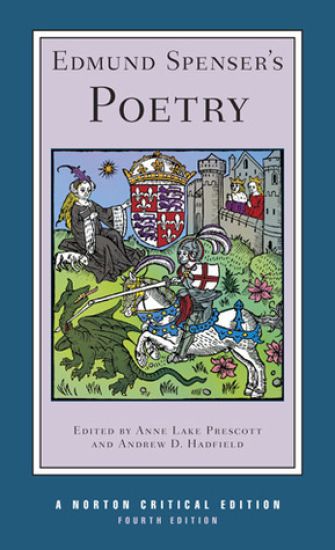
This revised and enlarged Fourth Edition expands and improves on the strengths of the previous three editions. All selections are based on early and established texts, fully glossed, and carefully annotated. An Editor's Note follows each section. This new edition addresses the shifts in scholarly and critical interests in Spenser studies since 1993 as well as access provided by new technology. Notes reflect the information that Spenser’s best readers would have at their fingertips without spoiling the pleasure of reading Spenser for the first time. Mother Hubberds Tale from the 1591 Complaints is newly included. The Ruines of Rome, Spenser’s translation of Joachim Du Bellay’s Antiquitez, is also added to give readers the chance to see Spenser at work as a translator and to give the English perspective on Rome. Sixteen critical essays have been added to supplement fourteen earlier commentaries. Among the perspectives new to the Fourth Edition are those of C. S Lewis, Martha Craig, Gordon Teskey, Jeff Dolven, David Wilson-Okamura, and Jennifer Summit. In keeping with the last edition, critical pieces on the House of Busyrane, Spenser's pastoral, Muiopotmos, and Amoretti are grouped together to facilitate classroom discussion. New selections from Jane Grogan, Andrew D. Hadfield, Colin Burrow, Lynn Staley, Lauren Silberman, and A. E. B. Coldiron join the readings on House of Busyrane, and “Amoretti” grows with selections by A. Leigh DeNeef and Helena Mennie Shire. A Chronology of Spenser's life and an extensive Bibliography are also included.
Edmund Spencer
Routledge
1995
sidottu
The Critical Heritage gathers together a large body of critical sources on major figures in literature. Each volume presents contemporary responses to a writer's work, enabling students and researchers to read for themselves, for example, comments on early performances of Shakespeare's plays, or reactions to the first publication of Jane Austen's novels. The carefully selected sources range from landmark essays in the history of criticism to journalism and contemporary opinion, and little published documentary material such as letters and diaries. Significant pieces of criticism from later periods are also included, in order to demonstrate the fluctuations in an author's reputation. Each volume contains an introduction to the writer's published works, a selected bibliography, and an index of works, authors and subjects. The Collected Critical Heritage set will be available as a set of 68 volumes and the series will also be available in mini sets selected by period (in slipcase boxes) and as individual volumes.
Edmund Husserl
Routledge
2004
muu
Edmund Husserl was the founding father of phenomenology and one of the most important philosophers of the twentieth century. This collection will make available, in one place, the very best essays on Husserl's thought from the past seventy years. It will draw together a range of writings, many of which are otherwise inaccessible, that have been recognized as seminal contributions not only to an understanding of this great philosopher but also to the development of his phenomenology.
First published in 1973, this title offers a concise and readable account of Burke's political philosophy. As well as examining the foundation for Burke's thought, the book also provides much needed connections between the fields of history and political theory. Critical comment and analysis of Burke's attitudes to the problems of the second half of the eighteenth century are also included.
First published in 1973, this title offers a concise and readable account of Burke's political philosophy. As well as examining the foundation for Burke's thought, the book also provides much needed connections between the fields of history and political theory. Critical comment and analysis of Burke's attitudes to the problems of the second half of the eighteenth century are also included.
Edmund Spencer
Routledge
2014
nidottu
The Critical Heritage gathers together a large body of critical sources on major figures in literature. Each volume presents contemporary responses to a writer's work, enabling students and researchers to read for themselves, for example, comments on early performances of Shakespeare's plays, or reactions to the first publication of Jane Austen's novels. The carefully selected sources range from landmark essays in the history of criticism to journalism and contemporary opinion, and little published documentary material such as letters and diaries. Significant pieces of criticism from later periods are also included, in order to demonstrate the fluctuations in an author's reputation. Each volume contains an introduction to the writer's published works, a selected bibliography, and an index of works, authors and subjects. The Collected Critical Heritage set will be available as a set of 68 volumes and the series will also be available in mini sets selected by period (in slipcase boxes) and as individual volumes.
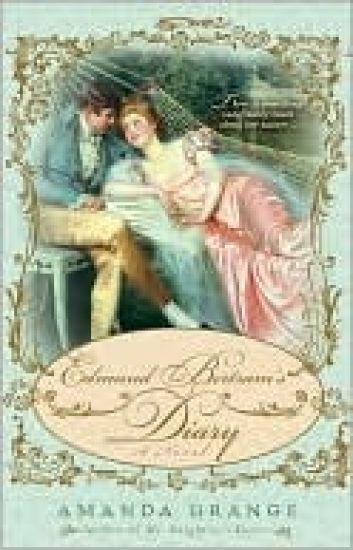
The retelling of Jane Austen's novel Mansfield Park from the point of view of Edmund Bertram, by the author of Mr. Knightley's Diary and Captain Wentworth's Diary. At ten years of age, Fanny Price came to live with Edmund Bertram and his family at Mansfield Park. Far from the brat Edmund expected, Fanny became his closest confidante and dearest friend. But when the fashionable Crawford siblings, Henry and Mary-come to town, they captivate the Bertram family. Henry embarks on a scandalous flirtation with Edmund's sister, who is already betrothed to another, while Edmund is enchanted by Mary's beauty and wit. But when it appears that Mary is not all she seems to be, Edmund will turn to the one woman who has always been at his side to find the happiness he deserves-Fanny.
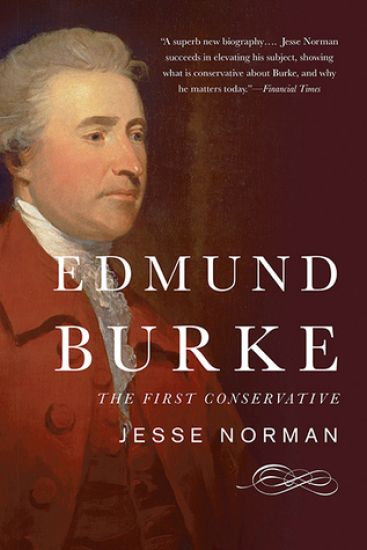
A provocative biography of Edmund Burke, the underappreciated founder of modern conservatismEdmund Burke is both the greatest and the most underrated political thinker of the past three hundred years. A brilliant 18th-century Irish philosopher and statesman, Burke was a fierce champion of human rights and the Anglo-American constitutional tradition, and a lifelong campaigner against arbitrary power. Once revered by an array of great Americans including Presidents Theodore Roosevelt and Woodrow Wilson, Burke has been almost forgotten in recent years. But as politician and political philosopher Jesse Norman argues in this penetrating biography, we cannot understand modern politics without him.As Norman reveals, Burke was often ahead of his time, anticipating the abolition of slavery and arguing for free markets, equality for Catholics in Ireland, responsible government in India, and more. He was not always popular in his own lifetime, but his ideas about power, community, and civic virtue have endured long past his death. Indeed, Burke engaged with many of the same issues politicians face today, including the rise of ideological extremism, the loss of social cohesion, the dangers of the corporate state, and the effects of revolution on societies. He offers us now a compelling critique of liberal individualism, and a vision of society based not on a self-interested agreement among individuals, but rather on an enduring covenant between generations. Burke won admirers in the American colonies for recognizing their fierce spirit of liberty and for speaking out against British oppression, but his greatest triumph was seeing through the utopian aura of the French Revolution. In repudiating that revolution, Burke laid the basis for much of the robust conservative ideology that remains with us to this day: one that is adaptable and forward-thinking, but also mindful of the debt we owe to past generations and our duty to preserve and uphold the institutions we have inherited. He is the first conservative.A rich, accessible, and provocative biography, Edmund Burke describes Burke's life and achievements alongside his momentous legacy, showing how Burke's analytical mind and deep capacity for empathy made him such a vital thinker-both for his own age, and for ours.thread on pub day of what people at basic like about it (editors)"You won't find a more impressive political philosopher than the 18th-century MP who more or less invented Anglosphere conservatism. And you won't find a pithier, more readable treatise on his life and works than this one." --Wall Street Journal

Edmund Burke and the Conservative Logic of Empire
Daniel O'Neill
University of California Press
2016
sidottu
Edmund Burke, long considered modern conservatism's founding father, is also widely believed to be an opponent of empire. However, Daniel O'Neill turns that latter belief on its head. This fresh and innovative book shows that Burke was a passionate supporter and staunch defender of the British Empire in the eighteenth century, whether in the new world, India, or Ireland. Moreover - and against a growing body of contemporary scholarship that rejects the very notion that Burke was an exemplar of conservatism - O'Neill demonstrates that Burke's defense of empire was in fact ideologically consistent with his conservative opposition to the French Revolution. Burke's logic of empire relied on two opposing but complementary theoretical strategies: Ornamentalism, which stressed cultural similarities between "civilized" societies, as he understood them, and Orientalism, which stressed the putative cultural differences distinguishing "savage" societies from their "civilized" counterparts. This incisive book also shows that Burke's argument had lasting implications, as his development of these two justifications for empire prefigured later intellectual defenses of British imperialism.
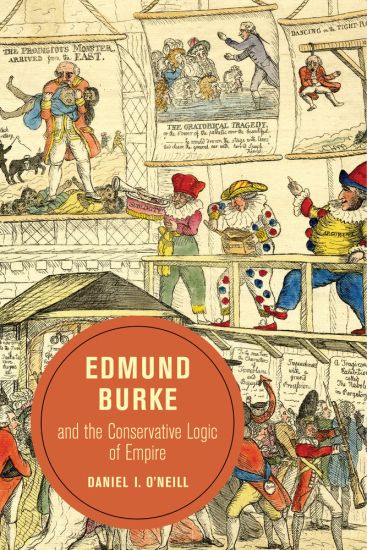
Edmund Burke and the Conservative Logic of Empire
Daniel O'Neill
University of California Press
2016
pokkari
Edmund Burke, long considered modern conservatism's founding father, is also widely believed to be an opponent of empire. However, Daniel O'Neill turns that latter belief on its head. This fresh and innovative book shows that Burke was a passionate supporter and staunch defender of the British Empire in the eighteenth century, whether in the New World, India, or Ireland. Moreover - and against a growing body of contemporary scholarship that rejects the very notion that Burke was an exemplar of conservatism - O'Neill demonstrates that Burke's defense of empire was in fact ideologically consistent with his conservative opposition to the French Revolution. Burke's logic of empire relied on two opposing but complementary theoretical strategies: Ornamentalism, which stressed cultural similarities between "civilized" societies, as he understood them, and Orientalism, which stressed the putative cultural differences distinguishing "savage" societies from their "civilized" counterparts. This incisive book also shows that Burke's argument had lasting implications, as his development of these two justifications for empire prefigured later intellectual defenses of British imperialism.
This study develops a detailed reading of the interrelations between aesthetics, ideology, language, gender and political economy in two highly influential works by Edmund Burke: his Philosophical Enquiry into the Origin of our Ideas of the Sublime and the Beautiful (1757), and the Reflections on the Revolution in France (1790). Tom Furniss's close attention to the rhetorical labyrinths of these texts is combined with an attempt to locate them within the larger discursive networks of the period, including texts by Locke, Hume and Smith. This process reveals that Burke's contradictions and inconsistencies are symptomatic of a strenuous engagement with the ideological problems endemic to the period. Burke's dilemma in this respect makes the Reflections an audacious compromise which simultaneously defends the ancien régime, contributes towards the articulation of radical thought, and makes possible the revolution which we call English Romanticism.
This book offers a fresh reading of Spenser's poetry in the light of his Protestantism. Previous critics have devoted much space to the poet's debt to the literature of antiquity and the Renaissance, as well as to his knowledge of Neoplatonism, mythograph, and iconography; but less has been written about the imaginative consequences for his poetry of his Protestantism, largely conditioned by the Elizabethan religious milieu. Dr Hume seeks to illuminate Spenser's major poems, The Shepheardes Calender and The Faerie Queene, by placing them in a relevant context of Elizabethan Protestant thought and writings. Her detailed analysis shows how words, images and episodes in both poems come into focus when the reader takes account of sermons, biblical commentaries, devotional treatises and controversial works of the Elizabethan decades.