Kirjojen hintavertailu. Mukana 11 627 220 kirjaa ja 12 kauppaa.

Kirjahaku

Etsi kirjoja tekijän nimen, kirjan nimen tai ISBN:n perusteella.

1000 tulosta hakusanalla Emily Manuel Reeves

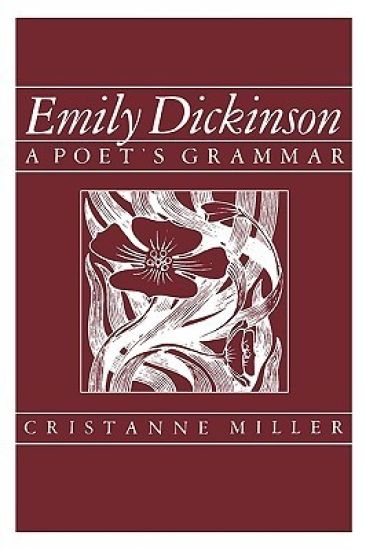
Emily Dickinson

Emily Dickinson

Cristanne Miller

Harvard University Press
1989
nidottu
In this inventive work on Emily Dickinson’s poetry, Cristanne Miller traces the roots of Dickinson’s unusual, compressed, ungrammatical, and richly ambiguous style, finding them in sources as different as the New Testament and the daily patterns of women’s speech. Dickinson writes as she does both because she is steeped in the great patriarchal texts of her culture, from the Bible and hymns to Herbert’s poetry and Emerson’s prose, and because she is conscious of writing as a woman in an age and culture that assume great and serious poets are male.Miller observes that Dickinson’s language deviates from normal construction along definable and consistent lines; consequently it lends itself to the categorical analysis of an interpretive “grammar” such as the one she has constructed in this book. In order to facilitate the reading of Dickinson’s poems and to reveal the values and assumptions behind the poet’s manipulations of language, Miller examines in this grammar how specific elements of the poet’s style tend to function in various contexts. Because many, especially modernist, poets use some of the same techniques, the grammar throws light on the poetic syntax of other writers as well.In the course of her analysis, Miller draws not only on traditional historical and linguistic sources but also on current sociolinguistic studies of gender and speech and on feminist descriptions of women’s writing. Dickinson’s language, she concludes, could almost have been designed as a model for twentieth-century theories of what a women’s language might be. As a critical examination of the relationship between linguistic style and literary identity in America’s greatest woman poet, Emily Dickinson: A Poet’s Grammar provides a significant addition to feminist literary studies.
Emily Dickinson

Emily Dickinson

Emily Dickinson

The Belknap Press
1986
nidottu
When the complete Letters of Emily Dickinson appeared in three volumes in 1958, Robert Kirsch welcomed them in the Los Angeles Times, saying “The missives offer access to the mind and heart of one of America’s most intriguing literary personalities.” This one-volume selection is at last available in paperback. It provides crucial texts for the appreciation of American literature, women’s experience in the nineteenth century, and literature in general.
Letters of Emily Dickinson

Letters of Emily Dickinson

Emily Dickinson

The Belknap Press
1997
sidottu
Approximately 100 letters are published here for the first time, including almost all of the letters to Jane Humphrey and to Mrs. J. Howard Sweetser. The new material is even more extensive than it might appear, for many of the letters previously published were censored when first made public. This volume, designed to accompany Mr. Johnson’s previously published work, the widely acclaimed Poems of Emily Dickinson, assembles all of Emily Dickinson’s letters (with the exception of letters presumably destroyed). The editors present the letters chronologically, with manuscript location, previous publication data, and notes for each letter, together with a general introduction, and biographical notes on recipients of letters.The notes for each letter identify persons and events mentioned, and the source of literary allusions and quotations is given wherever known. Since Emily Dickinson rarely dated her letters after 1850, the dates for the most part must be conjectured from careful study of handwriting changes and from internal evidence of the letters. Of the 1,150 letters and prose fragments included in this outstanding edition, the text of about 800 derives from Dickinson autographs.
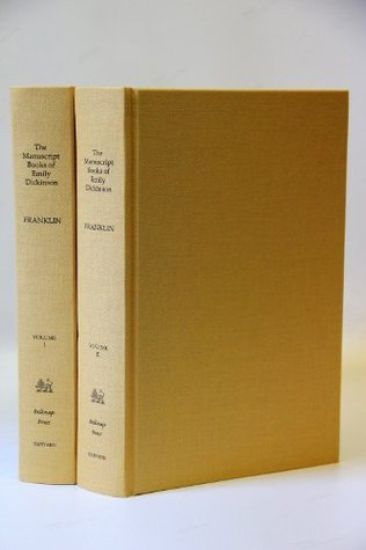
The Manuscript Books of Emily Dickinson

The Manuscript Books of Emily Dickinson

Emily Dickinson

Harvard University Press
1981
sidottu
Here for the first time is the poetry of Emily Dickinson as she herself “published” it in the privacy of her upstairs room in the house in Amherst.She invented her own form of bookmaking. Her first drafts, jotted on odd scraps of paper, were discarded when transcribed. Completed poems were neatly copied in ink on sheets of folded stationery which she arranged in groups, usually of sixteen to twenty-four pages, and sewed together into packets or fascicles. These manuscript books were her private mode of publication, a substitute perhaps for the public mode that, for reasons unexplained, she denied herself. In recent years there has been increasing interest in the fascicles as artistic gathering, intrarelated by theme, imagery, or emotional movement. But no edition in the past, not even the variorum, or has arranged the poems in the sequence in which they appear in the manuscript books.Emily Dickinson’s poems, more than those of any other poet, resist translation into the medium of print. Since she never saw a manuscript through the press, we cannot tell how she would have adapted for print her unusual capitalization, punctuation, line and stanza divisions, and alternate readings. The feather-light punctuation, in particular, is misrepresented when converted to conventional stop or even to dashes.This elegant edition presents all of Emily Dickinson’s manuscript books and unsewn fascicle sheets—1,148 poems on 1,250 pages—restored insofar as possible to their original order, as they were when her sister found them after her death. The manuscripts are reproduced with startling fidelity in 300-line screen. Every detail is preserved: the bosses on the stationery, the sewing holes and tears, and poet’s alternate reading and penciled revisions, ink spots and other stains offset onto adjacent leaves, and later markings by Susan Dickinson, Mabel Todd, and others. The experience of reading these facsimile pages is virtually the same as reading the manuscripts themselves. Supplementary information is provided in introductions, notes, and appendices.
The Poems of Emily Dickinson

The Poems of Emily Dickinson

Emily Dickinson

Harvard University Press
1998
sidottu
Emily Dickinson, poet of the interior life, imagined words/swords, hurling barbed syllables/piercing. Nothing about her adult appearance or habitation revealed such a militant soul. Only poems, written quietly in a room of her own, often hand-stitched in small volumes, then hidden in a desk drawer, revealed her true self. She did not live in time, as did that other great poet of the day, Walt Whitman, but in universals. As she knowingly put it: “There is one thing to be grateful for—that one is one’s self and not somebody else.”Dickinson lived and died without fame: she saw only a few poems published. Her great legacy was later rescued from her desk drawer—an astonishing body of work revealing her acute, sensitive nature reaching out boldly from self-referral to a wider, imagined world. Her family sought publication of Dickinson’s poetry over the years, selecting verses, often altering her words or her punctuation, until, in 1955, the first important attempt was made to collect and publish Dickinson’s work, edited by Thomas H. Johnson for the Belknap Press of Harvard University Press.Now, after many years of preparation by Ralph W. Franklin, the foremost scholar of Dickinson’s manuscripts, a new comprehensive edition is available. This three-volume work contains 1,789 poems, the largest number ever assembled. The poems, arranged chronologically, based on new dating, are drawn from a range of archives, most frequently from holographs, but also from various secondary sources representing lost manuscripts. The text of each manuscript is rendered individually, including, within the capacity of standard type, Dickinson’s spelling, capitalization, and punctuation. Franklin gives Dickinson’s alternative readings for the poems, her revisions, and the line and page, or column, divisions in the source. Each entry identifies Franklin’s editorial emendations and records the publication history, including variants. Fourteen appendices of tables and lists give additional information, including poems attributed to Emily Dickinson. The poems are indexed by numbers from the Johnson edition, as well as by first lines.Franklin has provided an introduction that serves as a guide to this edition and surveys the history of the editing of Dickinson’s poems. His account of how Dickinson conducted her workshop is a reconstruction of a remarkable poetic life.
Emily Dickinson’s Poems

Emily Dickinson’s Poems

Emily Dickinson

The Belknap Press
2016
sidottu
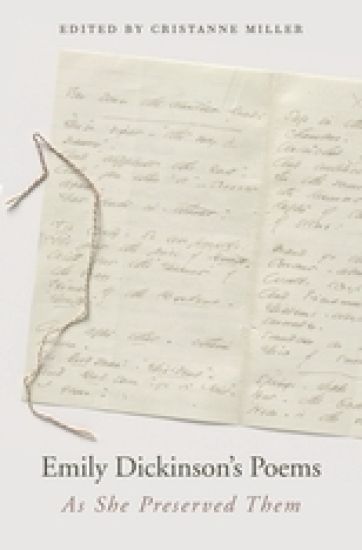
Widely considered the definitive edition of Emily Dickinson’s poems, this landmark collection presents her poems here for the first time “as she preserved them,” and in the order in which she wished them to appear. It is the only edition of Dickinson’s complete poems to distinguish clearly those she took pains to copy carefully onto folded sheets in fair hand—presumably to preserve them for posterity—from the ones she kept in rougher form. It is also unique among complete editions in presenting the alternate words and phrases Dickinson chose to use on the copies of the poems she kept, so that we can peer over her shoulder and see her composing and reworking her own poems.The world’s foremost scholar of Emily Dickinson, Cristanne Miller, guides us through these stunning poems with her deft and unobtrusive notes, helping us understand the poet’s quotations and allusions, and explaining how she composed, copied, and circulated her poems. Miller’s brilliant reordering of the poems transforms our experience of them.A true delight, this award-winning collection brings us closer than we have ever been to the writing practice of one of America’s greatest poets. With its clear, uncluttered page and beautiful production values, it is a gift for students of Emily Dickinson and for anyone who loves her poems.
Emily Dickinson’s Letters to Dr. and Mrs. Josiah Gilbert Holland
The ninety-three letters—and the poems, over thirty in all, which she included in the letters or sent in place of them—written by Emily Dickinson to her dear friends the Hollands, are intimate, spontaneous, and at the same time as characteristically poetic as everything Emily ever wrote or said. They span the major portion of Emily's adult life, from her twenties to her death. A detailed study of handwriting and paper has made possible a new historical approach to her life, her prose, and her poetry.This is the first of the books made possible by Harvard's acquisition of the Dickinson papers and the rights connected with them.
The Letters of Emily Dickinson

The Letters of Emily Dickinson

Emily Dickinson

HARVARD UNIVERSITY PRESS
2024
sidottu
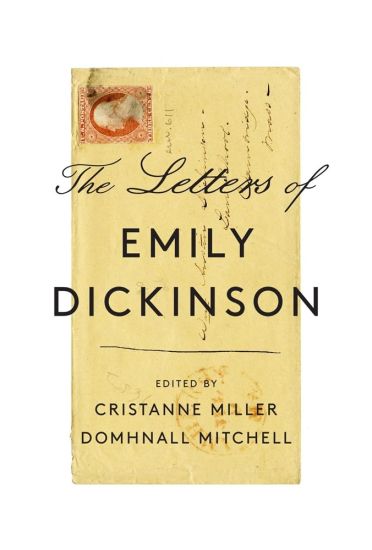
One of the Top 10 “Books We Love” —Fresh AirThe definitive edition of Emily Dickinson’s correspondence, expanded and revised for the first time in over sixty years.Emily Dickinson was a letter writer before she was a poet. And it was through letters that she shared prose reflections—alternately humorous, provocative, affectionate, and philosophical—with her extensive community. While her letters often contain poems, and some letters consist entirely of a single poem, they also constitute a rich genre all their own. Through her correspondence, Dickinson appears in her many facets as a reader, writer, and thinker; social commentator and comedian; friend, neighbor, sister, and daughter.The Letters of Emily Dickinson is the first collected edition of the poet’s correspondence since 1958. It presents all 1,304 of her extant letters, along with the small number available from her correspondents. Almost 300 are previously uncollected, including letters published after 1958, letters more recently discovered in manuscript, and more than 200 “letter-poems” that Dickinson sent to correspondents without accompanying prose. This edition also redates much of her correspondence, relying on records of Amherst weather patterns, historical events, and details about flora and fauna to locate the letters more precisely in time. Finally, updated annotations place Dickinson’s writing more firmly in relation to national and international events, as well as the rhythms of daily life in her hometown. What emerges is not the reclusive Dickinson of legend but a poet firmly embedded in the political and literary currents of her time.Dickinson’s letters shed light on the soaring and capacious mind of a great American poet and her vast world of relationships. This edition presents her correspondence anew, in all its complexity and brilliance.
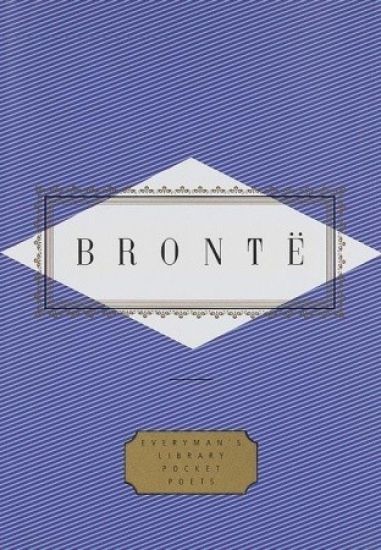
Emily Bronte: Poems: Edited by Peter Washington

Emily Bronte: Poems: Edited by Peter Washington

Emily Brontë

Everyman's Library
1996
sidottu
The Everyman's Library Pocket Poets hardcover series is popular for its compact size and reasonable price which does not compromise content. Poems: Bronte contains poems that demonstrate a sensibility elemental in its force with an imaginative discipline and flexibility of the highest order. Also included are an Editor's Note and an index of first lines.
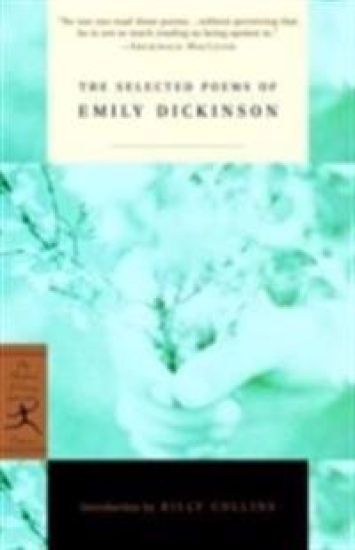
The Selected Poems of Emily Dickinson

The Selected Poems of Emily Dickinson

Emily Dickinson

Modern Library Inc
2000
pokkari
Emily Dickinson lived as a recluse in Amherst, Massachusetts, dedicating herself to writing a "letter to the world"--the 1,775 poems left unpublished at her death in 1886. Today, Dickinson stands in the front rank of American poets. This enthralling collection includes more than four hundred poems that were published between Dickinson's death and 1900. They express her concepts of life and death, of love and nature, and of what Henry James called "the landscape of the soul." And as Billy Collins suggests in his Introduction, "In the age of the workshop, the reading, the poetry conference and festival, Dickinson reminds us of the deeply private nature of literary art." "No one can read these poems...without perceiving that he is not so much reading as being spoken to."--Archibald MacLeish
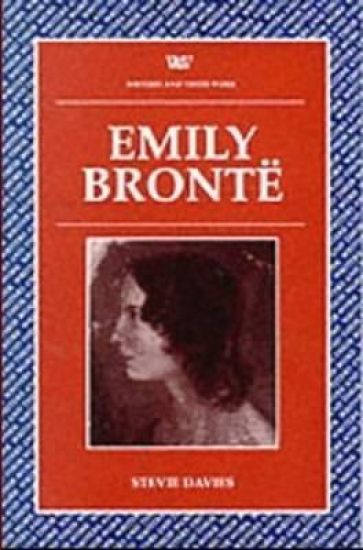
Emily Bronte

Emily Bronte

Stevie Davies

Northcote House Publishers Ltd
1997
pokkari
This lucid and perceptive study subjects the Emily Brontë myth to radical scrutiny, questioning the validity of memorabilia and eye-witness accounts. Contrasting her art with the daguerreotype realism coming into vogue in the 1840’s, Stevie Davies reads Emily Brontë’s life in terms of her own image of landmarks buried or half-buried beneath drifting snow which disguises or betrays underlying realities. A radical reading of Wuthering Heights explores it as a poet’s and musician’s novel, which can be ‘scored’ as in opera or the piano transcriptions of symphonies, which Emily Brontë possessed and played. Close study of her sheet music; her germinal Brussels essays; books and journals in her possession; and translations into European languages will demonstrate the phenomenal intellectual range, originality and acuity of an author who can be regarded as a European.
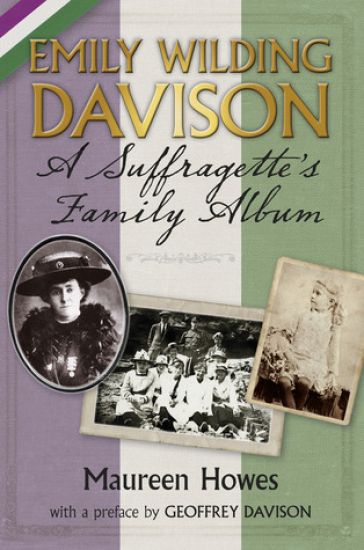
Emily Wilding Davison

Emily Wilding Davison

Maureen Howes

The History Press Ltd
2013
nidottu
Emily Wilding Davison’s image has been frozen in time since 1913. On the 4 June of that year, Emily was struck by the king’s horse, Anmer, during the Epsom Derby. She died four days later. She, unlike her fellow Militant Suffragettes, did not live to write her memoirs in a more enlightened and tolerant era. In the aftermath of the Epsom protest, her family and her northern associates were caught between two very powerful factions: the Government’s spin doctors and the very efficient publicity machine of Mrs Pankhurst’s W.S.P.U. In response, Emily’s family and associates closed ranks around her mother, Margaret Davison, and her young cousins. For almost a century, their silence has guarded Emily’s story. Now, at the centenary of Emily’s death, her family have come together to share Emily’s side of the story for the first time. Drawing on the Davison family archives, and filled with more than 100 rare photographs, this volume explores the true cost of women’s suffrage, revolutionizing in the process our understanding of one of the defining events of the twentieth century.
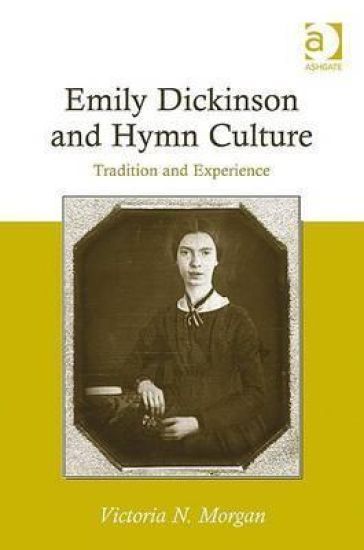
Emily Dickinson and Hymn Culture

Emily Dickinson and Hymn Culture

Victoria N. Morgan

Ashgate Publishing Limited
2010
sidottu
Extending the critical discussion which has focused on the hymns of Isaac Watts as an influence on Emily Dickinson's poetry, this study brings to bear the hymnody of Dickinson's female forbears and contemporaries and considers Isaac Watts's position as a Dissenter for a fuller understanding of Dickinson's engagement with hymn culture. Victoria N. Morgan argues that the emphasis on autonomy in Watts, a quality connected to his position as a Dissenter, and the work of women hymnists, who sought to redefine God in ways more compatible with their own experience, posing a challenge to the hierarchical 'I-Thou' form of address found in traditional hymns, inspired Dickinson's adoption of hymnic forms. As she traces the powerful intersection of tradition and experience in Dickinson's poetry, Morgan shows Dickinson using the modes and motifs of hymn culture to manipulate the space between concept and experience-a space in which Dickinson challenges old ways of thinking and expresses her own innovative ideas on spirituality. Focusing on Dickinson's use of bee imagery and on her notions of religious design, Morgan situates the radical re-visioning of the divine found in Dickinson's 'alternative hymns' in the context of the poet's engagement with a community of hymn writers. In her use of the fluid imagery of flight and community as metaphors for the divine, Dickinson anticipates the ideas of feminist theologians who privilege community over hierarchy.