Kirjojen hintavertailu. Mukana 11 244 527 kirjaa ja 12 kauppaa.

Kirjahaku

Etsi kirjoja tekijän nimen, kirjan nimen tai ISBN:n perusteella.

1000 tulosta hakusanalla Eric Butler

Eric Rohmer

Eric Rohmer

Derek Schilling

Manchester University Press
2007
nidottu
Few filmmakers have taken the principle of the ‘talking picture’ so far as Eric Rohmer, the internationally reknowned director of the Moral Tales, Comedies and Proverbs, and Tales of the Four Seasons cycles. Occasionally dismissed as precious or overly literary, Rohmer’s features may leave the impression that there is more to listen to than to look at. Yet as the secretive director (b. Maurice Schérer in 1920) points out, dialogue is no less engaging than the best gunfights, and if his characters prefer discussing love to making it, they are no less the ‘heroes’ of the stories they tell.Charges of political conservatism aside, the author of My Night at Maud’s, Summer and such period films as Perceval and the all-digital The Lady and the Duke emerges - like Hitchcock before him - as a singular inventor of cinematic forms. This critical overview, which contains an extensive bibliography and a filmography, will appeal to students of Film Studies, French Studies, and enthusiasts.

Eric's Greatest Race

Eric's Greatest Race

Tim Challies

HARVEST HOUSE PUBLISHERS,U.S.
2025
sidottu
This engaging, fully illustrated book tells young readers the story of famous Olympian Eric Liddell, whose steadfast courage and commitment to Christ has inspired generations of believers. Athlete. Missionary. Prisoner. Eric Liddell’s life was a series of remarkable twists and turns, from his refusal to run on a Sunday in the 1924 Olympics (as depicted in the Oscar-winning film Chariots of Fire) to his extensive missionary work, and finally to his imprisonment during World War II. Through it all, Eric never abandoned his faith in God. Written and illustrated as a graphic novel, Eric’s Greatest Race tells Eric Liddell’s entire life story and educates young readers about important historical events and concepts along the way. Children will encounter a real-life hero whose incredible impact on Christianity and the world lives on today.
Eric Clapton

Eric Clapton

Michael Schumacher

Sphere
1998
nidottu
I wonder, "Why me? Why have I survived?"' Eric Clapton, Rolling Stone, 1991The million-selling, Grammy award-winning master of the blues guitar, Eric Clapton still generates the kind of adulation that led fans to graffiti London underground stations in 1965 with the statement, 'Clapton is God'. And yet Clapton has more thanan astonishing professional story to tell: he has survived a personal journey blighted by tragedy and heartbreak. In 1990 he lost four of his closest friends in a helicopter crash, followed a year later by the devastating death of his four-year-old son Conor.In this definitive study of the man and his music, Michael Schumacher reveals with compassion and insight both the depths of Clapton's sorrow and the roots of his remarkable musical power. From his days with the Yardbirds, through spells with Cream and Derek and the Dominoes to a solo career that has spanned over a quarter of a century, Schumacher superbly charts the development of an enduring guitar legend.
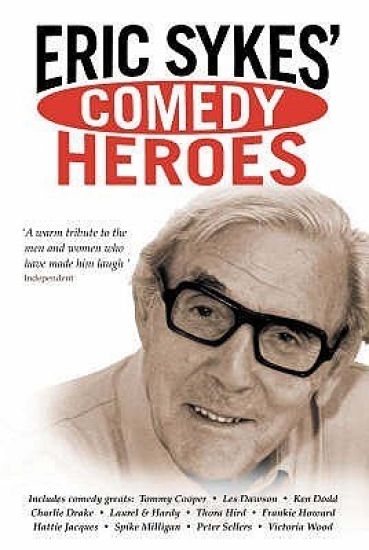
Eric Sykes' Comedy Heroes

Eric Sykes' Comedy Heroes

Eric Sykes

Virgin Books
2006
nidottu
Eric Sykes is one of Britain's creative comedy geniuses combining personal warmth, superbly observed written and performed comedy and a deeply intimate understanding of what a viewing audience wants. Here he has assembled a comedy hall of fame for those who have inspired, entertained and, most of all, amused him.Including tributes to comedy greats Tommy Cooper, Les Dawson, Ken Dodd, Spike Milligan, Peter Sellers and many, many more, this is a beautiful and personal testimony to the wonderful characters who have stimulated Eric's life-long love affair with laughter.
Eric on His Bike

Eric on His Bike

Eric Olverson

New Generation Publishing
2011
pokkari
After returning from two months assisting at the Thamsanqa orphanage in South Africa, Eric Olverson felt he needed to do more to help. Despite having had life-threatening meningitis a few years previously, he decided at the age of 59 to take on what would be one of the most demanding undertakings of his life - a 12,000 km sponsored cycle ride across Africa - which would challenge him physically and mentally and alter his view of life. This is his story of why he decided to do this journey and what happened. He describes the daily challenges, the hair-raising and often hilarious situations he gets into, his bonding with his fellow riders over the 4-month journey and eloquently depicts the continent of Africa as a land of shifting landscapes, diverse people and cultures and sheer beauty.
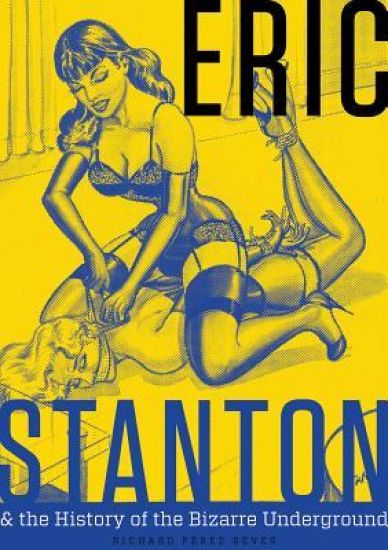
Eric Stanton & the History of the Bizarre Underground

Eric Stanton & the History of the Bizarre Underground

Richard Pérez Seves

Schiffer Publishing Ltd
2018
sidottu
An illustrated biography of pioneering underground artist and sexual fantasist Eric Stanton that traces the history of commercial fetish art from the 1940s to the 1970s. Tracing the rise of commercial fetish art from its shadowy beginnings in the 1940s to its acceptance in the 1970s, this illustrated biography explores the unconventional life and art of Eric Stanton, a pioneering sexual fantasist who helped shape the movement. With more than 400 rare images and interviews with Stanton’s family and closest associates, this biography chronicles the infamous circle of patrons, publishers, and cult icons populating his subterranean world, including Irving Klaw, John Willie, Bettie Page, Steve Ditko, and Gene Bilbrew. It is the untold, secret history of a misunderstood culture, the abuses of government authority, social intolerance, and gangsters. But above all, it is a tale about survival against all odds and an artist who had the courage to stay true to himself.
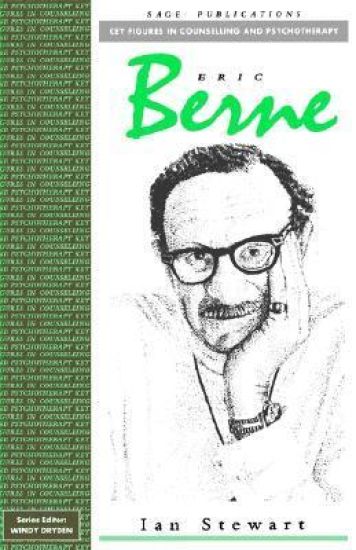
Eric Berne

Eric Berne

Ian Stewart

SAGE Publications Ltd
1992
nidottu
`Ian Stewart has done an outstanding job of presenting a comprehensive overview of Eric Berne, his life, his philosophy and his significant contributions to the fields of personality and psychotherapy... Stewart has made a significant and unique contribution to the literature of transactional analysis. This book deserves reading by all transactional analysts' - Transactional Analysis Journal Eric Berne is probably still best known as the author of the bestselling Games People Play, yet his professional writings on transactional analysis fill several books and his practice of psychotherapy was distilled from more than thirty years' experience of work with clients. Ian Stewart draws Berne's ideas together in a unique and accessible form and concludes that Berne emerges not only as a skilled communicator but also as a profound thinker who offers a major contribution to counselling and psychotherapy this century.
Eric Williams and the Making of the Modern Caribbean

Eric Williams and the Making of the Modern Caribbean

The University of North Carolina Press
2008
nidottu
This book covers the important West Indian scholar and politician.Born in Trinidad, Eric Williams (1911-81) founded the Republic of Trinidad and Tobago's first modern political party in 1956, led the country to independence from the British culminating in 1962, and became the nation's first prime minister. Before entering politics, he was a professor at Howard University and wrote several books, including the classic ""Capitalism"" and ""Slavery"". In the first scholarly biography of Williams, Colin Palmer provides insights into Williams' personality that illuminate his life as a scholar and politician and his tremendous influence on the historiography and politics of the Caribbean.Palmer focuses primarily on the fourteen-year period of struggles for independence in the Anglophone Caribbean, when Williams was at the center of most of the conflicts and challenges that defined the region. Looking at the ideas of Williams, as well as those of his Caribbean and African peers, Palmer demonstrates how the development of the modern Caribbean was inextricably intertwined with the evolution of a regional anticolonial consciousness.
Eric Carle Stroller Cards

Eric Carle Stroller Cards

Eric Carle

Chronicle Books
2010
muu
These five touch-and-feel stroller flash cards feature the beloved Eric Carle's wonderful animals: the caterpillar, lion, sheep, hippo, and fish. Easy to attach to a stroller, backpack, or diaper bag, they won't get lost, and the engaging soft textures make them perfect interactive entertainment for toddlers on the go.
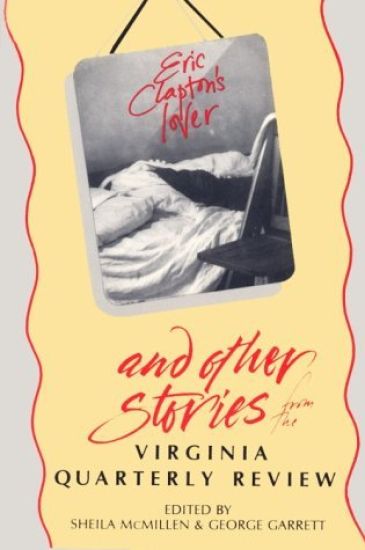
Eric Clapton's Lover and Other Stories from the ""Virginia Quarterly Review
This collection presents some of the best fiction published in the Virginia Quarterly Review- or anywhere- during the past twenty-five years. The stories, written by well-established names as well as recent discoveries, are national, even international, in setting and appeal.Together this collection represents the rich and varied modes of contemporary fiction and celebrates a quarter century of distinguished short fiction published by the Virginia Quarterly Review.
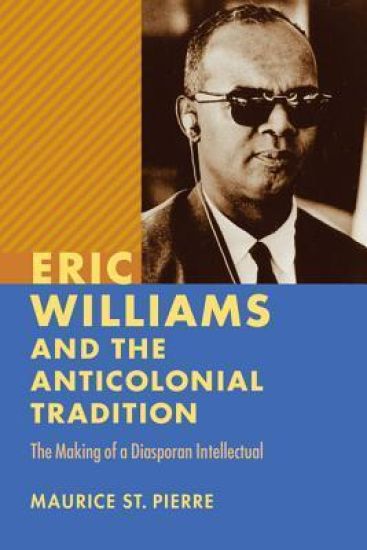
Eric Williams and the Anticolonial Tradition

Eric Williams and the Anticolonial Tradition

Maurice St. Pierre

University of Virginia Press
2015
nidottu
A leader in the social movement that achieved Trinidad and Tobago’s independence from Britain in 1962, Eric Williams (1911–1981) served as its first prime minister. Although much has been written about Williams as a historian and a politician, Maurice St. Pierre is the first to offer a full-length treatment of him as an intellectual. St. Pierre focuses on Williams's role not only in challenging the colonial exploitation of Trinbagonians but also in seeking to educate and mobilize them in an effort to generate a collective identity in the struggle for independence. Drawing on extensive archival research and using a conflated theoretical framework, the author offers a portrait of Williams that shows how his experiences in Trinidad, England, and America radicalized him and how his relationships with other Caribbean intellectuals—along with Aimé Césaire in Martinique, Juan Bosch in the Dominican Republic, George Lamming of Barbados, and Frantz Fanon from Martinique—enabled him to seize opportunities for social change and make a significant contribution to Caribbean epistemology.
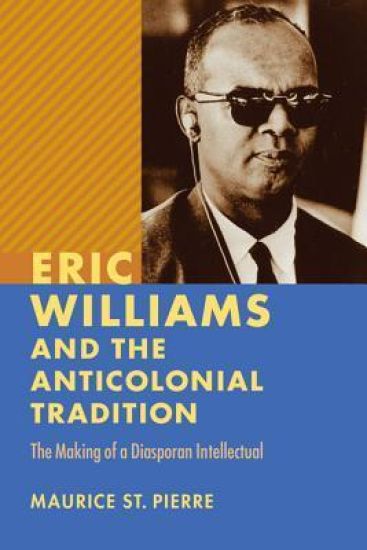
Eric Williams and the Anticolonial Tradition

Eric Williams and the Anticolonial Tradition

Maurice St. Pierre

University of Virginia Press
2015
sidottu
A leader in the social movement that achieved Trinidad and Tobago’s independence from Britain in 1962, Eric Williams (1911–1981) served as its first prime minister. Although much has been written about Williams as a historian and a politician, Maurice St. Pierre is the first to offer a full-length treatment of him as an intellectual. St. Pierre focuses on Williams's role not only in challenging the colonial exploitation of Trinbagonians but also in seeking to educate and mobilize them in an effort to generate a collective identity in the struggle for independence. Drawing on extensive archival research and using a conflated theoretical framework, the author offers a portrait of Williams that shows how his experiences in Trinidad, England, and America radicalized him and how his relationships with other Caribbean intellectuals—along with Aimé Césaire in Martinique, Juan Bosch in the Dominican Republic, George Lamming of Barbados, and Frantz Fanon from Martinique—enabled him to seize opportunities for social change and make a significant contribution to Caribbean epistemology.
Eric Hoffer

Eric Hoffer

Tom Bethell

Hoover Institution Press,U.S.
2011
nidottu
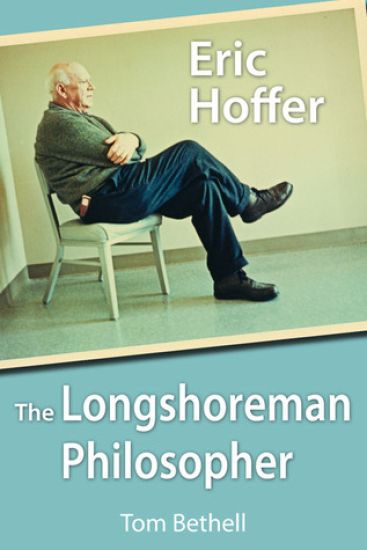
Eric Hoffer was unknown in the American literary and philosophical scene in 1951 when he published his first book, The True Believer. Almost overnight, the San Francisco dockworker became a public figure, helped by a 1956 profile in Look magazine that identified Hoffer as "Ike's Favorite Author"—elevating this blue-collar working man to the level of President Eisenhower's bedside table. Recognized as a highly original thinker, he became known as the "Longshoreman Philosopher." In this book, Tom Bethell paints a new, insightful portrait of this American original. He draws much of his material from Hoffer's personal papers—acquired by the Hoover Institution in 2000—and interviews with those who knew the man, as well as his own interviews with Hoffer, conducted shortly before his death. The result is a detailed portrait of an enigmatic philosopher who was interested in probing the depths of human behavior and discovering the motivations behind the twentieth century's wars and revolutions.Hoffer's life divides into two roughly equal parts. The first part is from birth to his move to San Francisco after Pearl Harbor. The second is his life in San Francisco. Before Pearl Harbor, Hoffer's life is documented only by what he said or wrote. His best friend, Lili Osborne, summarized the difficulty: "all we know about Eric's early life is what he told us." There is a wealth of information on his later life, however, and Bethell reveals it in great detail. He tells of Hoffer's emergence as a public figure in the 1950s, a period he referred to as a "paradise of lost innocence." He details the whirlwind that was Hoffer's life in the 1960s—a decade notorious for attitudes that Hoffer grew to detest—when he became a well-known figure on the national stage. And he provides an insightful look at Hoffer's gradual withdrawal from public life until his death in 1983.
Eric Weil

Eric Weil

William Kluback

University Press of America
1987
sidottu
Presents a summary of the philosophical views of French thinker Eric Weil. The major innovation of Weil's discourse is to embody absolute knowledge in the discourse of such categories as truth, discussion, object, self, God, condition, consciousness, intelligence, personality, the absolute, the unmediated particular, the finite, action, meaning, and wisdom.
Eric Voegelin and the Foundations of Modern Political Science

Eric Voegelin and the Foundations of Modern Political Science

Barry Cooper

University of Missouri Press
1999
sidottu
This important new work is a major analysis of the foundation of Eric Voegelin's political science. Barry Cooper maintains that the writings Voegelin undertook in the 1940s provide the groundwork for the brilliant book that is one of his best known, The New Science of Politics. At the time of that book's publication, however, few were aware of the enormous knowledge and accomplished scholarship that lay behind its illuminating, although sometimes baffling, formulations.By focusing on several of the key chapters in Voegelin's eight- volume History of Political Ideas, especially the studies of Bodin, Vico, and Schelling, Cooper shows how those studies provide the basis for Voegelin's thought. Investigating Voegelin's study of Oriental influences on Western political "ideas," especially Mongol constitutional law, and his study of Toynbee, Cooper seeks to demonstrate the vast range of materials Voegelin used.Cooper contends that, as with other great thinkers, political crisis, specifically the world war of 1939-1945, stimulated Voegelin's intellectual and spiritual achievement. He provides an analysis of Voegelin's immediate concern with the course of World War II, his ability to understand those dramatic events in a large context, and his ability to provide an insightful account of the causes, the significance, and the consequences of the spiritual and political disorder that was evident all around him.In Eric Voegelin and the Foundations of Modern Political Science, Cooper makes the connection between Voegelin's political writings of the 1940s and the meditative interpretations that began to appear with the publication of Anamnesis and with the later volumes of Order and History much more intelligible than does any existing discussion of Voegelin. Scholars in intellectual history and political science will benefit enormously from this valuable new addition to Voegelin studies.
Eric Voegelin's Dialogue with the Postmoderns
These essays endeavor to generate a dialogue between Eric Voegelin and other 20th-century thinkers and explore issues in contemporary political theory. Each essay rests on the underlying question: is it possible or desirable to construct or discover political foundations without resorting to metaphysical or essentialist constructs?