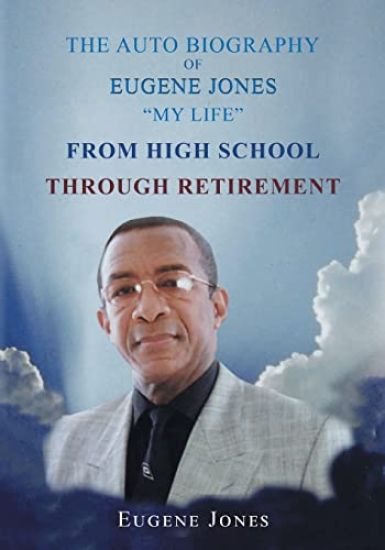
This book is about me and some of my experiences. I started this book from the time I was a teenager. I included some of my travels as I got older: Atlantic City; Canada; Bermuda; Puerto Rico; St. Thomas; China; Hawaii; Las Vegas; Los Angeles; South Carolina; North Carolina; Pennsylvania; Washington, DC; Maryland; New York; Connecticut; Atlanta, Georgia; Texas; Kentucky; Arkansas; and back to Florida.
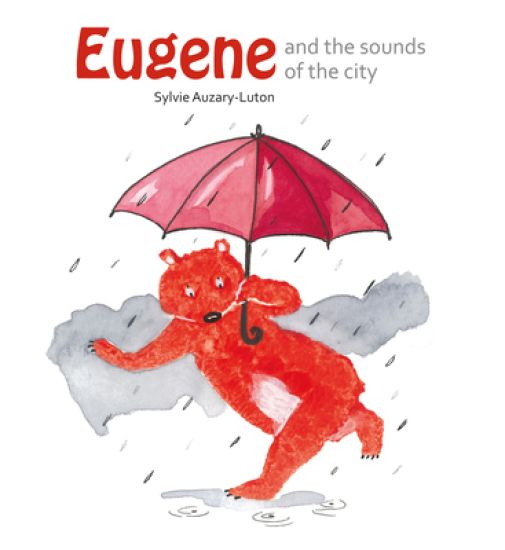
A bear who loves to dance finds music and delight in all the sounds of the city, and discovers that silence shared with others can be a music all its own. Eugene loves to dance. He loves it so much he'll dance to any noise in the city, whether it be a car horn or a jackhammer. He wishes he could get everyone else to dance along with him, but no one else seems to care. When an evening snow begins to fall, Eugene discovers the magic ingredient that will put everyone in a mood to frolic. Here's a gleeful celebration of the rhythms of daily life, and a lesson in how to find the music that's all around you.
The story of Eugene Ely’s life is the stuff of myth and legend. Much of what has been written about him relies on sensationalized newspaper accounts from an era when early twentieth century reporters unabashedly fabricated stories to increase newspaper circulation. Those accounts portray Ely as a reckless daredevil and are essentially historical fiction. Eugene Ely: Pioneer of Navigation cuts through the sensationalism by relying on primary sources and photographic records and triangulating multiple sources to arrive at an honest portrait of the man and his legacy. The result is the story of a quiet, self-effacing Iowan who did extraordinary things. Ely’s measured approach and calculated demonstrations of the potential of military aviation ultimately pointed the way to today’s modern aircraft carriers, over a century later.
Henry James, OM (15 April 1843 - 28 February 1916) was an American author regarded as a key transitional figure between literary realism and literary modernism, and is considered by many to be among the greatest novelists in the English language. He was the son of Henry James Sr. and the brother of renowned philosopher and psychologist William James and diarist Alice James.
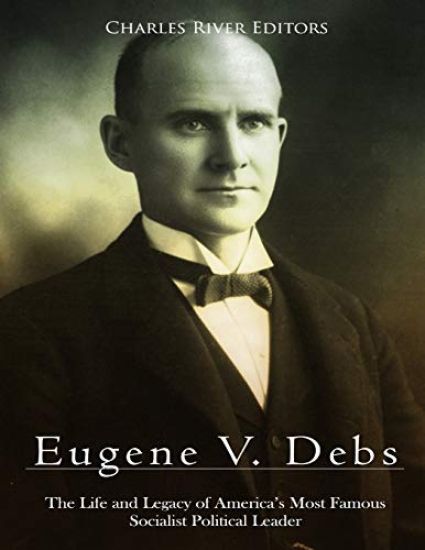
*Includes pictures *Includes contemporary accounts *Includes online resources and a bibliography for further reading "When great changes occur in history, when great principles are involved, as a rule the majority are wrong." - Eugene V. Debs History is full of tales of men who were in the right place at the right time and thereby rose to greatness, but rarely is the story told of a man who was in the right place at the wrong time. The life of Eugene V. Debs is such a tale. Debs was born in Middle America just before the outbreak of the Civil War, and had he been born a century later, or in a large city on one of the coasts, his story might have been much different. As he grew, he had the restlessness that often indicates greatness, but he lacked the crisis that might have allowed him to hone and use his leadership skills. He saw the needs of those less fortunate around him, and at first, like so many others, he thought that he could work within the system to correct them. However, when he ultimately concluded that he could best serve others through firebrand speeches and increasingly controversial actions, he was unable to convince enough people to follow him to make the massive changes he desired. Instead, he found himself thwarted time and again by those with more power and more established views. Of course, this is not to discount the profound impact Debs had on the country; after all, he was one of the most famous men in America during the late 19th and early 20th century. Indeed, he was able to give to the nation a new understanding of the values and power of industrial workers, helping organize them into some of the first industrial unions in the country. He also taught the men themselves to think as a unit, and to act with a united front that allowed them to make their voices heard and to earn for themselves and their families a living wage and benefits commiserate with their work's value. As one early 20th century socialist put it, "Something was in Debs, seemingly, that did not come out unless you saw him. I'm told that even those speeches of his which seem to any reader indifferent stuff, took on vitality from his presence. A hard-bitten socialist told me once, "Gene Debs is the only one who can get away with the sentimental flummery that's been tied onto Socialism in this country. Pretty nearly always it gives me a swift pain to go around to meetings and have people call me 'comrade.' That's a lot of bunk. But the funny part of it is that when Debs says 'comrade' it is all right. He means it. That old man with the burning eyes actually believes that there can be such a thing as the brotherhood of man. And that's not the funniest part of it. As long as he's around I believe it myself." In the course of his work, Debs also changed the political scene in America. He established the Socialist Party, and when he ran for president in 1912, he attracted a noticeable percentage of the popular vote. No Socialist politician has been as successful on the national level before or since. However, even as he garnered popularity, the times in which he lived hampered his work, for the outbreak of World War I, along with the Bolshevik Revolution in Russia, brought socialism under suspicion. Most controversially, Debs was arrested and imprisoned during World War I on charges of sedition, and while that episode has justly marred President Woodrow Wilson's legacy, prison damaged Debs' health even as his spirit strove on for one last victory. In many ways, his end seems tragic, but for those who benefited through the years from his practical work for organized labor and his theoretical work for socialism, his death marked neither a tragedy nor an end, just a new type of beginning. Eugene V. Debs: The Life and Legacy of America's Most Famous Socialist Political Leader chronicles the life and work that made him one of America's most influential men.
*Includes pictures *Includes contemporary accounts *Includes online resources and a bibliography for further reading "When great changes occur in history, when great principles are involved, as a rule the majority are wrong." - Eugene V. Debs History is full of tales of men who were in the right place at the right time and thereby rose to greatness, but rarely is the story told of a man who was in the right place at the wrong time. The life of Eugene V. Debs is such a tale. Debs was born in Middle America just before the outbreak of the Civil War, and had he been born a century later, or in a large city on one of the coasts, his story might have been much different. As he grew, he had the restlessness that often indicates greatness, but he lacked the crisis that might have allowed him to hone and use his leadership skills. He saw the needs of those less fortunate around him, and at first, like so many others, he thought that he could work within the system to correct them. However, when he ultimately concluded that he could best serve others through firebrand speeches and increasingly controversial actions, he was unable to convince enough people to follow him to make the massive changes he desired. Instead, he found himself thwarted time and again by those with more power and more established views. Of course, this is not to discount the profound impact Debs had on the country; after all, he was one of the most famous men in America during the late 19th and early 20th century. Indeed, he was able to give to the nation a new understanding of the values and power of industrial workers, helping organize them into some of the first industrial unions in the country. He also taught the men themselves to think as a unit, and to act with a united front that allowed them to make their voices heard and to earn for themselves and their families a living wage and benefits commiserate with their work's value. As one early 20th century socialist put it, "Something was in Debs, seemingly, that did not come out unless you saw him. I'm told that even those speeches of his which seem to any reader indifferent stuff, took on vitality from his presence. A hard-bitten socialist told me once, "Gene Debs is the only one who can get away with the sentimental flummery that's been tied onto Socialism in this country. Pretty nearly always it gives me a swift pain to go around to meetings and have people call me 'comrade.' That's a lot of bunk. But the funny part of it is that when Debs says 'comrade' it is all right. He means it. That old man with the burning eyes actually believes that there can be such a thing as the brotherhood of man. And that's not the funniest part of it. As long as he's around I believe it myself." In the course of his work, Debs also changed the political scene in America. He established the Socialist Party, and when he ran for president in 1912, he attracted a noticeable percentage of the popular vote. No Socialist politician has been as successful on the national level before or since. However, even as he garnered popularity, the times in which he lived hampered his work, for the outbreak of World War I, along with the Bolshevik Revolution in Russia, brought socialism under suspicion. Most controversially, Debs was arrested and imprisoned during World War I on charges of sedition, and while that episode has justly marred President Woodrow Wilson's legacy, prison damaged Debs' health even as his spirit strove on for one last victory. In many ways, his end seems tragic, but for those who benefited through the years from his practical work for organized labor and his theoretical work for socialism, his death marked neither a tragedy nor an end, just a new type of beginning. Eugene V. Debs: The Life and Legacy of America's Most Famous Socialist Political Leader chronicles the life and work that made him one of America's most influential men.
The Eugene Mosley Story follows the life of Eugene Mosley, explaining how he overcame adversary, bullying, and doubt. Eugene overcame these obstacles to become a legendary Jazz Portrait Artist, traveling the world, meeting some of the most influential and powerful people alive, and establishing a legacy that will last forever. The Eugene Mosley Story shows that when you take the time to answer God's calling, ignore to bullies, and seek to be your best, you will succeed.
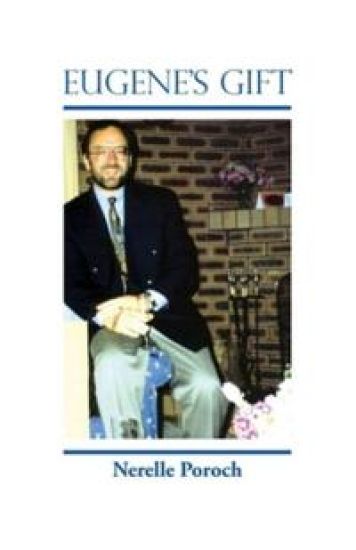
How would you cope with a terminal illness? This was the challenge Eugene faced when told he had cancer. This book explains how he, his wife Nerelle and his circle of close friends and family rose to the challenge. Eugene's gift was to come to terms with his own situation in a quiet, courageous way that inspired those around him. He lost his life but left a legacy of goodwill and love for those remaining.
Eugene Onegin is a bored St. Petersburg dandy, whose life consists of balls, concerts, parties, and nothing more. When he inherits a substantial fortune and a landed estate, he moves to the country where he strikes up a friendship with his neighbor, a young poet named Vladimir Lensky. Onegin is introduced to Lensky's fiancee, Olga, and her sister, Tatyana, who becomes intensely drawn to Onegin. After rejecting Tatyana's advances, Onegin attempts to seduce Olga, simply to spite Lensky. Eugene Onegin is considered a classic of Russian literature, and its protagonist has served as the model for a number of Russian literary heroes. Almost the entire work is made up of 389 fourteen-line stanzas of iambic tetrameter with the unusual rhyme scheme "AbAbCCddEffEgg", where the uppercase letters represent feminine rhymes while the lowercase letters represent masculine rhymes. The innovative rhyme scheme, the natural tone and diction, and the economical transparency of presentation all demonstrate the virtuosity which has been instrumental in proclaiming Pushkin as the undisputed master of Russian poetry.This case laminate collector's edition includes a Victorian inspired dust-jacket.
A powerful love story set in the class-conscious Tsarist Russia of the early 19th century. It embraces every level of that society – serf, provincial, aristocrat – in verse which is by turns beautiful, witty, wickedly perceptive and always readable. This is essential reading for anyone with a love of Russian literature, because this is where it all began. There is little pre-history to that golden age of 19th century novels. Lomonosov, a fisherman’s son turned scholar, took church Slavonic, peasant Russian, mixed in a few ‘Loan translations’ and gave a French-speaking aristocracy a literary language; Pushkin was the first truly great poet to use it; Yevgeny Onegin is his greatest work.