In 1846 C.E., when they had defeated the Sikh nation of Punjab, the officers of the British East India company found themselves in charge of a vast tract of land inhabited by a proud people with a history of surviving political and religious oppression. The Khalsa Sikhs, the order of "saint-soldiers" founded by Guru Gobind Singh in 1699 had weathered Mughal oppression and rebounded from two ghallugharas, or "holocausts" (1746 and 1762). When the Sikh confederacy was joined together by Maharaja Ranjeet Singh in 1801, it governed a domain the size of France. The Punjab was the last part of the Indian subcontinent to fall to the British, and two short years later, the Khalsa would rise again for a second Anglo-Sikh war (1848-49) before settling in, mostly, as loyal vassals of the British Crown.Badges of Bondage is an account of how the British managed to rule their Punjabi Sikh subjects for one hundred years. It is a story of their stratagems to diminish the beliefs and practices of their subjects, while presenting their own doctrines of government, education and justice, together with their race, culture and religion, as inherently superior. It is an historic account of self-assured agents of a Western power encountering a culture and people unlike any they had known: the Sikhs with their legendary thirst for fairness and their unmatched resilience in the face of adversity. This book, first published in 1996 and now updated and illustrated with historic photos and paintings, is a story of the successes and failures of the British to cow the Sikhs into subservience. It is also the account of a spiritual nation that at times stood as one against schemes and strategies employed by their rulers and their stooges to prolong British dominance of the people of south Asia, by far the richest and most important part of their global empire. Finally, this book is a preliminary assessment of long term effects, past India's proclamation of independence in 1947, of British rule on the habits, psyche and self-concept of Sikhs living today. "Your essay makes very cogent reading and I enjoyed going through it. Your narration is powerful and effective." Professor Harbans Singh, The Encyclopedia of Sikhism, Punjabi University"Thoughtful people everywhere will be touched by Guru Fatha Singh's concern, as also benefit from a reading of his first book. His first set of documented writings, succinct and neatly produced, explore the Sikh faith through history. His loyalty to the Guru's purpose is firm as a rock. His understanding of Gurbani is extraordinarily perceptive, and their rendering into English sensitively poetic. His objective in compiling the historic panorama is to re-awaken the true spirit of Khalsa." Sardar Saran Singh, editor, The Sikh Review, Kolkata"The author rightly laments the surrender of the rich spiritual heritage of Sikhism to the so-called secular, materialistic and dehumanizing values of the West planted during British rule." Sardar Gurcharan Singh, Abstracts of Sikh Studies, Chandigarh"I am writing on behalf of the Siri Singh Sahib. The Siri Singh Sahib really enjoyed reading your book and was appreciative of the work that you have put in. You seem to have done considerable research which is well-documented. I also found your writing style comfortable to read, and it held my interest throughout. I felt your approach is sound, for while it does not actually point fingers and place blame, it makes clear that Sikhs themselves are accountable and responsible for their circumstances." Singh Sahib Gurutej Singh Khalsa, Founder, Akal Security
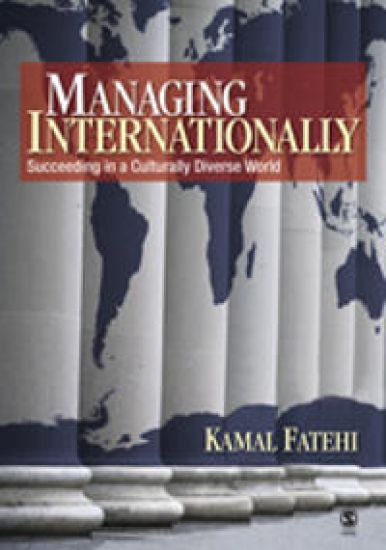
"Managing Internationally provides a broad yet original treatment of global business environment and managing globally. The book addresses the most common aspects of operating internationally and introduces subjects that are often neglected by management scholars. Powerful insights and perspectives are provided for understanding the dynamics and complexity of managing business across the globe."--Abbas J. Ali, Indiana University of Pennsylvania"A well-written text that highlights the tenets of international management in their cultural realities. Current, focused, and grounded in the importance of understanding the diverse business and management practices…to be successful in today's global environment."--Jim Giermanski, Belmont Abbey College and Powers International Inc.Key Features Provides a better understanding of existing international management knowledge: The book traces this knowledge back to its origins to reinforce the scope and importance of international business and international management. Offers a cross-cultural perspective within a functional framework: The author underlines the effectiveness of different concepts for various functions of management when applied in diverse environments. Presents cutting edge topics: Concepts and ideas unique to this book include an entire chapter devoted to information systems, a chapter on legal issues, and a unique perspective on control in international business transactions. Includes engaging vignettes: Each chapter begins with an interesting and often amusing short story related to the content. Provides ample visual aids: Charts, graphs, tables, and boxed material cover specific issues that can be used as a starting point for discussion of chapter material. Instructor's ResourcesAn instructor's resource CD, including PowerPoint slides, teaching notes for all in-text cases studies, suggested exercises, discussion questions, a brief test bank, and related journal articles, is available to qualified adopters of this text.Intended Audience: This is an excellent source for advanced undergraduate and graduate courses in International Management, Global Management, Multinational Management, or Transnational Management. It is also a valuable resource for practicing managers to gain a competitive advantage in the global market.
This story is suitable for children age 10 and above. Kamal-5 is a team formed by five friends Kamal, Waleed, Mustafa, Lamees and Yosuf. They embark on a space adventure. They lost Earth coordinates and now they are on a mission to get back home.
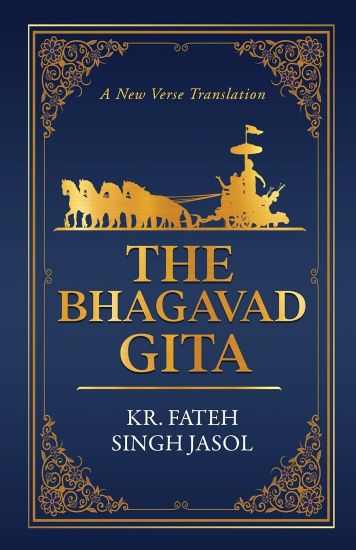
A unique, verifiably accurate, pure and uncluttered user friendly translation in flawless poetry which all true lovers of the Bhagavad Gita will want to read and have in their homes.
Sometimes we love to live in stories and Sometimes stories live in us. But in both cases, until we bring it out we never know how far it will became special for Someone.Happiness but somewhere Else is a fiction which is Beyond Friendship, Love and Life
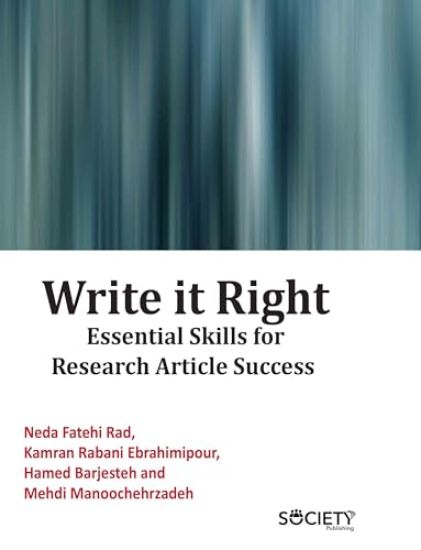
Write it Right: Essential Skills for Research Article Success is an essential guide for anyone aiming to develop the art of research paper writing with clarity and confidence. This 15-chapter handbook, tailored for both beginners and experienced researchers, guides you from the initial spark of an idea to a polished and publication-ready manuscript. Each chapter breaks down key steps with clear objectives, straightforward explanations, real-world examples, and practical tips which makes the writing process less daunting and more manageable. With organized checklists at every stage, you will stay focused and on course. Whether you are refining your existing skills or beginning the writing process for the first time, this guide equips you with the insights and tools needed to produce impactful and high-quality research that makes a lasting impression.Key FeaturesClear Goals: Sets practical, step-by-step learning targets.Comprehensive: Covers every essential section of a research article.Balanced: Blends theoretical insights with hands-on strategies. Sequential Guidance: Breaks down the writing process for clarity.Statistical Tips: Supports data presentation and analysis.Templates: Includes sample sections to guide your writing.Reflective Checklists: Encourages growth and precision with every draft.
The next big tech disruption is already here... and you can be a part of it. It's no secret that SaaS (Software as a Service) has become a staple of our lives, from personal entertainment with video streaming platforms like Netflix to business development with powerful tools like Salesforce. But what if the power of SaaS could serve a greater purpose beyond convenience for the user? What if it could be harnessed by any organization-or any person-to its fullest multi-dimensional capacity to generate massive economic growth and social good?In this quick and insightful read, Feyzi Fatehi shares a remarkable vision for a game-changing disruption in the software industry by granting unprecedented software access to the masses through rapid and automated SaaS-enablement empowered by Corent's disruptive SaaSOps™ platform. With a wealth of experience and success in the tech industry, Feyzi provides compelling proof of how fully automated SaaS is unlocking the next tech boom by empowering everyone from global giants like Samsung to open source developers and organizations alleviating poverty through SaaS-based banking services.
This textbook addresses the theoretical and practical dynamics of managing international businesses including multi-cultural, multi-national and global issues of managing business expansion beyond the domestic market. This new third edition provides up-to-date data and insights in dealing with challenges such as war, pandemic (COVID-19), supply chain disruption, etc. In particular, it includes a new chapter that delves into an institutional aspect of international business management and the roles of legal environments in multinational businesses such as intellectual property, international alliance/joint venture contract enforcement, and operations. Featuring new visual aids (i.e., charts, tables, etc.), vignettes, and professional points, this text is engaging, visually appealing, and easily accessible for students taking International Business Management courses.
Mehrdad Fatehi studies Paul's letters and shows that the risen Lord is featured in the religious experiences of Paul and the Pauline believers as the present and active lord of the new covenant community. These experiences seem to point beyond the notion of a divine agent alongside God to a redefinition of the very concept of God in a way that it would include Christ within itself. This is confirmed by the way Paul and the Pauline communities believed themselves to have experienced the risen Lord through God's Spirit.In Judaism in general, as well as in Paul, the Spirit was not regarded as an entity distinct or separable from God but as God himself in his presence and action in and among his people. Yet we have clear evidence in Paul's letters that the risen Christ was experienced and conceived of as being present and active through the Spirit bestowing grace and gracious gifts, infusing wisdom, communicating his will, regenerating and transforming his people, and dwelling in and among them all through the Spirit in a way which is best understood after the analogy of God's presence and work through the Spirit in Judaism. In other words, Paul's 'the Spirit of Christ' is best understood after the analogy of 'the Spirit of God'.Paul's application of the Spirit-language to describe and interpret the Christians' experiences of the risen Lord shows that Paul most probably presupposed a redefinition of monotheism in which Christ would be included within the Godhead.