Kirjojen hintavertailu. Mukana 12 016 292 kirjaa ja 12 kauppaa.

Kirjahaku

Etsi kirjoja tekijän nimen, kirjan nimen tai ISBN:n perusteella.

1000 tulosta hakusanalla Fausto Angius

Faust, Part I

Faust, Part I

Goethe

Penguin Classics
2005
pokkari
Goethe's Faust reworks the late-medieval myth of Dr Faust, a brilliant scholar so disillusioned he resolves to make a contract or wager with the devil, Mephistopheles. The devil will do all he asks on Earth and seek to grant him a moment in life so glorious that he will wish it to last for ever. But if Faust does bid the moment stay, he falls to Mephisto and must serve him after death. In this first part of Goethe's great work the embittered thinker and Mephistopheles enter into their agreement, and soon Faust is living a life beyond his study and - in rejuvenated form - winning the love of the charming and beautiful Gretchen. But in this compelling tragedy of arrogance, unfulfilled desire and self-delusion, Faust, served by the devil, heads inexorably towards destruction.
Faust, Part II

Faust, Part II

Goethe

Penguin Classics
2009
pokkari
In this sequel to Faust, Mephistopheles takes Faust on a journey through ancient Greek mythology, conjuring for him the insurpassably beautiful Helen of Troy, as well as the classical gods. Faust falls in love with and marries Helen, embodying for Goethe his 'imaginative longing to join poetically the Romantic Medievalism of the germanic West to the classical genius of the Greeks'. Further to the themes of redemption and salvation in this great drama, are Goethe's eerie premonitions of modern phenomena such as inflation and the creation of life by scientific synthesis.
Faust in Copenhagen: A Struggle for the Soul of Physics
A physicist himself, Gino Segr writes about what scientists do and why they do it with intimacy, clarity, and passion. In Faust in Copenhagen, he evokes the fleeting, magical moment when physics' and the world was about to lose its innocence forever. Known by physicists as the miracle year, 1932 saw the discovery of the neutron and antimatter, as well as the first artificially induced nuclear transmutations. However, while scientists celebrated these momentous discoveries, which presaged the nuclear era and the emergence of big science, during a meeting at Niels Bohr's Copenhagen Institute, Europe was moving inexorably toward totalitarianism and war.
Faust: Part Two

Faust: Part Two

J. W. von Goethe

Oxford University Press
2008
nidottu
Loosely connected with Part One and the German legend of Faust, Part Two is a dramatic epic rather than a strictly constructed drama. It is conceived as an act of homage to classical Greek culture and inspired above all by the world of story-telling and myth at the heart of the Greek tradition, as well as owing some of its material to the Arabian Nights tales. The restless and ruthless hero, advised by his cynical demon-companion Mephistopheles, visits classical Greece i search of the beautiful Helen of Troy. Returning to modern times, he seeks to crown his career by gaining control of the elements, and at his death is carried up into the unkown regions, still in pursuit of the `Eternal Feminine'. David Luke's translation of Part One won the European Poetry Translation Prize. Here he again imitates the varied verse-forms of the original, and provides a highly readable - and actable - translation, supported by an introduction, full notes, and an index of classical mythology. ABOUT THE SERIES: For over 100 years Oxford World's Classics has made available the widest range of literature from around the globe. Each affordable volume reflects Oxford's commitment to scholarship, providing the most accurate text plus a wealth of other valuable features, including expert introductions by leading authorities, helpful notes to clarify the text, up-to-date bibliographies for further study, and much more.
Faust: Part One

Faust: Part One

J. W. von Goethe

Oxford University Press
2008
nidottu
The legend of Faust grew up in the sixteenth century, a time of transition between medieval and modern culture in Germany. Johann Wolfgang von Goethe (1749-1832) adopted the story of the wandering conjuror who accepts Mephistopheles's offer of a pact, selling his soul for the devil's greater knowledge; over a period of 60 years he produced one of the greatest dramatic and poetic masterpieces of European literature. David Luke's recent translation, specially commissioned for The World's Classics series, has all the virtues of previous classic translations of Faust, and none of their shortcomings. Cast in rhymed verse, following the original, it preserves the essence of Goethe's meaning without sacrifice to archaism or over-modern idiom. It is as near an `equivalent' rendering of the German as has been achieved. ABOUT THE SERIES: For over 100 years Oxford World's Classics has made available the widest range of literature from around the globe. Each affordable volume reflects Oxford's commitment to scholarship, providing the most accurate text plus a wealth of other valuable features, including expert introductions by leading authorities, helpful notes to clarify the text, up-to-date bibliographies for further study, and much more.
Faust the Theologian

Faust the Theologian

Jaroslav Pelikan

Yale University Press
1997
pokkari
In this erudite and beautifully written book, an eminent scholar meditates on the theological implications of Goethe's Faust. Jaroslav Pelikan reflects on Goethe's statement that he was a pantheist when it came to science, a polytheist in art, and a monotheist in ethics, and he uses it for the first time to analyze Faust's development as a theologian. By so doing, Pelikan enables us to see Goethe's masterpiece in a surprising new light.Pelikan begins by discussing Faust's role as natural scientist or pantheist. He examines Faust's disenchantment with traditional knowledge, considers his interests in geology, oceanography, and optics, and analyzes his perception of nature as a realm inspirited throughout by a single unifying Power. Pelikan next follows Faust on his journeys to the two Walpurgis Nights, where he shows how Faust reveals his delight in the polytheistic extravaganzas of Germanic and especially of Greek mythology. Finally Pelikan describes the operatic finale of the book, where Faust's spirit is drawn upward to salvation by the Eternal Feminine, and he argues that this marks Faust's evolution into moral philosopher and monotheist. Pelikan's analysis thus reveals thematic unities and a dialectical development of Faust's character that have been unnoticed heretofore.
Faust

Faust

Johann Wolfgang von Goethe

Yale University Press
2014
pokkari
“Greenberg has accomplished a magnificent literary feat. He has taken a great German work, until now all but inaccessible to English readers, and made it into a sparkling English poem, full of verve and wit. Greenberg's translation lives; it is done in a modern idiom but with respect for the original text; I found it a joy to read.”—Irving Howe (on the earlier edition) A classic of world literature, Goethe’s Faust is a philosophical and poetic drama full of satire, irony, humor, and tragedy. Martin Greenberg re-creates not only the text’s varied meter and rhyme but also its diverse tones and styles—dramatic and lyrical, reflective and farcical, pathetic and coarse, colloquial and soaring. His rendition of Faust is the first faithful, readable, and elegantly written translation of Goethe’s masterpiece available in English. At last, the Greenberg Faust is available in a single volume, together with a thoroughly updated translation, preface, and notes.
Faust's Anesthesiology Review

Faust's Anesthesiology Review

Elsevier - Health Sciences Division
2023
nidottu
Authored by current and former physicians at the Mayo Clinic, Faust's Anesthesiology Review, 6th Edition, is an invaluable review source for success on exams and in practice. It covers a broad range of important and timely topics in a succinct, easy-to-read format, providing the essential information you need to master the latest advances, procedures, guidelines, and protocols in anesthesiology. Provides in-depth, yet succinct clinical synopses of all topic areas found on the ABA/ASA exam, with the perfect amount of information to ensure exam success. Contains five new chapters: Principles of Preoperative Evaluation; Anesthesia for Patients who are Lactating; Peripheral Nerve Blocks of the Anterior Trunk; Sustainability in Anesthesiology and the Operating Room; and Anesthesia During a Pandemic. Covers the core knowledge needed to succeed in today’s anesthesiology practice, including awake craniotomy, non-OR anesthesia (NORA), neuromodulation, using arterial pressure waveform to derive cardiac output, enhanced recovery (ERAS) pathways, chemical dependency in anesthesia personnel, lung transplantation, anesthesia for robotic surgery, and more. Includes boxes, tables, charts, and graphs throughout to provide visual guidance and summarize critical information. Features concise chapters for efficient review and effective recall, making this an ideal study tool for certification, recertification, or as a refresher for anesthesiology practice. An eBook version is included with purchase. The eBook allows you to access all of the text, figures and references, with the ability to search, customize your content, make notes and highlights, and have content read aloud.
Faust: Part 1

Faust: Part 1

Johann Wolfgang Von Goethe

Farrar, Straus and Giroux
2001
nidottu
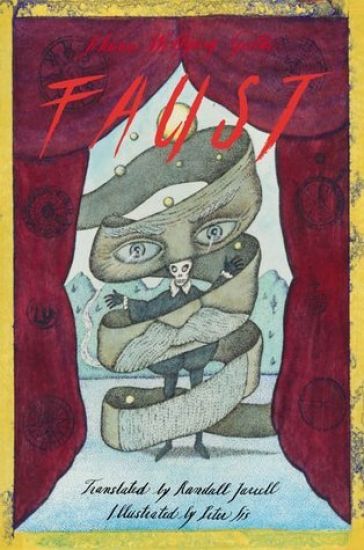
Goethe's classic, enlivened by Randall Jarrell's fine translation and Peter S s's dark, dreamy illustrations Randall Jarrell's translation of Faust is one of his most important achievements. In 1957 he inscribed Goethe's motto on the first page of his notebook--"Ohne Hast aber ohne Rast" ("Without haste but without rest")--and from then until his death in 1965 he worked on the masterpiece of his "own favorite daemon, dear good great Goethe." His intent was to make the German poetry free, unrhymed poetry in English. He all but finished the job before he died, and the few lines that remained untouched--"Gretchen's Room"--were rendered into English by Robert Lowell. This elegant new edition features numerous beautiful line drawings and jacket lettering by the renowned Czech artist Peter S s, author of the award-winning books Starry Messenger: Galileo Galilei and Tibet: Through the Red Box.
Faust

Faust

Johann Wolfgang von Goethe

WW Norton Co
2000
nidottu
This edition presents Parts I and II complete. Cyrus Hamlin provides essential supporting material for this difficult text, and his Interpretive Notes have been expanded and reset in larger, easy-to-read type. "Comments by Contemporaries" includes short pieces by Margaret Fuller, Ralph Waldo Emerson, Thomas Carlyle, and Wilhelm von Humboldt. "Modern Criticism"--comprised of ten essays newly added to the Second Edition--presents the perspectives of Stuart Atkins, Jaroslav Pelikan, Benjamin Bennett, Franco Moretti, Friedrich A. Kittler, Neil M. Flax, Marc Shell, Jane Brown, Hans Rudolf Vaget, and Marshall Berman. A Selected Bibliography is included.
Faust is Dead

Faust is Dead

Mark Ravenhill

Methuen Drama
1997
nidottu
Mark Ravenhill's Faust (Faust is Dead) is a dark and often brutally funny journey through a world of virtual reality The world's most famous philosopher arrives in Los Angeles and is greeted as a star. In a round of chat show appearances, he announces the Death of Man and the End of History. When he meets up with a young man who is on the run from his father, a leading software magnate, they embark on a hedonistic voyage across America. But in the play's bloody conclusion, they discover that not all events are virtual."In Shopping and Fucking, Mark Ravenhill made theatre relevant to the Thatcher generation. Now he's put videos and Net-surfing in FAUST. And it's no less stunning." (The Guardian)
Faust

Faust

Charles Gounod

Dover Publications Inc.
2013
nidottu
Charles Gounod's interpretation is the best-known and most frequently performed of any stage or orchestral treatment of the Faust legend. Long a staple of the operatic repertoire, "Faust" was a major success upon its first fully realized performance at Milan's La Scala in 1862. The opera's lyricism, tremendous variety of mood and orchestral color, and subtle delineation of character continue to delight generations of concertgoers.Now opera lovers can study and enjoy the complete masterpiece in this attractive and inexpensive volume, which has been reprinted from an authoritative edition. Despite the frequency of its performances, Gounod's work is hard to find in print, so this rare edition of the full score constitutes a treasure for conductors, performers, and music majors alike.
Faust: Parts One and Two

Faust: Parts One and Two

Harry Clarke; Johannwolfgangvon Goethe

Dover Publications Inc.
2018
nidottu
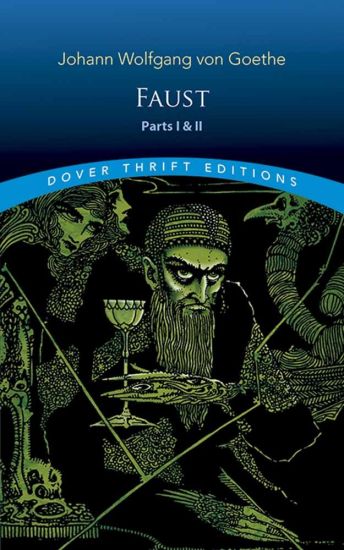
The best-known work of the Enlightenment literary giant Johann Wolfgang von Goethe, Faust took a lifetime to write. For more than sixty years, Goethe worked on his masterpiece and ultimately divided it into two parts, the second of which was published in 1832, the year of his death. Hailed as Germany's greatest contribution to world literature, Faust drew upon the legends surrounding a sixteenth-century sorcerer as well as Marlowe's Dr. Faustus. But Goethe's epic interpretation further explores the tension between learning and experience, and in this version Faust sells his soul not simply for magic powers but also for a heightened sense of existence. Part One of the dramatic poem concerns the magician's devilish pact with Mephistopheles and his seduction of Gretchen, an innocent girl. Part Two incorporates a vast array of influences -- theological, mythological, philosophical, political, musical, and literary--to relate Faust's life at court, his romance with Helen of Troy, and his salvation. This edition features the acclaimed translation by Bayard Taylor.
Faust

Faust

Johann Wolfgang von Goethe

RANDOM HOUSE USA INC
1988
pokkari
Goethe's masterpiece and perhaps the greatest work in German literature, Faust has made the legendary German alchemist one of the central myths of the Western world. Here indeed is a monumental Faust, an audacious man boldly wagering with the devil, Mephistopheles, that no magic, sensuality, experience, or knowledge can lead him to a moment he would wish to last forever. Here, in Faust, Part I, the tremendous versatility of Goethe's genius creates some of the most beautiful passages in literature. Here too we experience Goethe's characteristic humor, the excitement and eroticism of the witches' Walpurgis Night, and the moving emotion of Gretchen's tragic fate. This authoritative edition, which offers Peter Salm's wonderfully readable translation as well as the original German on facing pages, brings us Faust in a vital, rhythmic American idiom that carefully preserves the grandeur, integrity, and poetic immediacy of Goethe's words.