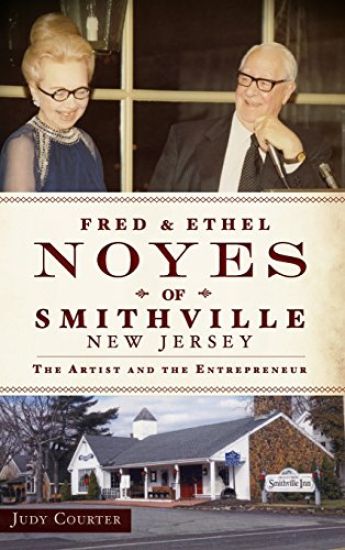
Thousands of visitors each year flock to the Historic Smithville Inn and Village to enjoy restaurants, shops and festivals. The story behind Smithville--the remarkable efforts of its founders, Fred and Ethel Noyes--is as colorful as the village itself. Fred was a World War II veteran and artist with a rambunctious personality. Ethel was an unstoppable visionary and self-made businesswoman. Together, they restored the Smithville Inn and, over the years, added the historic village. Ethel ran the enterprise with a notoriously tight grip, while the garrulous Fred painted, collected decoys and was the mainstay. They went on to build the Ram's Head Inn and the Noyes Museum of Art. Fred and Ethel left a lasting legacy for the people of New Jersey. Author Judy Courter tells the story of this fascinating couple through the memories of family, friends and employees.
A collection of 12 stories published serially in The Ludgate, London, Jun 1897 to May 1898, in which the criminal mastermind, Felix Gryde, conducts his nefarious criminal work -- theft, kidnapping, ransom, assassination, fraud -- and he never gets caught. The author's introduction: "The history of famous detectives, imaginary and otherwise, has frequently been written, but the history of a famous criminal-never. "This is a bold statement, but a true one all the same. The most notorious of rascals know that sooner or later they will be found out, and therefore they plan their lives accordingly. But they are always found out in the end. And yet there must be many colossal rascals who have lived and died apparently in the odour of sanctity. Such a character would be quite new to fiction, and herein I propose to attempt the history of the Sherlock Holmes of malefactors. "Given a rascal with the intellect of the famous creation in question, and detection would be reduced to a vanishing point. It is the intention of the writer to set down here some of the wonderful adventures that befell Felix Gryde in the course of his remarkable career."
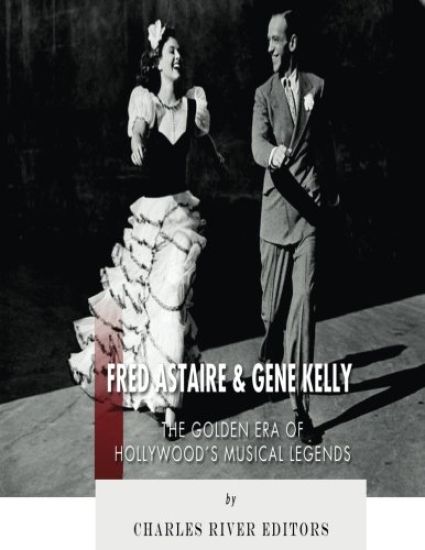
*Includes pictures. *Includes quotes about both men's lives and careers. *Includes bibliographies of both men. Virtually all famous actors are regaled by the public, but even still, Fred Astaire occupies a privileged position in American pop culture. The specific films in which Astaire acted may not be especially famous in their own right - most people likely cannot recall the title of Top Hat (1935), his most decorated film - but Astaire's dancing prowess invariably creates a lasting impact on viewers. Instead of tying his fame to a single film, Astaire's genius lay in constructing his star persona around a specific set of iconographic imagery that has become embedded within American culture. Across his films, the recurring iconic images of the top hat, cane, and coat tails, as well as the image of Astaire dancing with Ginger Rogers, all constitute a timeless symbol for elegance that continues to captivate viewers who are unfamiliar with the plots of his films. There have been other film musical actors who were proficient dancers, Gene Kelly chief among them, but none were able to perform with the seamless elegance of Astaire, and none have been remembered nearly as well. Astaire's popularity can in large part be tied to the escapism that his films offered to impoverished Depression-era American audiences, and yet Astaire was a working man, albeit one who labored in the studios of Hollywood rather than the factories of America. Considering the quiet life that he led off the movie set, it can be difficult to disassociate Astaire from his films, and while he may have attempted to project the same image off the screen, the era and his personal background were extremely important. As someone who was born just before the start of the 20th century, Astaire's life sheds light on the developments that occurred in American entertainment, from the stage (where he first performed during his youth) to cinema (the site of his greatest triumphs) and finally to television (a medium Astaire entered at the end of his career.) Astaire's career tends to obscure his all-American success story, one in which hard work transformed a Nebraska boy from a working-class family into America's most prominent symbol of grace. Although they did collaborate on two occasions, in many ways Gene Kelly's rise to popularity in the 1940s amounted to a changing of the guard, because Astaire's career had begun to wane by the mid-1940s. For film historians and fans of the musical, however, even if they weren't contemporaries, Astaire and Kelly will forever be viewed as rivals, with each having left an indelible stamp on the genre that defined their careers. Regardless of which dancer viewers film, there is no denying the cultural significance of some of Kelly's most famous films, including An American in Paris (1949) and Singin' in the Rain (1952), movies that occupy a central position within the pantheon of Hollywood musicals. While it is true that a comparison between Astaire and Kelly is indispensible to any study of Kelly's life, much can also be gained simply by focusing mostly on his life and career. What made Kelly unusual for actors of that era is that he did not actually arrive in Hollywood until he was nearly 30 years old, so his early life and work before film had a crucial influence on his star image. Furthermore, given that he came to prominence after Astaire, Kelly's career offers a valuable lens through which to chart the evolution of the musical genre, as well as a look at the prevailing standards of masculinity within Hollywood at the time. Fred Astaire and Gene Kelly examines the lives and careers of two of Hollywood's most iconic dancers, tracing their rise to stardom and the forces within Hollywood and American popular culture that would ultimately lead to the end of their careers.
A Story of What Might Happen In the Days to Come, When Underground London is Tunnelled In all Directions for Electric Railways, If an Explosion Should Take Place In One of the Tubes. A short story in the "Doom of London" series. Excerpts: There was a sudden splitting crack as if a thousand rifles had been discharged in the ballroom. The floor rose on one side to a perilous angle, considering the slippery nature of its surface. Such a shower of white flakes fell from the ceiling that dark dresses and naval uniforms looked as if their wearers had been out in a snowstorm. ... "An earthquake," somebody said at length. "An earthquake, beyond doubt, and a pretty bad one at that. That accounts for the failure of the electric light. There will be some bad accidents if the gas mains are disturbed." ...
Six spy-stories published in the US edition of Pearson's Magazine, Jul-Dec 1900. This series features Newton Moore, the top agent of a fictitious branch of the British War Office called "The Secret Service Fund." All of the stories in this series were illustrated by Victor Venner.
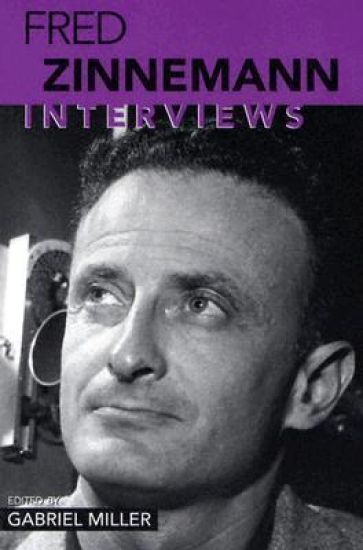
Fred Zinnemann (1907-1997) was one of Hollywood's most honored directors. In a career that spanned fifty years, he won four Academy Awards and directed such classic movies as From Here to Eternity, A Man for All Seasons, The Day of the Jackal, and High Noon. Covering thirty-three years of conversations (1964-1997), Fred Zinnemann: Interviews provides a revealing glimpse into the director's vision as he discusses in his cultivated, elegant voice his varied experiences as a filmmaker. He defends himself against charges that his films are too objective or unemotional. He reminisces about his experiences with independent director Robert Flaherty and his early years in the American studios and recounts his disappointment and frustration over his abortive attempt to film Man's Fate. Filled with intelligent commentary and recollections about all of his important work, the interviews disclose an artist committed to his craft, his vision, and the human enterprise. Despite the range of genres in which he worked-the western, the musical, film noir, and the ""social problem"" film-Zinnemann was aesthetically committed to social realism. Due in part to his training under Flaherty and his upbringing in Austria, where he witnessed firsthand the rise of fascism, Zinnemann was always drawn to stories that highlighted the testing of conscience in people caught up in a historical moment. World War II provided the backdrop to much of his work. As he put it, ""I have always been concerned with the problem of the individual who struggles to preserve personal integrity and self-respect."" Gabriel Miller is a professor of English at Rutgers University, Newark, and has written several other books on film and theater.
Winner, Carter G. Woodson Book Award * Winner, New-York Historical Society Children’s Book Prize * Winner, Social Justice Literature Award * Honor Title, Jane Addams Children’s Book Award * Finalist, 2017 Cybils Awards * Nominee, Georgia Children’s Book Award * Nominee, Rebecca Caudill Young Readers’ Book Award * Nominee, South Carolina Junior Book Award * A Kirkus Best Book of the Year * An Association of Children's Librarians of Northern California Outstanding Title"An invaluable profile of a civil rights hero whose story deserves greater attention. Middle schoolers will take to the superb writing and original format." —School Library Journal, starred review "Korematsu's is an important story and should be part of our national educational curriculum." —Los Angeles Review of BooksFred Korematsu liked listening to music on the radio, playing tennis, and hanging around with his friends—just like lots of other Americans. But everything changed when the United States went to war with Japan in 1941 and the government forced all people of Japanese ancestry to leave their homes on the West Coast and move to distant prison camps. This included Fred, whose parents had immigrated to the United States from Japan many years before. But Fred refused to go. He knew that what the government was doing was unfair. And when he got put in jail for resisting, he knew he couldn't give up.Inspired by the award-winning book for adults Wherever There's a Fight, the Fighting for Justice series introduces young readers to real-life heroes and heroines of social progress. The story of Fred Korematsu's fight against discrimination explores the life of one courageous person who made the United States a fairer place for all Americans, and it encourages all of us to speak up for justice.
Winner, Carter G. Woodson Book Award * Winner, New-York Historical Society Children’s Book Prize * Winner, Social Justice Literature Award * Honor Title, Jane Addams Children’s Book Award * Finalist, 2017 Cybils Awards * Nominee, Georgia Children’s Book Award * Nominee, Rebecca Caudill Young Readers' Book Award * Nominee, South Carolina Junior Book Award * A Kirkus Best Book of the Year * An Association of Children's Librarians of Northern California Outstanding TitleNow in paperback: The award-winning story of Fred Korematsu's fight for justice, acclaimed by School Library Journal as "an invaluable profile of a civil rights hero."Fred Korematsu liked listening to music on the radio, playing tennis, and hanging around with his friends—just like lots of other Americans. But everything changed when the United States was attacked by Japan in 1941 and the government forced all people of Japanese ancestry to leave their homes on the West Coast and move to distant prison camps. This included Fred, whose parents had immigrated to the United States from Japan many years before. But Fred refused to go. He knew that what the government was doing was unfair. And when he got put in jail for resisting, he knew he couldn't give up.The first book in Heyday's Fighting for Justice series and now in paperback, the story of Fred Korematsu's fight against discrimination explores the life of one courageous person who made the United States a fairer place for all Americans, and it encourages all of us to speak up for justice.
On March 29, 1863, 12-year-old Frederick Grant, the eldest son of Union Maj. Gen. Ulysses S. Grant, arrived at his father’s headquarters at Young’s Point, Louisiana. Grant’s Army of the Tennessee was preparing to move against Vicksburg, Mississippi, and young Fred had no intention of missing out on the adventure. His incredible journey would consume more than three months and would not end until shortly after the surrender of the Confederate bastion on the Fourth of July. Posterity is the beneficiary of the younger Grant’s brief memoir on the subject, which Albert A. Nofi has edited and annotated as Fred Grant at Vicksburg: A Boy’s Memoir at his Father’s Side during the American Civil War. For nearly 100 days, young Fred roamed freely within the army, often not seeing his father for days while living amongst the troops, sharing their rations, and seeing war firsthand. At times hungry, cold, and alone, he was also often under fire, slept where he could, was nearly captured, and was lightly wounded in the Battle of the Big Black River Bridge. The pre-teen twice watched as Union ships ran the Vicksburg batteries, acquired souvenirs, met some of the most notable Americans of the time, and nearly died from dysentery—all the while witnessing and participating in some of the most decisive events of the Civil War. Years after the war, Fred began recounting his adventures at veteran reunions or during interviews with journalists. In 1887, he contributed a long account of his dramatic experiences to The National Tribune, the nation’s principal newspaper for Union vets. This book is based primarily on that main account. Editor and annotator Nofi supplemented Grant’s memoir with material from more than a dozen other versions of his adventures, which often add additional details or explanations omitted in the longer National Tribune telling. Fred Grant at Vicksburg is one of the greatest yet least-known adventure stories of the age. This entertaining and enlightening new study adds another facet to our understanding of Vicksburg, the Civil War, and the unique relationship of father and son.
Fred Rogers's gentle spirit and passion for children's television takes center stage in this collection of interviews spanning his nearly forty-year career Nearly twenty years after his death, Fred Rogers remains a source of comfort and fond memories for generations who grew up watching Mister Rogers' Neighborhood. Over the course of his career, Rogers revolutionized children's television and changed the way experts thought about the educational power of media. But perhaps his most lasting legacy was demonstrating the power of simply being nice to other people. In this collection of interviews including his firey (for him) 1969 senate testimony that saved PBS and his final interview with Diane Rehm, Rogers's gentle spirit and compassionate approach to life continues to be an inspiration.
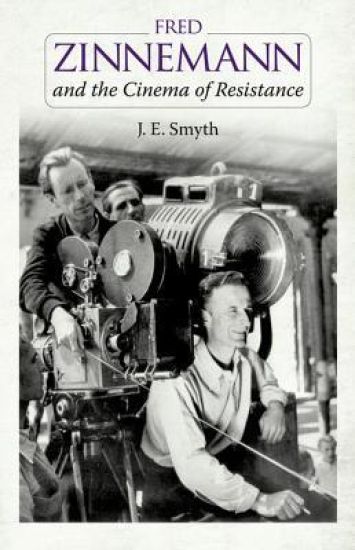
Fred Zinnemann directed some of the most acclaimed and controversial films of the twentieth century, yet he has been a shadowy presence in Hollywood history. In Fred Zinnemann and the Cinema of Resistance, J. E. Smyth reveals the intellectual passion behind some of the most powerful films ever made about the rise and resistance to fascism and the legacy of the Second World War, from The Seventh Cross and The Search to High Noon, From Here to Eternity, and Julia. Smyth's book is the first to draw upon Zinnemann's extensive papers at the Academy of Motion Picture Arts and Sciences and brings Fred Zinnemann's vision, voice, and film practice to life. In his engagement with the defining historical struggles of the twentieth century, Zinnemann fought his own battles with the Hollywood studio system, the critics, and a public bent on forgetting. Zinnemann's films explore the role of women and communists in the antifascist resistance, the West's support of Franco after the Spanish Civil War, and the darker side of America's national heritage. Smyth reconstructs a complex and conflicted portrait of Zinnemann's cinema of resistance, examining his sketches, script annotations, editing and production notes, and personal letters. Illustrated with seventy black-and-white images from Zinnemann's collection, Fred Zinnemann and the Cinema of Resistance discusses the director's professional and personal relationships with Spencer Tracy, Montgomery Clift, Audrey Hepburn, Vanessa Redgrave, and Gary Cooper; the critical reaction to his revisionist Western, High Noon; his battles over the censorship of From Here to Eternity, The Nun's Story, and Behold a Pale Horse; his unrealized history of the communist Revolution in China, Man's Fate; and the controversial study of political assassination, The Day of the Jackal. In this intense, richly textured narrative, Smyth enters the mind of one of Hollywood's master directors, redefining our knowledge of his artistic vision and practice.
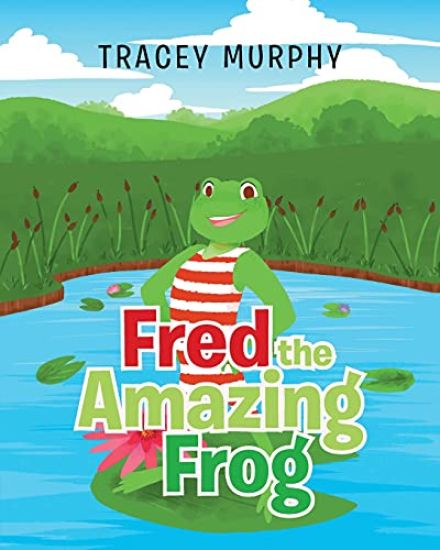
Fred is a superstar. Every day he puts on a show for all the frogs in Lily Pond.He does tricks that no other frog would even think of trying. Fred is amazing Come read along and find out what tricks Fred does and what surprise he has for a lucky little frog each day in Lily Pond.