On the morning of her thirtieth birthday, ex-con-turned-paparazza Nina Zero scales the Malibu hillside above the estate of a reclusive film star who hasn't been seen in a decade. Within the next few hours, a mysterious gunman shoots her, a deadly brushfire almost smokes her, an arson investigator accuses her, and a toothless Rottweiler adopts her as his new best friend. Accompanied by the toothless Rott, Zero goes on the hunt, compelled to prove that someone else set fire to the star's estate to keep the cops from jailing her for arson and -- when charred bones are discovered in the ashes -- murder. The killers are equally interested in finding her, and their desperation escalates to a bone-chilling series of violent encounters in which Nina plays hunter one moment and prey the next.
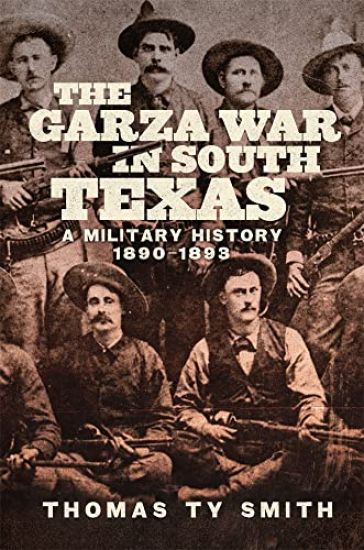
South Texas and northern Mexico formed a seedbed of revolt in the late nineteenth century. In the 1890s, two decades after he had launched his own successful revolution from South Texas, Mexican president Porfirio DÍaz faced a cross-border insurgency intent on toppling his government. The Garza War, so named for the revolutionary firebrand and editor Catarino Erasmo Garza, actually comprised three concerted Texas-based attempts to overthrow DÍaz: a June 1890 raid led by Francisco Ruiz Sandoval, the Garza Raid of September 1891, and the San Ignacio Raid of December 1892. In the first detailed military history of the Garza War, Thomas Ty Smith reveals how an armed insurrection against a foreign government, conducted on American soil, drew the US Army into a uniquely complex conflict whose repercussions would be felt on both sides of the US-Mexico border for generations to come. Though not intended as a direct threat to the United States, the insurgency, in using Texas as a staging area, threatened US neutrality laws, forcing the United States to honor its treaty obligations to the Porfirio DÍaz government in Mexico City—a proposition further complicated by the Posse Comitatus Act of 1878, which prevented soldiers from acting as law enforcement. Smith describes how what began as a measured and somewhat limited effort by the United States to enforce the Neutrality Act in Texas eventually escalated into an all-out shooting war between the army and the Garzistas, elevating the counterinsurgency campaign into the highest military, diplomatic, and political echelons of both America and Mexico.The Garza War in South Texas profiles central characters in the conflict—such as Captain John Gregory Bourke, famed for his service with Major General George Crook in the Indian Wars; the biracial, bilingual Shely brothers, former Texas Rangers who ran the army’s secret spy network; and Francisco Benavides, aka El Tuerto (One-Eye), leader of the 1892 raid that resulted in the brutal slaughter and burning of a Mexican federal cavalry outpost across the river from San Ygnacio, Texas. These revolutionaries provided a cornerstone ideology, and a historic legacy, for the Mexican Revolution two decades later.
South Texas and northern Mexico formed a seedbed of revolt in the late nineteenth century. In the 1890s, two decades after he had launched his own successful revolution from South Texas, Mexican president Porfirio DÍaz faced a cross-border insurgency intent on toppling his government. The Garza War, so named for the revolutionary firebrand and editor Catarino Erasmo Garza, actually comprised three concerted Texas-based attempts to overthrow DÍaz: a June 1890 raid led by Francisco Ruiz Sandoval, the Garza Raid of September 1891, and the San Ignacio Raid of December 1892. In the first detailed military history of the Garza War, Thomas Ty Smith reveals how an armed insurrection against a foreign government, conducted on American soil, drew the US Army into a uniquely complex conflict whose repercussions would be felt on both sides of the US-Mexico border for generations to come. Though not intended as a direct threat to the United States, the insurgency, in using Texas as a staging area, threatened US neutrality laws, forcing the United States to honor its treaty obligations to the Porfirio DÍaz government in Mexico City—a proposition further complicated by the Posse Comitatus Act of 1878, which prevented soldiers from acting as law enforcement. Smith describes how what began as a measured and somewhat limited effort by the United States to enforce the Neutrality Act in Texas eventually escalated into an all-out shooting war between the army and the Garzistas, elevating the counterinsurgency campaign into the highest military, diplomatic, and political echelons of both America and Mexico. The Garza War in South Texas profiles central characters in the conflict—such as Captain John Gregory Bourke, famed for his service with Major General George Crook in the Indian Wars; the biracial, bilingual Shely brothers, former Texas Rangers who ran the army’s secret spy network; and Francisco Benavides, aka El Tuerto (One-Eye), leader of the 1892 raid that resulted in the brutal slaughter and burning of a Mexican federal cavalry outpost across the river from San Ygnacio, Texas. These revolutionaries provided a cornerstone ideology, and a historic legacy, for the Mexican Revolution two decades later.
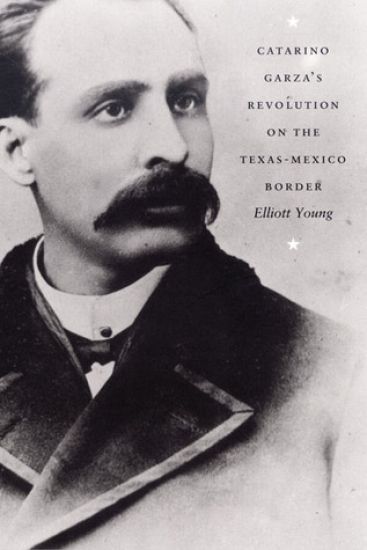
Catarino Garza’s Revolution on the Texas-Mexico Border rescues an understudied episode from the footnotes of history. On September 15, 1891, Garza, a Mexican journalist and political activist, led a band of Mexican rebels out of South Texas and across the Rio Grande, declaring a revolution against Mexico’s dictator, Porfirio Díaz. Made up of a broad cross-border alliance of ranchers, merchants, peasants, and disgruntled military men, Garza’s revolution was the largest and longest lasting threat to the Díaz regime up to that point. After two years of sporadic fighting, the combined efforts of the U.S. and Mexican armies, Texas Rangers, and local police finally succeeded in crushing the rebellion. Garza went into exile and was killed in Panama in 1895. Elliott Young provides the first full-length analysis of the revolt and its significance, arguing that Garza’s rebellion is an important and telling chapter in the formation of the border between Mexico and the United States and in the histories of both countries. Throughout the nineteenth century, the borderlands were a relatively coherent region. Young analyzes archival materials, newspapers, travel accounts, and autobiographies from both countries to show that Garza’s revolution was more than just an effort to overthrow Díaz. It was part of the long struggle of borderlands people to maintain their autonomy in the face of two powerful and encroaching nation-states and of Mexicans in particular to protect themselves from being economically and socially displaced by Anglo Americans. By critically examining the different perspectives of military officers, journalists, diplomats, and the Garzistas themselves, Young exposes how nationalism and its preeminent symbol, the border, were manufactured and resisted along the Rio Grande.
Catarino Garza’s Revolution on the Texas-Mexico Border rescues an understudied episode from the footnotes of history. On September 15, 1891, Garza, a Mexican journalist and political activist, led a band of Mexican rebels out of South Texas and across the Rio Grande, declaring a revolution against Mexico’s dictator, Porfirio Díaz. Made up of a broad cross-border alliance of ranchers, merchants, peasants, and disgruntled military men, Garza’s revolution was the largest and longest lasting threat to the Díaz regime up to that point. After two years of sporadic fighting, the combined efforts of the U.S. and Mexican armies, Texas Rangers, and local police finally succeeded in crushing the rebellion. Garza went into exile and was killed in Panama in 1895. Elliott Young provides the first full-length analysis of the revolt and its significance, arguing that Garza’s rebellion is an important and telling chapter in the formation of the border between Mexico and the United States and in the histories of both countries. Throughout the nineteenth century, the borderlands were a relatively coherent region. Young analyzes archival materials, newspapers, travel accounts, and autobiographies from both countries to show that Garza’s revolution was more than just an effort to overthrow Díaz. It was part of the long struggle of borderlands people to maintain their autonomy in the face of two powerful and encroaching nation-states and of Mexicans in particular to protect themselves from being economically and socially displaced by Anglo Americans. By critically examining the different perspectives of military officers, journalists, diplomats, and the Garzistas themselves, Young exposes how nationalism and its preeminent symbol, the border, were manufactured and resisted along the Rio Grande.
This collection explores how the body became a touchstone for late antique religious practice and imagination. When we read the stories and testimonies of late ancient Christians, what different types of bodies stand before us? How do we understand the range of bodily experiences—solitary and social, private and public—that clothed ancient Christians? How can bodily experience help us explore matters of gender, religious identity, class, and ethnicity? The Garb of Being investigates these questions through stories from the Eastern Christian world of antiquity: monks and martyrs, families and congregations, and textual bodies. Contributors include S. Abrams Rebillard, T. Arentzen, S. P. Brock, R. S. Falcasantos , C. M. Furey, S. H. Griffith, R. Krawiec, B. McNary-Zak, J.-N. Mellon Saint-Laurent, C. T. Schroeder, A. P. Urbano, F. M. Young
The ARDAA series is designed and published for Somali speaking/learning children. The books in this series are written by different writers. The stories within ARDAA are fictional, some are folktales and others are origianl works. The writers of ARDAA have one thing in common - the love for Somali language, traditions and customs. In this story, there are ethical messages embedded for the children and learners to unfold. It is also beautifully told and illustrated.
This is a guide to a visit to the Garda Lake, taking a drive clockwise from Desenzano and touching in sequence the towns of Salo, Gardone Riviera, Toscolano Maderno, Gargnano, Tignale, Tremosine, Limone sul Garda, Riva del Garda, Torbole, Malcesine, Brenzone, Torri del Benaco, Bardolino, Garda, Lazise, Pechiera del Garda and Sirmione. There are extensive descriptions and photos of the attractions. It contains many reviews for the best recommended restaurants that are at the location described, you have the basic information ready: the name, address and telephone number are included in the guide together with the review.
Does your little one love spending time with the family at the lake? Then they will love this delightful book filled with activities related to water-side vacations. The Lake Fun Book includes coloring pages with everything from the animals you'd find at the lake to the tents you sleep in. Puzzles and word finds create fun and educational activities, for both you and your child, throughout this enjoyable book. As a bonus, this book would serve as a good resource for the times at the lake when the weather isn't suitable to be outdoors. Pick up this charming activity book for your youngster today Are you constantly looking for activities to keep your young one busy during those bad weather times at the lake? Are they tired of sitting in the tent with nothing to do? Then the Lake Fun Book is the book for you Filled with lake related coloring pages, challenging word finds and educational puzzles this book will keep your littlest child busy for hours. In addition, the lake related theme throughout will get your youngster excited about all the things the lake has to offer when the weather clears. Pick up your copy of this charming activity book today and be prepared for that next rainy day at the lake -DISCOVER:: FUN on the lake. This body of water is a true gem. Now you can work your way through the majestic shores that make this lake so special. Fun for all ages. Share the gift of Lake Fun with someone you love today. ***Limited Time Discount Offer *** ***Regular Price $12.99*** - -***Plus, As a Special Thank-you for buying this Book Today, You Will Receive FREE puzzles and games inside the book*** - -Do you want to see a side of the lake a child rarely gets to see? Do you or a child you love need to express their creative side while enjoying a fun cultural experience? Read on to find out more about how this book can solve your problem... Buy:: The one and only Lake Fun Coloring Book Here's a preview of what you'll find inside this book: - -Fisherman First Aid Kit Tent Sleeping Bag Beach Towell Fish Net Flippers Boat Paddle Hat Visor Swim Trunks Bikini Radio Playing Music Life jacket Rafts Knee Board Tubes Friends Fire Wood Camp Fire Grill Sun Screen Lotion Money Drinks Goggles Wake board Ski Rope Anchor Bug repellent Beach Chairs Binoculars Book Playing Cards Cooler Coozie Camera Snacks Tackle Box Fishing Rod Worms Cricket Water Shoes Skipping Rocks Water bottle Floaties Swim Noodle Dry Clothes Phone Trash Bag Toilet Paper Paper Towels Watermelon Lantern Flash light Boat light Ski rope Bobber Fishing Hook Catfish Bluegill Turtle Minnow Crickett Water Snake Duck Pelican Seagull Frog Large Mouth Bass Small Mouth Bass Trout Laptop Computer Tablet Swim Cap Nose plug Fish food Bag of ice Dog Pop sickle Marshmallows Chocolate Graham crackers Smores Canoe Kayak Paddlebaord Flip flops Lake Map Swim Noodle And much, much more Want to Know More? Scroll to the top of the page and select the "BUY" button for instant purchase. Buy Your Copy Right Now
Hay nombres inextinguibles, qui n no ha o do hablar de Greta Garbo? Fue la estrella m s refulgente en el Hollywood del cine silente y cl sico, siempre con un halo de misterio y se retir con solo 35 a os, luego de actuar en 28 filmes, pero su recuerdo qued por siempre entre los cin filos. "Greta Garbo, la mujer que m s am ", el libro que Armando Mu oz nos entrega, es una versi n novelada de la parte menos visible de la actriz, a trav s del mon logo de Mercedes De Acosta, con quien sostuvo un t rrido romance y amistad por 30 a os. Debemos recordar que en los a os 30 y 40, el lesbianismo era despreciado y condenado al ostracismo, y estas mujeres ten an que ocultar sus m nimos movimientos. Mercedes De Acosta, nacida en 1893, de padre cubano y madre espa ola, fue una dramaturga, poeta y novelista, no demasiado exitosa, pero pas a la historia por sus muchos affaires l sbicos con figuras notables del mundo de Broadway y Hollywood, incluyendo Marlene Dietrich e Isadora Duncan. Dec a Mercedes, "No hay mujeres imposibles, s lo mujeres dif ciles". Fue por la t rrida e inestable relaci n de Mercedes con Greta Garbo, por la que es m s recordada. Le presentaron a Greta en 1931, y r pidamente se desarroll un err tico romance. En 1960, Mercedes public sus memorias, "Here Lies the Heart". Acuciada por problemas econ micos y de salud. Muchas de las figuras retratadas en este libro rechazaron su veracidad, al ser se aladas en el libro y por ser un tab en la poca. En "Greta Garbo, la mujer que m s am ", Armando Mu oz nos introduce con finos detalles y una prosa impecable, a la compleja personalidad de Mercedes De Acosta, sus obsesiones, la mayor de ellas Greta. Es una narraci n apasionante y reveladora, que el autor logra con gran estilo, entre la infinidad de libros que nos asolan en nuestro mundo moderno, es uno que merece leer. Ismael Lorenzo
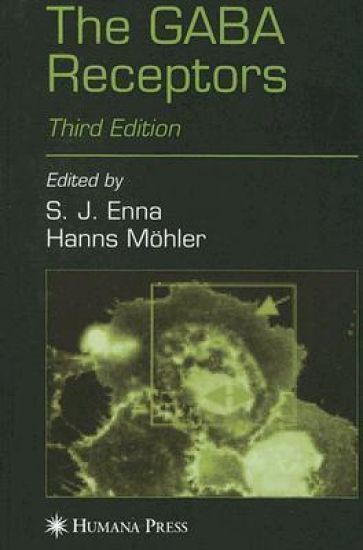
This volume is the third edition of a monograph series that was first published in 1983. The demand for this work is a testament to the impact of studies on -aminobutyric acid (GABA) receptors on the basic understanding of synaptic transmission and on defining the clinical importance of the neurotransmitter system. Chronicled in The GABA Receptors, Third Edition, are the advances made in understanding the molecular and pharmacological properties of GABA A and GABA receptors since the topic was last reviewed in 1996. Particular B emphasis is placed on describing the assembly, structure, and function of GABA B sites, the first heterodimeric G protein-coupled receptors identified in vivo. In addition, there are reports dealing with the subunit composition, trafficking, and pharmacological selectivity of GABA receptors. Aside from providing A insights into the fundamental properties of ligand-gated ion channels and second messenger systems, the findings detailed in this work point the way for developing novel therapeutics capable of more selectively manipulating these transmitter sites.
This volume is the third edition of a monograph series that was first published in 1983. The demand for this work is a testament to the impact of studies on -aminobutyric acid (GABA) receptors on the basic understanding of synaptic transmission and on defining the clinical importance of the neurotransmitter system. Chronicled in The GABA Receptors, Third Edition, are the advances made in understanding the molecular and pharmacological properties of GABA A and GABA receptors since the topic was last reviewed in 1996. Particular B emphasis is placed on describing the assembly, structure, and function of GABA B sites, the first heterodimeric G protein-coupled receptors identified in vivo. In addition, there are reports dealing with the subunit composition, trafficking, and pharmacological selectivity of GABA receptors. Aside from providing A insights into the fundamental properties of ligand-gated ion channels and second messenger systems, the findings detailed in this work point the way for developing novel therapeutics capable of more selectively manipulating these transmitter sites.
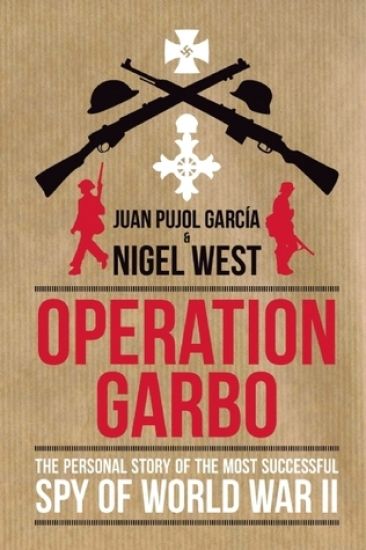
Garbo was the British codename of Joan Puyol Garcia, perhaps the most influential spy of the Second World War. By feeding false information to the Germans on the eve of the D-Day landings he ensured Hitler held troops back that might otherwise have defeated the Normandy landings. This allowed the Allied push against the Nazis in Europe to begin. Amazingly, Garbo's cover was never broken and he remains the only person ever to have been awarded both the British MBE and the German Iron Cross. After the war Garbo faked his own death and fled to Venezuela with a mistress, where he later opened a book store. Ironically, his family in Spain only found out he was still alive when this book was published, Garbo having failed to realise it would also be translated into Spanish. The best collection of military, espionage, and adventure stories ever told. The Dialogue Espionage Classics series began in 2010 with the purpose of bringing back classic out-of-print spying and espionage tales. From WWI and WWII to the Cold War, D-Day to the SOE, Bletchley Park to the Comet Line this fascinating spy history series brings you the best stories that should never be forgotten.
Let Marco Polo Lake Garda guide you around this beautiful Italian lake. Explore Lake Garda with this handy, pocket-sized, authoritative guide, packed with Insider Tips. Discover boutique hotels, authentic restaurants, the island’s trendiest places, and get tips on shopping and what to do on a limited budget. There are also lots of ideas for travel with kids. Let Marco Polo show you all that Lake Garda has to offer. Inside this guide you will find: Insider Tips – we show you the hidden gems and little-known secrets that offer a real insight into this the region from tasting the most magnificent ice cream to experiencing the lake from a historic fishing boat and exploring an almost deserted medieval village on the north shoreBest of – find the best things to do if you’re travelling on a budget, the best things to do with the kids, the best things to do if it rains and the best things to do if you’re looking for an authentic Lake Garda experienceSightseeing – all the top sights are organised by area, so you can easily plan your trip Discovery Tours – specially tailored tours will get you to the heart of Lake Garda. Experience the unique character of the lake with these personal tours Lake Garda in full-colour – Marco Polo Pocket Guide Lake Garda includes full-colour photos throughout the guide bringing the lake to life offering you a real taste of what you can see and enjoy on your tripGet in the holiday mood – before even leaving home, get in to the holiday mood with Marco Polo’s spotify playlist featuring songs related to the travel destination along with the best apps, blogs, film and book recommendationsUseful Italian phrases - the essential words and phrases are included to help you get by Pull-out map – we’ve included a handy, pull-out map so you can pop the guide in your bag for a full-on sightseeing day or head out with just the map to enjoy your Discovery Tour Enjoy a cappuccino or 'spritz' in a café by the lake, stroll around ancient Roman sites, eat fish under the olive trees or get active windsurfing on the lake, this handy, pocket-size guide will help you discover the best of Lake Garda. Trust Marco Polo Pocket Guide Lake Garda to show you this amazing Italian region. The comprehensive coverage and unique insights will ensure you experience everything that Lake Garda has to offer and more. The special tips, personal insights and unusual experiences will help you make the most of your trip - just arrive and enjoy.