Kirjojen hintavertailu. Mukana 11 535 022 kirjaa ja 12 kauppaa.

Kirjahaku

Etsi kirjoja tekijän nimen, kirjan nimen tai ISBN:n perusteella.

1000 tulosta hakusanalla George Malcolm Stratton

George Palmer Putnam

George Palmer Putnam

Ezra Greenspan

Pennsylvania State University Press
2000
sidottu
George Palmer Putnam (1814–1872) was arguably the most important American publisher of the nineteenth century, a man fully and multiply involved in developments transforming all aspects of literary culture. In this comprehensive cultural biography, Ezra Greenspan offers a wide-ranging account of a rich, productive life lived in print, interrelating Putnam’s life with the life of his family (one of the most remarkable of its time), with the changing patterns of life in New York City and the nation, and with the institutionalization of modern print culture in nineteenth-century America. Putnam’s roles and achievements were many: he established and ran the publishing house of G. P. Putnam’s in New York City; published many of the leading American antebellum writers, male and female, canonical and noncanonical (indeed, was responsible for the first act of American canonization—of Washington Irving); was the leading publisher of art books in his time and launched Putnam's Monthly; led efforts resulting in the institutionalization of the American publishing industry and was the most outspoken promoter of American authorship; led the fight in the United States for international copyright; was the first American publisher to open an overseas (London) branch office; and for a decade was the leading American agent in the international book trade. Putnam’s achievements were not limited to his professional sphere: he was also the founding Superintendent of the Metropolitan Museum of Art, the official publisher to the New York World's Fair of 1853, the Commissioner of the Internal Revenue in New York City during the Civil War, and the organizer of the greatest authors-publishers dinner ever given in nineteenth-century America. Friend and confidant to many of the leading figures of his time, he was not simply a centrally placed publisher but was one of the most centrally placed people of his entire society.This study is based on meticulous archival research into not only Putnam's own papers but into the records of his business, the papers of other family members, and the archives of persons with whom Putnam had contact through business and social networks. In a finely detailed narrative, Greenspan weaves together the story of Putnam's life and that of the development of print culture in nineteenth-century America to offer an ambitious, comprehensive biography of this "representative American publisher."
George Herbert's Christian Narrative

George Herbert's Christian Narrative

Harold Toliver

Pennsylvania State University Press
1993
pokkari
No seventeenth-century poet was more popularly read or imitated than George Herbert, and none represents the lyric implications of the Christian narrative more fully, with the possible exception of Milton. There is therefore a growing perception that George Herbert deserves to be placed more in the mainstream of literary history and that romanticism and modernism are not exclusively post-Milton phenomena. As one of the centers of new historicist interest, The Temple has of late been seated in the context of church controversies, Reformation thought, and the politics of the 1620s. Yet previous studies have been reluctant to widen their focus to locate Herbert within the intellectual movements of the earlier seventeenth century, apart from doctrinal issues and the social idiom that he often uses.Harold Toliver explores the implications for Herbert's lyrics of the Christian narrative—the secular labyrinth and the parables' guiding rope, the conflicts between heart and mind, the agonies of postponement, intervals and abstract totality, the visible church and its calendar, the concept of an ending, and Herbert's adaptation of the sonnet form. To establish Herbert's place among other seventeenth-century writers who make use of the Christian narrative, Toliver provides close readings of several poems and new configurations that reveal the pressure of the narrative whole on lyric moments as well as the bearing of the times on them. Herbert had difficulty salvaging any interest in a university or a secular career once he turned to sacred poetry. He also subordinated all phases of the Bible as a cultural history to the single pattern imposed by the Pauline reduction of the Bible to a single story. As part of Toliver's assessment of Herbert's intellectual landscape and active engagement in alternatives, the treatment polarizes that Pauline method and the Hebrew Bible's anecdotal, political, and social detail.
George Palmer Putnam

George Palmer Putnam

Ezra Greenspan

Pennsylvania State University Press
2000
pokkari
George Palmer Putnam (1814–1872) was arguably the most important American publisher of the nineteenth century, a man fully and multiply involved in developments transforming all aspects of literary culture. In this comprehensive cultural biography, Ezra Greenspan offers a wide-ranging account of a rich, productive life lived in print, interrelating Putnam’s life with the life of his family (one of the most remarkable of its time), with the changing patterns of life in New York City and the nation, and with the institutionalization of modern print culture in nineteenth-century America. Putnam’s roles and achievements were many: he established and ran the publishing house of G. P. Putnam’s in New York City; published many of the leading American antebellum writers, male and female, canonical and noncanonical (indeed, was responsible for the first act of American canonization—of Washington Irving); was the leading publisher of art books in his time and launched Putnam's Monthly; led efforts resulting in the institutionalization of the American publishing industry and was the most outspoken promoter of American authorship; led the fight in the United States for international copyright; was the first American publisher to open an overseas (London) branch office; and for a decade was the leading American agent in the international book trade. Putnam’s achievements were not limited to his professional sphere: he was also the founding Superintendent of the Metropolitan Museum of Art, the official publisher to the New York World's Fair of 1853, the Commissioner of the Internal Revenue in New York City during the Civil War, and the organizer of the greatest authors-publishers dinner ever given in nineteenth-century America. Friend and confidant to many of the leading figures of his time, he was not simply a centrally placed publisher but was one of the most centrally placed people of his entire society.This study is based on meticulous archival research into not only Putnam's own papers but into the records of his business, the papers of other family members, and the archives of persons with whom Putnam had contact through business and social networks. In a finely detailed narrative, Greenspan weaves together the story of Putnam's life and that of the development of print culture in nineteenth-century America to offer an ambitious, comprehensive biography of this "representative American publisher."
George Sand

George Sand

Martine Reid

Pennsylvania State University Press
2018
sidottu
The romantic and rebellious novelist George Sand, born in 1804 as Amantine Lucile Aurore Dupin, remains one of France’s most infamous and beloved literary figures. Thanks to a peerless translation by Gretchen van Slyke, Martine Reid’s acclaimed biography of Sand is now available in English.Drawing on recent French and English biographies of Sand as well as her novels, plays, autobiographical texts, and correspondence, Reid creates the most complete portrait possible of a writer who was both celebrated and vilified. Reid contextualizes Sand within the literature of the nineteenth century, unfolds the meaning and importance of her chosen pen name, and pays careful attention to Sand’s political, artistic, and scientific expressions and interests. The result is a candid, even-handed, and illuminating representation of a remarkable woman in remarkable times.With its clear, flowing language and impeccable scholarship, this Ernest Montusès Award–winning biography of the author of La Petite Fadette and A Winter in Majorca will be of great interest to those specializing in Sand and nineteenth-century literature—and to readers everywhere.
George Bernard Shaw and the Socialist Theatre

George Bernard Shaw and the Socialist Theatre

Tracy C. Davis

Praeger Publishers Inc
1994
nidottu
A biographically based study of George Bernard Shaw and his milieu, this book offers a non-laudatory reading of Shaw's economic practices and theories, augments feminist and postcolonial critiques that preoccupy the study of literary history in the 1990s, and provides a long overdue revisionist reading of Shaw for an undergraduate readership. It traces the theatrical and political influences on Shaw from his earliest days in London; tracks his interest in socialism as an activist and author of tracts, novels, and plays emphasizing certain polemical traits; and follows his career as a major literary figure into the mid-20th century. The overarching themes of theatre and politics are narrated in relation to attempts by Shaw and his contemporaries to identify an audience and aesthetic for socialist theatre. The bibliographic essay that concludes the book is particularly helpful for student readers, who can benefit from a manageably-sized orientation to the mountain of Shavian scholarship.
George F. Kennan's Strategic Thought

George F. Kennan's Strategic Thought

Richard Russell

Praeger Publishers Inc
1999
sidottu
George F. Kennan's strategic thought was instrumental in the formulation of the American grand strategy of containment of the Soviet Union. As Dr. Russell points out, Kennan's strategic thought was forged in the diplomatic practice and scholarship of the time. Russell looks beyond containment, however, to sift through Kennan's work to illuminate the worldview that informed his analysis of international relations and American foreign policy.Kennan's realist worldview contained principles for governing American diplomacy and the use of force to achieve national interests within the bounds set by the international competition for power between nation-states. Kennan's worldview illuminates the continuities of international politics that are often overlooked because of the massive changes in the post-Cold War world. Ironically, Kennan's worldview continues to provide a theoretical footing for guiding American foreign policy after containment. This is an important study for scholars, policymakers, and concerned citizens interested in international relations, American foreign policy, diplomatic history, and strategic studies.
George Washington and the Origins of the American Presidency

George Washington and the Origins of the American Presidency

William D. Pederson; Mark J. Rozell; Frank J. Williams

Praeger Publishers Inc
2000
sidottu
This essay collection is a retrospective analysis of the Washington administration's importance to the understanding of the modern presidency. Contemporary presidential scholarship gives little attention to the enormous impact that Washington's actions had on establishing the presidency. Most contemporary literature starts with 1933 and, although FDR's impact on the development of the modern institution of the presidency is undeniable, Washington's actions in office also established standards for practices that continue to this day.This analysis of the Washington presidency begins with an examination of Washington's leadership and its relevance to the modern presidency. The second group of essays looks at different aspects of presidential powers and the precedents established by the Washington administration. The third section examines Washington's press coverage, looking at the origins of Washington's image and the various myths in the press as well as the president's difficult relations with his contemporary press. A thoughtful and important corrective that will be of interest to scholars, students, and researchers involved with the American presidency and its history.
George Washington

George Washington

Praeger Publishers Inc
2001
sidottu
There have been many serious abuses of presidential power in recent decades, including Watergate, the Iran-Contra scandal, and the Lewinsky affair, subsequently Americans have demonstrated renewed interest in discussing the relationship between character and political leadership. Through an investigation of the life and career of George Washington, often considered the exemplary moral president, the chapters offer a balanced scholarly contribution to this analysis.Fishman, Pederson, Rozell, and their contributors examine the legacy of Washingtons presidency. Leading political scientists and historians describe and evaluate the impact of Washington's leadership on the institution of the presidency and on those who have since occupied the Oval Office. In the contemporary era of almost endless speculation about the role of character in presidential leadership, an analysis of Washington's character and the model he established is especially germane.The chapters provide diverse interpretations of the value of understanding Washington's leadership and the character of the modern presidency. Some of the scholars conclude that Washington indeed laid the foundation for good character and strong leadership in the presidency. Others take a more critical approach and see Washington, like many of his successors, as a fallible human being who possessed both character strengths and weaknesses. The lasting value of this analysis for political scientists, historians, and other students of the American presidency is that it demonstrates the continued vibrant debate over Washington's authentic legacy to the office.
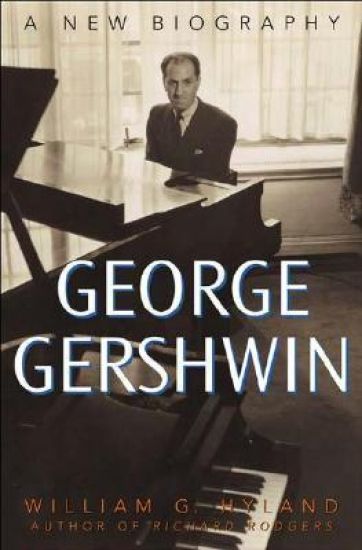
George Gershwin

George Gershwin

William G. Hyland

Praeger Publishers Inc
2003
sidottu
Having retired from a career in government, Hyland has taken to writing about American popular music and here traces the life, personality, and work of composer Gershwin (1898-1937) from his birth in New York City to the impact his music continues to exert. Annotation (c) Book News, Inc., Portland,
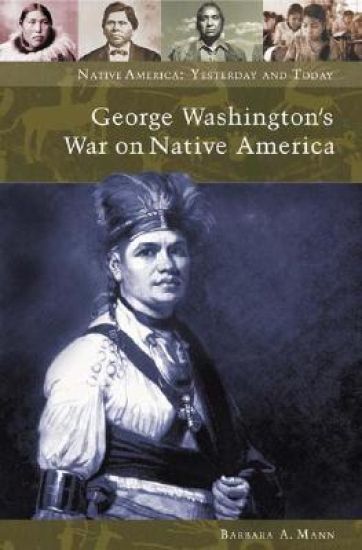
George Washington's War on Native America

George Washington's War on Native America

Barbara Alice Mann

Praeger Publishers Inc
2005
sidottu
The Revolutionary War is ordinarily presented as a conflict exclusively between colonists and the British, fought along the northern Atlantic seacoast. This important work recounts the tragic events on the forgotten Western front of the American Revolution—a war fought against and ultimately won by Native America. The Natives, primarily the Iroquois League and the Ohio Union, are erroneously presented in history texts as allies (or lackeys) of the British, but Native America was working from its own internally generated agenda: to prevent settlers from invading the Old Northwest. Native America won the war in the West, holding the land west and north of the Allegheny-Ohio River systems. While the British may have awarded these lands to the colonists in the Treaty of Paris, the Native Americans did not concur.Throughout the war, the unwavering goal of the Revolutionary Army, under George Washington, and their associated settler militias was to break the power of the Iroquois League, which had successfully held off invasion for the preceding two centuries, and the newly formed Ohio Union. To destroy the Natives in the way of land seizure, Washington authorized a series of rampages intended to destroy the League and the Union by starvation. Food, livestock, homes, and trees were destroyed, first in the New York breadbaskets, then in the Ohio granaries—spreading famine across Native lands. Uncounted thousands of Natives perished from New York to Pennsylvania to Ohio. This book tells how, in the wake of the massive assaults, the Natives held back the American onslaught.
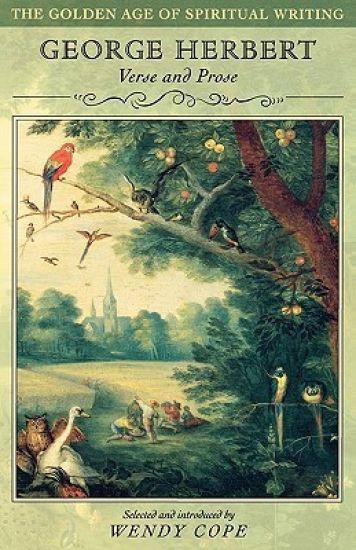
George Herbert

George Herbert

SPCK Publishing
2002
nidottu
George Herbert was a 17th century spiritual writer. This is a selection of his poetry and prose chosen by the poet, Wendy Cope. The volume also contains some biographical detail and historical context.
George W. Brackenridge

George W. Brackenridge

Marilyn Mcadams Sibley

University of Texas Press
1973
nidottu
George W. Brackenridge (1832–1920) was a paradox to his fellow Texans. A Republican in a solidly Democratic state, a financier in a cattleman's country, a Prohibitionist in the goodtime town of San Antonio, he devoted his energies to making a fortune only to give it to philanthropic causes. Indiana born, Brackenridge came to Texas in 1853, but left the state during the Civil War to serve as U.S. Treasury agent and engage in the wartime cotton trade. Later he settled in San Antonio, where he founded a bank and invested in railroads, utilities, and other enterprises. Some of Brackenridge's contemporaries never forgave him for his Civil War career, but others knew him as a public-spirited citizen, educator, and advocate of civil rights. He cared little for what others thought of him. Yet, he confided once in a rare interview that his fondest ambition was to leave the world a better place for his having lived in it. To this end, he gave generously of himself and his means. His best-known benefaction is Brackenridge Park, which he gave to the city of San Antonio, but most of his contributions were in the field of education. As regent of the University of Texas for more than twenty-five years, he gave the institution its first dormitory, a large tract of land in Austin, and innumerable smaller gifts. He also offered to underwrite the expenses of the University when Governor James E. Ferguson vetoed the appropriation bill for 1917–1919. Other educational institutions to benefit from his largess were the public schools of San Antonio, a Negro college in Seguin, and the University of Texas Medical Branch at Galveston. In addition, he assisted individual students, especially women, through scholarships and loans. Believing that the betterment of humanity lay in education, Brackenridge arranged for the continuation of his philanthropies. By his will he created the George W. Brackenridge Foundation, the first of its kind in Texas and one of the first in the United States. Marilyn McAdams Sibley's study of George W. Brackenridge is the first biography of an important and, for his time, unusual Texan. It presents new material concerning the Mexican cotton trade during the Civil War, on the beginnings of banking in Texas, and on higher education in Texas.
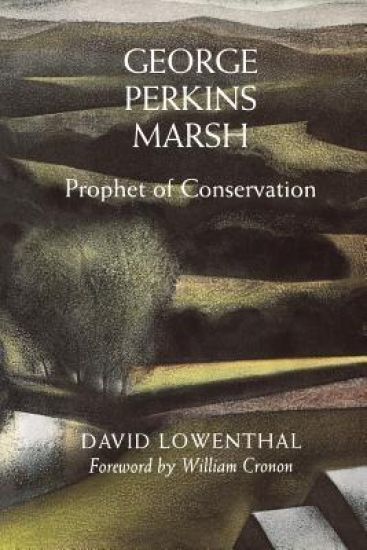
George Perkins Marsh

George Perkins Marsh

David Lowenthal; William Cronon

University of Washington Press
2003
pokkari
George Perkins Marsh (1801–1882) was the first to reveal the menace of environmental misuse, to explain its causes, and to prescribe reforms. David Lowenthal here offers fresh insights, from new sources, into Marsh's career and shows his relevance today, in a book which has its roots in but wholly supersedes Lowenthal's earlier biography George Perkins Marsh: Versatile Vermonter (1958). Marsh's devotion to the repair of nature, to the concerns of working people, to women's rights, and to historical stewardship resonate more than ever. His Vermont birthplace is now a national park chronicling American conservation, and the crusade he launched is now global.Marsh's seminal book Man and Nature is famed for its ecological acumen. The clue to its inception lies in Marsh's many-sided engagement in the life of his time. The broadest scholar of his day, he was an acclaimed linguist, lawyer, congressman, and renowned diplomat who served 25 years as U.S. envoy to Turkey and to Italy. He helped found and guide the Smithsonian Institution, shaped the Washington Monument, penned potent tracts on fisheries and on irrigation, spearheaded public science, art, and architecture. He wrote on camels and corporate corruption, Icelandic grammar and Alpine glaciers. His pungent and provocative letters illuminate life on both sides of the Atlantic.Like Darwin's Origin of Species, Marsh's Man and Nature marked the inception of a truly modern way of looking at the world, of taking care lest we irreversibly degrade the fabric of humanized nature we are bound to manage. Marsh's ominous warnings inspired reforestation, watershed management, soil conservation, and nature protection in his day and ours.George Perkins Marsh: Prophet of Conservation was awarded the Association for American Geographers' 2000 J. B. Jackson Prize. The book was also on the shortlist for the first British Academy Book Prize, awarded in December 2001.
George Perkins Marsh

George Perkins Marsh

David Lowenthal; William Cronon

University of Washington Press
2015
sidottu
George Perkins Marsh (1801–1882) was the first to reveal the menace of environmental misuse, to explain its causes, and to prescribe reforms. David Lowenthal here offers fresh insights, from new sources, into Marsh’s career and shows his relevance today, in a book which has its roots in but wholly supersedes Lowenthal’s earlier biography George Perkins Marsh: Versatile Vermonter (1958). Marsh’s devotion to the repair of nature, to the concerns of working people, to women’s rights, and to historical stewardship resonate more than ever. His Vermont birthplace is now a national park chronicling American conservation, and the crusade he launched is now global.Marsh’s seminal book Man and Nature is famed for its ecological acumen. The clue to its inception lies in Marsh’s many-sided engagement in the life of his time. The broadest scholar of his day, he was an acclaimed linguist, lawyer, congressman, and renowned diplomat who served 25 years as U.S. envoy to Turkey and to Italy. He helped found and guide the Smithsonian Institution, shaped the Washington Monument, penned potent tracts on fisheries and on irrigation, spearheaded public science, art, and architecture. He wrote on camels and corporate corruption, Icelandic grammar and Alpine glaciers. His pungent and provocative letters illuminate life on both sides of the Atlantic.Like Darwin’s Origin of Species, Marsh’s Man and Nature marked the inception of a truly modern way of looking at the world, of taking care lest we irreversibly degrade the fabric of humanized nature we are bound to manage. Marsh’s ominous warnings inspired reforestation, watershed management, soil conservation, and nature protection in his day and ours.George Perkins Marsh: Prophet of Conservation was awarded the Association for American Geographers' 2000 J. B. Jackson Prize. The book was also on the shortlist for the first British Academy Book Prize, awarded in December 2001.
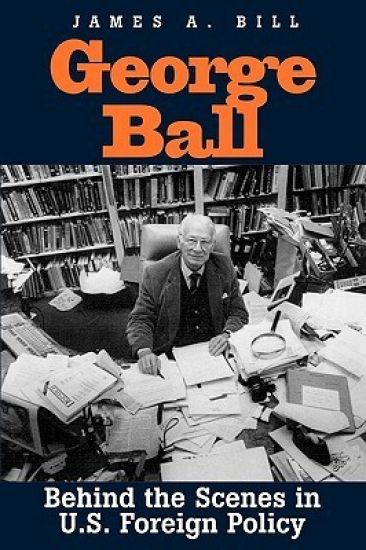
George Ball

George Ball

James A. Bill

Yale University Press
1998
pokkari
Diplomat and "wise man" George Ball wielded enormous influence in American foreign policy for more than forty years. Best known for his dissent from U.S. Vietnam policy when he was under secretary of state during the Kennedy and Johnson administrations, he also helped those administrations formulate policy concerning the European Community, the Congo, the Cuban missile crisis, and Cyprus. His last formal appointment was in 1968 as U.S. Ambassador to the United Nations, but he continued to advise and unofficially assist presidents and members of the American political elite for another twenty-five years, often taking contrary and critical positions on the major issues of the day. In this book James Bill offers fascinating new insights into the inner workings of foreign policy by examining Ball's career and the political problems with which he grappled. Drawing on Ball's personal archive as well as extensive interviews with Ball and with dozens of his associates, Bill traces Ball's involvement with foreign policy. He begins in the 1940s, when Ball was a close associate of Jean Monnet, chief architect of the European Community, and ends with Ball's death in 1994. He also chronicles Ball's forty-year involvement as a founding member of the Bilderberg group, an international clique of powerful European and American leaders. The book stresses a seldom-recognized dimension of the U.S. foreign policymaking process: the importance of the second tier of officialdom, the level just below that of cabinet secretary. And it provides a thoughtful comparison of the realpolitik model of statesmanship practiced by Henry Kissinger and the phronesis practiced by Ball, who was a prudent statesman guided by practical wisdom within a moral framework.
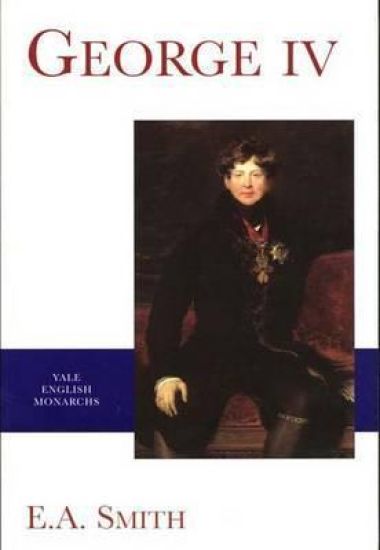
George IV

George IV

E. A. Smith

Yale University Press
2000
pokkari
This engrossing biography of George IV, king of England from 1820 to 1830, gives a full and objective reassessment of the monarch’s character, reputation, and achievement. Previous writers have tended to accept the unfavorable verdicts of the king’s contemporaries that he was a dissolute, pleasure-loving dilettante and a feeble and ineffective ruler who was responsible for the decline of the power and reputation of the monarchy in the early nineteenth century. Now E.A. Smith offers a new view of George IV, one that does not minimize the king’s faults but focuses on the positive qualities of his achievement in politics and in the patronage of the arts.Smith explores the roots of the king’s character and personality, stressing the importance of his relationship with his parents and twelve surviving siblings. He examines the king’s important contributions to the cultural enhancement of his capital and his encouragement of the major artistic, literary, and scholarly figures of his time. He reassesses the king’s role as constitutional monarch, contending that it was he, rather than Victoria and Albert, who created the constitutional monarchy of nineteenth-century Britain and began the revival of its popularity. Smith’s biography not only illuminates the character of one of the most colorful of Britain’s rulers but also contributes to the history of the British monarchy and its role in the nation’s life.
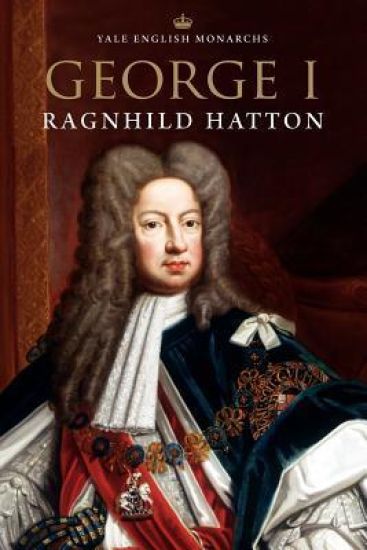
George I

George I

Ragnhild Hatton

Yale University Press
2001
pokkari
In 1714 George Ludwig, the fifty-eight-year-old elector of Brunswick-Luneburg, became, as George I, the first of the Hanoverian dynasty to rule Britain. Until his death in 1727 George served as both elector of Hanover and British monarch. An enigmatic figure whose real character has long been concealed by anti-Hanoverian propaganda, George emerges in this groundbreaking biography as an impressive ruler who welcomed the responsibilities the accession brought him and set out to bring culture to what he considered the unsophisticated English nation.Ragnhild Hatton’s biography is the only comprehensive account of George’s life and reign. It draws on a wide range of archival sources in several languages to illuminate the fascinating details of George’s early life and dynastic crises, his plans and ambitions for the British nation, the impact of his rationalist ideas, and his accomplishments as king. The book also examines the king’s private life, his family relationships in both Prussia and England, his private interest in music and the arts, and the improvement of his British and Hanoverian properties.
George Berkeley in America

George Berkeley in America

Edwin Scott Gaustad

Yale University Press
2005
pokkari
In 1728 George Berkeley, the Irish philosopher and Anglican priest, came to America in the hope of founding a university in Bermuda and converting the Indians. He never reached Bermuda, where within a few years no Indians were left. Instead he settled in Newport, Rhode Island, one of the few places in New England that was hospitable to Anglicans. There his lively mind and sympathetic spirit involved him in a great variety of interests, though he stayed only thirty-three months. “Westward the Course of Empire takes its Way,” Berkeley wrote, and these words inspired Americans both as British colonists and later as citizens of a new nation. Berkeley, in spite of his disappointment over the much-vexed Bermuda project, never flagged in his concern for the spiritual and intellectual life of the New World. The presence of the distinguished churchman gave heart to embattled Anglicans in Puritan New England. Through his close friendship with New Haven’s Samuel Johnson, Berkeley did much to encourage both that faith and the town’s recently founded college. Harvard also benefited from his generosity. But Berkeley’s enduring influence on the cultural life of America is attested all the way from Yale’s Berkeley College to Berkeley, California, the site of another great university.This book is a graceful and authoritative account of an important episode in the life of a major philosopher and influential figure in the religious life of colonial New England.