Kirjojen hintavertailu. Mukana 12 595 353 kirjaa ja 12 kauppaa.

Kirjahaku

Etsi kirjoja tekijän nimen, kirjan nimen tai ISBN:n perusteella.

438 tulosta hakusanalla Hee-Cheon Oh

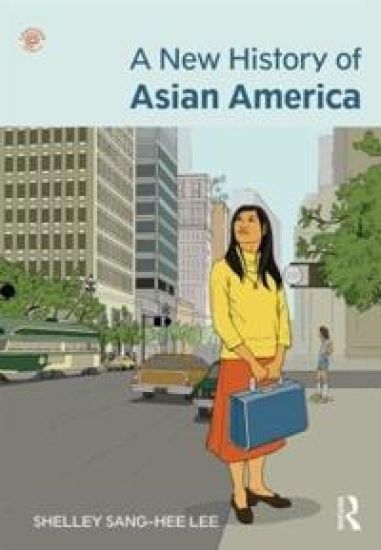
A New History of Asian America

A New History of Asian America

Shelley Sang-Hee Lee

Routledge
2013
nidottu
A New History of Asian America is a fresh and up-to-date history of Asians in the United States from the late eighteenth century to the present. Drawing on current scholarship, Shelley Lee brings forward the many strands of Asian American history, highlighting the distinctive nature of the Asian American experience while placing the narrative in the context of the major trajectories and turning points of U.S. history. Covering the history of Filipinos, Koreans, Asian Indians, and Southeast Indians as well as Chinese and Japanese, the book gives full attention to the diversity within Asian America. A robust companion website features additional resources for students, including primary documents, a timeline, links, videos, and an image gallery.From the building of the transcontinental railroad to the celebrity of Jeremy Lin, people of Asian descent have been involved in and affected by the history of America. A New History of Asian America gives twenty-first-century students a clear, comprehensive, and contemporary introduction to this vital history.
Beyond Multiculturalism in Social Work Practice

Beyond Multiculturalism in Social Work Practice

Song Kui-Hee

University Press of America
2004
pokkari
Drawn from experience, this in-depth case study presents an integrated approach to social work practice with culturally-linguistically diverse clients, to show how theories of postmodernism and multiculturalism can be applied when working with Korean immigrant families. Specifically, author Kui Hee Song examines the clinical change process of a Korean immigrant family that is working with Child Protective Services, seeking to resolve child abuse problems and generate new meaning in the parent-child relationship through therapeutic dialogue. Integrating theory, research, and practice in the culturally linguistic and diverse context of human service fields, Song provides a profound understanding of the empowerment process: a conversational partnership in dialogue that invites the clients to speak their loud, unsaid voices and enhance a personal perception of competency for action and hope.
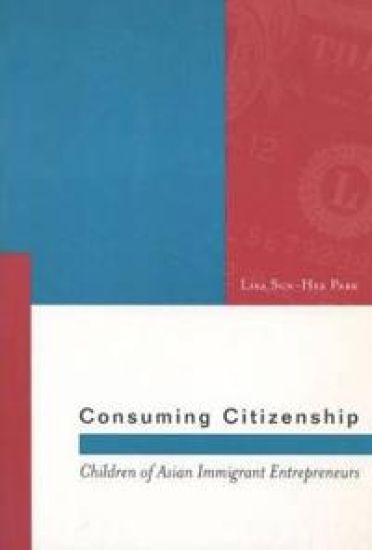
Consuming Citizenship

Consuming Citizenship

Lisa Sun-Hee Park

Stanford University Press
2005
sidottu
Consuming Citizenship investigates how Korean American and Chinese American children of entrepreneurial immigrants demonstrate their social citizenship as Americans through conspicuous consumption. The American immigrant entrepreneur has played a central role in projecting the American ideology of meritocracy and equality. The children of these immigrants are seen as evidence of an open society. While it appears that these children have readily adapted to American culture, questions remain as to why second-generation Asian Americans feel compelled to convince others of their legitimacy and the way they go about asserting their citizenship status. Extending our understanding of such children beyond the traditional emphasis on assimilation, the author argues that their consumptive behavior is a significant expression of their paradoxical position as citizens who straddle the boundaries of social inclusion and exclusion.
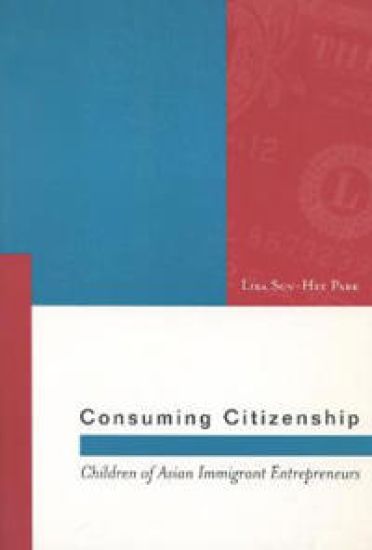
Consuming Citizenship

Consuming Citizenship

Lisa Sun-Hee Park

Stanford University Press
2005
pokkari
Consuming Citizenship investigates how Korean American and Chinese American children of entrepreneurial immigrants demonstrate their social citizenship as Americans through conspicuous consumption. The American immigrant entrepreneur has played a central role in projecting the American ideology of meritocracy and equality. The children of these immigrants are seen as evidence of an open society. While it appears that these children have readily adapted to American culture, questions remain as to why second-generation Asian Americans feel compelled to convince others of their legitimacy and the way they go about asserting their citizenship status. Extending our understanding of such children beyond the traditional emphasis on assimilation, the author argues that their consumptive behavior is a significant expression of their paradoxical position as citizens who straddle the boundaries of social inclusion and exclusion.
Entitled to Nothing

Entitled to Nothing

Lisa Sun-Hee Park

New York University Press
2011
sidottu
In Entitled to Nothing, Lisa Sun-Hee Park investigates how the politics of immigration, health care, and welfare are intertwined. Documenting the formal return of the immigrant as a "public charge," or a burden upon the State, the author shows how the concept has been revived as states adopt punitive policies targeting immigrants of color and require them to "pay back" benefits for which they are legally eligible during a time of intense debate regarding welfare reform. Park argues that the notions of "public charge" and "public burden" were reinvigorated in the 1990s to target immigrant women of reproductive age for deportation and as part of a larger project of "disciplining" immigrants. Drawing on nearly 200 interviews with immigrant organizations, government agencies and safety net providers, as well as careful tracking of policies and media coverage, Park provides vivid, first-person accounts of how struggles over the "public charge" doctrine unfolded on the ground, as well as its consequences for the immigrant community. Ultimately, she shows that the concept of "public charge" continues to lurk in the background, structuring our conception of who can legitimately access public programs and of the moral economy of work and citizenship in the U.S., and makes important policy suggestions for reforming our immigration system.
Entitled to Nothing

Entitled to Nothing

Lisa Sun-Hee Park

New York University Press
2011
pokkari
In Entitled to Nothing, Lisa Sun-Hee Park investigates how the politics of immigration, health care, and welfare are intertwined. Documenting the formal return of the immigrant as a "public charge," or a burden upon the State, the author shows how the concept has been revived as states adopt punitive policies targeting immigrants of color and require them to "pay back" benefits for which they are legally eligible during a time of intense debate regarding welfare reform. Park argues that the notions of "public charge" and "public burden" were reinvigorated in the 1990s to target immigrant women of reproductive age for deportation and as part of a larger project of "disciplining" immigrants. Drawing on nearly 200 interviews with immigrant organizations, government agencies and safety net providers, as well as careful tracking of policies and media coverage, Park provides vivid, first-person accounts of how struggles over the "public charge" doctrine unfolded on the ground, as well as its consequences for the immigrant community. Ultimately, she shows that the concept of "public charge" continues to lurk in the background, structuring our conception of who can legitimately access public programs and of the moral economy of work and citizenship in the U.S., and makes important policy suggestions for reforming our immigration system.
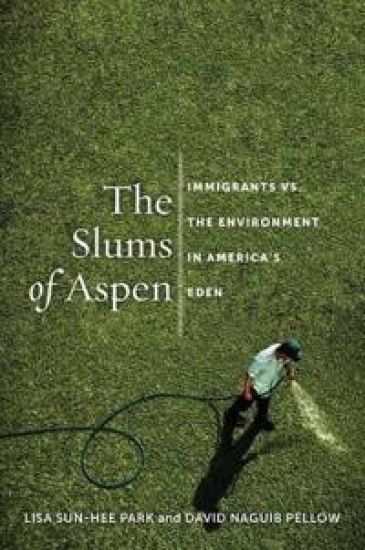
The Slums of Aspen

The Slums of Aspen

Lisa Sun-Hee Park; David Pellow

New York University Press
2011
sidottu
Winner, Allan Schnaiberg Outstanding Publication Award, presented by the Environment & Technology section of the American Sociological Association How the elite ski resort reshaped the socio-economic and demographic landscape in pursuit of profit and pleasure Environmentalism usually calls to mind images of peace and serenity, a oneness with nature, and a shared sense of responsibility. But one town in Colorado, under the guise of environmental protection, passed a resolution limiting immigration, bolstering the privilege of the wealthy and scapegoating Latin American newcomers for the area's current and future ecological problems. This might have escaped attention save for the fact that this wasn't some rinky-dink backwater. It was Aspen, Colorado, playground of the rich and famous and the West's most elite ski town. Tracking the lives of immigrant laborers through several years of exhaustive fieldwork and archival digging, The Slums of Aspen tells a story that brings together some of the most pressing social problems of the day: environmental crises, immigration, and social inequality. Park and Pellow demonstrate how these issues are intertwined in the everyday experiences of people who work and live in this wealthy tourist community. Offering a new understanding of a little known class of the super-elite, of low-wage immigrants (mostly from Latin America) who have become the foundation for service and leisure in this famous resort, and of the recent history of the ski industry, Park and Pellow expose the ways in which Colorado boosters have reshaped the landscape and altered ecosystems in pursuit of profit and pleasure. Of even greater urgency, they frame how environmental degradation and immigration reform have become inextricably linked in many regions of the American West, a dynamic that interferes with the efforts of valorous environmental causes, often turning away from conservation and toward insidious racial privilege.
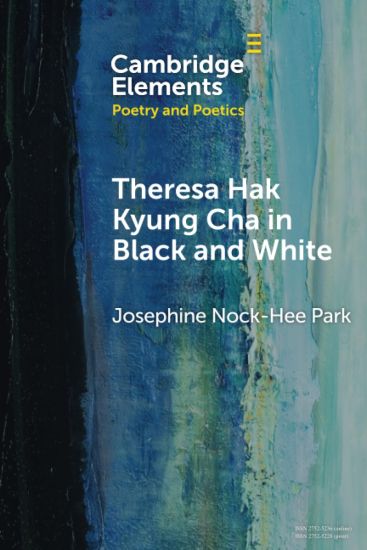
Theresa Hak Kyung Cha in Black and White

Theresa Hak Kyung Cha in Black and White

Josephine Nock-Hee Park

Cambridge University Press
2023
pokkari
Theresa Hak Kyung Cha in Black and White explores the relation between text, author, and reader – a nexus theorized as the 'apparatus' in Cha's study of cinema – by tracing two key literary intertexts in Dictée: Henry James's 'The Jolly Corner,' a submerged literary resonance in Apparatus, Cha's anthology of film theory, and the writing of Saint Thérèse of Lisieux, a primary intertext at the heart of Dictée. In Cha's film theory, black and white is the flicker of the cinematic apparatus, and the Elements readings consider this contrasting palette in self-reflexive portraits in black and white. This study reads flashes of identification, often in punishing self-encounters, and it dwells on the figure of the martyr to arrive at the death of Theresa Hak Kyung Cha, the patron saint of artists and scholars fascinated by her art and her suffering.
A New History of Asian America

A New History of Asian America

Shelley Sang-Hee Lee

TAYLOR FRANCIS LTD
2025
sidottu
The second edition of A New History of Asian America offers an expansive, updated synthesis of the Asian American experience, making it essential reading for those seeking a nuanced understanding of Asian America’s role in shaping contemporary society.Covering Asian American history from early Orientalist conceptions preceding the United States’ founding to the racial reckonings of the 2020s, this work integrates cutting-edge research with enduring historical narratives. Groundbreaking in its approach, the book addresses urgent contemporary issues such as neoliberal multiculturalism, intensified immigration enforcement, and anti-Asian violence, alongside deepened analysis of class, gender, and transnational dynamics. Prominent case studies include post-9/11 racial profiling of Arabs and South Asians, activism during the George Floyd protests, and anti-Asian violence linked to COVID-19 rhetoric. This edition has been thoroughly revised, incorporating significant developments and scholarly innovations of the last decade, while reframing familiar histories to yield fresh insights into structural violence and diasporic agency. The book remains committed to a central claim: that Asian American history is fundamental to understanding broader American histories of race, power, and resistance.Accessible yet rigorous, this book is a vital resource for students, scholars, librarians, booksellers, and general readers alike.
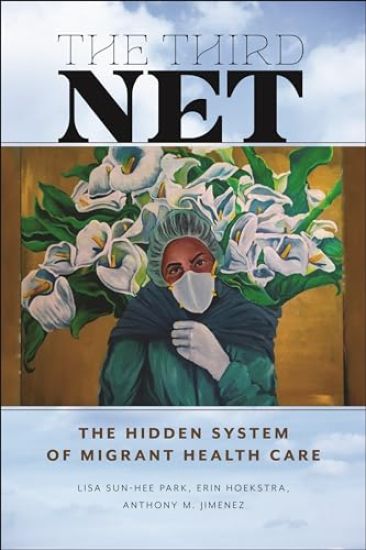
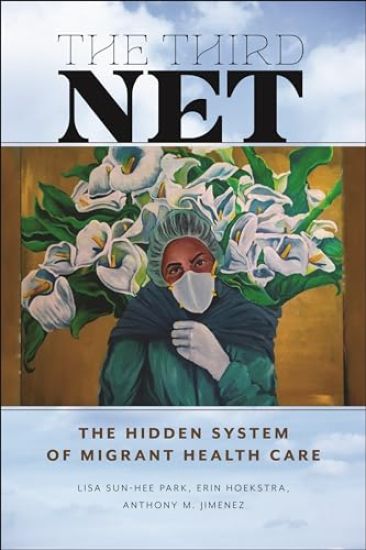
The Third Net

The Third Net

Lisa Sun-Hee Park; Erin Hoekstra; Anthony M. Jimenez

NEW YORK UNIVERSITY PRESS
2024
sidottu
Reveals the presence of an informal system of valuable support and care for marginalized migrants The United States' health care system not only consists of a formal safety net, but also an informal and disjointed network of organizations that offer basic care to millions of migrants. This "Third Net" provides free or low-cost health care for the undocumented, low-income, and uninsured migrants who are excluded from the formal system. This groundbreaking study sheds light on the existence of the Third Net and its implications for the overall inequalities in the US health care system. The Third Net is made up of diverse providers with varying levels of service, organizational culture, and mission. These providers operate in unconventional settings, such as mobile clinics on wheels; pop-up clinics in repurposed spaces; and unlicensed, makeshift clinics run by health activists. Despite their unassuming appearances, these clinics are vital resources for marginalized populations that often go unnoticed by the general public, revealing the shortcomings of our formal health care system. By examining these alternative health care spaces, the authors expose the inequities entrenched in the broader health care system and urge a reevaluation of it entirely in order to address these injustices.
The Third Net

The Third Net

Lisa Sun-Hee Park; Erin Hoekstra; Anthony M. Jimenez

NEW YORK UNIVERSITY PRESS
2024
pokkari
Reveals the presence of an informal system of valuable support and care for marginalized migrants The United States' health care system not only consists of a formal safety net, but also an informal and disjointed network of organizations that offer basic care to millions of migrants. This "Third Net" provides free or low-cost health care for the undocumented, low-income, and uninsured migrants who are excluded from the formal system. This groundbreaking study sheds light on the existence of the Third Net and its implications for the overall inequalities in the US health care system. The Third Net is made up of diverse providers with varying levels of service, organizational culture, and mission. These providers operate in unconventional settings, such as mobile clinics on wheels; pop-up clinics in repurposed spaces; and unlicensed, makeshift clinics run by health activists. Despite their unassuming appearances, these clinics are vital resources for marginalized populations that often go unnoticed by the general public, revealing the shortcomings of our formal health care system. By examining these alternative health care spaces, the authors expose the inequities entrenched in the broader health care system and urge a reevaluation of it entirely in order to address these injustices.
The Slums of Aspen

The Slums of Aspen

Lisa Sun-Hee Park; David Pellow

New York University Press
2013
pokkari
Winner, Allan Schnaiberg Outstanding Publication Award, presented by the Environment & Technology section of the American Sociological Association How the elite ski resort reshaped the socio-economic and demographic landscape in pursuit of profit and pleasure Environmentalism usually calls to mind images of peace and serenity, a oneness with nature, and a shared sense of responsibility. But one town in Colorado, under the guise of environmental protection, passed a resolution limiting immigration, bolstering the privilege of the wealthy and scapegoating Latin American newcomers for the area's current and future ecological problems. This might have escaped attention save for the fact that this wasn't some rinky-dink backwater. It was Aspen, Colorado, playground of the rich and famous and the West's most elite ski town. Tracking the lives of immigrant laborers through several years of exhaustive fieldwork and archival digging, The Slums of Aspen tells a story that brings together some of the most pressing social problems of the day: environmental crises, immigration, and social inequality. Park and Pellow demonstrate how these issues are intertwined in the everyday experiences of people who work and live in this wealthy tourist community. Offering a new understanding of a little known class of the super-elite, of low-wage immigrants (mostly from Latin America) who have become the foundation for service and leisure in this famous resort, and of the recent history of the ski industry, Park and Pellow expose the ways in which Colorado boosters have reshaped the landscape and altered ecosystems in pursuit of profit and pleasure. Of even greater urgency, they frame how environmental degradation and immigration reform have become inextricably linked in many regions of the American West, a dynamic that interferes with the efforts of valorous environmental causes, often turning away from conservation and toward insidious racial privilege.
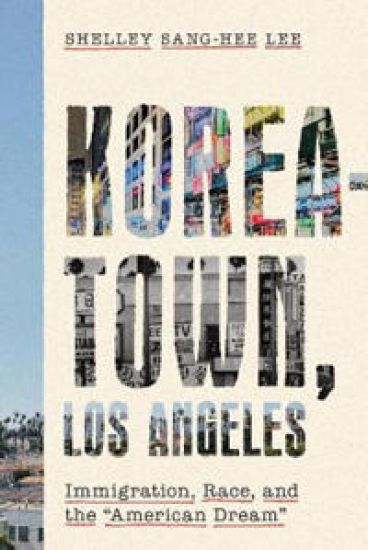
Koreatown, Los Angeles

Koreatown, Los Angeles

Shelley Sang-Hee Lee

STANFORD UNIVERSITY PRESS
2022
sidottu
The story of how one ethnic neighborhood came to signify a shared Korean American identity. At the turn of the twenty-first century, Los Angeles County's Korean population stood at about 186,000—the largest concentration of Koreans outside of Asia. Most of this growth took place following the passage of the Hart-Celler Act of 1965, which dramatically altered US immigration policy and ushered in a new era of mass immigration, particularly from Asia and Latin America. By the 1970s, Korean immigrants were seeking to turn the area around Olympic Boulevard near downtown Los Angeles into a full-fledged "Koreatown," and over the following decades, they continued to build a community in LA. As Korean immigrants seized the opportunity to purchase inexpensive commercial and residential property and transformed the area to serve their community's needs, other minority communities in nearby South LA—notably Black and Latino working-class communities—faced increasing segregation, urban poverty, and displacement. Beginning with the early development of LA's Koreatown and culminating with the 1992 Los Angeles riots and their aftermath, Shelley Sang-Hee Lee demonstrates how Korean Americans' lives were shaped by patterns of racial segregation and urban poverty, and legacies of anti-Asian racism and orientalism. Koreatown, Los Angeles tells the story of an American ethnic community often equated with socioeconomic achievement and assimilation, but whose experiences as racial minorities and immigrant outsiders illuminate key economic and cultural developments in the United States since 1965. Lee argues that building Koreatown was an urgent objective for Korean immigrants and US-born Koreans eager to carve out a spatial niche within Los Angeles to serve as an economic and social anchor for their growing community. More than a dot on a map, Koreatown holds profound emotional significance for Korean immigrants across the nation as a symbol of their shared bonds and place in American society.
Koreatown, Los Angeles

Koreatown, Los Angeles

Shelley Sang-Hee Lee

STANFORD UNIVERSITY PRESS
2022
pokkari
The story of how one ethnic neighborhood came to signify a shared Korean American identity. At the turn of the twenty-first century, Los Angeles County's Korean population stood at about 186,000—the largest concentration of Koreans outside of Asia. Most of this growth took place following the passage of the Hart-Celler Act of 1965, which dramatically altered US immigration policy and ushered in a new era of mass immigration, particularly from Asia and Latin America. By the 1970s, Korean immigrants were seeking to turn the area around Olympic Boulevard near downtown Los Angeles into a full-fledged "Koreatown," and over the following decades, they continued to build a community in LA. As Korean immigrants seized the opportunity to purchase inexpensive commercial and residential property and transformed the area to serve their community's needs, other minority communities in nearby South LA—notably Black and Latino working-class communities—faced increasing segregation, urban poverty, and displacement. Beginning with the early development of LA's Koreatown and culminating with the 1992 Los Angeles riots and their aftermath, Shelley Sang-Hee Lee demonstrates how Korean Americans' lives were shaped by patterns of racial segregation and urban poverty, and legacies of anti-Asian racism and orientalism. Koreatown, Los Angeles tells the story of an American ethnic community often equated with socioeconomic achievement and assimilation, but whose experiences as racial minorities and immigrant outsiders illuminate key economic and cultural developments in the United States since 1965. Lee argues that building Koreatown was an urgent objective for Korean immigrants and US-born Koreans eager to carve out a spatial niche within Los Angeles to serve as an economic and social anchor for their growing community. More than a dot on a map, Koreatown holds profound emotional significance for Korean immigrants across the nation as a symbol of their shared bonds and place in American society.
Hawai'i's Best Local Dishes

Hawai'i's Best Local Dishes

Jean Watanabe Hee

Mutual Publishing
2002
kierre
Easy to make recipes from the Hawaiian Islands featuring local favorites that capture the flavors of Hawaii's cuisines such as Chinese, Japanese, Filipino, Hawaiian, Portuguese, and Southeast Asian, just to name a few.
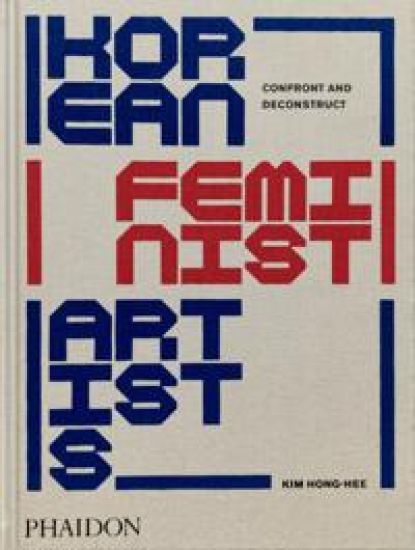
Korean Feminist Artists

Korean Feminist Artists

Kim Hong-hee; Kim Hyesoon

PHAIDON PRESS LTD
2024
sidottu
As featured in Artsy, Hyperallergic, and Artnet Explore the vibrant history and profound cultural resonance of feminist art from Korea and the diaspora Renowned curator and scholar Dr. Kim Hong-hee’s book is the first to delve into Korean feminist artists’ impact on the East Asian cultural landscape. This unprecedented visual survey celebrates the work of 42 contemporary artists, from rising stars to globally recognized names, including Theresa Hak Kyung Cha, Kyungah Ham, Kimsooja, Lee Bul, Mire Lee, Minouk Lim, Haegue Yang, and Yun Suknam. Organized by themes including queer politics, ecofeminism, the diaspora, and abstraction, Korean Feminist Artists features artworks across painting, sculpture, photography, film, video, installation, handicrafts, and performance. Through rich imagery and insightful writing, the book explores the quest of these pioneering artists for social, cultural, and sexual equality, from their confrontations with the mainstream art establishment to the significance of their aesthetic and political interventions. Richly illustrated with nearly 260 beautifully reproduced images and closing with a personal and thought-provoking essay from influential South Korean poet Kim Hyesoon, this vital and timely survey reveals the impact of women artists on Korean culture at large.