Kirjojen hintavertailu. Mukana 12 390 323 kirjaa ja 12 kauppaa.

Kirjahaku

Etsi kirjoja tekijän nimen, kirjan nimen tai ISBN:n perusteella.

1000 tulosta hakusanalla Henry Styron

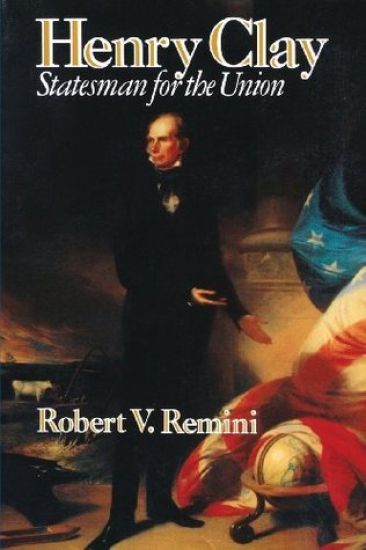
Henry Clay

Henry Clay

Robert V. Remini

WW Norton Co
1994
nidottu
Among the nineteenth-century Americans, few commanded the reverence and respect accorded to Henry Clay of Kentucky. As orator and as Speaker of the House for longer than any man in the century, he wielded great power, a compelling presence in Congress who helped preserve the Union in the antebellum period. Remini portrays both the statesman and the private man, a man whose family life was painfully torn and who burned with ambition for the office he could not reach, the presidency.
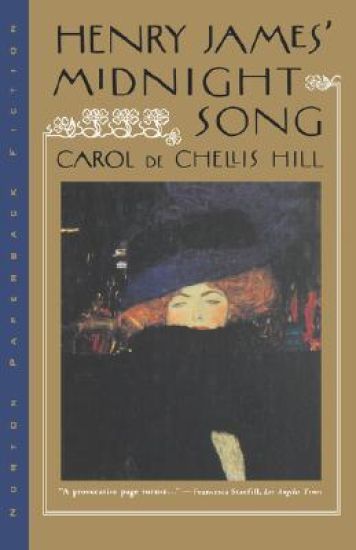
Henry James' Midnight Song

Henry James' Midnight Song

Carol De Chellis Hill

W. W. Norton Company
1995
nidottu
The Setting: Fin de si cle Vienna - a society of almost unprecedented vitality, enlivened by new movements in music, art, fashion, literature, psychology, and love. Yet Vienna is a society on the edge of chaos. Beneath the glittering surface it seethes with conflict and ethnic tension. Divided by anti-Semitism, racism, feminism, sex, and the denial of sex, it is a society remarkably similar to our own. The Plot: The women of Vienna are dying - some by murder, some by suicide. During Dr. Freud's absence in Paris, a body is found in his study but disappears as quickly as it was discovered. Was there really a murder or was it merely hysteria on the part of Freud's wife and sister-in-law? How does this body fit into the recent epidemic of women's mysterious deaths in Vienna? Into the web of deceit, murder, and social upheaval step a variety of real characters, each with something to hide, who become suspects in the case: the distinguished novelist Edith Wharton, who comes to Vienna to engage in a passionate illicit affair; her friend and traveling companion Henry James, who has consulted Freud about his own secret trespasses; Freud's colleagues Dr. Jung and Dr. Fliess; and Jung's patient-lover, Sabina Spielrein. Drawn into the plot as well are the Mains, the family of an American businessman, along with Police Inspector LeBlanc, who arrives from Paris to pursue the strange case amid mounting anti-Semitic desire to lay blame for the murders at the door of Jews. Will the inspector solve the murders before a riot ensues? The Novel: Is fiction, as Henry James says, just the other side of history? Is Vienna in 1900 merely a stage on which the same tensions that haunt American society today are being given a dress rehearsal? Are we, like the Viennese of 1900, suffering from fin de si cle syndrome? Is there such a thing? Combining the historical imagination of Ragtime with the intellectual audacity of Flaubert's Parrot, Henry James' Midnight Song brilliantly blends history and fiction in a fast-moving, breathtakingly original novel of ideas.
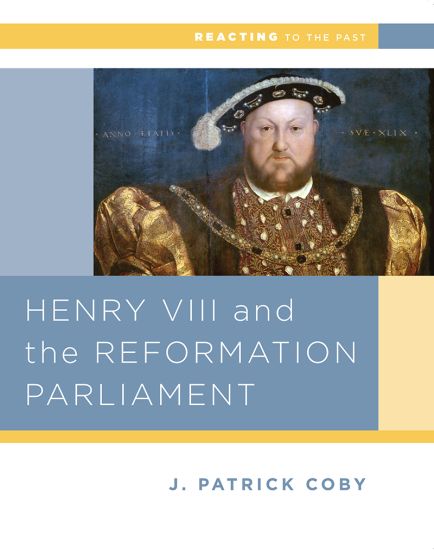
Henry VIII and the Reformation of Parliament

Henry VIII and the Reformation of Parliament

John Patrick Coby

WW Norton Co
2014
nidottu
Cardinal Wolsey has just been dismissed as Lord Chancellor for failing to obtain an annulment of King Henry’s marriage to Catherine of Aragon. Thomas More is named as Wolsey’s replacement. More presides over Parliament, which the king hopes will somehow find the means to invalidate his marriage, thus freeing him to marry his new love, Lady Anne Boleyn. Apart from matters of the heart, matters of state also apply, for Henry has no male heir to carry on the Tudor line, and Queen Catherine has passed her child-bearing years. But will Parliament be content with solving the king’s marital and dynastic problems? For there are some in Parliament who wish to use the royal divorce to disempower the English church, to sever its ties to papal Rome, and to change it doctrinally from Catholicism to Protestantism. Others are against the divorce, against supremacy and independence, and against this heretical creed filtering in from the Continent. More is their leader, for as long as he can survive. Thomas Cromwell leads the king’s party. The king is ambivalent about the reformation unleashed by his "great matter," as the divorce campaign is called, and so the conservatives are free to prosecute reformers as heretics, while the reformers are free to prosecute conservatives as traitors. Victory is up for grabs, because the king’s party is in fact a coalition of three dissimilar factions whose members are further divided by personal ambitions and jealousies. At issue is the clash of four contending ideas: medieval Catholicism, Lutheranism, Renaissance humanism and Machiavellian statecraft.
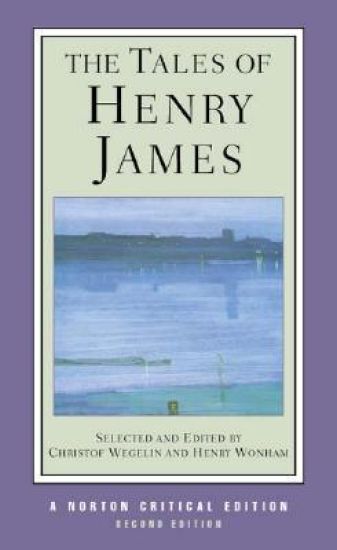
Tales of Henry James

Tales of Henry James

Henry James

WW Norton Co
2003
nidottu
"The Author on His Craft" again reprints James’s critical essay "The Art of Fiction" and related passages from his notebooks, including a new passage on "In the Cage." "Criticism" has been entirely updated and includes ten new essays by critics who during the last twenty-five years have helped to establish the lines of debate about James’s tales. An updated Selected Bibliography is also included.
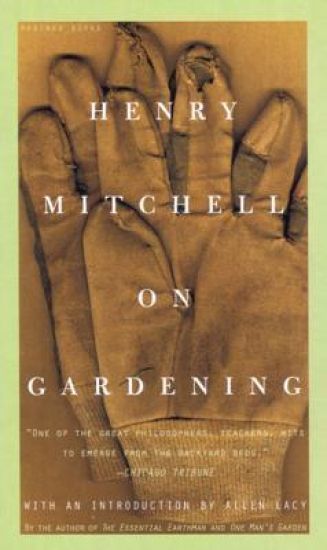
Henry Mitchell on Gardening

Henry Mitchell on Gardening

Henry Mitchell

Houghton Mifflin (Trade)
1999
nidottu
For readers who like gardening (and love the English language), this posthumous collection of Henry Mitchell's Washington Post "Earthman" columns is "equal parts entertainment and shrewd horticultural advice" (Science News). Henry Mitchell is "beloved for his witty, smart, informed, philosophical, wide-ranging and often wickedly humorous columns" (Detroit Free Press).
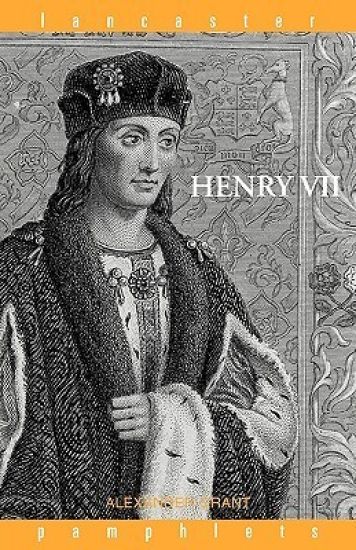
Henry VII

Henry VII

Alexander Grant

Routledge
1985
nidottu
The importance of Henry VII is the subject of heated debate. Did his reign mark the start of a new era, or was its prevailing characteristic continunity with the past? The pamphlet: · emphasizes the lasting political stability established during the reign · demonstrates the difference between Henry's policies and those of the Yorkists · shows how successors built on Henry's legacy · argues that victory at Bosworth in 1485 can be seen as initiating a genunine 'Tudor revolution in government'.
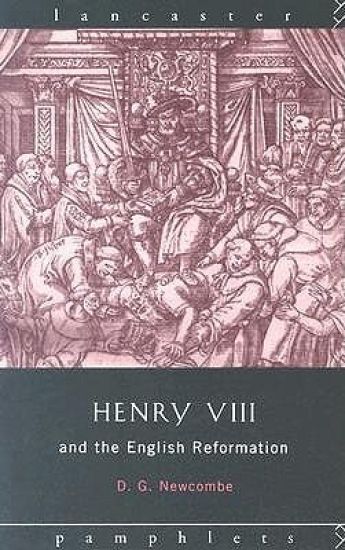
Henry VIII and the English Reformation

Henry VIII and the English Reformation

David G Newcombe

Routledge
1995
nidottu
When Henry VIII died in 1547 he left a church in England that had broken with Rome - but was it Protestant? The English Reformation was quite different in its methods, motivations and results to that taking place on the continent. This book: * examines the influences of continental reform on England * describes the divorce of Henry VIII and the break with Rome * discusses the political and religious consequences of the break with Rome * assesses the success of the Reformation up to 1547 * provides a clear guide to the main strands of historical thought on the topic.
Henry Fielding
The Critical Heritage gathers together a large body of critical sources on major figures in literature. Each volume presents contemporary responses to a writer's work, enabling students and researchers to read the material themselves.
Henry James

Henry James

Routledge
1997
sidottu
This set comprises 40 volumes covering 19th and 20th century European and American authors. These volumes will be available as a complete set, mini boxed sets (by theme) or as individual volumes. This second set complements the first 68 volume set of Critical Heritage published by Routledge in October 1995.
Henry Ford

Henry Ford

Routledge
2002
sidottu
This collection includes evaluations of and responses to the contributions made by Henry Ford and the ways in which his influence helped shape the understanding of management practices.Henry Ford was an eccentric, and occasionally enlightened, thinker and remains a controversial figure today. He developed F.W. Taylor's ideas of scientific management (the subject of another four volume collection in this series), turning them into a whole 'system of production'. Ford's system was characterized by highly efficient, high volume and vertically integrated production, with high wages and low prices. His methods helped make the motor car the defining product of the twentieth century and also ensured his own iconic status.
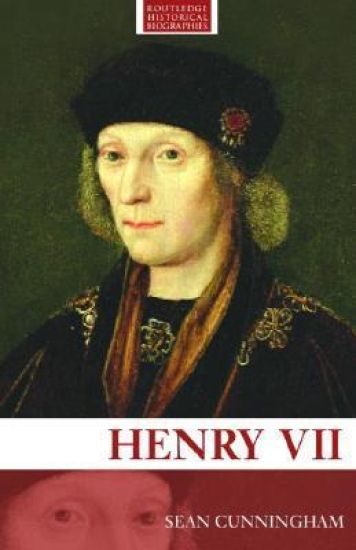
Henry VII

Henry VII

Sean Cunningham

Routledge
2007
sidottu
This biography illuminates the life of Henry VII himself, how he ran his government, how his authority was maintained, and the nature of the country over which he ruled since he first claimed the throne in 1485.Sean Cunningham explores how Henry's reign was vitally important in stabilizing the English monarchy and providing the sound financial and institutional basis for later developments in government, and tackles key questions in the debate:Was Henry VII a conventional late medieval nobleman?How did his upbringing affect his later kingship?What was the nature of Henry's marriage to Elizabeth of York?How and why did he become the main rival to Richard III following the disappearance of Edward V and his brother in July 1483?Up until now the details of Henry as a person and as a king, his court and household, his subjects, and his country have remained little known. This book fills that gap, bringing to the forefront the life and times of the very first Tudor king.
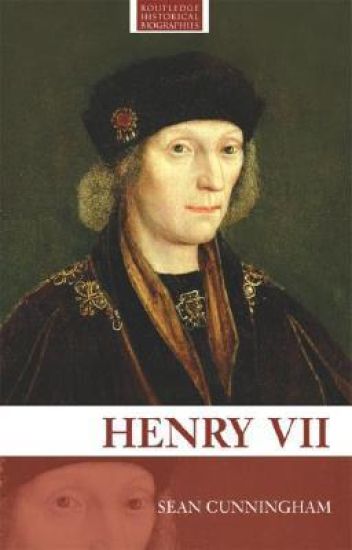
Henry VII

Henry VII

Sean Cunningham

Routledge
2007
nidottu
This biography illuminates the life of Henry VII himself, how he ran his government, how his authority was maintained, and the nature of the country over which he ruled since he first claimed the throne in 1485.Sean Cunningham explores how Henry's reign was vitally important in stabilizing the English monarchy and providing the sound financial and institutional basis for later developments in government, and tackles key questions in the debate:Was Henry VII a conventional late medieval nobleman?How did his upbringing affect his later kingship?What was the nature of Henry's marriage to Elizabeth of York?How and why did he become the main rival to Richard III following the disappearance of Edward V and his brother in July 1483?Up until now the details of Henry as a person and as a king, his court and household, his subjects, and his country have remained little known. This book fills that gap, bringing to the forefront the life and times of the very first Tudor king.
The Writings of Henry Barrow, 1587-1590
Henry Barrow and John Greenwood are the fathers of Elizabethan Separatism. Unlike Robert Browne, they refused to compromise their beliefs or conform to Anglicanism and as a consequence they died in 1593 - as martyrs for their steadfast adherence to the principles of English Congregationalism. Volumes three and four include c. 40 items derived from manuscripts, surreptitiously printed books and very rare pamphlets and documents which allow evaluation of the teachings of the Separatists, in relation to the activities of the Elizabethan hierarchy, to the Puritans, to the Pilgrims in the Netherlands and the New World and to the Independents and Congregationalists. (16 of the pieces are by Barrow, 6 by Greenwood and 5 by both men, in addition to 13 related Barrowist items in the Appendix).
Henry Mintzberg
Henry Mintzberg (b. 1939) is one of the world’s leading thinkers in management and strategic planning. New from Routledge’s Critical Evaluations in Business and Management series, this new four-volume collection brings together the best and most influential critical writing on Mintzberg and his work. The set is supplemented with the editors’ expert introduction, which places the gathered work in its historical and intellectual context.
Henry Miller and Narrative Form

Henry Miller and Narrative Form

James Decker

Routledge
2005
sidottu
In this bold study James M. Decker argues against the commonly held opinion that Henry Miller’s narratives suffer from ‘formlessness’. He instead positions Miller as a stylistic pioneer, whose place must be assured in the American literary canon.From Moloch to Nexus through such widely-read texts as Tropic of Cancer and Tropic of Capricorn, Decker examines what Miller calls his ‘spiral form’, a radically digressive style that shifts wildly between realism and the fantastic. Drawing on a variety of narratological and critical sources, as well as Miller’s own aesthetic theories, he highlights that this fragmented narrative style formed part of a sustained critique of modern spiritual decay. A deliberate move rather than a compositional weakness, then, Miller’s style finds a wide variety of antecedents in the work of such figures as Nietzsche, Rabelais, Joyce, Bergson and Whitman, and is viewed by Decker as an attempt to chart the journey of the self through the modern city.Henry Miller and Narrative Form affords readers new insights into some of the most challenging writings of the twentieth century and provides a template for understanding the significance of an extraordinary and inventive narrative form.
Henry A. Abbati: Keynes' Forgotten Precursor
Henry A. Abbati was not an economist by profession. After retiring from business, in 1924 he published his first book, The Unclaimed Wealth: How Money Stops Production in which he expounded his theory of ‘effective demand’ (terminology of his own) and its differences with respect to current theories on economic fluctuations. He was advocating public intervention in the economy in the crisis. His second book, The Final Buyer marshalled his criticisms of current theories and further clarified salient aspects of his theory, such as ‘saving’ and its various definitions, the working of the banking system, the interest rate and the role of public works as a means of reducing unemployment. Later work in the 30s and 40s looked at full employment, reflections on the economic crisis and further analysis of the concept of unclaimed wealth.In many ways Abbati’s work in the twenties was an important precursor to Keynes’ Treatise on Money, though despite being admired by Robertson and indeed Keynes, his work is today largely unknown and entirely ignored by the numerous authors who have examined the debate of the twenties and thirties on the crises and business cycles and by academic opinion in general. In this book, Di Gaspare restores Abbati’s position as a pioneer in macroeconomic theory with a selection of his writings and a far reaching introduction to his contribution to the history of economic thought.
Henry V

Henry V

John Matusiak

Routledge
2012
sidottu
Henry V of England, the princely hero of Shakespeare’s play, who successfully defeated the French at the Battle of Agincourt and came close to becoming crowned King of France, is one of the best known and most compelling monarchs in English history. This new biography takes a fresh look at his entire life and nine year reign, and gives a balanced view of Henry, who is traditionally seen as a great hero but has been more recently depicted as an obsessive egotist or, worse, a ruthless warlord. The book locates Henry’s style of kingship in the context of the time, and looks at often neglected other figures who influenced and helped him, such as his father and his uncles, Henry and Thomas Beaufort. John Matusiak shows that the situation confronting Henry at the outset of his reign was far more favourable than is often supposed but that he was nonetheless a man of prodigious gifts whose extraordinary achievements in battle left the deepest possible impression upon his contemporaries.
Henry V

Henry V

John Matusiak

Routledge
2012
nidottu
Henry V of England, the princely hero of Shakespeare’s play, who successfully defeated the French at the Battle of Agincourt and came close to becoming crowned King of France, is one of the best known and most compelling monarchs in English history. This new biography takes a fresh look at his entire life and nine year reign, and gives a balanced view of Henry, who is traditionally seen as a great hero but has been more recently depicted as an obsessive egotist or, worse, a ruthless warlord. The book locates Henry’s style of kingship in the context of the time, and looks at often neglected other figures who influenced and helped him, such as his father and his uncles, Henry and Thomas Beaufort. John Matusiak shows that the situation confronting Henry at the outset of his reign was far more favourable than is often supposed but that he was nonetheless a man of prodigious gifts whose extraordinary achievements in battle left the deepest possible impression upon his contemporaries.
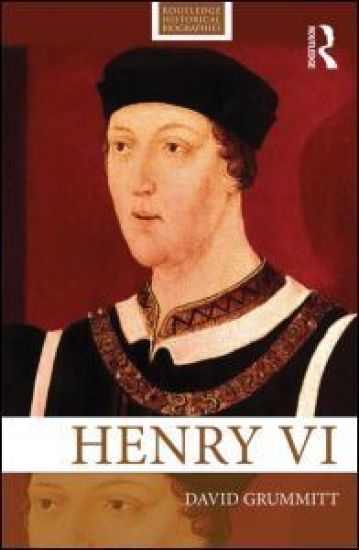
Henry VI

Henry VI

David Grummitt

Routledge
2015
sidottu
In this new assessment of Henry VI, David Grummitt synthesizes a wealth of detailed research into Lancastrian England that has taken place throughout the last three decades to provide a fresh appraisal of the house’s last King. The biography places Henry in the context of Lancastrian political culture and considers how his reign was shaped by the times in which he lived.Henry VI is one of the most controversial of England’s medieval kings. Coming to the throne in 1422 at the age of only nine months and inheriting the crowns of both England and France, he reigned for 39 years before losing his position to the Yorkist king, Edward IV, in the early stages of the Wars of the Roses. Almost a decade later, in 1470, he briefly regained the throne, only for his cause to be decisively defeated in battle the following year, after which Henry himself was almost certainly murdered. Henry continues to perplex and fascinate the modern reader, who struggles to understand how such an obviously ill-suited king could continue to reign for nearly forty years and command such loyalty, even after his cause was lost. From his coronation at nine months old, to the legacy of his reign in the centuries after his death, this is a balanced, detailed and engaging biography of one of England’s most enigmatic kings and will be essential reading for all students of late medieval England, and the Wars of the Roses.