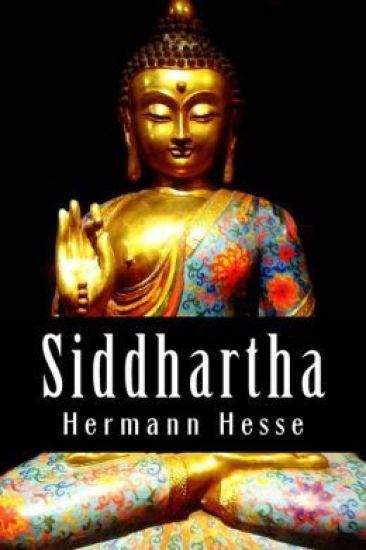
In a very simple prose, Hesse has conveyed a very profound message for all seekers. A brahmin boy follows his heart and goes through various lives to finally understand what it means to be enlightened. He experiences life as a pious brahmin, a Samana, a rich merchant, a lover and an ordinary ferryman, to a father. Neither a practitioner nor a devotee, neither meditating nor reciting, Siddhartha comes to blend in with the world, resonating with the rhythms of nature, bending the reader's ear down to hear answers from the river...
Siddhartha is perhaps the most important and compelling moral allegory our troubled century has produced. Integrating Eastern and Western spiritual traditions with psychoanalysis and philosophy, this strangely simple tale, written with a deep and moving empathy for humanity, has touched the lives of millions since its original publication in 1922.
Siddhartha is perhaps the most important and compelling moral allegory our troubled century has produced. Integrating Eastern and Western spiritual traditions with psychoanalysis and philosophy, this strangely simple tale, written with a deep and moving empathy for humanity, has touched the lives of millions since its original publication in 1922.
Siddhartha by Hermann Hesse follows the spiritual journey of self-discovery of a man named Siddhartha during the time of the Gautama Buddha. The book was originally written in German, in a simple, lyrical style. It was published in the U.S. in 1951 and became influential during the 1960s.The word Siddhartha is made up of two Sanskrit words which together mean "he who has found meaning (of existence)" or "he who has attained his goals".The story takes place in ancient India. Siddhartha, the son of a Brahmin, decides to leave behind his home in the hopes of gaining spiritual illumination by becoming an ascetic wandering beggar of the Samanas. Joined by his best friend Govinda, Siddhartha fasts, becomes homeless, renounces all personal possessions, and intensely meditates, eventually seeking and personally speaking with Gautam, the famous Buddha, or Enlightened One. Afterward, both Siddhartha and Govinda acknowledge the elegance of the Buddha's teachings. Although Govinda hastily joins the Buddha's order, Siddhartha does not follow, claiming that the Buddha's philosophy, though supremely wise, does not account for the necessarily distinct experiences of each person. He argues that the individual seeks an absolutely unique and personal meaning that cannot be presented to him by a teacher; he thus resolves to carry on his quest alone.
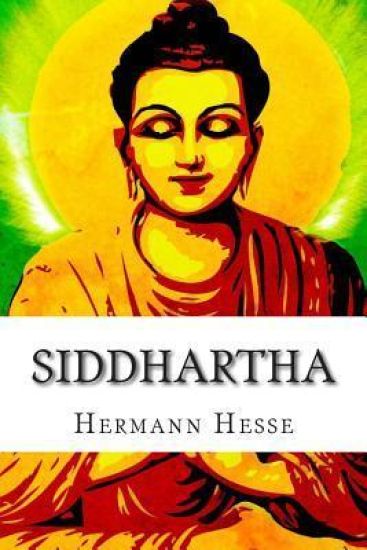
Hand gestures and hand language have been connecting cultures since the beginning of all our known civilizations. They have been part of peace and wars, communication and silence, past-present and future dialogues, affection, love, healing, spiritual connection and much more. You can even take a quick inventory of how many 'hand signals' you utilize in a daily basis on your everyday walk of life. In this book you will learn to connect to Mudras which will assist you to improve clarity, confidence, inner serenity; connect deeper with your intuition, compassion, sense of gratitude and more. Through the energy pathways of the mudras, the energies of healing and transformation are properly directed to the physical, mental and emotional body supporting balance and well-being. And as you dive in the amazing Spiritual Journey of Self-Discovery through the life and teachings of Siddhartha, you will find a sense of home within your own beingness.
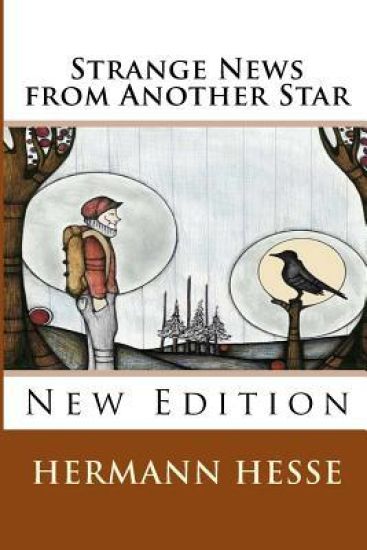
"The war is nobody's fault. It occurs by itself, like thunder and lightning. All of us who must fight wars are not the perpetrators. We are only their victims." "Strange News from Another Star" is a short fairy tale written by Hermann Hesse in April 1915, one year after the start of the 1st World War. In the fairy tale, two stars are juxtaposed. On one star, life is valued, beauty is appreciated, reason is respected, humane traditions are cultivated, love and happiness are experienced and peace prevails. On the other star, jealousy, hatred and despair are cultivated, wars are waged incessantly, battlefield murder is officially condoned, the countryside is left strewn with unattended cadavers and fear prevails. The latter is clearly our world as Hesse saw it, rendered mythical, and the former is an idealized world that ours could be. Unlike his earlier works, the story does not lend itself to rational interpretation. It is essentially a fairy tale dealing with the subconscious, magic and the dream world. The fairy tale represents an intermediate stage between Hesse's initial ambiguous stance to the war, as an internationalist who tolerated war and a pacifist who looked forward to a German victory, and his later active anti-war campaign. The story, which was titled "Merkw rdige Nachricht von einem anderen Stern" in German, was one of several that brought Hesse into conflict with supporters of the war, his country and its government. This print edition contains new translations of Strange News from Another Star, Faldum, Iris, Fine Dream Sequence, A Difficult Path, The Poet and Augustus
Siddhartha is an allegorical novel by Hermann Hesse which deals with the spiritual journey of an Indian boy called Siddhartha during the time of the Buddha. The book, Hesse's ninth novel, was written in German, in a simple, yet powerful and lyrical, style. It was first published in 1922, after Hesse had spent some time in India in the 1910s. It was published in the U.S. in 1951 and became influential during the 1960s. The word Siddhartha is made up of two words in the Sanskrit language, siddha (gotten) + artha (meaning or wealth). The two words together mean "one who has found meaning (of existence)" or "he who has attained his goals". The Buddha's name, before his renunciation, was Prince Siddhartha Gautama, later the Buddha. In this book, the Buddha is referred to as "Gotama".
Siddhartha is a 1922 novel by Hermann Hesse that deals with the spiritual journey of self-discovery of a man named Siddhartha during the time of the Gautama Buddha. The book, Hesse's ninth novel, was written in German, in a simple, lyrical style. It was published in the U.S. in 1951 and became influential during the 1960s. Hesse dedicated Siddhartha to Romain Rolland and Wilhelm Gundert. The word Siddhartha is made up of two words in the Sanskrit language, siddha (achieved) + artha (what was searched for), which together means "he who has found meaning (of existence)" or "he who has attained his goals". In fact, the Buddha's own name, before his renunciation, was Siddhartha Gautama, Prince of Kapilvastu. In this book, the Buddha is referred to as "Gotama".