What do we do when we've failed? J.R. Briggs, founder of the Epic Fail Pastors Conference, explores the landscape of failure, how it devastates us and how it transforms us. Without offering pat answers or quick fixes, he challenges our expectations of success and gives us permission to grieve our losses and receive the grace of healing and restoration.
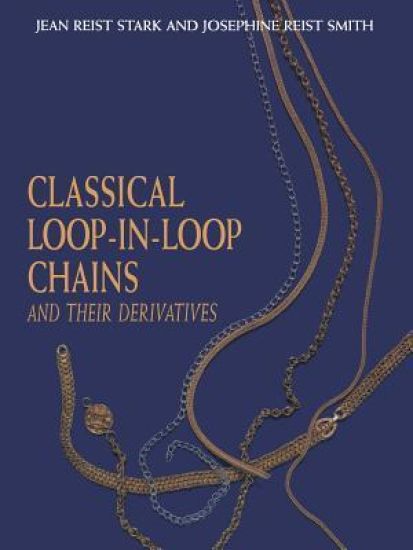
ThiS is not only a book of instruction in chainmaking but it is also a work celebrating man's continuous creativity over thousands of years. At times something that man creates has far-reach ing effects; an example that quickly comes to mind is the wheel, which has enabled many devel opments, from pottery to computers. At this point it is important to note that these same wheels could not have been made without metal tools. From early Neolithic times on gold was a favorite choice in the making of jewelry. During the Neolithic period these "shining stones," probably alluvial, were prized. Actually gold was cold worked as if it were a stone. There is a surviving example of cold-worked gold from Catahuyuk (present day Turkey) estimated to have been made in 6500 B. C. There were only four metals on the earth's surface that were found in sufficient quantity to be used: gold, copper, silver, and meteoric iron. An understanding of the malleability of gold, and of the annealing effect of fire, changed jewelry making; new forms were found. Gold was no longer a piece of stone but a material that could be flattened and made very thin. Sheet and foil are the oldest forms of worked gold. The smiths' tools were stone, wood, and horn.
The Integrated Services Digital Network (ISDN) represents the current position in about a hundred years of evolutionary growth of the worldwide telecommunications infrastructure. This evolution is by no means complete and the next few years will see the emergence of a "Broad-band" ISDN as the next stage of evolutionary development. It is important to appreciate the evolutionary nature of the telecommunications infrastructure if one is to properly understand much of the thinking that lies behind the current ISDN proposals. This book therefore begins with a number of chapters devoted to a study of the various developments which have eventually led to the concept of an integrated digital network. These include the development of digital transmission of speech using PCM and the development of digital switching techniques based on stored program control. The book then turns to a consideration of those features of the existing telecommunications network which need to be modified in order to make ISDN a realizable practicality. Of particular importance is the digitization of transmission over the links between the user and the local exchange. Next we look at the current practice and proposals for ISDN based on the technology presently in use in the telephone network. Finally, we look at the proposals for a broadband ISDN likely to become widely available by the turn of the century.
Functional Ecology of Woodlands is firmly based on the factors which govern the composition of woodland communities, but goes on to explore the dynamics of interactions between various ecosystem components. This is an authoritative text on the functioning of forest ecosystems, which will also assist readers to reach informed decisions about issues such as the greenhouse effect, acid precipitation, the greening of cities and agroforestry.
Functional Ecology of Woodlands is firmly based on the factors which govern the composition of woodland communities, but goes on to explore the dynamics of interactions between various ecosystem components. This is an authoritative text on the functioning of forest ecosystems, which will also assist readers to reach informed decisions about issues such as the greenhouse effect, acid precipitation, the greening of cities and agroforestry.
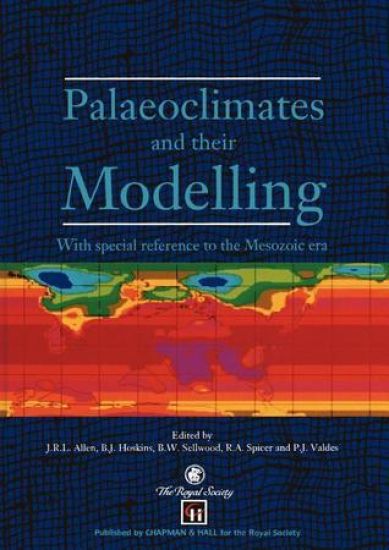
The climate of the Earth has undergone many changes and for those times when geologic data are widespread and abundant the Mesozoic appears to have been one of the warmest intervals. This was a time during which the single continent Pangea disintegrated into continental units similar to those of today, a time when there were no significant polar ice caps and sea level was generally much higher than at the present time, and a time when dinosaurs apparently dominated terrestrial faunas and the flowering plants evolved. Understanding this alien world, ancestral to ours, is intrinsically interesting, intellectually challenging, and offers opportunities for more effective targeting of sites where commercially important geological resources may be found. It also provides critical insights into the operation of coupled Earth systems (biospheric, atmospheric, hydrospheric and geospheric) under extreme 'greenhouse' conditions, and therefore may have relevance to possible future global change. Our intention in organizing this Discussion Meeting was to bring together those who gather and interpret geologic data with those who model global climates from first principles. The community of workers who study the Quaternary have made significant advances by integrating and comparing palaeodata and climate model experiments. Although we have focused not on the Quaternary 'icehouse' but on the Mesozoic 'hothouse' climate we are well aware that approaches used in the study of the Quaternary may have relevance to earlier times.
Life in coastal sand dunes, salt marshes and shingle banks presents a variety of challenges to their inhabitants. By describing the interactions of coastal organisms with the physical processes shaping the granular deposits within and on which they live, the authors illuminate many aspects of adaptation, population dynamics, community ecology, zonation and ecophysiology. A wide range of biological principles and geomorphological features are illustrated and there is lively discussion of the relevant aspects of applied biology, environmental threat and conservation management. Well-chosen examples and case studies have been drawn from coastal systems around the world, particularly those of the British Isles, continental Europe and North America.
The Conceptual Roots of Mathematics is a comprehensive study of the foundation of mathematics. J.R. Lucas, one of the most distinguished Oxford scholars, covers a vast amount of ground in the philosophy of mathematics, showing us that it is actually at the heart of the study of epistemology and metaphysics.
This is Volume XIX of twenty-one in the Cognitive Psychology series. First published in 1956, this study makes a unique contribution to our knowledge of perception. The author takes a representationalist view and disposes of the theory of projected sensations. Adopting Bertrand Russell’s idea of physical and perceptual worlds, proceeds to discuss the possible geometries of their mutual relations. The value of this book is that the author has made available to students of philosophy much new knowledge of the first importance.
Focusing on urban sociology as practised in Britain, the author argues that it is a key element in the response of the 'intellectual proletariat' to urbanization and the calls on it by the State to control the ensuing way of life. The themes of urban sociology have been the concerns of the Welfare State and, despite radical inputs, the discipline has remained tied up with the assumptions and methodological precepts of liberalism. The author's contention is that urbanization should be analysed in the framework of the political economy of regional development.This book was first published in 1977.
The Conceptual Roots of Mathematics is a comprehensive study of the foundation of mathematics. J.R. Lucas, one of the most distinguished Oxford scholars, covers a vast amount of ground in the philosophy of mathematics, showing us that it is actually at the heart of the study of epistemology and metaphysics.
Focusing on urban sociology as practised in Britain, the author argues that it is a key element in the response of the 'intellectual proletariat' to urbanization and the calls on it by the State to control the ensuing way of life. The themes of urban sociology have been the concerns of the Welfare State and, despite radical inputs, the discipline has remained tied up with the assumptions and methodological precepts of liberalism. The author's contention is that urbanization should be analysed in the framework of the political economy of regional development.This book was first published in 1977.
The protection of groundwater and surface water from contamination by the escape of contaminant from waste disposal is now an important consideration in many countries of the world.This book deals with the design of 'barrier systems' which separate waste from the surrounding environment and which are intended to prevent contamination of both groundwater and surface waters. The authors discuss all key aspects of the design of barrier systems, including leachate collection, natural barriers such as clayey aquitards, clay liners, geomembrane and composite liners, providing a state-of-the-art work of reference of great value to engineers and environmentalists alike. This retitled second edition of Clayey Barrier Systems for Waste Disposal has been fully revised and updated, with new chapters on geomembranes and geosynthetic clay liners as well as a number of new chapters.Engineers involved with waste management, geotechnics and landfill design will use this book in order to understand the concepts, find out about the latest developments and subsequently apply them to practical applications relevant to the design of barrier systems.
This new edition of John Illingworth's popular book provides a thorough introduction to the selection of construction methods, their planning and organization on site. Thoroughly revised and updated, Construction Methods and Planning takes a practical, down-to-earth approach and features numerous examples and illustrations taken from real situations and sites. In Part One, the main factors which determine the planning of construction methods - site inspections, the site itself, temporary works, design, cost concepts and selection of plant and methods - are discussed. In Part Two, the application of these tools is presented, covering foundations and basements, in situ and precast concrete structures, steel frames, cladding, internal and external works, waste, methods statements, contract planning control and claims. The author provides an extension of the concept of 'buildability' and new chapters on facade retention and the refurbishment of domestic accommodation.
Fundamentals of Vacuum Science and System Design for High and Ultrahigh Vacuum, Volume 2: Creating and Measuring Vacuum reviews the many specialized components that must be effectively integrated to create, support, and measure vacuum. This includes pipes, valves, flexible bellows, and several types of vacuum pumps, including rotary vane, dry scroll, turbomolecular, and cryogenic varieties. Pressure sensors are also reviewed with specific attention to their operating principles, pressure range, accuracy, reproducibility, and calibration. The unique features of various vacuum components are highlighted to aid in the selection of devices appropriate for specific pressure ranges and operating conditions. This volume informs the reader about critical vacuum components and how they can be integrated in a complete, dynamically pumped, vacuum system. The specific nuances related to pressure ranges and vacuum component characteristics are featured. Design considerations, such as vacuum gauge placement relative to active gas flows, pressure differentials, and pressure control approaches are also discussed.
High Integrity Systems and Safety Management in Hazardous Industries, Second Edition serves as an overview of best practices as applied to high integrity systems, including their design, maintenance, regulation, and detailed guidance surrounding safety management processes. Across three parts, this book introduces current, key themes for all engineering managers of high-hazard plants, including aging plants, cybersecurity, crisis management, corporate social responsibility, and the significance of local culture to operational safety. This book uses real-world examples and a multidisciplinary approach to safety case management to bridge the disciplinary gap and help readers understand the latest advice and technology underpinning high integrity systems and safety management. It will be an invaluable guide for industry professionals, researchers, and students at graduate level or above working or researching in hazardous industries.
Fundamentals of Vacuum Science and System Design for High and Ultrahigh Vacuum, Volume 1: Introduction to Vacuum and Systems details the important practical considerations in design of vacuum systems for various vacuum deposition technologies. Topics covered include an introduction to vacuum and end-uses, molecular density in vacuum, molecular flow in various vacuum regimes, characteristics of gas composition at various molecular densities, general principles of gas–solid interactions, vacuum pump technology, pressure sensors, leak detection, and the impact of fundamental design decisions and operating practices on vacuum system performance. The introductory sections are designed to introduce the reader to basic concepts in vacuum technology. More detailed sections provide fundamental descriptions of basic vacuum pumps and pumping mechanisms in current practice and provides insight into the various pros and cons for each approach. System design, assembly, maintenance, and trouble-shooting are reviewed in detail. The book also describes a wide range of pressure measurement approaches, and includes several key characterization techniques, example applications on systems for rough vacuum, high vacuum and ultrahigh vacuum, as well as trade-offs in system design. These perspectives will allow the reader to develop an understanding of all the elements required for a successfully designed, assembled, and operating system.
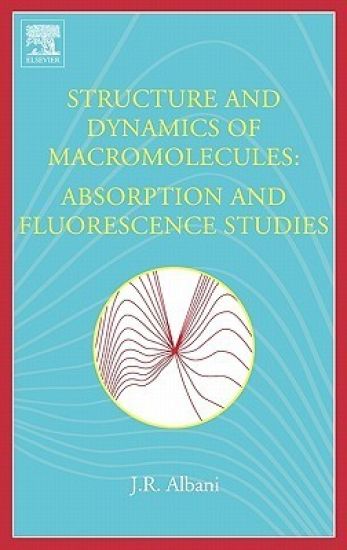
Structure and Dynamics of Macromolecules: Absorption and Fluorescence Studies is clearly written and contains invaluable examples, coupled with illustrations that demonstrate a comprehensible analysis and presentation of the data. This book offers practical information on the fundamentals of absorption and fluorescence, showing that it is possible to interpret the same result in different ways. It is an asset to students, professors and researchers wishing to discover or use absorption and fluorescence spectroscopy, and to scientists working on the structure and dynamics of macromolecules.
the Earth's Interior the Earth's Interior Vitamin D held at the Maastricht Exhibition and Congress Centre in Maastricht, The Netherlands from July 6 to July 10, 2003. A total of 323 registered delegates from 30 countries attended. The primary function of the Vitamin D Workshop is to organize and present scientific meetings on aspects related to vitamin D. The substantial attendance at the Maastricht Workshop reflected the continuing high level of worldwide interest in research developments related to vitamin D. The quality and diversity of the science presented at the Twelfth Workshop on Vitamin D was again of an exceptionally high level. Remarkable progress continues to be made in research areas related to the vitamin D analogs of 1alpha,25(OH)2D3, the study of the biochemistry and cell biological biological effects in a wide variety of systems (including calcium homeostasis, vitamin D metabolism, regulation of gene transcription, and action of rapid responses). Also, an important component of the Workshop Program was dedicated to clinically related topics which included presentations concerning treatment of psoriasis, the application of 1alpha,25(OH)2D3 and its analogs, in the treatment of osteoporosis and application of prostate cancer.
A.J. Sutherland knows her own mind. She also knows a champion when she sees him... Everyone thinks A.J. Sutherland is crazy to buy a rogue stallion that no rider or trainer has been able to tame. But if anybody has the hustle to make something out of that hell-raiser, it's her. She can't do it alone, however, and goes after the great Devlin McCloud, an equestrian legend with a bad leg- and a worse attitude. Devlin recognizes a fighter when he sees one- and that horse isn't a wallflower, either. Before he knows it, he's got a wild stallion in his empty stable and a hot-headed, heavenly-bodied rider sleeping on his couch. But can he get all three of them through the championship in one piece? This passion he's found with his rider is compromising training- and at this level of competition, any distraction is not just unprofessional, but downright deadly...