Kirjojen hintavertailu. Mukana 11 699 587 kirjaa ja 12 kauppaa.

Kirjahaku

Etsi kirjoja tekijän nimen, kirjan nimen tai ISBN:n perusteella.

1000 tulosta hakusanalla James Stratton

James Joyce and Nationalism

James Joyce and Nationalism

Emer Nolan

Routledge
1994
sidottu
James Joyce and Nationalism comprehensively revises our understanding of Joyce by re-examining his writing against Irish Nationalism. In this exciting and provocative book, Emer Nolan looks at the relationship between modernism and nationalism, tracing the applicability of alternative notions of nationalism to the various phases of Joyce's work. Nolan also brings post-colonial and feminist theories to a close re-reading of Joyce's works. This insightful and challenging work provides a polemical introduction to Joyce and is a much needed contribution to the vast field of Joyce studies. James Joyce and Nationalism is a ground-breaking and theoretically engaged intervention into debates about Joyce's politics and the politics of modernism.
James Mill's History of British India
In this monumental work James Mill exhibited the character, history, religion, arts, literature and the laws of the people of India, together with the physical influences arising out of the climate of the country. He narrated the story of the acquisition by England of its Indian Empire for the first time and brought to bear a vast body of political theory on the delineation of the Hindu civilization, severely criticizing the conduct of those involved in the successive stages of India's conquest and administration. The work itself and Mill's official subsequent connection with India had a profound effect on the whole system of governing that country. Mill had never been to India, so the editorial involvement of the great Orientalist Horace Hayman Wilson enhances this edition well. He has not only extended the history up to 1835 but added notes gained from his intimate knowledge of India and its languages. Together these two writers have produced one of the great history books of the last century, of interest to social and political historians of the British Empire and general historians alike.
James Joyce. Volume I: 1907-27
This set comprises 40 volumes covering nineteenth and twentieth century European and American authors. These volumes will be available as a complete set, mini boxed sets (by theme) or as individual volumes. This second set compliments the first 68 volume set of Critical Heritage published by Routledge in October 1995.
James Joyce. Volume 2: 1928-41
This set comprises 40 volumes covering nineteenth and twentieth century European and American authors. These volumes will be available as a complete set, mini boxed sets (by theme) or as individual volumes. This second set compliments the first 68 volume set of Critical Heritage published by Routledge in October 1995.
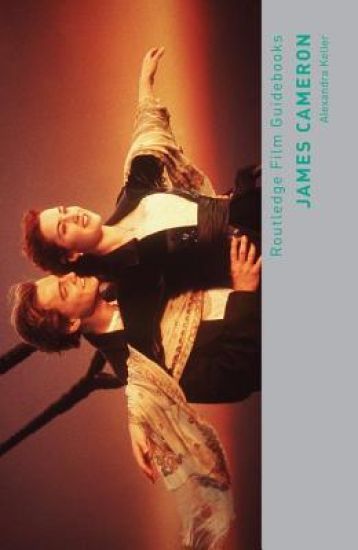
James Cameron

James Cameron

Alexandra Keller

Routledge
2006
sidottu
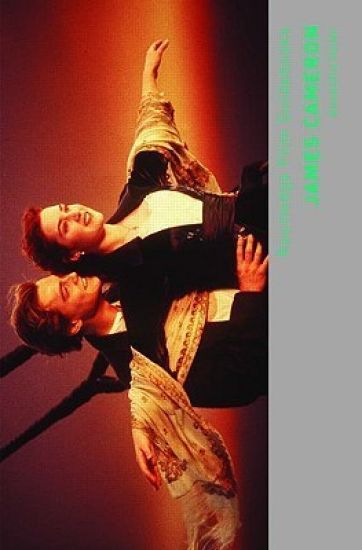
Featuring excerpts from interviews and frame-by-frame analysis of important scenes from films such as Terminator, Aliens, True Lies, and Titanic, Alexandra Keller provides the first critical study of James Cameron as an auteur. Considering in particular his treatment of gender and preoccupation with capital, both in his films and his filmmaking practice, Keller offers an overview of Cameron's work and its significance within cinematic history. Sections in the book include:ChronologyKey DebatesKey ScenesSourcesResources.This is a fascinating insight into the work of one of Hollywood's top directors, and will prove invalubale to students of film studies and media studies all over the English-speaking world.
James Cameron

James Cameron

Alexandra Keller

Routledge
2006
nidottu
Featuring excerpts from interviews and frame-by-frame analysis of important scenes from films such as Terminator, Aliens, True Lies, and Titanic, Alexandra Keller provides the first critical study of James Cameron as an auteur. Considering in particular his treatment of gender and preoccupation with capital, both in his films and his filmmaking practice, Keller offers an overview of Cameron's work and its significance within cinematic history. Sections in the book include:ChronologyKey DebatesKey ScenesSourcesResources.This is a fascinating insight into the work of one of Hollywood's top directors, and will prove invalubale to students of film studies and media studies all over the English-speaking world.
James Joyce
The Collected Critical Heritage II comprises 40 volumes covering nineteenth and twentieth century European and American authors. These volumes will be available as a complete set, mini boxed sets (by theme) or as individual volumes. This second set compliments the first 68 volume set of Critical Heritage published by Routledge in October 1995. The Critical Heritage series gathers together a large body of critical figures in literature. These carefully selected sources include: * comtemporary reviews from both popular and literary media. In these students can read about how Lady Chatterly's Lover shocked contemporary reviewers or what Ibsen's Doll's House meant to the early women's movement. * little-known documentary material, such as diaries and correspondence - often between authors and their publishers and critics. * landmark essays in the history of criticism. * significant pieces of criticism from later periods to demonstrate how an author's reputation changed over time.
James Joyce. Volume I: 1907-27
This set comprises 40 volumes covering nineteenth and twentieth century European and American authors. These volumes will be available as a complete set, mini boxed sets (by theme) or as individual volumes. This second set compliments the first 68 volume set of Critical Heritage published by Routledge in October 1995.
James Joyce. Volume 2: 1928-41
This set comprises 40 volumes covering nineteenth and twentieth century European and American authors. These volumes will be available as a complete set, mini boxed sets (by theme) or as individual volumes. This second set compliments the first 68 volume set of Critical Heritage published by Routledge in October 1995.
James Joyce
James Augustine Aloysius Joyce (1882–1941) is a towering figure in the development of English-language modernist prose fiction. And his influence extends well beyond the anglophone literary world; like his alter ego, Stephen Dedalus, Joyce flew by the nets of nationality, language, and religion, and spent most of his life in continental Europe.The significance of Joyce’s oeuvre—particularly the later and more radical prose works—far outweighs the modesty of its bulk: only two books of verse, a play, one collection of short stories, and three novels (using that term in its most elastic sense) were published in his lifetime. But the combination of a modest output with an increasingly audacious experimentalism has generated interpretative and critical commentary on a vast and bewildering scale. Joyce attracted serious attention (not always favourable) from virtually every significant writer of the age: elder statesmen like Yeats recognized his importance, as did members of his own generation, such as Pound, Eliot, and Lawrence. The major American critics of the era, like Edmund Wilson and Lionel Trilling, and, in France, Eugene Jolas and Jacques Mercanton, also responded with enthusiasm to his work, as did Cyril Connolly and F. R. Leavis in Britain. Joyce’s work has also lent itself to approaches informed by contemporary theory—whether new critical, formalist, structuralist, deconstructionist, feminist, or materialist—such that the development of Joycean criticism maps the spread and transmutations of ‘theory’ and illustrates its applications.So, while the prospective reader of Ulysses or Finnegans Wake is likely to feel a compelling need for some preparation before consuming the text itself, the daunting quantity (and variable quality) of Joyce criticism makes it difficult to discriminate the useful from the tendentious, superficial, and otiose. That is why this new Routledge title is so urgently needed. In four volumes, the collection meets the need for an authoritative reference work to allow researchers and students to make sense of the vast Joycean literature and the continuing explosion in research output. Users will now be able easily and rapidly to locate the best and most influential critical scholarship, work that is otherwise often inaccessible or scattered throughout a variety of specialist journals and books. With material gathered into one easy-to-use set, researchers and students can now spend more of their time with the key journal articles, book chapters, and other pieces, rather than on time-consuming (and sometimes fruitless) archival searches.Fully indexed and with a comprehensive introduction newly written by the editor, which places the collected material in its historical and intellectual context, James Joyce is an essential reference work and is destined to be valued as a vital research resource.
The Collected Works of James E. Meade (Routledge Revivals)
This ten volume backlist collection brings together an assortment of seminal works by highly influential British economist and Nobel Laureate James Meade. This comprehensive and diverse collection encompasses everything from economic growth, through to international trade, property ownership and his work on the principles of political economy. Spanning more than 30 years in Professor Meade’s distinguished career, the reissued volumes in this collection, originally published between 1940 and 1976, offer a thorough and engaging insight into Professor Meade’s work, which will appeal to the general reader as well as to students of economics and professional economists.
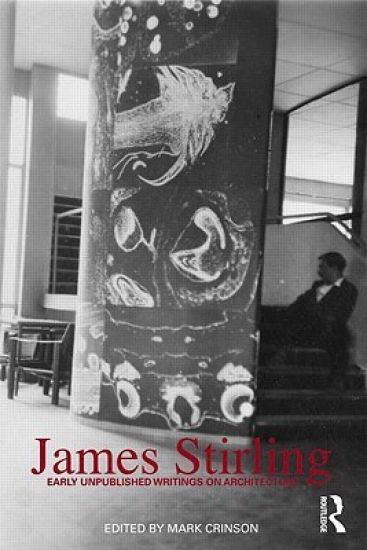
James Stirling
James Stirling (1924-1992) was, arguably, the most influential and controversial post-war British architect. Stirling’s reputation is based primarily on such seminal buildings as the Leicester University Engineering Building (1959-63, with James Gowan), at one end of his career, and the Neue Staatsgalerie Stuttgart (1977-83, with Michael Wilford) at the other. Although he denied both labels, his work is seen as central to New Brutalism and Post-Modernism and his buildings attracted commentary and theory from the leading architectural thinkers of the day (including Frampton, Tafuri, Eisenman and Banham). Despite his significance, however, there has been very little recent research or creative re-interpretation of his work. This fascinating insight into Stirling’s work presents previously unavailable writings by him as well as new research on his early career, including: 'The Black Notebook' – the journal he kept in the mid-1950s the recorded talk he gave to the 'Team 10' group in 1962, as well as the discussion that followed that talk three sets of notes for lectures he gave an interview with Stirling and Gowan essays by the editor placing the texts in the context of Stirling’s early work and discussing Stirling’s relation to Le Corbusier. Profusely illustrated, with many photographs taken by Stirling himself, this book gives fresh understanding of Stirling’s early career and the reasons why avant-garde architecture in post-war Britain became so widely influential outside the country.
James Stirling
James Stirling (1924-1992) was, arguably, the most influential and controversial post-war British architect. Stirling’s reputation is based primarily on such seminal buildings as the Leicester University Engineering Building (1959-63, with James Gowan), at one end of his career, and the Neue Staatsgalerie Stuttgart (1977-83, with Michael Wilford) at the other. Although he denied both labels, his work is seen as central to New Brutalism and Post-Modernism and his buildings attracted commentary and theory from the leading architectural thinkers of the day (including Frampton, Tafuri, Eisenman and Banham). Despite his significance, however, there has been very little recent research or creative re-interpretation of his work. This fascinating insight into Stirling’s work presents previously unavailable writings by him as well as new research on his early career, including: 'The Black Notebook' – the journal he kept in the mid-1950s the recorded talk he gave to the 'Team 10' group in 1962, as well as the discussion that followed that talk three sets of notes for lectures he gave an interview with Stirling and Gowan essays by the editor placing the texts in the context of Stirling’s early work and discussing Stirling’s relation to Le Corbusier. Profusely illustrated, with many photographs taken by Stirling himself, this book gives fresh understanding of Stirling’s early career and the reasons why avant-garde architecture in post-war Britain became so widely influential outside the country.
James Joyce and Nationalism

James Joyce and Nationalism

Emer Nolan

Routledge
2014
nidottu
James Joyce and Nationalism comprehensively revises our understanding of Joyce by re-examining his writing against Irish Nationalism. In this exciting and provocative book, Emer Nolan looks at the relationship between modernism and nationalism, tracing the applicability of alternative notions of nationalism to the various phases of Joyce's work. Nolan also brings post-colonial and feminist theories to a close re-reading of Joyce's works. This insightful and challenging work provides a polemical introduction to Joyce and is a much needed contribution to the vast field of Joyce studies. James Joyce and Nationalism is a ground-breaking and theoretically engaged intervention into debates about Joyce's politics and the politics of modernism.
James Joyce, Science, and Modernist Print Culture
This book makes an important intervention in the ongoing debates about modernism, science, and the divisions of early Twentieth-Century print culture. In order to establish Joyce's place in the nexus of modernism and scientific thought, Drouin uses the methods of periodical studies and textual criticism to examine the impact of Einstein's relativity theories on the development of Ulysses (1922) and Finnegans Wake (1939). Looking at experiments with space, time, motion, and perspective, it rigorously surveys discourse of science and the novel in the print culture networks connected to Joyce, with concrete analysis of avant-garde magazines, newspapers, popular science books, BBC pamphlets, and radio broadcasts between 1914 and 1939. These sources elucidate changes that Joyce made to the manuscripts, typescripts, and page proofs of certain episodes of his final two novels. The new evidence establishes for the first time the nature of the material link between Joyce and non-technical science, and the manner in which Ulysses and Finnegans Wake owe their structure and meaning to the humanistic issues associated with science during the wartime and inter-war years. In examining the relationships between Joyce's later work and the popular science industry, the book elucidates the often conflicting attitudes toward science in inter-war British print culture, filling in a piece of the puzzle that is modernism's relationship to the new physics and, simultaneously, the history of the novel.
James Merrill

James Merrill

Reena Sastri

Routledge
2007
sidottu
James Merrill: Knowing Innocence reevaluates the achievement of this important poet by showing how he takes up an old paradigm – innocence – and reinvents it in response to new historical, scientific, and cultural developments including the bomb, contemporary cosmology, and the question of agency. The book covers Merrill’s full career, emphasizing the late poetry, on which there remains little commentary. Illuminating both Merrill’s relation to a tradition of literary innocence from Milton to Blake and Wordsworth to Emerson and Stevens, and his relevance to contemporary cultural debates, the rubric of "knowing innocence" helps us to understand his achievement. Merrill undertakes a career-long effort to know innocence, and develops a thematic and stylistic attitude that is both innocent and knowing, combining attitudes of wonder and hope with reflexive wit, intellectual breadth, and an unflinching gaze at mortality. He ultimately imagines innocence as creative agency, a capacity for imagination, invention, and ethical responsibility. The book demonstrates how, addressing questions of sexual identity, childhood and memory; atomic science, the big bang, and black holes; environmental degradation; AIDS; and the notion of the death of history – while honoring poetry’s essential qualities of freedom and play – his poems perform cultural work crucial to his time and ours.