

Kirjahaku
Etsi kirjoja tekijän nimen, kirjan nimen tai ISBN:n perusteella.
1000 tulosta hakusanalla James T. Cook



Old Fort Garland
James T (James Taylor) Forrest; Rosamund Slack; Paul A Rossi
Anson Street Press
2025
pokkari




Characterizing and Controlling the Effects of Differential Drag on Satellite Formations
James T Wedekind
Hutson Street Press
2025
sidottu
Characterizing and Controlling the Effects of Differential Drag on Satellite Formations
James T Wedekind
Hutson Street Press
2025
pokkari

Measurement of Human Pilot Dynamic Characteristics in Flight Simulation
James T Reedy
Hutson Street Press
2025
pokkari

Digest of United States Automobile Patents From 1789 to July 1, 1899, Including All Patents Officially Classed as Traction-engines for the Same Period
James T. (James Titus) Comp Allen
Hutson Street Press
2025
sidottu
A comprehensive historical record, "Digest of United States Automobile Patents From 1789 to July 1, 1899" meticulously compiles patents related to automobiles and traction engines during the formative years of the automotive industry. This volume, compiled by James T. Allen, provides a chronological arrangement of patents, offering invaluable insights into the technological evolution of early automobiles. Included are detailed lists of patents in related classes such as portable engines, road engines, steam carriages, and motor carriages. This digest serves as an essential reference for historians, researchers, and anyone interested in the early development of automotive technology and intellectual property. Discover the groundbreaking inventions and innovations that paved the way for modern transportation with this detailed historical compendium. This work has been selected by scholars as being culturally important, and is part of the knowledge base of civilization as we know it. This work was reproduced from the original artifact, and remains as true to the original work as possible. Therefore, you will see the original copyright references, library stamps (as most of these works have been housed in our most important libraries around the world), and other notations in the work. This work is in the public domain in the United States of America, and possibly other nations. Within the United States, you may freely copy and distribute this work, as no entity (individual or corporate) has a copyright on the body of the work. As a reproduction of a historical artifact, this work may contain missing or blurred pages, poor pictures, errant marks, etc. Scholars believe, and we concur, that this work is important enough to be preserved, reproduced, and made generally available to the public. We appreciate your support of the preservation process, and thank you for being an important part of keeping this knowledge alive and relevant.
Introduction to Forensic Science: The Science of Criminalistics is a textbook that takes a unique and holistic approach to forensic science. This book focuses on exploring the underlying scientific concepts as presented at the introductory college and senior high school levels. Chapters introduce readers to each of the important areas of forensic science, grouping chapters together by discipline and following a logical progression and flow between chapters. This systematically allows students to understand the fundamental scientific concepts, recognize their various applications to the law and investigations, and discern how each topic fits broadly within the context of forensic science.The writing is accessible throughout, maintaining students’ interest – including both science and non-science majors – while inspiring them to learn more about the field. Concepts are demonstrated with numerous case studies and full-color illustrations that serve to emphasize the important ideas and issues related to a particular topic. This approach underscores scientific understanding, allowing the student to go beyond simple rote learning to develop deeper insights into the field, regardless of their scientific background. This book has been extensively classroom-tested to provide the most comprehensive and up-to-date survey of various forensic disciplines and the current state of the science, policies, and best practices. Key features: Presents a wholly new, fresh approach to addressing a broad survey of techniques and evidentiary analyses in the field of forensic science. All concepts – and the underpinnings of forensic practice – are explained in simple terms, using understandable analogies and illustrations to further clarify concepts. Introduces topics that other introductory texts fail to address, including serology, behavioral science, forensic medicine and anthropology, forensic ecology, palynology, zoology, video analysis, AI/computer forensics, and forensic engineering. Highly illustrated with over 1,000 full-color photographs, drawings, and diagrams to further highlight key concepts. Suitable for both high school senior-level instruction and two- and four-year university courses for majors, non-majors, and criminal justice students enrolled in introductory forensic science classes.Support Materials – including an Instructor’s Manual with test bank and chapter PowerPoint lecture slides – are available to professors with qualified course adoption.
This insightful book offers contemporary psychologists and other social theorists an understanding of the comprehensive system of thought developed by the German scholar William Stern (1871–1938) known as critical personalism.Expanding the author’s ongoing efforts in this area, the book considers, firstly, how critical personalism could ground a needed revival of psychological science, a need created by the field's gradual transformation, through its widespread adoption of aggregate statistical methods of investigation, into a discipline better characterized as 'psycho-demography.' Consistent with Stern's own view of the potential of critical personalism vis-a-vis socio-ethical concerns, the book then explores how the framework could facilitate a transcendence of thinking about racial and other social relationships beyond currently prevailing narratives about personkinds into narratives that are actually about persons. This part of the book includes a chapter discussing Stern's own historical efforts in this direction, serving to highlight the non-individualistic nature of critically personalistic thinking. Throughout, Lamiell constructs a clear case for the merits and applicability of critical personalism in modern psychology and social thought.Primer in Critical Personalism will interest established psychological scientists and advanced students in the field, as well as those who are concerned about our contemporary socio-cultural ethos and the prospects for its improvement, including philosophers, sociologists, educators, journalists, clerics, and thoughtful laypersons alike.
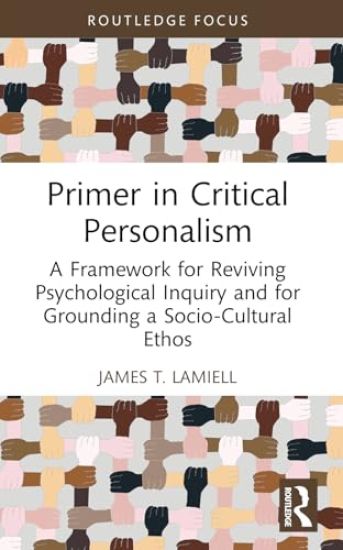
This insightful book offers contemporary psychologists and other social theorists an understanding of the comprehensive system of thought developed by the German scholar William Stern (1871–1938) known as critical personalism.Expanding the author’s ongoing efforts in this area, the book considers, firstly, how critical personalism could ground a needed revival of psychological science, a need created by the field's gradual transformation, through its widespread adoption of aggregate statistical methods of investigation, into a discipline better characterized as 'psycho-demography.' Consistent with Stern's own view of the potential of critical personalism vis-a-vis socio-ethical concerns, the book then explores how the framework could facilitate a transcendence of thinking about racial and other social relationships beyond currently prevailing narratives about personkinds into narratives that are actually about persons. This part of the book includes a chapter discussing Stern's own historical efforts in this direction, serving to highlight the non-individualistic nature of critically personalistic thinking. Throughout, Lamiell constructs a clear case for the merits and applicability of critical personalism in modern psychology and social thought.Primer in Critical Personalism will interest established psychological scientists and advanced students in the field, as well as those who are concerned about our contemporary socio-cultural ethos and the prospects for its improvement, including philosophers, sociologists, educators, journalists, clerics, and thoughtful laypersons alike.

Practical Bomb Scene Investigation, Fourth Edition details the evidence collection and investigative processes undertaken—at the scene of an explosion—by improvised explosive device (IED) specialists, including bomb scene technicians and post-blast investigators.Providing easy-to-understand, step-by-step procedures for managing and safely processing the bomb scene, it offers investigators instruction on finding and properly collecting and preserving all explosive evidence. In addition to being a roadmap on how to assess the scene and find and collect evidence, it provides an understanding of explosion dynamics or the effects caused by an explosion to include the blast radius and the impacts on people and objects in the vicinity. Evidence analyzed can also help to identify the bombmaker’s biometrics (fingerprints and DNA), explosive residue, toolmarks left on device components and the identification of the initiation system components used to fabricate and explode the explosive device.With input provided over the years from working post blast investigators from the federal, state, and municipal sectors, the Fourth Edition of Practical Bomb Scene Investigation is an invaluable resource for those professionals involved in bombing investigations. From the post blast investigator, the evidence technician and laboratory examiner, the intelligence analyst, the soldier on patrol, and the public safety officer—both police officer and firefighters—as well as prosecutors, this latest edition is a “one-stop shop” to learn the methods utilized to locate and preserve evidence recovered from the post-blast scene for eventual use in a court of law.

From the time of Alexander Hamilton's "Report on Manufactures" through the Great Depression, American towns and cities sought to lure footloose companies by offering lavish benefits. These ranged from taxpayer-financed factories, to tax exemptions, to outright gifts of money. This kind of government aid, known as "corporate welfare," is still around today. After establishing its historical foundations, James T. Bennett reveals four modern manifestations.His first case is the epochal debate over government subsidy of a supersonic transport aircraft. The second case has its origins in Southern factory relocation programs of the 1930s—the practice of state and local governments granting companies taxpayer financed incentives. The third is the taking of private property for the enrichment of business interests. The fourth—export subsidies—has its genesis in the New Deal but matured with the growth of the Export-Import Bank, which subsidizes international business exchanges of America's largest corporate entities.Bennett examines the prospects for a successful anti-corporate welfare coalition of libertarians, free market conservatives, Greens, and populists. The potential for a coalition is out there, he argues. Whether a canny politician can assemble and maintain it long enough to mount a taxpayer counterattack upon corporate welfare is an intriguing question.
A captivating collection of deeply personal yet intensely relatable poems, Upon the Token Grass: Musings and Inspirational Experiences of a Jamaican Poet, captures the past thirty years of the author's life experiences triumphs and tragedies included. With poems about faith, nature, love, loss, politics, mental illness, and even a heartfelt longing for the simplicity of childhood and the comforts of home, this collection examines the vagaries of human existence and serves it back up to its readers as delectable morsels of insight and imagery that are undeniably impactful. With a poetic voice and perspective as unique as it is compelling, James Golding has created a collection that takes its readers on a journey mirroring the human experience and promising personal growth, even when it hurts. Matured in both its subject matter and depth, Upon the Token Grass: Musings and Inspirational Experiences of a Jamaican Poet, is a collection that can be appreciated one exceptional poem at a time or all in one sitting-settling in and allowing the author's unique perspective and immersive phrasing to sweep you up and carry you along in the complex and emotional current. Either way ... take your time. It is a journey worth savouring.
A captivating collection of deeply personal yet intensely relatable poems, Upon the Token Grass: Musings and Inspirational Experiences of a Jamaican Poet, captures the past thirty years of the author's life experiences triumphs and tragedies included. With poems about faith, nature, love, loss, politics, mental illness, and even a heartfelt longing for the simplicity of childhood and the comforts of home, this collection examines the vagaries of human existence and serves it back up to its readers as delectable morsels of insight and imagery that are undeniably impactful. With a poetic voice and perspective as unique as it is compelling, James Golding has created a collection that takes its readers on a journey mirroring the human experience and promising personal growth, even when it hurts. Matured in both its subject matter and depth, Upon the Token Grass: Musings and Inspirational Experiences of a Jamaican Poet, is a collection that can be appreciated one exceptional poem at a time or all in one sitting-settling in and allowing the author's unique perspective and immersive phrasing to sweep you up and carry you along in the complex and emotional current. Either way ... take your time. It is a journey worth savouring.
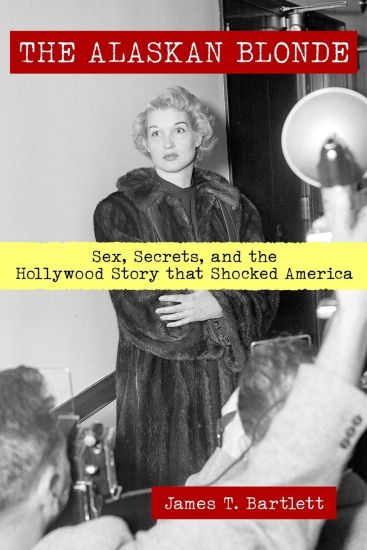
Nicknamed "the most beautiful woman in Alaska," 31-year-old Diane Wells was bruised and bloodied when she screamed for help in the early hours of October 17, 1953. Her husband Cecil, a wealthy Fairbanks businessman, had been shot dead, and she claimed they were the victims of a brutal home invasion.Blonde, glamorous and 20 years younger than Cecil, police were immediately suspicious of Diane's account, and the investigation soon turned toward her alleged lover, black musician Johnny Warren, who had left town the night of the murder.The scandal hit the pages of Newsweek, Life, Jet and the pulp detective magazines, and nearly 70 years later, journalist James T. Bartlett uncovers new evidence including an unpublished memoir, unseen photographs, and re-examines the FBI files. He tracks down and interviews the people close to Cecil, Diane, Johnny, and the mysterious "Third Suspect", dance instructor William Colombany, to reveal the story of "the most notorious and baffling murder in the history of Fairbanks."