Kirjojen hintavertailu. Mukana 12 083 983 kirjaa ja 12 kauppaa.

Kirjahaku

Etsi kirjoja tekijän nimen, kirjan nimen tai ISBN:n perusteella.

1000 tulosta hakusanalla Jean Rotrou

Jean Bodin

Jean Bodin

Ashgate Publishing Limited
2006
sidottu
In the course of a lifetime, Jean Bodin aimed at nothing less than to encompass all the disciplines of his age in a huge encyclopedia of knowledge. In many areas, his ideas have been not only original but seminal. He made major contributions to historiography, philosophy of history, economics, political science, comparative public law and policy, religion and national philosophy. This volume brings together a selection of major articles in English, representing almost all of his intellectual interests. It is an essential collection for libraries and scholars in both humanities and social sciences.
Jean-Jacques Rousseau

Jean-Jacques Rousseau

Ashgate Publishing Limited
2007
sidottu
Jean-Jacques Rousseau (1712-1778) was hailed by Claude Lévi-Strauss as "the founder of the sciences of man". This collection of fourteen classic papers devoted to his work addresses the points of intersection between the moral and the political, the personal and the social. The volume is divided into five parts: The Critique of Progress and the Speculative Anthropology, The Naturalizing of Natural Law, The General Will and Totalitarianism, Anticipations of Game Theory and Strategies of Redemption. The articles are accompanied by an extensive, detailed introduction by the editor along with a selective bibliography.
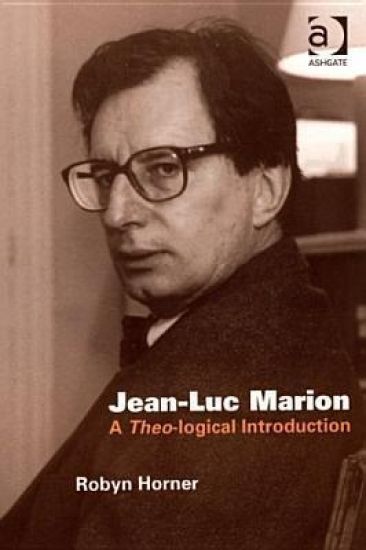
Jean-Luc Marion

Jean-Luc Marion

Robyn Horner

Ashgate Publishing Limited
2005
nidottu
Jean-Luc Marion is one of the leading Catholic thinkers of our time: a formidable authority on Descartes and a major scholar in the philosophy of religion. This book presents a concise, accessible, and engaging introduction to the theology of Jean-Luc Marion. Described as one of the leading thinkers of his generation, Marion's take on the postmodern is richly enhanced by his expertise in patristic and mystical theology, phenomenology, and modern philosophy. In this first introduction to Marion's thought, Robyn Horner provides the essential background to Marion's work, as well as analysing the most significant themes for contemporary theology. This book serves as an ideal starting point for students of theology and philosophy, as well as for those seeking to further their knowledge of cutting-edge thinking in contemporary theology.
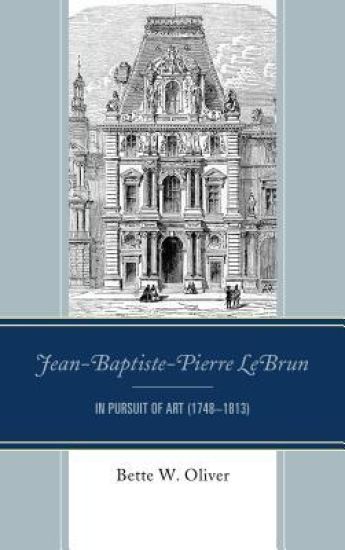
Jean-Baptiste-Pierre LeBrun

Jean-Baptiste-Pierre LeBrun

Bette W. Oliver

Hamilton Books
2018
sidottu
Jean-Baptiste Pierre LeBrun's life was marked by his intense interest in art, first as an artist, and then from 1770 until his death in 1813, as an art dealer/connoisseur and as a participant in the transformation of the Louvre into a national museum during the French Revolution. He managed to accommodate whichever regime assumed power, from monarchy to republic to empire. He married the artist Elisabeth Vigée in 1776 and together they figured prominently in the pre-revolutionary cultural world of Paris. LeBrun travelled widely, buying art for his gallery and contributing to a number of aristocratic collections. His expertise in attributions of 17th-century Dutch and Flemish paintings was acknowledged internationally, while his reference work on the subject was considered the most comprehensive ever written. LeBrun, the grand-nephew of the illustrious artist Charles LeBrun, became one of the most successful art dealers in Paris. He played an active role in the politics of art between 1789 and 1802, serving as an expert-commissioner in restoration at the national museum. His inventories of artworks, confiscated from all over Europe by Napoleon's armies, have provided a valuable record of the development of the French national museum. In addition, his inventories have been useful in the identification and recovery of Nazi confiscations during World War II. LeBrun's accomplishments during a tumultuous period of political and artistic change present evidence of his contributions to the concept of the modern art museum, notably in the areas of conservation, restoration, and arrangement.
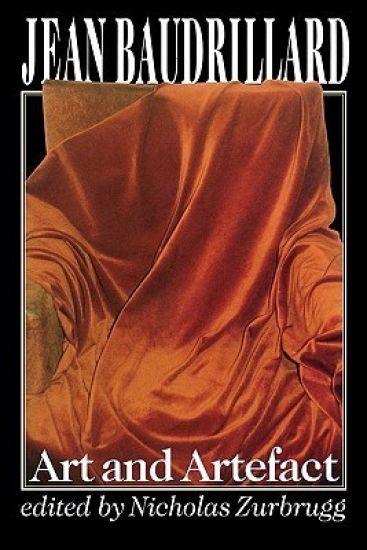
Jean Baudrillard, Art and Artefact
This book offers a major reappraisal of Jean Baudrillard's thoughts on the image, radical illusion and media culture. Here for the first time, through a number of highly accessible interviews and recent essays, Baudrillard introduces what he calls the `stunning clarity' of the photographic, and fascinatingly outlines his present thoughts on urban reality, aesthetics, virtual reality and new media technologies, in the light of his practice as a photographer. The book is illustrated with eight colour plates of Baudrillard's photographs and includes a number of provocative and illuminating responses to his recent writings from noted Baudrillard scholars. It also includes a definitive bibliography of critical responses to Baudrillard's writings on media culture, art and photography.
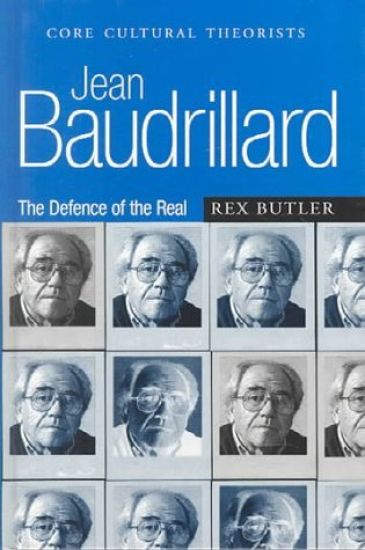
Jean Baudrillard

Jean Baudrillard

Rex Butler

SAGE Publications Inc
1999
sidottu
This book goes beyond Baudrillard's writings on consumer objects, the Gulf War and America, to identify the fundamental logic that underpins his writings. It does this through a series of close readings of his main texts, paying particular attention to the form and internal coherence of his arguments. The book is written for all those who want a general introduction to Baudrillard's work, and will also appeal to those readers who are interested in social theory, but who have not yet taken Baudrillard seriously.
Jean Baudrillard

Jean Baudrillard

Rex Butler

SAGE Publications Inc
1999
nidottu
This book goes beyond Baudrillard's writings on consumer objects, the Gulf War and America, to identify the fundamental logic that underpins his writings. It does this through a series of close readings of his main texts, paying particular attention to the form and internal coherence of his arguments. The book is written for all those who want a general introduction to Baudrillard's work, and will also appeal to those readers who are interested in social theory, but who have not yet taken Baudrillard seriously.
Jean Baudrillard

Jean Baudrillard

SAGE Publications Inc
2000
muu
Jean Baudrillard is one of the most important and provocative writers in the contemporary era. Widely acclaimed as the prophet of postmodernism, he has famously announced the disappearance of the subject, meaning, truth, class and the notion of reality itself. Although he worked as a sociologist, his writing has enjoyed a wide interdisciplinary popularity and influence. He is read by students of sociology, cultural studies, philosophy, literature, French and geography. Organized into eight sections, the volumes provide the most complete guide to Baudrillard currently available: Section 1: Theoretical Issues In this section the central themes informing Baudrillard's work are defined and discussed. Baudrillard's place in contemporary social thought is examined through considerations of how his work has been received. The importance of signs and the sign economy in Baudrillard's analysis is highlighted. The case for treating Baudrillard as a seminal theorist in contemporary social thought is elucidated. Section 2: Postmodernism Baudrillard is reluctant to regard himself as a postmodernist. Nonetheless, it is as the leading theorist of postmodernism that he is widely celebrated and generally known. This section explores Baudrillard's relation to postmodernism and demonstrates his specific contribution. Questions of Baudrillards relation to capitalism, commodification, fatalism, Lyotard, Jameson and politics are explored. Section 3: Culture It is now commonplace to refer to the period since the late 1980s as `the cultural turn'. Baudrillard's work provided a leading exponent of the significance of culture in understanding contemporary life. Included here are reflections on Baudrillard and corporate culturalism, power, ideology, simulation, mass media, Disney, hyperreality and leisure. Section 4: War In the 1990s Baudrillard became famous for the thesis that `the gulf war did not happen'. For some critics, it revealed the poverty of Baudrillard's approach. For others it showed more profoundly why his thought is an indispensable tool in grappling with the complexities of contemporary society. At all events, Baudrillard's treatment of the war represented a climacteric in critical responses to Baudrillard. In this section the various range of responses to Baudrillard's intervention are precisely delineated, providing the reader with the essential data required to decide if Baudrillard's thesis is right or wrong. Section 5: America America dazzles and appalls Baudrillard. In America and of Cool Memories 1&2, he documents his violent responses to America as an idea; a physical space. Included here are reflections on Baudrillard, America and postmodernism; Baudrillard's significance as an ethnographer of US life; Baudrillard and American film; Baudrillard and Reagan's America; and Baudrillard, America and the politics of simulation. Section 6: Seduction Baudrillard's theory of seduction is, like much else in his work, controversial. This section examines how the theory has been interpreted and criticized. The relationship between Baudrillard and feminism is examined. Applications of his theory to art and work are explored. Section 7: Fiction and Art Baudrillard is an unusual contemporary thinker, in as much as his writing is taken seriously by artists. Baudrillard himself has responded to this, by becoming more interested in photography in the last ten years. This section aims to provide an essential guide to the relationship between Baudrillard and art. Included here are enquiries into Baudrillard and science fiction, the relationship between Baudrillard and J G Ballard's `Crash'; Baudrillard and abstract painting; Baudrillard and Francis Bacon; Baudrillard, Benjamin and Lichtenstein; Baudrillard, Barthes and photography; and Baudrillard's theory of communication. Section 8: Baudrillard and Other Social Theorists The concluding part of the collection aims to situate Baudrillard in the field of contemporary social theory. Interestingly, Baudrillard himself has never attempted to compare and contrast his theoretical ideas with those of others. The 14 contributions included in this section, seek to rectify this shortcoming. The contributions cover Baudrillard and Marx; Baudrillard, Durkheim and Rousseau; Baudrillard and psychoanalysis; Baudrillard and Bataille; existentialism, postmodernism and Baudrillard; Baudrillard and McLuhan; Baudrillard and Critical Theory; Baudrillard and Habermas; Baudrillard and Deleuze; Baudrillard and de Certeau; and the fictional Baudrillard, as dreamt up by Alan Sokal and Jean Bricmont. The contributions are selected and introduced by Mike Gane, Reader in Sociology at the University of Loughborough. With publications like Baudrillard's Bestiary, Baudrillard: Critical & Fatal Theory and Baudrillard Live, Gane is widely recognized as the leading secondary commentator on the work of Baudrillard. No-one else matches him in the appreciation and critical understanding of Baudrillard. In a full length 'Introduction' to the volumes, written with verve and penetration, Gane shows exactly why Baudrillard is a key thinker of our times. Mike Gane is Professor of Sociology at University of Loughborough
Jean Renoir: A Biography

Jean Renoir: A Biography

Pascal Mérigeau; Bruce Benderson; Martin Scorsese

Running Press Adult
2017
pokkari
Originally published in France in 2012, Pascal Mérigeau's definitive biography of legendary film director Jean Renoir is a landmark work,the winner of a Prix Goncourt, France's top literary achievement. Now available in the English language for the first time, Jean Renoir: A Biography , is the definitive study of one of the most fascinating and creative artistic figures of the twentieth century. The French filmmaker made more than forty films from the silent era to the late '60s and today he is revered by filmmakers and seen by many as one of the greatest of all time. Renoir made acclaimed movies in France, America, India, and Italy and became a writer during the last part of his life. An estimated 75 percent of the book details previously unknown information about the filmmaker, including Renoir's close affiliation with Communism in the '30s (when he was the Party's official director) and his work with the fascist regimes during World War II his previously uncredited Hollywood film, The Amazing Mrs. Holiday and new information on the making of his most famous films. Drawing from unpublished or little known sources, this biography is a completely fresh approach to the maker of Grand Illusion and The Rules of the Game , redefining the very function of the movie director and simultaneously recounting the history of a century.
Atlas of Elementary Botany by Jean-Jacques Rousseau

Atlas of Elementary Botany by Jean-Jacques Rousseau

Jean-Jacques Rousseau; Marc Jeanson

SCHIFFER PUBLISHING LTD
2025
sidottu
Explore the natural world through Jean-Jacques Rousseau’s letters on botany—a beautifully written reflection on plants, nature, and philosophy by one of the Enlightenment’s greatest thinkers. Whether on his philosophical walks or his bucolic wanderings: Jean-Jacques Rousseau, a Swiss-born philosopher, writer, and composer whose works profoundly influenced the Enlightenment and the French Revolution, always portrayed a deep passion for plant collecting. Between 1771 and 1774, he composed eight letters offering lessons in botany, addressed to Madame Delessert and destined to teach her young daughter Madelon. These letters constitute the thinker’s final work, alongside Reveries of a Solitary Walker, and reverberated throughout Europe in the early nineteenth century. Rousseau’s project was much more than a simple lesson in pedagogy; it is, rather, a genuine invitation to observe plants. Under his pen, the descriptions are elevated to the rank of art, and contemplation achieves the status of science. Liliaceous, cruciform, papilionaceous, and umbellate plants combine to compose a poetic herbarium.
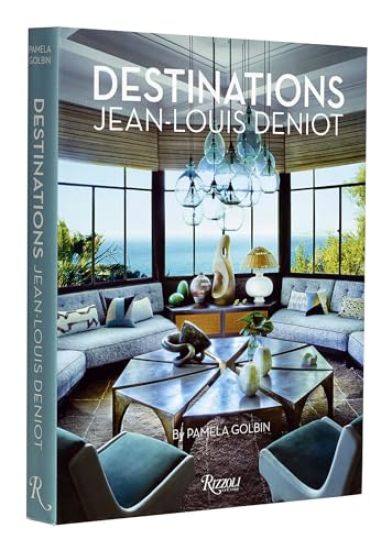
Jean-Louis Deniot: Destinations

Jean-Louis Deniot: Destinations

Pamela Golbin; Jean-Louis Deniot

RIZZOLI INTERNATIONAL PUBLICATIONS
2025
sidottu
Deniot is known for layering art and furniture from different periods, custom-made pieces with one-of-a-kind antiques with inviting harmony and elegance. Deniot s timeless and glamorous rooms possess an almost cinematic aesthetic without being either too formal or trendy. With stunning photography and a series of discerning project-by-project conversations between the designer and author Pamela Golbin, Destinations takes the reader around the world to eighteen destinations showcasing Deniot s newest never-before-published international projects, from his own handsome Paris office, tropical retreats in Miami, Manhattan aeries, and the interior of a private jet in Aspen, to an elegant townhouse in London, an Italian waterfront villa, and projects in Colombia, India, Russia, and Morocco. Destinations is the design book must of the year, both for fans of his work and the Francophile dreamer looking for inspiration wherever they live in the wide world.
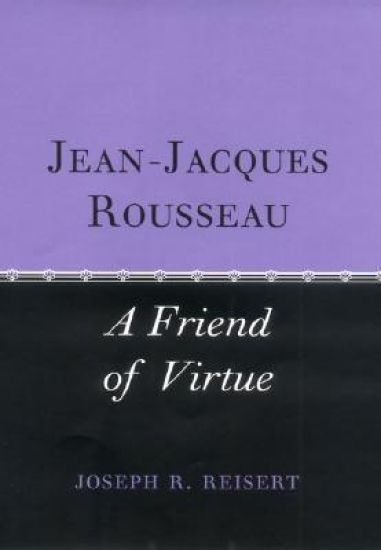
Jean-Jacques Rousseau

Jean-Jacques Rousseau

Joseph Reisert

Cornell University Press
2003
sidottu
Scholars have long debated the contribution Rousseau has made to political thought. Is he a theorist of radical individualism, a reactionary advocate for authoritarianism, or just a brilliantly paradoxical but ultimately incoherent controversialist? In the first book devoted to discussion of Rousseau's conception of virtue, Joseph R. Reisert argues that Rousseau's work offers a coherent political theory that both complements and challenges key elements of contemporary liberalism.Drawing on his deep familiarity with Rousseau's work, Reisert maintains that Rousseau's primary concern was to discover the psychological foundations of virtue, which he understood as the strength of will needed to respect the rights of others. Reisert reconstructs the model of the human soul that underpins Rousseau's account of virtue, a model he considers superior to the alternatives conceived by Aristotle, Hobbes, Locke, Montesquieu, Kant, and Rawls. Rousseau, the author explains, believed that life in modern societies undermines virtue, but that for individuals to thrive, and for free societies to endure, all would require moral education. Rousseau, who styled himself "a friend of virtue," sought to impart virtue to his readers through the examples of his literary characters Emile and Julie.Reisert finds that Rousseau's thought poses a dilemma for modern politics: democratic governments can do little to cultivate virtue directly, yet liberal society continues to need it. The requisite moral teaching, Reisert concludes, should be provided instead by families, religious organizations, and other civil associations.
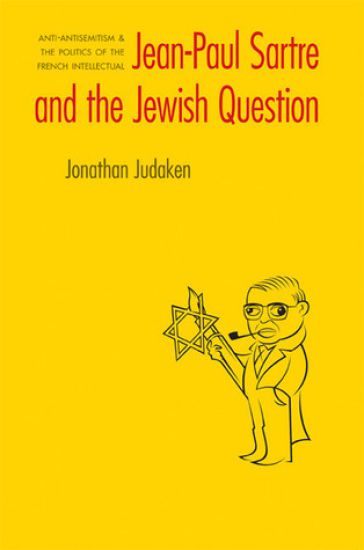
Jean-Paul Sartre and the Jewish Question

Jean-Paul Sartre and the Jewish Question

Jonathan Judaken

University of Nebraska Press
2009
pokkari
Jean-Paul Sartre and the Jewish Question examines the image of "the Jew" in Sartre's work to rethink not only his oeuvre but also the role of the intellectual in France and the politics and ethics of existentialism. It explores more broadly how French identity is defined through the abstraction and allegorization of "the Jew" and examines the role anti-antisemitic intellectuals play in this process. Jonathan Judaken reconsiders the origins of the intellectual in France in the context of the Dreyfus affair and Sartre's interventions in the parallel Franco-French conflicts in the 1930s and during the Vichy regime. He considers what it was possible to say on behalf of Jews and Judaism during the German occupation, Sartre's contribution after the war to the Vichy syndrome, his positions on the Arab-Israeli conflict, and the ways Sartre's reflections on the Jewish Question served as a template for his shift toward Marxism, his resistance to colonialism, and for the defining of debates about Jews and Judaism in postwar France by both Jewish and non-Jewish intellectuals. Judaken analyzes the texts that Sartre devoted to these issues and argues that "the Jew" constituted a foil Sartre consistently referenced in reflecting on politics in general and on the role of the intellectual in particular.
Jean-Jacques Rousseau

Jean-Jacques Rousseau

Strong Tracy B.

SAGE Publications Inc
1994
sidottu
This book examines the philosophy of Rousseau and its contribution to our understanding of modernity. Strong notes that Rousseau has been associated with almost every school of thought and political movement of Western modernity - why is it that he has been read so divergently? The author suggests that Rousseau `gives us...our language for politics and personhood...Rousseau is not the whole story of modernity, but he is, in ways that others around and before him were not, modern.'
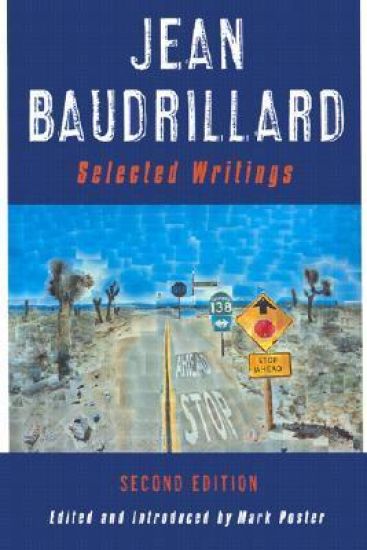
Jean Baudrillard: Selected Writings

Jean Baudrillard: Selected Writings

Jean Baudrillard

Stanford University Press
2002
sidottu
This is an expanded edition of the first comprehensive overview of the work of Jean Baudrillard, one of the most fascinating thinkers on the French intellectual scene. To the original selection of his writings from 1968 to 1985, this new edition adds examples of Baudrillard's work since that time. Reviews of the First Edition "This is a good book, and the author of its selected writings, Jean Baudrillard, deserves only a share of the compliment. It is difficult to introduce a difficult author, and Mark Poster has done a brilliant job. He has selected wisely from Baudrillard's writings. . . . More important, Poster has written what may be, pound for pound, the best introduction to a social theorist I have read. . . . Poster has somehow said everything the uninitiated needs to know before deciding to read Baudrillard."—Contemporary Sociology "Following the lead of thinkers such as Foucault, Derrida, and Deleuze, Baudrillard engages in a task of pointing away from any traditional sociological themes. His writings demand that one turn away from convenient or customary interpretations of society and, in the process, one is forced to use his or her imagination in new ways."—Choice "Poster's Introduction presents what is probably as clear and intelligent an exposition of Baudrillard's ideas as you'll find anywhere."—Philosophy and Literature
Jean Baudrillard: Selected Writings

Jean Baudrillard: Selected Writings

Jean Baudrillard

Stanford University Press
2002
pokkari
This is an expanded edition of the first comprehensive overview of the work of Jean Baudrillard, one of the most fascinating thinkers on the French intellectual scene. To the original selection of his writings from 1968 to 1985, this new edition adds examples of Baudrillard's work since that time. Reviews of the First Edition "This is a good book, and the author of its selected writings, Jean Baudrillard, deserves only a share of the compliment. It is difficult to introduce a difficult author, and Mark Poster has done a brilliant job. He has selected wisely from Baudrillard's writings. . . . More important, Poster has written what may be, pound for pound, the best introduction to a social theorist I have read. . . . Poster has somehow said everything the uninitiated needs to know before deciding to read Baudrillard."—Contemporary Sociology "Following the lead of thinkers such as Foucault, Derrida, and Deleuze, Baudrillard engages in a task of pointing away from any traditional sociological themes. His writings demand that one turn away from convenient or customary interpretations of society and, in the process, one is forced to use his or her imagination in new ways."—Choice "Poster's Introduction presents what is probably as clear and intelligent an exposition of Baudrillard's ideas as you'll find anywhere."—Philosophy and Literature