Kirjojen hintavertailu. Mukana 11 627 220 kirjaa ja 12 kauppaa.

Kirjahaku

Etsi kirjoja tekijän nimen, kirjan nimen tai ISBN:n perusteella.

1000 tulosta hakusanalla John Cheever

The Chronicle of John of Worcester: Volume II: The Annals from 450 to 1066
The chronicle of John of Worcester is one of the most important sources of earlier English history. The chronicle, which was written at Worcester by 1140, is of considerable interest to historians of both the Anglo-Saxon period and of the late eleventh and twelfth centuries. Its backbone is a translation of an Anglo-Saxon chronicle with varied connections, and this edition makes possible the detailed examination of these allegiances. Its annals for the second half of the ninth century provide one of the earliest surviving witnesses to the text of Asser's Life of Alfred. The author had access to otherwise unrecorded sources of events in the eleventh century, and the chronicle's value as a contemporary source for the reign of Stephen has long been acknowledged. Dr McGurk has completed the edition of the work left unfinished by R. R. Darlington on his death in 1977. The chronicle will be published in three volumes. Volume II covers the annals for 450 to 1066, and volume III the annals from 1067 to 1140. Volume I will be published last, and will contain a general introduction and supplementary material.
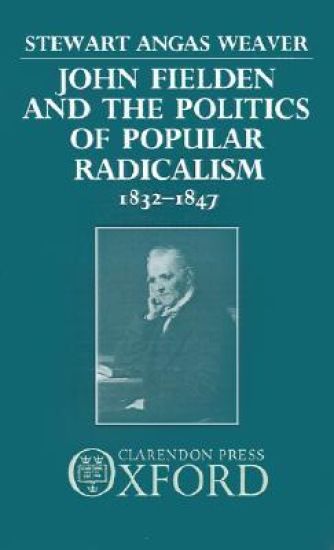
John Fielden and the Politics of Popular Radicalism 1832-1847
This is the first biographical study of John Fielden, industrial magnate and radical MP for Oldham in Lancashire from 1832 to 1847. Best known as a leading advocate of factory reform - he was the parliamentary sponsor of the momentous Ten Hours Act of 1847 - Fielden also took a conspicuous part in the Owenite, Chartist, and anti-Poor Law movements. Drawing on a little-used collection of Fielden family papers, the book offers an assessment of each of the movements in which Fielden's relationship with them, and discusses the influences which went into the making of a radical industrialist who occupied a unique place in Parliament as the people's representative. This long overdue account of his personal, business, and political life offers new insights into the turbulent politics of mid-nineteenth century England.
John Palsgrave as Renaissance Linguist

John Palsgrave as Renaissance Linguist

Gabriele Stein

Clarendon Press
1997
sidottu
The year 1530 saw the publication in London of one of the most remarkable books of the Renaissance: Lesclarcissement de la langue francoyse. The author of this vast work of over 1,000 pages was John Palsgrave, graduate of Cambridge, Paris, and Oxford, priest and chaplain to Henry VIII, and tutor to the King's sister. His book is the first dictionary of two neighbouring vernaculars, English and French, and simultaneously the first contrastive grammar of the two languages. It reveals him as a pioneering and exceptional linguist with a sharply observant and analytical mind, who goes far beyond the traditional application of Latin grammar-writing to two living languages. The book is also remarkable for the liveliness with which Palsgrave discusses and illustrates the social aspects of language use, dialectal variation, and the vigour of colloquial idiom. In this uniquely detailed study Stein sets the author and his book in their wider sociohistorical context and discusses Palsgrave's syntactic, semantic, and pragmatic analyses, some of which anticipate the findings of modern linguistics by over 400 years.
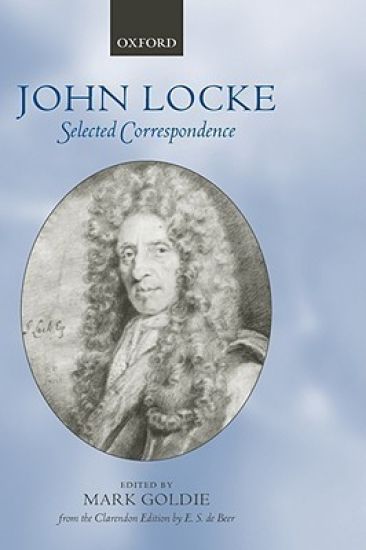
John Locke: Selected Correspondence
John Locke (1632-1704) was a prolific correspondent and left behind him over 3,600 letters, a collection almost unmatched in pre-modern times. A man of insatiable curiosity and wide social connections, his letters open up the cultural, social, intellectual, and political worlds of the later Stuart age. Spanning half a century, they mark the transition from the era of revolutionary Puritanism to the dawn of the Enlightenment. Locke is chiefly known as a philosopher, a theorist of empiricism in his Essay Concerning Philosophyrstanding, a theorist of liberalism in his Two Treatises of Government, and a theorist of religious toleration in his Letter concerning Toleration. But his interests extended further still, to education, medicine, finance, theology, empire, and the natural world. He was a Fellow of the early Royal Society. He received letters from scholars in Paris and Amsterdam, from colonial administrators in Virginia, from aristocrats and shopkeepers, from children, from tenants, from politicians, from philosophic women, from astronomers, chemists, and physicists. He is one of the first people whose correspondence is as far flung as North America, India, and China. A friend of Anglican archbishops and of freethinking anticlericals, of Isaac Newton and Robert Boyle, of William Molyneux the 'virtuoso' of Dublin, of Jean LeClerc of Amsterdam, and of Damaris Masham, Locke stood in the midst of the 'Republic of Letters'. This book brings together 245 of the most important and revealing letters. Half of them are letters written by Locke (twelve per cent of the total number surviving), the other half are letters written to him. If Locke's place is already secure among those who explore philosophy and political ideas, these letters will give Locke a new presence among those who are interested in the social and cultural worlds of seventeenth-century Britain.
John Locke: An Essay concerning Toleration
J. R. and Philip Milton present the first critical edition of John Locke's Essay concerning Toleration and a number of other writings on law and politics composed between 1667 and 1683. Although Locke never published any of these works himself they are of very great interest for students of his intellectual development because they are markedly different from the early works he wrote while at Oxford and show him working out ideas that were to appear in his mature political writings, the Two Treatises of Government and the Epistola de Tolerantia. The Essay concerning Toleration was written in 1667, shortly after Locke had taken up residence in the household of his patron Lord Ashley, subsequently Earl of Shaftesbury. It has been in print since the nineteenth century, but this volume contains the first critical edition based on all the extant manuscripts; it also contains a detailed account of Locke's arguments and of the contemporary debates on comprehension and toleration. Also included are a number of shorter writings on church and state, including a short set of queries on Scottish church government (1668), Locke's notes on Samuel Parker (1669), and 'Excommunication' (1674). The other two main works contained in this volume are rather different in character . One is a short tract on jury selection which was written at the time of Shaftesbury's imprisonment in 1681. The other is 'A Letter from a Person of Quality', a political pamphlet written by or for Shaftesbury in 1675 as part of his campaign against the Earl of Danby. This was published anonymously and is of disputed authorship; it was first attributed to Locke in 1720 and since then has occupied an uncertain position in the Locke canon. This volume contains the first critical edition based on contemporary printed editions and manuscripts and it includes a detailed account of the Letter's composition, authorship, and subsequent history. This volume will be an invaluable resource for all historians of early modern philosophy, of legal, political, and religious thought, and of 17th century Britain.
John Locke: The Reasonableness of Christianity
In 1695 John Locke published The Reasonableness of Christianity, an enquiry into the foundations of Christian belief. He did so anonymously, to avoid public involvement in the fiercely partisan religious controversies of the day. In the Reasonableness Locke considered what it was to which all Christians must assent in faith; he argued that the answer could be found by anyone for themselves in the divine revelation of Scripture alone. He maintained that the requirements of Scripture were few and simple, and therefore offered a basis for tolerant agreement among all Christians, and the promise of peace, stability, and security through toleration. This is the first critical edition of the Reasonableness: for the first time an authoritative annotated text is presented, with full information about sources, variants, amendments, and the publishing history of the work. Also provided in the editorial notes are cross-references, references to other works by Locke, definitions of terms, and other information conducive to an understanding of the text. Though modern interest has focused particularly on Locke's philosophy and political theory, increasing attention is being paid to his religious thought. These different strands cannot be understood properly in isolation from each other: so the broader aim of this edition is to help towards an improved understanding of his religious thought in the context of his work as a philosopher, political theorist, and exponent of religious toleration. In his editorial introduction John Higgins-Biddle investigates how Locke's ideas developed, and offers a critical assessment of the three main contemporary and subsequent interpretations of Locke's religious thought, all of which are shown to be unsatisfactory.
John Locke: Drafts for the Essay Concerning Human Understanding and Other Philosophical Writings
This is the first of three volumes which will contain all of Locke's extant philosophical writings relating to An Essay Concerning Human Understanding, not included in other Clarendon editions like the Correspondence. It contains the earliest known drafts of the Essay, Drafts A and B, both written in 1671, and provides for the first time an accurate version of Locke's text. Virtually all his changes are recorded in footnotes on each page. Peter Nidditch, whose highly acclaimed edition of An Essay Concerning Human Understanding was published in this series in 1975, used pioneering editorial techniques in his compilation of Volume 1. Most of the work was completed before his tragically early death in 1983. Volumes 2 and 3, almost wholly the work of G. A. J. Rogers will contain the third extant draft of the Essay (Draft C), the Epitome and the Conduct of the Understanding. They will also include a History of the Writing of the Essay, together with other shorter writings by Locke.
John Locke: Locke on Money

John Locke: Locke on Money

John Locke

Clarendon Press
1991
sidottu
Locke on Money presents for the first time the entire body of the philosopher's writings on this important subject (other than Two Treatises of Government). Accurate texts, together with an apparatus listing variant readings and significant manuscript changes, record the evolution of Locke's ideas from the original 1668-74 paper on interest to the three pamphlets on interest and coinage published in the 1690s. The introduction by Patrick Hyde Kelly establishes the wider context of Locke's writings in terms of contemporary debates on these subjects, the economic conditions of the time, and the circumstances of writing and publication. It shows, notably, that Locke's supposed responsibility for the 1696 recoinage is a myth. The account of what Locke derived from Mercantilist writings and of how he reformulated these in accordance with his philosophy illuminates his contribution to the evolution of economics, and will aid reappraisal of Two Treatises. The picture that emerges confirms Locke's status as major economic thinker, contrary to the prevalent view of recent decades. There are two volumes in the present edition. The first contains the introductory matter, and the texts of the Early Writings on Interest, 1688-74, and Some Considerations. The second comprises Short Observations, Further Considerations, and the Appendices, Bibliography, and Index.
John Locke: Correspondence

John Locke: Correspondence

John Locke

Clarendon Press
1978
sidottu
A scholarly edition of The Clarendon Edition of the Works of John Locke: Correspondence: Letters 849-1241 by E. S. de Beer. The edition presents an authoritative text, together with an introduction, commentary notes, and scholarly apparatus.
John Locke: Correspondence

John Locke: Correspondence

John Locke

Clarendon Press
1979
sidottu
A scholarly edition of The Clarendon Edition of the Works of John Locke: Correspondence: Letters 1702-2198 by E. S. de Beer. The edition presents an authoritative text, together with an introduction, commentary notes, and scholarly apparatus.
John Locke: Correspondence

John Locke: Correspondence

John Locke

Clarendon Press
1980
sidottu
A scholarly edition of The Clarendon Edition of the Works of John Locke: Correspondence: Letters 2199-2664 by E. S. de Beer. The edition presents an authoritative text, together with an introduction, commentary notes, and scholarly apparatus.
John Locke: Correspondence

John Locke: Correspondence

John Locke

Clarendon Press
1981
sidottu
A scholarly edition of The Clarendon Edition of the Works of John Locke: Correspondence: Letters 2665-3286 by E. S. de Beer. The edition presents an authoritative text, together with an introduction, commentary notes, and scholarly apparatus.
The Clarendon Edition of the Works of John Locke: Some Thoughts Concerning Education
One of the major works of John Locke (1632-1704), this detailed and comprehensive guide is mainly concerned with moral education. While concentrating on its role in creating a responsible adult and on the importance of virtue as a transmitter of culture, it also ranges over such practical topics as the effectiveness of physical punishment, how best to teach foreign languages, table manners, and varieties of crying. This critical edition is based on the third (1695) edition, and includes variants from the first five editions, from the Harvard University Library and the British Library drafts, and from Locke's correspondence to Edward Clarke and his wife.
John Locke: A Paraphrase and Notes on the Epistles of St. Paul
Locke's posthumously published work on Galatians, 1 and 2 Corinthians, Romans, and Ephesians provides important evidence of his thought during the final years of his life, and gives insights into his theology which are not available in his other writings. This critical edition of the work is based as far as possible on Locke's manuscript, and includes an editorial introduction, and textual, manuscript, and explanatory notes, as well as transcriptions of hitherto unpublished papers by Locke.
John Locke: A Paraphrase and Notes on the Epistles of St. Paul
Locke's posthumously published work on Galatians, 1 and 2 Corinthians, Romans and Ephesians, provides important evidence of his thought during the final years of his life, ad gives insights into his theology which are not available in his other writings. This critical edition of the work is based as far as possible on Locke's manuscript, and includes an editorial introduction, textual, manuscript, and explanatory notes, as well as transcriptions of hitherto unpublished papers by Locke.