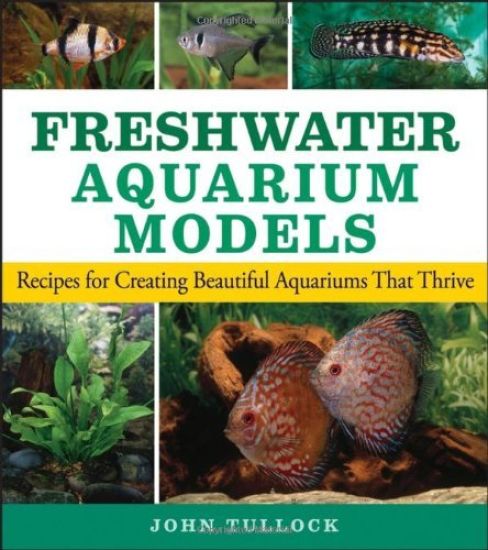
This book shows you step-by-step and fish-by-fish how to create a beautiful, harmonious aquarium that mimics a natural habitat and fosters healthy fish and plant life. It includes more than eighty detailed recipes for aquariums of different types and sizes, specific aquarium model designs, the basics of aquarium setup and maintenance, and a 16-page color catalog of fish and plant varieties.
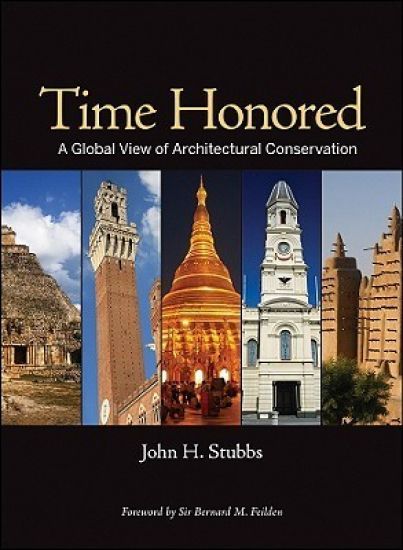
“The absence heretofore of a comparably thoroughgoing but accessible resource on a topic of such urgent public concern was a glaring lapse that makes this deeply researched, lucidly written, and helpfully annotated book an invaluable addition to the literature.”— New York Review of Books Time Honored is a comprehensive survey of the practice, theory, and structure of architectural heritage conservation throughout the world. Offering an argument for why architectural conservation is indispensable to modern life, Time Honored describes its parameters and evolution in an historical context, and then methodically presents approaches used in various countries, showing how historic preservation in the West differs from conservation in the rest of the world. Illustrated throughout with over 300 photographs, drawings, maps, and charts. No other book navigates the global conservation programs, policies, and project types so completely.
Introductory guide to human population genetics and microevolutionary theory Providing an introduction to mathematical population genetics, Human Population Genetics gives basic background on the mechanisms of human microevolution. This text combines mathematics, biology, and anthropology and is best suited for advanced undergraduate and graduate study. Thorough and accessible, Human Population Genetics presents concepts and methods of population genetics specific to human population study, utilizing uncomplicated mathematics like high school algebra and basic concepts of probability to explain theories central to the field. By describing changes in the frequency of genetic variants from one generation to the next, this book hones in on the mathematical basis of evolutionary theory. Human Population Genetics includes: Helpful formulae for learning ease Graphs and analogies that make basic points and relate the evolutionary process to mathematical ideas Glossary terms marked in boldface within the book the first time they appear In-text citations that act as reference points for further research Exemplary case studies Topics such as Hardy-Weinberg equilibrium, inbreeding, mutation, genetic drift, natural selection, and gene flow Human Population Genetics solidifies knowledge learned in introductory biological anthropology or biology courses and makes it applicable to genetic study. NOTE: errata for the first edition can be found at the author's website: http://employees.oneonta.edu/relethjh/HPG/errata.pdf
This book gives an introduction to basic fuzzy logic and Mamdani and Takagi-Sugeno fuzzy systems. The text shows how these can be used to control complex nonlinear engineering systems, while also also suggesting several approaches to modeling of complex engineering systems with unknown models. Finally, fuzzy modeling and control methods are combined in the book, to create adaptive fuzzy controllers, ending with an example of an obstacle-avoidance controller for an autonomous vehicle using modus ponendo tollens logic.
A comprehensive treatment of statistical applications for solving real-world environmental problems A host of complex problems face today's earth science community, such as evaluating the supply of remaining non-renewable energy resources, assessing the impact of people on the environment, understanding climate change, and managing the use of water. Proper collection and analysis of data using statistical techniques contributes significantly toward the solution of these problems. Statistics for Earth and Environmental Scientists presents important statistical concepts through data analytic tools and shows readers how to apply them to real-world problems. The authors present several different statistical approaches to the environmental sciences, including Bayesian and nonparametric methodologies. The book begins with an introduction to types of data, evaluation of data, modeling and estimation, random variation, and sampling—all of which are explored through case studies that use real data from earth science applications. Subsequent chapters focus on principles of modeling and the key methods and techniques for analyzing scientific data, including: Interval estimation and Methods for analyzinghypothesis testing of means time series data Spatial statistics Multivariate analysis Discrete distributions Experimental design Most statistical models are introduced by concept and application, given as equations, and then accompanied by heuristic justification rather than a formal proof. Data analysis, model building, and statistical inference are stressed throughout, and readers are encouraged to collect their own data to incorporate into the exercises at the end of each chapter. Most data sets, graphs, and analyses are computed using R, but can be worked with using any statistical computing software. A related website features additional data sets, answers to selected exercises, and R code for the book's examples. Statistics for Earth and Environmental Scientists is an excellent book for courses on quantitative methods in geology, geography, natural resources, and environmental sciences at the upper-undergraduate and graduate levels. It is also a valuable reference for earth scientists, geologists, hydrologists, and environmental statisticians who collect and analyze data in their everyday work.
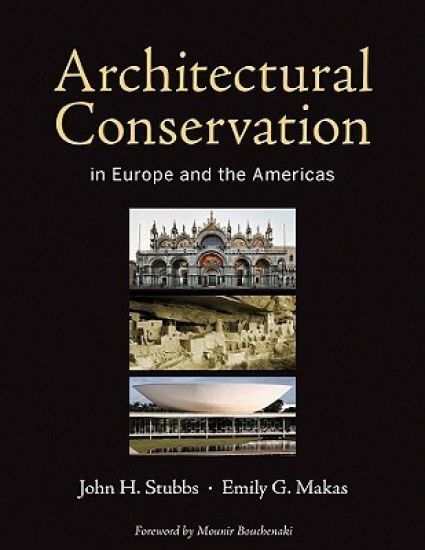
“From such well-known and long-vexed sites as the Athenian Acropolis to more contemporary locales like the Space Age Modernist capital city of Brasília, the conflicting and not always neatly resolvable forces that bear upon preservation are addressed as clearly and thoughtfully as the general reader could hope for.”—New York Review of Books “…an astonishing feat of research, compilation and synthesis.”—Context The book delivers the first major survey concerning the conservation of cultural heritage in both Europe and the Americas. Architectural Conservation in Europe and the Americas serves as a convenient resource for professionals, students, and anyone interested in the field. Following the acclaimed Time Honored, this book presents contemporary practice on a country-by-country and region-by-region basis, facilitating comparative analysis of similarities and differences. The book stresses solutions in architectural heritage protection and the contexts in which they were developed.
50 Great Myths of Human Evolution uses common misconceptions to explore basic theory and research in human evolution and strengthen critical thinking skills for lay readers and students. Examines intriguing—yet widely misunderstood—topics, from general ideas about evolution and human origins to the evolution of modern humans and recent trends in the fieldDescribes what fossils, archaeology, and genetics can tell us about human originsDemonstrates the ways in which science adapts and changes over time to incorporate new evidence and better explanationsIncludes myths such as “Humans lived at the same time as dinosaurs;” “Lucy was so small because she was a child;” “Our ancestors have always made fire;” and “There is a strong relationship between brain size and intelligence”Comprised of stand-alone essays that are perfect for casual reading, as well as footnotes and references that allow readers to delve more deeply into topics
50 Great Myths of Human Evolution uses common misconceptions to explore basic theory and research in human evolution and strengthen critical thinking skills for lay readers and students. Examines intriguing—yet widely misunderstood—topics, from general ideas about evolution and human origins to the evolution of modern humans and recent trends in the fieldDescribes what fossils, archaeology, and genetics can tell us about human originsDemonstrates the ways in which science adapts and changes over time to incorporate new evidence and better explanationsIncludes myths such as “Humans lived at the same time as dinosaurs;” “Lucy was so small because she was a child;” “Our ancestors have always made fire;” and “There is a strong relationship between brain size and intelligence”Comprised of stand-alone essays that are perfect for casual reading, as well as footnotes and references that allow readers to delve more deeply into topics
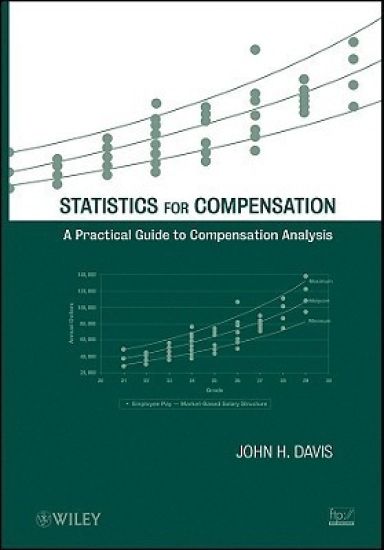
An insightful, hands-on focus on the statistical methods used by compensation and human resources professionals in their everyday work Across various industries, compensation professionals work to organize and analyze aspects of employment that deal with elements of pay, such as deciding base salary, bonus, and commission provided by an employer to its employees for work performed. Acknowledging the numerous quantitative analyses of data that are a part of this everyday work, Statistics for Compensation provides a comprehensive guide to the key statistical tools and techniques needed to perform those analyses and to help organizations make fully informed compensation decisions. This self-contained book is the first of its kind to explore the use of various quantitative methods—from basic notions about percents to multiple linear regression—that are used in the management, design, and implementation of powerful compensation strategies. Drawing upon his extensive experience as a consultant, practitioner, and teacher of both statistics and compensation, the author focuses on the usefulness of the techniques and their immediate application to everyday compensation work, thoroughly explaining major areas such as: Frequency distributions and histograms Measures of location and variability Model building Linear models Exponential curve models Maturity curve models Power models Market models and salary survey analysis Linear and exponential integrated market models Job pricing market models Throughout the book, rigorous definitions and step-by-step procedures clearly explain and demonstrate how to apply the presented statistical techniques. Each chapter concludes with a set of exercises, and various case studies showcase the topic's real-world relevance. The book also features an extensive glossary of key statistical terms and an appendix with technical details. Data for the examples and practice problems are available in the book and on a related FTP site. Statistics for Compensation is an excellent reference for compensation professionals, human resources professionals, and other practitioners responsible for any aspect of base pay, incentive pay, sales compensation, and executive compensation in their organizations. It can also serve as a supplement for compensation courses at the upper-undergraduate and graduate levels.
Critical Acclaim for Jacqueline Bouvier John Davis's intimate memoir of his beloved first cousin "Readers longing for a dignified and elegant approach to Jackie's early years will enjoy this biographical gem by John H. Davis." --Boston Herald "Goes a long way to highlight the formative influence of her privileged back-ground and her warm relationship with her father, the philandering Jack (Black Jack) Bouvier." --Los Angeles Times "Re-creates a colorful, fast-fading slice of American life as it flourished in the shadows of toll hedges and long lineages." --The Miami Herald "The most charming and reliable in the batch [of Jackie books] is Davis's memoir." --The Atlanta Journal and Constitution "Entertaining, a guilty pleasure." --The Associated Press "This tender memoir of Jackie's early years sheds much light on the future woman we all wanted to know but never could." --The Star-Ledger (Newark)
This Second Edition continues the fine tradition of its predecessor by exploring the various automatic control systems in aircraft and on board missiles. Considerably expanded and updated, it now includes new or additional material on: the effectiveness of beta-beta feedback as a method of obtaining coordination during turns using the F-15 as the aircraft model; the root locus analysis of a generic acceleration autopilot used in many air-to-air and surface-to-air guided missiles; the guidance systems of the AIM-9L Sidewinder as well as bank-to-turn missiles; various types of guidance, including proportional navigation and line-of-sight and lead-angle command guidance; the coupling of the output of a director fire control system into the autopilot; the analysis of multivariable control systems; and methods for modeling the human pilot, plus the integration of the human pilot into an aircraft flight control system. Also features many new additions to the appendices.
In Microdramas, John H. Muse argues that plays shorter than twenty minutes deserve sustained attention, and that brevity should be considered a distinct mode of theatrical practice. Focusing on artists for whom brevity became both a structural principle and a tool to investigate theater itself (August Strindberg, Maurice Maeterlinck, F. T. Marinetti, Samuel Beckett, Suzan-Lori Parks, and Caryl Churchill), the book explores four episodes in the history of very short theater, all characterized by the self-conscious embrace of brevity. The story moves from the birth of the modernist microdrama in French little theaters in the 1880s, to the explicit worship of speed in Italian Futurist synthetic theater, to Samuel Beckett’s often-misunderstood short plays, and finally to a range of contemporary playwrights whose long compilations of shorts offer a new take on momentary theater. Subjecting short plays to extended scrutiny upends assumptions about brief or minimal art, and about theatrical experience. The book shows that short performances often demand greater attention from audiences than plays that unfold more predictably. Microdramas put pressure on preconceptions about which aspects of theater might be fundamental and about what might qualify as an event. In the process, they suggest answers to crucial questions about time, spectatorship, and significance.
Richard D. McKelvey was a pioneer in the use of mathematical modeling for understanding the nature of political choices. Positive Changes in Political Science brings together his most important articles, accompanied by original essays from contemporary political scientists, some his colleagues or students, who reflect upon his contributions, their continuing relevance today, and how they are still shaping research for the future."Richard McKelvey's fundamental contributions to the foundations of political choice and to model-based empirical research are brought together in this volume. Their value is greatly enhanced by the perspectives provided by outstanding scholars."---Kenneth J. Arrow, Stanford University"If there were a Nobel Prize in Political Science, the late Richard McKelvey's name would have been high on the short list. This outstanding book shows why, by presenting McKelvey's original work on seven major contributions to the discipline, along with interpretive essays by numerous major scholars. This book is the essential McKelvey."---William R. Keech, Professor Emeritus of Political Economy, Carnegie Mellon University"Richard McKelvey made brilliant contributions to political science. This volume collects some of his most important papers and includes perspectives and comments on his work by noted scholars. It is a valuable resource for students and researchers."---Thomas Romer, Professor of Politics and Public Affairs, Princeton University"This excellent collection of essays, conjoined with reprinted papers by McKelvey, documents the continuing influence of one of the seminal forces in modern political science. High-quality commentaries on some of the most important published papers in political science highlight both McKelvey's empirical and theoretical contributions, and argue that McKelvey did indeed provide the building blocks for the research agendas being pursued today."---Gary Miller, Professor of Political Science, Washington University in St. LouisJohn H. Aldrich is Pfizer-Pratt University Professor of Political Science at Duke University. Visit the author's website at: www.duke.edu/~aldrich/.James E. Alt is Frank G. Thomson Professor of Government at Harvard University. Visit the author's website at: www.gov.harvard.edu/faculty/jalt/. Arthur Lupia is Varian Collegiate Professor of Political Science at the University of Michigan, Research Professor at the Institute for Social Research, and Principal Investigator of the American National Election Studies. Visit the author's website at: www.umich.edu/~lupia.
In Microdramas, John H. Muse argues that plays shorter than twenty minutes deserve sustained attention, and that brevity should be considered a distinct mode of theatrical practice. Focusing on artists for whom brevity became both a structural principle and a tool to investigate theater itself (August Strindberg, Maurice Maeterlinck, F. T. Marinetti, Samuel Beckett, Suzan-Lori Parks, and Caryl Churchill), the book explores four episodes in the history of very short theater, all characterized by the self-conscious embrace of brevity. The story moves from the birth of the modernist microdrama in French little theaters in the 1880s, to the explicit worship of speed in Italian Futurist synthetic theater, to Samuel Beckett’s often-misunderstood short plays, and finally to a range of contemporary playwrights whose long compilations of shorts offer a new take on momentary theater. Subjecting short plays to extended scrutiny upends assumptions about brief or minimal art, and about theatrical experience. The book shows that short performances often demand greater attention from audiences than plays that unfold more predictably. Microdramas put pressure on preconceptions about which aspects of theater might be fundamental and about what might qualify as an event. In the process, they suggest answers to crucial questions about time, spectatorship, and significance.
Richard D. McKelvey was a pioneer in the use of mathematical modeling for understanding the nature of political choices. Positive Changes in Political Science brings together his most important articles, accompanied by original essays from contemporary political scientists, some his colleagues or students, who reflect upon his contributions, their continuing relevance today, and how they are still shaping research for the future."Richard McKelvey's fundamental contributions to the foundations of political choice and to model-based empirical research are brought together in this volume. Their value is greatly enhanced by the perspectives provided by outstanding scholars."---Kenneth J. Arrow, Stanford University"If there were a Nobel Prize in Political Science, the late Richard McKelvey's name would have been high on the short list. This outstanding book shows why, by presenting McKelvey's original work on seven major contributions to the discipline, along with interpretive essays by numerous major scholars. This book is the essential McKelvey."---William R. Keech, Professor Emeritus of Political Economy, Carnegie Mellon University"Richard McKelvey made brilliant contributions to political science. This volume collects some of his most important papers and includes perspectives and comments on his work by noted scholars. It is a valuable resource for students and researchers."---Thomas Romer, Professor of Politics and Public Affairs, Princeton University"This excellent collection of essays, conjoined with reprinted papers by McKelvey, documents the continuing influence of one of the seminal forces in modern political science. High-quality commentaries on some of the most important published papers in political science highlight both McKelvey's empirical and theoretical contributions, and argue that McKelvey did indeed provide the building blocks for the research agendas being pursued today."---Gary Miller, Professor of Political Science, Washington University in St. LouisJohn H. Aldrich is Pfizer-Pratt University Professor of Political Science at Duke University. Visit the author's website at: www.duke.edu/~aldrich/.James E. Alt is Frank G. Thomson Professor of Government at Harvard University. Visit the author's website at: www.gov.harvard.edu/faculty/jalt/. Arthur Lupia is Varian Collegiate Professor of Political Science at the University of Michigan, Research Professor at the Institute for Social Research, and Principal Investigator of the American National Election Studies. Visit the author's website at: www.umich.edu/~lupia.
Voters do not always choose their preferred candidate on election day. Often they cast their ballots to prevent a particular outcome, as when their own preferred candidate has no hope of winning and they want to prevent another, undesirable candidate’s victory; or, they vote to promote a single-party majority in parliamentary systems, when their own candidate is from a party that has no hope of winning. In their thought-provoking book The Many Faces of Strategic Voting, Laura B. Stephenson, John H. Aldrich, and André Blais first provide a conceptual framework for understanding why people vote strategically, and what the differences are between sincere and strategic voting behaviors. Expert contributors then explore the many facets of strategic voting through case studies in Great Britain, Spain, Canada, Japan, Belgium, Germany, Switzerland, and the European Union.
Our world is built upon evolutionary transition and growth--and your ability to navigate through change will determine the quality of your life.Life's a dance between achievement and loss, how you handle these universal experiences defines who you are--and what your legacy will be. In Pivot Your Perspective, Spenker explains: How change is the propulsion mechanism of our life's journey--once you understand the change framework you can make informed choices and watch your life flourish. How we interact with the change others have created--and how we can take advantage of the ubiquitous nature of change in our lives to utilize change as a tool. Why understanding our values, beliefs, goals, and success are essential ingredients in allowing us to be consciously moving forward with our lives. This book is not a 10-step program whereby completing the steps everything comes together perfectly. Instead, this is about understanding the change framework, being aware of your active participation within it, and knowing that realizing goals is great--but what we gain from the experience striving for the goal is even better. It is extraordinarily clear that the volume and magnitude of change happening around us is of monumental scale. It has never been more important to be adept, skilled, and comfortable with change. If you do not want to embrace change, then this book is not for you right now. In reading Pivot Your Perspective, you'll accurately assess where you are stuck in your journey, learn how to navigate through change, and determine how to reach a place of trust and understanding in your life. If you shift your perspective of change, you shift your level of satisfaction, prosperity, and happiness--this book will teach you how. The journey is between what was and what is yet to be. To embrace the future, we must first examine the relationship we have with change. As with any journey, there is the first step. Let's get started, shall we?
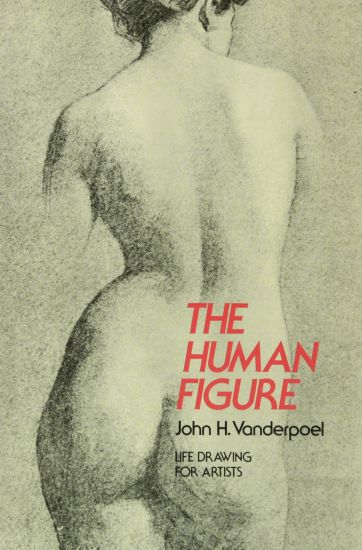
This great classic is still unrivalled for its clear, detailed presentation of thousands of fundamental features of the human figure. Every element of the body (such as the overhang of the upper lip; the puckering at the corners of the mouth; the characteristic proportions of the head, trunk, limbs, etc.; the tension between connected portions of the body; etc.) is carefully and concisely pointed out in the text. Even more helpful are the 430 pencil and charcoal drawings that illustrate each feature so that you are, in effect, shown what to look for by a master teacher.The result is the only art instruction book which not only illustrates details of the body but directs your attention at every stage to a host of subtle points of shading, curvature, proportion, foreshortening, muscular tension, variations due to extreme age or youth, and both major and minor differences in the structure and representation of the male and female figure. Comprehensive discussions and drawings cover the eyes; nose, mouth and chin; ear; head, trunk, back and hips; neck, throat, and shoulder; shoulder and arm; hand and wrist; leg; foot; the complete figure; and other interdependent groups of structures. This is the human figure as the artist, art student, and art teacher must know it in order to avoid many deceptive errors unfortunately common in much modern portraiture, painting, and illustrative art.
An American boy, son of Presbyterian missionaries, was born in Shanghai early in this century. The boy lived two lives, one within the pious church compound, the other along the canal and in the alleys of a traditional Chinese city. There he faced the alley brats' Lady Bandit, heard the shrill screams of a child's foot-binding, learned rank obscenities from passing boatmen, and, while still in short pants, chewed Sen-Sen and ogled snake-charmers in the old Native City. He sailed up the Yangtze to attend boarding school, and along with his Boy Scout patrol, met Chiang Kai-shek. And when John Espey grew up, he wrote about his years in China. This memoir is the story of those years, and while it is a wry, affectionate account, it also conveys an often overlooked picture of China in the years before communism. Seen through the eyes of a child, the interplay of religion, commerce, and American colonialism that took place during this period is revealed more tellingly - and more lightheartedly - than in many an analysis by an 'old China hand'. Espey's bent is to use a 'Chinese' approach to his subject, that is, to hide a second meaning within his words, to speak in parables. This he learned from both his single-minded missionary father and the family's Chinese cook. The result is that the reader of "Minor Heresies, Major Departures" will learn a great deal about the Pacific Rim while having a rollicking good time.