Kirjahaku
Etsi kirjoja tekijän nimen, kirjan nimen tai ISBN:n perusteella.
1000 tulosta hakusanalla John R. Fitzpatrick
As organizations today are linking their systems across enterprise-wide networks and VPNs as well as increasing their exposure to customers, competitors, browsers and hackers on the Internet, it becomes increasingly imperative for Web professionals to be trained in techniques for effectively protecting their sites from internal and external threats. Each connection magnifies the vulnerability to attack. With the increased connectivity to the Internet and the wide availability of automated cracking tools, organizations can no longer simply rely on operating system security to protect their valuable corporate data. Furthermore, the exploding use of Web technologies for corporate intranets and Internet sites has escalated security risks to corporate data and information systems. Practical Internet Security reveals how the Internet is paving the way for secure communications within organizations and on the public Internet. This book provides the fundamental knowledge needed to analyze risks to a system and to implement a security policy that protects information assets from potential intrusion, damage, or theft. It provides dozens of real-life scenarios and examples, as well as hands-on instruction in securing Web communications and sites. You will learn the common vulnerabilities of Web sites; as well as, how to carry out secure communications across unsecured networks. All system administrators and IT security managers will find this book an essential practical resource.

1. INTRODUCTION With the increasing deployment of wireless networks (802. 11 architecture) in enterprise environments, IT enterprises are working to implement security mechanisms that are equivalent to those existing today for wire-based networks. An important aspect of this is the need to provide secure access to the network for valid users. Existing wired network jacks are located inside buildings already secured from unauthorized access through the use of keys, badge access, and so forth. A user must gain physical access to the building in order to plug a client computer into a network jack. In contrast, a wireless access point (AP) may be accessed from off the premises if the signal is detectable (for instance, from a parking lot adjacent to the building). Thus, wireless networks require secure access to the AP and the ability to isolate the AP from the internal private network prior to user authentication into the network domain. Furthermore, as enterprises strive to provide better availability of mission-critical wireless data, they also face the challenge of maintaining that data's security and integrity. While each connection with a client, a supplier or a enterprise partner can improve responsiveness and efficiency, it also increases the vulnerability of enterprise wireless data to attack. In such an environment, wireless network security is becoming more important every day. Also, with the growing reliance on e-commerce, wireless network-based services and the Internet, enterprises are faced with an ever-increasing responsibility to protect their systems from attack.
If you imagine South Dakota as a dry and dusty plains state, you are partly right, says author John Milton in this gracefully written history. But the image of flat, barren prairies fails to convey other qualities that have lured people there—the cool fragrance of the pine-covered Black Hills, the grand sweep of sky and earth on the prairie.
Triangulating Peace tackles today’s most provocative hypothesis in the field of international relations: the democratic peace proposition. Drawing on ideas originally put forth by Immanuel Kant, the authors argue that democracy, economic interdependence, and international mediation can successfully cooperate to significantly reduce the chances of war.
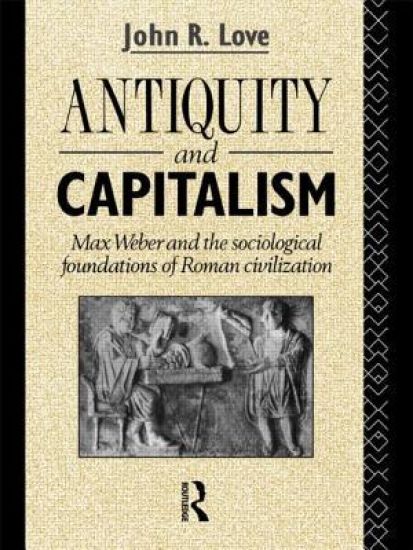
This ambitious book addresses questions concerning an old theme - the rise and fall of ancient civilization - but does so from a distinctive theoretical perspective by taking its lead from the work of the great German sociologist Max Weber.
International Media Research
John R. Corner; Philip Schlesinger; Professor Philip R Schlesinger; Roger Silverstone
Routledge
1996
sidottu
International Media Research offers a rigorous and critical review of key approaches and concerns that have recently defined the field of media research. In this clearly argued collection of essays, the contributors analyze and reflect upon dominant themes and debates that have made media research an increasingly important element of cultural theory. The volume begins with a critical evaluation of the work of the leading media scholar, Elihu Katz, and continues with an exploration of the relationship between media studies and adjacent disciplines: cultural studies and gender and sexuality.Contributors drawn from Britain, America, Canada and Belgium consider the relationships between media research and media policy in different national and international contexts. Focusing on the European Union, East-Central Europe, North America and Latin America, chapters assess the impact of social, economic and political circumstances on policy debates and the shaping of the research agenda. The final chapter adopts a transatlantic perspective in tracing and analysing the history of the media's role in reporting war.
The development of the environmental movement has relied heavily upon written and visual imagery. Representing the Environment offers an introductory guide to representations of the environment found in the media, literature, art and everyday life encounters. Featuring case studies from Europe, the Americas and Australia, Representing the Environment provides practical guidance on how to study environmental representations from a cultural and historic perspective, and places the reader in the role of active interpreter. The book argues that studying representations provides an important lens on the development of environmental attitudes, values and decision-making.
International Media Research
John R. Corner; Philip Schlesinger; Professor Philip R Schlesinger; Roger Silverstone
Routledge
1998
nidottu
International Media Research offers a rigorous and critical review of key approaches and concerns that have recently defined the field of media research. In this clearly argued collection of essays, the contributors analyze and reflect upon dominant themes and debates that have made media research an increasingly important element of cultural theory. The volume begins with a critical evaluation of the work of the leading media scholar, Elihu Katz, and continues with an exploration of the relationship between media studies and adjacent disciplines: cultural studies and gender and sexuality.Contributors drawn from Britain, America, Canada and Belgium consider the relationships between media research and media policy in different national and international contexts. Focusing on the European Union, East-Central Europe, North America and Latin America, chapters assess the impact of social, economic and political circumstances on policy debates and the shaping of the research agenda. The final chapter adopts a transatlantic perspective in tracing and analysing the history of the media's role in reporting war.
Apocalypse Observed is about religious violence. By analyzing five of the most notorious cults of recent years, the authors present a fascinating and revealing account of religious sects and conflict. Cults covered include:* the apocalypse at Jonestown* the Branch Davidians at Waco* the violent path of Aum Shinrikyo* the mystical apocalypse of the Solar Temple* the mass suicide of Heaven's Gate.Through comparative case studies and in-depth analysis, the authors show how religious violence can erupt not simply from the beliefs of the cult followers or the personalities of their leaders, but also from the way in which society responds to the cults in its midst.
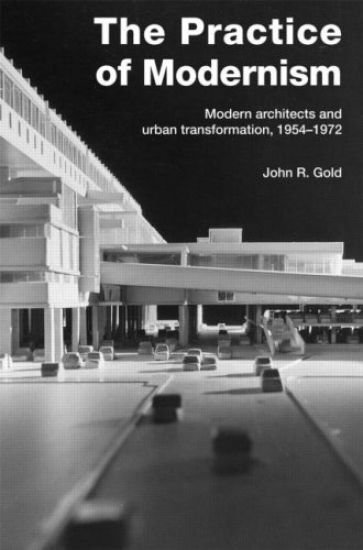
In this sequel to his widely-acclaimed book The Experience of Modernism (1997), John Gold continues his detailed enquiry into the Modern Movement's involvement in urban planning and city design.Making extensive use of information gained from hours of in-depth interviews with architects of the time, this new book examines the complex relationship between vision and subsequent practice in the saga of postwar urban reconstruction. The Practice of Modernism:traces the personal, institutional and professional backgrounds of the architects involved in schemes for reconstruction and replanningdeals directly with the progress of urban transformation, focusing on the contribution that modern architects and architectural principles made to town centre renewal and social housinghighlights how the exuberance of the 1960s gave way to the profound reappraisal that emerged by the early 1970s.Written by an expert, this is a key book on the planning aspects of the modernist movement for architectural historians, urban geographers, planners and all concerned with understanding the recent history of the contemporary city.
The arrival of the railway was one of the most far reaching events in the history of the Victorian city. The present study, based upon detailed case histories of Britain's five largest cities (London, Birmingham, Glasgow, Manchester and Liverpool), shows how the railways gave Victorian cities their compact shape, influenced topography and character of their central districts, and determines the nature of suburban expansion.This book was first published in 1969.
Festivals have always been part of city life, but their relationship with their host cities has continually changed. With the rise of industrialization, they were largely considered peripheral to the course of urban affairs. Now they have become central to new ways of thinking about the challenges of economic and social change, as well as repositioning cities within competitive global networks. In this timely and thought-provoking book, John and Margaret Gold provide a reflective and evidence-based historical survey of the processes and actors involved, charting the ways that regular festivals have now become embedded in urban life and city planning.Beginning with David Garrick’s rain-drenched Shakespearean Jubilee and ending with Sydney’s flamboyant Mardi Gras celebrations, it encompasses the emergence and consolidation of city festivals. After a contextual historical survey that stretches from Antiquity to the late nineteenth century, there are detailed case studies of pioneering European arts festivals in their urban context: Venice’s Biennale, the Salzburg Festival, the Cannes Film Festival and Edinburgh’s International Festival. Ensuing chapters deal with the worldwide proliferation of arts festivals after 1950 and with the ever-increasing diversifycation of carnival celebrations, particularly through the actions of groups seeking to assert their identity. The conclusion draws together the book’s key themes and sketches the future prospects for festival cities.Lavishly illustrated, and copiously researched, this book is essential reading not just for urban geographers, social historians and planners, but also for anyone interested in contemporary festival and events tourism, urban events strategy, urban regeneration regeneration, or simply building a fuller understanding of the relationship between culture, planning and the city.
Buried in many people and operating largely outside the realm of conscious thought are forces inclining us toward liberal or conservative political convictions. Our biology predisposes us to see and understand the world in different ways, not always reason and the careful consideration of facts. These predispositions are in turn responsible for a significant portion of the political and ideological conflict that marks human history.With verve and wit, renowned social scientists John Hibbing, Kevin Smith, and John Alford—pioneers in the field of biopolitics—present overwhelming evidence that people differ politically not just because they grew up in different cultures or were presented with different information. Despite the oft-heard longing for consensus, unity, and peace, the universal rift between conservatives and liberals endures because people have diverse psychological, physiological, and genetic traits. These biological differences influence much of what makes people who they are, including their orientations to politics.Political disputes typically spring from the assumption that those who do not agree with us are shallow, misguided, uninformed, and ignorant. Predisposed suggests instead that political opponents simply experience, process, and respond to the world differently. It follows, then, that the key to getting along politically is not the ability of one side to persuade the other side to see the error of its ways but rather the ability of each side to see that the other is different, not just politically, but physically. Predisposed will change the way you think about politics and partisan conflict.As a bonus, the book includes a "Left/Right 20 Questions" game to test whether your predispositions lean liberal or conservative.
In 1998 a bloody war erupted in The Horn of Africa between Ethiopia and Eritrea. During the war Ethiopia arrested and expelled 70,000 of its citizens, and stripped another 50,000-plus of their citzenship on the basis of their presumed ethnicity. Nationalism, Law and Statelessness: Grand Illusions in the Horn of Africa examines the events which led up to the war, documents the expulsions and denationalisations that took place and follows the flight of these stateless Ethiopians out of the Horn into Europe. The core issue examined is the link between sovereignty and statelessness as this plays out in The Horn of Africa and in the West. The book provides a valuable insight into how nations create and perpetuate statelessness, the failure of law, both national and international, to protect and address the plight of stateless persons, and the illusory nature of nationalism, citizenship and human rights in the modern age. The study is one of a very few which examines the problem of statelessness through the accounts of stateless persons themselves.This book will be of great interest to students and researchers in anthropology, law, politics, African studies and refugee studies as well as professionals and all those interested in stateless persons in the West, including Eritreans, who continue to be denied basic rights.
This ambitious book addresses questions concerning an old theme - the rise and fall of ancient civilization - but does so from a distinctive theoretical perspective by taking its lead from the work of the great German sociologist Max Weber.
The arrival of the railway was one of the most far reaching events in the history of the Victorian city. The present study, based upon detailed case histories of Britain's five largest cities (London, Birmingham, Glasgow, Manchester and Liverpool), shows how the railways gave Victorian cities their compact shape, influenced topography and character of their central districts, and determines the nature of suburban expansion.This book was first published in 1969.