Kirjahaku
Etsi kirjoja tekijän nimen, kirjan nimen tai ISBN:n perusteella.
1000 tulosta hakusanalla John R. Howe
Originally published in 1985, Learning to Read presents a balanced view of contemporary research into the reading process and theories accounting for reading and poor reading. The book focuses in particular on children who experience considerable difficulty in acquiring necessary reading skills. It considers how reading ability is assessed and the problematic subject of dyslexia. It also adopts a comprehensive approach to the cognitive factors behind poor reading, as well as possible developmental and environmental factors. Learning to Read will appeal to those with an interest in how children learn to read and the development of research on this subject.


As the first book in English on the origins of Japanese historiography, using both archaeological and textual data, this book examines the connection between ancient Japan and the Korean kingdom of Paekche and how tutors from the kingdom of Paekche helped to lay the foundation for a literate culture in Japan.Illustrating how tutors from the kingdom of Paekche taught Chinese writing to the Japanese court through the prism of this highly civilized culture, the book goes on to argue that Paekche tutors guided the early Japanese court through writing, recording family history, and ultimately an early history of the ruling family. As the Japanese began to create their own history, they relied on Paekche histories as a model. Triangulating textual data from Kojiki, Nihon shoki, and Sendai kuji hongi, the author here demonstrates that various aspects of early king genealogies and later events were manipulated. Offering new theories about the Japanese ruling family, it is posited that Emperor Jito had her committee put Jingu in power, and Suiko on the throne in place of original male rulers to enhance images of strong, female rulers, as she envisioned herself.The Birth of Japanese Historiography will be a valuable resource for students and scholars of Japanese history, historiography, and linguistics.
Atheology is the intellectual effort to understand atheism, defend the reasonableness of unbelief, and support nonbelievers in their encounters with religion. This book presents a historical overview of the development of atheology from ancient thought to the present day. It offers in-depth examinations of four distinctive schools of atheological thought: rationalist atheology, scientific atheology, moral atheology, and civic atheology. John R. Shook shows how a familiarity with atheology’s complex histories, forms, and strategies illuminates the contentious features of today’s atheist and secularist movements, which are just as capable of contesting each other as opposing religion. The result is a book that provides a disciplined and philosophically rigorous examination of atheism’s intellectual strategies for reasoning with theology. Systematic Atheology is an important contribution to the philosophy of religion, religious studies, secular studies, and the sociology and psychology of nonreligion.
First published in 1982 at a time when housing policy featured prominently in the press and in political debate, Housing in Britain was written to provide an authoritative review of housing in Britain. The book is a comprehensive introduction to the major policy shifts from 1945 to the year of publication. It explores the many aspects of ‘housing’ as a matter of state policy; as a commodity with a certain market for its sale and exchange; as an essential item, with rules regulating access and eligibility; and as a vital element in the reproduction of social life. Particular attention is paid to the institutions involved within the British housing market, and the redistributional consequences of housing-market processes and state housing policy. Housing in Britain will appeal to those with an interest in the history of British housing policy and debates, and the history of social policy in Britain.
While traditional finance focuses on the tools used to optimize return and minimize risk, this book shows how psychology can explain our decisions more than financial theory. Analyzing how investors behave in the real world, this is the first book of its kind to delve into the ways biases influence investment behavior, and how overcoming these biases can increase financial success.Now in its seventh edition, this classic text features: An easy-to-understand structure, illustrating psychological biases as everyday behavior; analyzing their effect on investment decisions; and concluding with academic studies that show real-life investors making choices that hurt their wealth New content on fintech and cryptocurrencies, the role of social media in investing, generational biases, and the COVID-19 pandemic Experiential examples, chapter summaries, and end-of-chapter discussion questions to help readers test their practical understanding Online supplements comprising PowerPoint slides for both students and lecturersFully updated with the latest research in the field, The Psychology of Investing will prove fascinating and educational for advanced students in behavioral finance, investment and portfolio management classes, as well as investors and financial planners.
Housebuilding, Planning and Community Action
John R. Short; Stephen Fleming; Stephen J. G. Witt
TAYLOR FRANCIS LTD
2023
nidottu
First published in 1986, Housebuilding, Planning and Community Action was written as an examination of the conflicts and tensions resulting from private sector housing growth in Central Berkshire, part of Britain’s ‘Silicon Valley’ along the M4 motorway. The book provides a detailed consideration of the various ‘actors’ and their interactions and explores the fight from Community groups and parish councils to halt development, in opposition to the government’s reluctance to discourage economic growth. It focuses on four groups closely involved in the production, allocation, and consumption of new housing: speculative housebuilders, local planning authorities, parish councils, and community/residents’ groups. The motivations and actions of each group are examined, and the tensions between them are highlighted, set within the context of central government attitudes towards planning and private housebuilding. Housebuilding, Planning and Community Action has lasting relevance for those interested in human geography, and the history of housebuilding and planning.
Housebuilding, Planning and Community Action
John R. Short; Stephen Fleming; Stephen J. G. Witt
Routledge
2021
sidottu
First published in 1986, Housebuilding, Planning and Community Action was written as an examination of the conflicts and tensions resulting from private sector housing growth in Central Berkshire, part of Britain’s ‘Silicon Valley’ along the M4 motorway. The book provides a detailed consideration of the various ‘actors’ and their interactions and explores the fight from Community groups and parish councils to halt development, in opposition to the government’s reluctance to discourage economic growth. It focuses on four groups closely involved in the production, allocation, and consumption of new housing: speculative housebuilders, local planning authorities, parish councils, and community/residents’ groups. The motivations and actions of each group are examined, and the tensions between them are highlighted, set within the context of central government attitudes towards planning and private housebuilding. Housebuilding, Planning and Community Action has lasting relevance for those interested in human geography, and the history of housebuilding and planning.
As organizations today are linking their systems across enterprise-wide networks and VPNs as well as increasing their exposure to customers, competitors, browsers and hackers on the Internet, it becomes increasingly imperative for Web professionals to be trained in techniques for effectively protecting their sites from internal and external threats. Each connection magnifies the vulnerability to attack. With the increased connectivity to the Internet and the wide availability of automated cracking tools, organizations can no longer simply rely on operating system security to protect their valuable corporate data. Furthermore, the exploding use of Web technologies for corporate intranets and Internet sites has escalated security risks to corporate data and information systems. Practical Internet Security reveals how the Internet is paving the way for secure communications within organizations and on the public Internet. This book provides the fundamental knowledge needed to analyze risks to a system and to implement a security policy that protects information assets from potential intrusion, damage, or theft. It provides dozens of real-life scenarios and examples, as well as hands-on instruction in securing Web communications and sites. You will learn the common vulnerabilities of Web sites; as well as, how to carry out secure communications across unsecured networks. All system administrators and IT security managers will find this book an essential practical resource.
1. INTRODUCTION With the increasing deployment of wireless networks (802. 11 architecture) in enterprise environments, IT enterprises are working to implement security mechanisms that are equivalent to those existing today for wire-based networks. An important aspect of this is the need to provide secure access to the network for valid users. Existing wired network jacks are located inside buildings already secured from unauthorized access through the use of keys, badge access, and so forth. A user must gain physical access to the building in order to plug a client computer into a network jack. In contrast, a wireless access point (AP) may be accessed from off the premises if the signal is detectable (for instance, from a parking lot adjacent to the building). Thus, wireless networks require secure access to the AP and the ability to isolate the AP from the internal private network prior to user authentication into the network domain. Furthermore, as enterprises strive to provide better availability of mission-critical wireless data, they also face the challenge of maintaining that data's security and integrity. While each connection with a client, a supplier or a enterprise partner can improve responsiveness and efficiency, it also increases the vulnerability of enterprise wireless data to attack. In such an environment, wireless network security is becoming more important every day. Also, with the growing reliance on e-commerce, wireless network-based services and the Internet, enterprises are faced with an ever-increasing responsibility to protect their systems from attack.
If you imagine South Dakota as a dry and dusty plains state, you are partly right, says author John Milton in this gracefully written history. But the image of flat, barren prairies fails to convey other qualities that have lured people there—the cool fragrance of the pine-covered Black Hills, the grand sweep of sky and earth on the prairie.
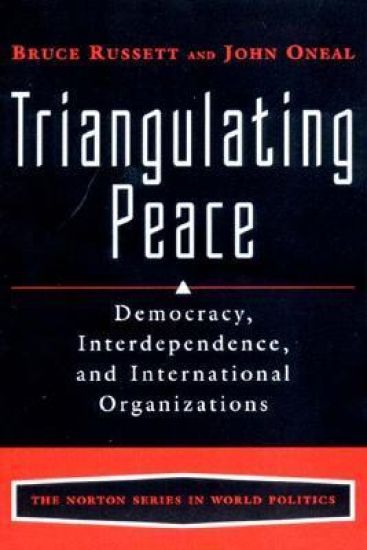
Triangulating Peace tackles today’s most provocative hypothesis in the field of international relations: the democratic peace proposition. Drawing on ideas originally put forth by Immanuel Kant, the authors argue that democracy, economic interdependence, and international mediation can successfully cooperate to significantly reduce the chances of war.
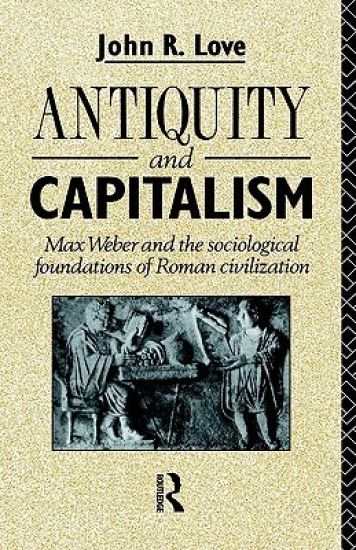
This ambitious book addresses questions concerning an old theme - the rise and fall of ancient civilization - but does so from a distinctive theoretical perspective by taking its lead from the work of the great German sociologist Max Weber.
International Media Research
John R. Corner; Philip Schlesinger; Professor Philip R Schlesinger; Roger Silverstone
Routledge
1996
sidottu
International Media Research offers a rigorous and critical review of key approaches and concerns that have recently defined the field of media research. In this clearly argued collection of essays, the contributors analyze and reflect upon dominant themes and debates that have made media research an increasingly important element of cultural theory. The volume begins with a critical evaluation of the work of the leading media scholar, Elihu Katz, and continues with an exploration of the relationship between media studies and adjacent disciplines: cultural studies and gender and sexuality.Contributors drawn from Britain, America, Canada and Belgium consider the relationships between media research and media policy in different national and international contexts. Focusing on the European Union, East-Central Europe, North America and Latin America, chapters assess the impact of social, economic and political circumstances on policy debates and the shaping of the research agenda. The final chapter adopts a transatlantic perspective in tracing and analysing the history of the media's role in reporting war.
The development of the environmental movement has relied heavily upon written and visual imagery. Representing the Environment offers an introductory guide to representations of the environment found in the media, literature, art and everyday life encounters. Featuring case studies from Europe, the Americas and Australia, Representing the Environment provides practical guidance on how to study environmental representations from a cultural and historic perspective, and places the reader in the role of active interpreter. The book argues that studying representations provides an important lens on the development of environmental attitudes, values and decision-making.
International Media Research
John R. Corner; Philip Schlesinger; Professor Philip R Schlesinger; Roger Silverstone
Routledge
1998
nidottu
International Media Research offers a rigorous and critical review of key approaches and concerns that have recently defined the field of media research. In this clearly argued collection of essays, the contributors analyze and reflect upon dominant themes and debates that have made media research an increasingly important element of cultural theory. The volume begins with a critical evaluation of the work of the leading media scholar, Elihu Katz, and continues with an exploration of the relationship between media studies and adjacent disciplines: cultural studies and gender and sexuality.Contributors drawn from Britain, America, Canada and Belgium consider the relationships between media research and media policy in different national and international contexts. Focusing on the European Union, East-Central Europe, North America and Latin America, chapters assess the impact of social, economic and political circumstances on policy debates and the shaping of the research agenda. The final chapter adopts a transatlantic perspective in tracing and analysing the history of the media's role in reporting war.
Apocalypse Observed is about religious violence. By analyzing five of the most notorious cults of recent years, the authors present a fascinating and revealing account of religious sects and conflict. Cults covered include:* the apocalypse at Jonestown* the Branch Davidians at Waco* the violent path of Aum Shinrikyo* the mystical apocalypse of the Solar Temple* the mass suicide of Heaven's Gate.Through comparative case studies and in-depth analysis, the authors show how religious violence can erupt not simply from the beliefs of the cult followers or the personalities of their leaders, but also from the way in which society responds to the cults in its midst.