Kirjojen hintavertailu. Mukana 11 244 527 kirjaa ja 12 kauppaa.

Kirjahaku

Etsi kirjoja tekijän nimen, kirjan nimen tai ISBN:n perusteella.

1000 tulosta hakusanalla Joseph Butler

Joseph Roberts Smallwood

Joseph Roberts Smallwood

Melvin Baker; Peter Neary

McGill-Queen's University Press
2021
sidottu
No other figure, historical or political, features more prominently in recent Newfoundland history than Joey Smallwood. During his long career in Newfoundland politics, Smallwood used the literary, rhetorical, and theatrical skills honed in the first five decades of his life to create a distinct and celebrated persona. He told his own story in his lively autobiography, I Chose Canada, published in 1973 only a year after he left office.Talented, venturesome, and above all resilient, he was no ordinary Joe. Smallwood was born in Gambo, Bonavista Bay, but grew up in St John's. Leaving school at fifteen, he quickly established himself as a journalist and as a publicist for Sir William Coaker's Fishermen's Protective Union. In the early 1920s Smallwood sojourned twice in New York, where he planned a Newfoundland labour party. Ambition, however, led him to support the Liberal Party of Sir Richard Squires. Defeated as a candidate in the general election of June 1932, he next promoted producer and consumer cooperatives, but with mixed results. In 1937 he edited The Book of Newfoundland and thereafter enjoyed great success on the radio as "The Barrelman." The book culminates with Smallwood's adoption of the cause of Confederation and his swearing in on 1 April 1949 as premier of the new Province of Newfoundland.There are multiple J.R. Smallwoods, but the aspiring and ambitious figure presented in this biography stands apart. Melvin Baker and Peter Neary use the largely untapped sources of Smallwood's own papers and his extensive journalistic writing to add a documentary basis to what is known or conjectured about the first five decades of Smallwood's remarkable life, both public and private.
Joseph Conrad and the Reader

Joseph Conrad and the Reader

A. Acheraïou

Palgrave Macmillan
2009
sidottu
Joseph Conrad and the Reader is the first book fully devoted to Conrad's relation to the reader, visual theory and authorship. This challenging study proposes new approaches to modern literary criticism and deftly examines the limits of deconstructionist theories, introducing groundbreaking new theoretical concepts of reading and reception.
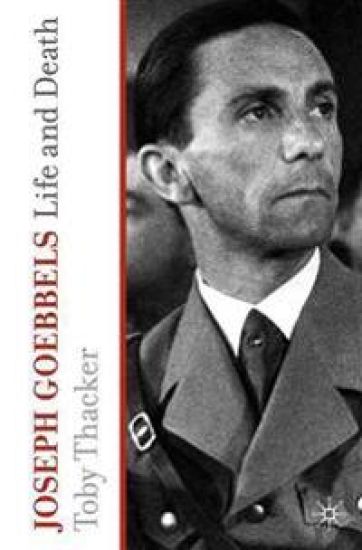
Joseph Goebbels

Joseph Goebbels

T. Thacker

Palgrave Macmillan
2009
sidottu
An insightful new biography of Joseph Goebbels, Propaganda Minister of the 'Third Reich' and one of the most important and troubling figures of the twentieth century. The first account to use all of Goebbels' surviving diaries, it sheds new light on his personality, private life and political convictions, as well as his relationship with Hitler.
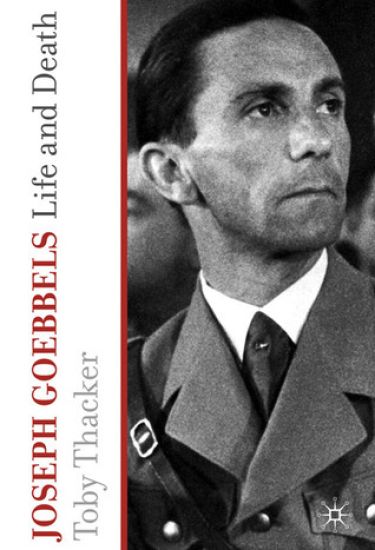
Joseph Goebbels

Joseph Goebbels

T. Thacker

Palgrave Macmillan
2009
nidottu
An insightful new biography of Joseph Goebbels, Propaganda Minister of the 'Third Reich' and one of the most important and troubling figures of the twentieth century. The first account to use all of Goebbels' surviving diaries, it sheds new light on his personality, private life and political convictions, as well as his relationship with Hitler.
Joseph Conrad: Heart of Darkness

Joseph Conrad: Heart of Darkness

Columbia University Press
1999
pokkari
Spanning an impressive range of interpretations, the critical works in this collection analyze the complex narrative technique of Heart Of Darkness while exploring its evocation of myth, philosophy, and politics, its attitudes to empire, its images of Africa, and its representations of women. Examining secondary sources from the 1900s to the 1990s, this Guide is an indispensable resource for the study of one of Conrad's most potent works.
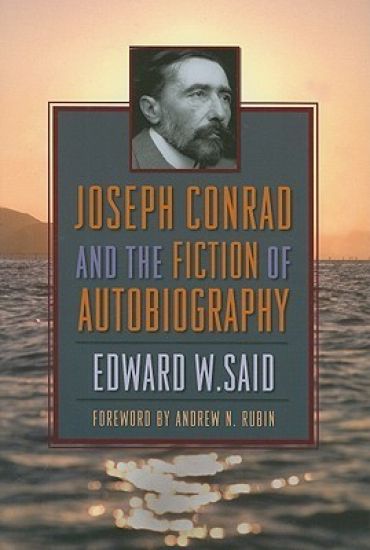
Joseph Conrad and the Fiction of Autobiography

Joseph Conrad and the Fiction of Autobiography

Edward Said; Andrew Rubin

Columbia University Press
2008
sidottu
Edward W. Said locates Joseph Conrad's fear of personal disintegration in his constant re-narration of the past. Using the author's personal letters as a guide to understanding his fiction, Said draws an important parallel between Conrad's view of his own life and the manner and form of his stories. The critic also argues that the author, who set his fiction in exotic locations like East Asia and Africa, projects political dimensions in his work that mirror a colonialist preoccupation with "civilizing" native peoples. Said then suggests that this dimension should be considered when reading all of Western literature. First published in 1966, Said's critique of the Western self's struggle with modernity signaled the beginnings of his groundbreaking work, Orientalism, and remains a cornerstone of postcolonial studies today.
Joseph Conrad and the Fiction of Autobiography

Joseph Conrad and the Fiction of Autobiography

Edward Said; Andrew Rubin

Columbia University Press
2008
pokkari
Edward W. Said locates Joseph Conrad's fear of personal disintegration in his constant re-narration of the past. Using the author's personal letters as a guide to understanding his fiction, Said draws an important parallel between Conrad's view of his own life and the manner and form of his stories. The critic also argues that the author, who set his fiction in exotic locations like East Asia and Africa, projects political dimensions in his work that mirror a colonialist preoccupation with "civilizing" native peoples. Said then suggests that this dimension should be considered when reading all of Western literature. First published in 1966, Said's critique of the Western self's struggle with modernity signaled the beginnings of his groundbreaking work, Orientalism, and remains a cornerstone of postcolonial studies today.
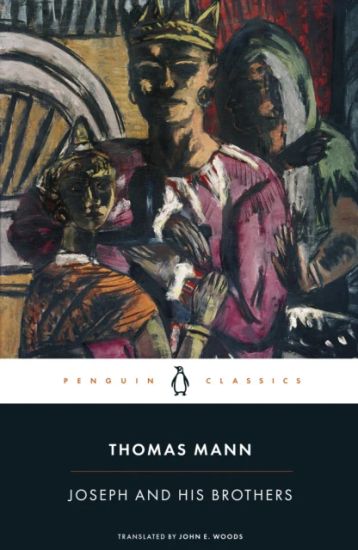
Joseph and his Brothers

Joseph and his Brothers

Thomas Mann

PENGUIN BOOKS LTD
2026
pokkari
Thomas Mann described Joseph and His Brothers as his ‘pyramid’: his greatest literary achievement, although the Nazi regime in his homeland did their best to tear it down on its first publication. A vivid and dazzlingly ambitious epic, it retells the Biblical story of Joseph, whose dreams and visions set him apart from his siblings and lead him first to slavery and ultimately to power and prestige in Egypt. With rich detail and unexpected humour, Mann paints the lost landscapes of Egypt, Canaan and Palestine and brings to life the great characters of Genesis – patriarchs, pharaohs, avenged sisters and jealous brothers – in a story of epic grandeur with a family drama at its heart.John E. Woods' translation is considered the definitive English version: a rich and immersive reading experience and a towering achievement of its own.
Joseph and His Three Friends

Joseph and His Three Friends

Joseph Odedele

Lulu.com
2019
nidottu
Joseph and his three friends, Eve, Lucy, and Frog, are going to Adventure Island. Join Joseph and his three friends as they learn about the importance of kindness, sharing, and taking turns on their journey to becoming better friends. Includes homework, lessons learned, new words, and a colouring section!
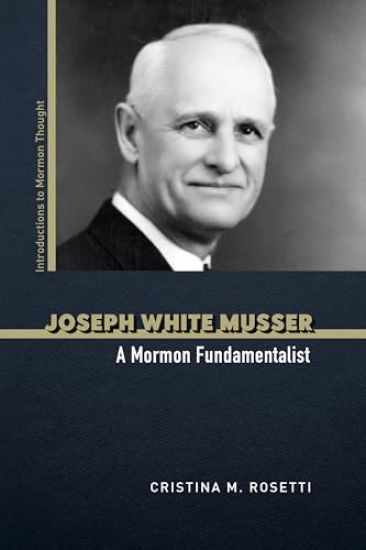
Joseph White Musser

Joseph White Musser

Cristina M. Rosetti

UNIVERSITY OF ILLINOIS PRESS
2024
sidottu
In 1921, the Church of Jesus Christ of Latter-day Saints excommunicated Joseph White Musser for his refusal to give up plural marriage. Cristina M. Rosetti tells the story of how a Church leader followed his beliefs into exile and applied the religious thought he began to develop in the mainline faith to become a foundational theologian of Mormon fundamentalism. Musser’s devotion to Joseph Smith’s vision and the faith’s foundational texts reflected a widespread uneasiness with, and reaction against, changes taking place across society. Rosetti analyzes how Musser’s writing and thought knit a disparate group of outcast LDS believers into a movement. She also places Musser’s eventful life against the backdrop of a difficult period in LDS history, when the Church strained to disentangle itself from plural marriage and leaders like Musser emerged to help dissident members make sense of their lives outside the mainstream. The first book-length account of the Mormon thinker, Joseph White Musser reveals the figure whose teachings helped mold a movement.
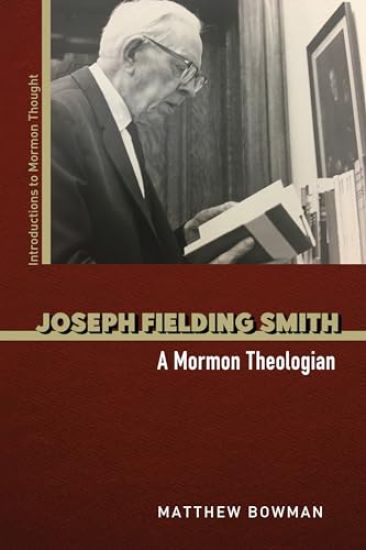
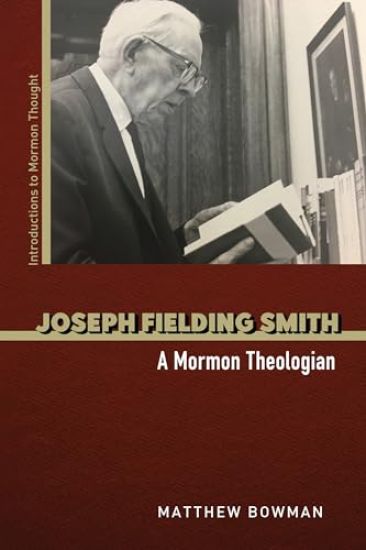
Joseph Fielding Smith

Joseph Fielding Smith

Matthew Bowman

UNIVERSITY OF ILLINOIS PRESS
2024
sidottu
In the early and mid-twentieth century, Joseph Fielding Smith’s (1876–1972) life as a public historian and theologian shaped the religious worldview of generations of Latter-day Saints. Matthew Bowman examines Smith’s ideas and his place in American religious history. Smith achieved position and influence at a young age, while his theories about the age of the earth and the falseness of evolutionary theory brought fame and controversy. As Bowman shows, Smith’s strong identity as a Saint influenced how he blended Protestant fundamentalist thought into his distinctly LDS theological views. Bowman also goes beyond Smith’s well-known conservatism to reveal him as an important thinker engaged with the major religious questions of his time. Incisive and illuminating, Joseph Fielding Smith examines the worldview and development of an influential theologian and his place in American religious and intellectual history.
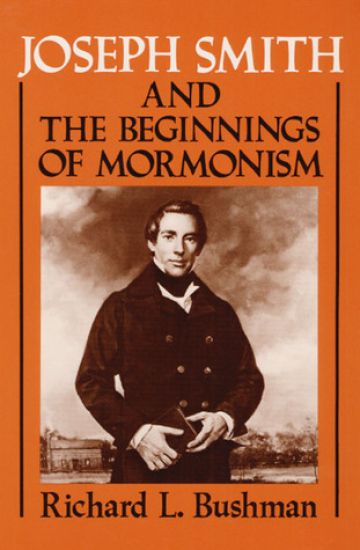
Joseph Smith and the Beginnings of Mormonism

Joseph Smith and the Beginnings of Mormonism

Richard L. Bushman

University of Illinois Press
1987
nidottu
Winner of the David Woolley Evans and Beatrice Evans Biography Award and a History Book Club selection, 1985. The core of Mormon belief was a conviction about actual events. The test of faith was not adherence to a certain confession of faith but belief that Christ was resurrected, that Joseph Smith saw God, that the Book of Mormon was true history, and that Peter, James, and John restored the apostleship. Mormonism was history, not philosophy. It is as history that Richard L. Bushman analyzes the emergence of Mormonism in the early nineteenth century. Bushman, however, brings to his study a unique set of credentials--he is both a prize-winning historian and a faithful member of the Latter-day Saints church. For Mormons and non-Mormons alike, his book provides a very special perspective on an endlessly fascinating subject. Building upon previous accounts and incorporating recently discovered contemporary sources, Bushman focuses on the first twenty-five years of Joseph Smith's life--up to his move to Kirtland, Ohio, in 1831. Bushman shows how the rural Yankee culture of New England and New York--especially evangelical revivalism, Christian rationalism, and folk magic--both influenced and hindered the formation of Smith's new religion. Mormonism, Bushman argues, must be seen not only as the product of this culture, but also as an independent creation based on the revelations of its charismatic leader. In the final analysis, it was Smith's ability to breathe new life into the ancient sacred stories and to make a sacred story out of his own life which accounted for his own extraordinary influence. By presenting Smith and his revelations as they were viewed by the early Mormons themselves, Bushman leads us to a deeper understanding of their faith.
Joseph Smith III

Joseph Smith III

Roger D. Launius

University of Illinois Press
1995
nidottu
This masterful study charts the extensive common ground and telling differences between two widely separated coal-mining communities: Lanarkshire, in the Clyde Valley of southwest Scotland, and the northern Illinois coalfield that became a prime destination for skilled Scottish migrant miners in the mid-nineteenth century. Challenging the prevailing exceptionalist paradigm of labor history, John Laslett examines the social, economic, and political context of each of these communities in generous detail. He traces the progressive heightening of class consciousness as the coal industry evolved from skilled hand labor to an increasingly mechanized extraction process and the escalating hostility between miners and mineowners as their interests split along class lines. Examining the rise of militant industrial unionism in both areas, Laslett provides a sophisticated explanation of the American and Scottish miners' divergent approaches to collectivist solutions. Based on a profound knowledge of both communities, Colliers across the Sea tells a compelling story of industrial transformation's human costs, of conflict and greed, and of democratic aspirations and community.
Joseph White Musser

Joseph White Musser

Cristina M. Rosetti

UNIVERSITY OF ILLINOIS PRESS
2024
nidottu
In 1921, the Church of Jesus Christ of Latter-day Saints excommunicated Joseph White Musser for his refusal to give up plural marriage. Cristina M. Rosetti tells the story of how a Church leader followed his beliefs into exile and applied the religious thought he began to develop in the mainline faith to become a foundational theologian of Mormon fundamentalism. Musser’s devotion to Joseph Smith’s vision and the faith’s foundational texts reflected a widespread uneasiness with, and reaction against, changes taking place across society. Rosetti analyzes how Musser’s writing and thought knit a disparate group of outcast LDS believers into a movement. She also places Musser’s eventful life against the backdrop of a difficult period in LDS history, when the Church strained to disentangle itself from plural marriage and leaders like Musser emerged to help dissident members make sense of their lives outside the mainstream. The first book-length account of the Mormon thinker, Joseph White Musser reveals the figure whose teachings helped mold a movement.
Joseph Fielding Smith

Joseph Fielding Smith

Matthew Bowman

UNIVERSITY OF ILLINOIS PRESS
2024
nidottu
In the early and mid-twentieth century, Joseph Fielding Smith’s (1876–1972) life as a public historian and theologian shaped the religious worldview of generations of Latter-day Saints. Matthew Bowman examines Smith’s ideas and his place in American religious history. Smith achieved position and influence at a young age, while his theories about the age of the earth and the falseness of evolutionary theory brought fame and controversy. As Bowman shows, Smith’s strong identity as a Saint influenced how he blended Protestant fundamentalist thought into his distinctly LDS theological views. Bowman also goes beyond Smith’s well-known conservatism to reveal him as an important thinker engaged with the major religious questions of his time. Incisive and illuminating, Joseph Fielding Smith examines the worldview and development of an influential theologian and his place in American religious and intellectual history.