The Hobie skips waves and shreds seaweed, racing ahead of the storm. Dede, flattened on the mesh trampoline, grips its laces. If she lets go now, rolls off the side and into the crazed sea, could she make it to shore? She swam 400 meters at the Freeport Y once-but this? When she dares to lift her head and angle her eyes left, the island-a charcoal smudge above the wild green water-melts into a darkening sky. Too far, too rough to try.
This book is described as being 'in a genre all its own'. Truly it is. Simeon the cat has two ambitions. the first is to become famous, which is why he writes this book, and the second is to meet the White Rabbit. While pursuing these goals, he takes time to air his views on Oxford, Mr Bean, the internet, on how the British do not value words, and on a while host of other things. He guides us through Oxford's history, landmarks and legends, and provides an entertaining and original introduction to the city. Over-confident in his ability to reason, he enjoys talking with academics and students. All use their real names in the story - Profs of Physics and Medieval German, and postgraduate students. He creates havoc in Blackwell's, discovers an unpublished poem. by Gerard Manley Hopkins, and lays plans to take the grin off the face of the Cheshire Cat. Does he really meet the White Rabbit? It seems he does! Oxford is unique in so many ways. It is the only city in the world where one is in and out of stories all the time. Morse, Mr Bean, Bridgehead, Dickens, Alice in Wonderland, Harry Potter. There is no book that does the job of this one in linking story to reality. It's laugh-out-loud funny, in a dry, sixth-form-humour way. You'll love it!
Revision with unchanged content. Traumatic stress, as a phenomenon, permeates across all nations, all over the globe. Literature expounds the often, debilitating psychological effects of trauma, on the lives of victims of crime. Repeat exposure to crime related trauma within the workplace, can result in victims processing their reality and perceiving their world in an atypical manner. This may be due, not only to the repetitive and multiple traumatic experiences themselves, but also, to the fact that the victims have to return to the workplace on a daily basis, in the location where they were initially traumatised. Acute awareness of possible repeat attacks, can create a constant state of hypervigilance and the perpetual 'on-alert' mode may become significantly psychologically taxing on the victim. Within the contents of this book, the impact of repetitive trauma, on the perceptual thinking processes of victims of multiple crime, is described. A sample of 15 adult males participated voluntary in a Rorschach Inkblot Method study, using Exner's Comprehensive System.
Julie E. Czerneda's 1997 debut, A Thousand Words for Stranger, was the first novel of the Trade Pact Universe-an instant best-seller, Science Fiction Book Club Editor's Choice and Locus Recommended First Novel. Book two, Ties of Power, further established the author's reputation as a master of vivid alien worlds-and had fans clamoring for the third book in the trilogy. Now comes the final chapter: To Trade the Stars. The stage is set for a possibly cataclysmic confrontation in non-space-and the Speaker for the Clan Council and her human mate are about to find themselves in the heart of the conflict....
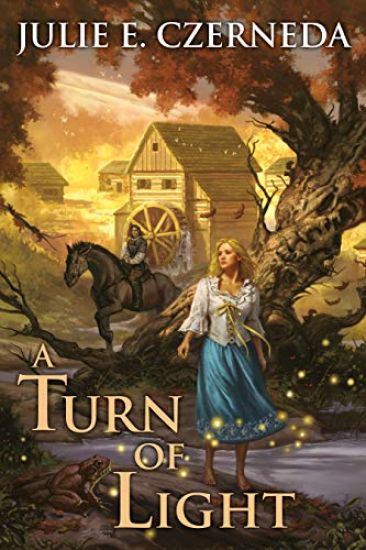
The Aurora Award winning first book of the Night's Edge series introduces a rich and atmospheric fantasy world. The pastoral valley of Marrowdell is home to a small pioneer settlement of refugees, lush fields of grain, enigmatic house toads--and Jenn Nalynn, the miller's daughter. Life here is full of laughter and peace, as well as hard work, and no one bothers overmuch about the outside world. Except Jenn Nalynn. Jenn longs to travel, to seek what's missing in her life. Not that she's sure what that is, but since this summer began, she's felt a strange and powerful yearning. She's certain she'll find what she needs, if only she can leave the valley. But she must not. Jenn is turn-born and cursed, born by the light of two worlds and bound to both. For the valley is more than it seems. Long ago, a cataclysm of misused power pinned Marrowdell to the Verge, a place of wild magic, home to dragons and even stranger creatures. Should Jenn step beyond Marrowdell, she will pull the worlds asunder. To prevent this, powers from the Verge have sent a guard to watch over her, a disgraced dragon Jenn knows as Wisp, her invisible playmate. Wisp's duty is to keep Jenn in Marrowdell. By love, if he can. By her death, if he must. But time is running out. What Jenn unknowingly feels is the rise of the Verge's magic within her, a magic that will threaten her and those she loves. Worse, this summer will end with a Great Turn, and strangers seeking power at any cost have come to Marrowdell to try to force an opening into the Verge, to the ruin of all.
During the lifetime of Guillaume Du Fay (c. 1400–1474) the motet underwent a profound transformation. Because of the protean nature of the motet during this period, problems of definition have always stood in the way of a full understanding of this crucial shift. Through a comprehensive survey of the surviving repertory, Julie Cumming shows that the motet is best understood on the level of the subgenre. She employs new ideas about categories taken from cognitive psychology and evolutionary theory to illuminate the process by which the subgenres of the motet arose and evolved. One important finding is the nature and extent of the crucial role that English music played in the genre’s transformation. Cumming provides a close reading of many little-known pieces; she also shows how Du Fay’s motets were the product of sophisticated experimentation with generic boundaries.
The second book in the hard science fiction Reunification trilogy, the thrilling conclusion to the award-winning Clan Chronicles Betrayed and attacked, the Clan fled the Trade Pact for Cersi, believing that world their long-lost home. With them went a lone alien, the Human named Jason Morgan, Chosen of their leader, Sira di Sarc. Tragically, their arrival upset the Balance between Cersi's three sentient species. And so the Clan, with their newfound kin, must flee again. Their starship, powered by the M'hir, follows a course set long ago, for Clan abilities came from an experiment their ancestors--the Hoveny--conducted on themselves. But it's a perilous journey. The Clan must endure more than cramped conditions and inner turmoil. Their dead are Calling. Sira must keep her people from answering, for if they do, they die. Morgan searches the ship for answers, afraid the Hoveny's tech is beyond his grasp. Their only hope? To reach their destination. Little do Sira and Morgan realize their destination holds the gravest threat of all....
Daunting challenges lie ahead for Arab countries where revolutions have upended longstanding authoritarian regimes. These unexpected events created new uncertainties in a troubled region: Would the Arab Spring lead to a flowering of democracy? Would loosening of the political systems in these countries unleash dangerous forces of extremism or ethno-sectarian conflict? Would new autocrats replace the old ones? Through a comparative analysis of past democratization experiences over nearly four decades and a detailed look at recent uprisings in the Arab world, this volume explores the conditions and decisions that are most likely to influence whether democratization will succeed in Arab countries undergoing political transitions. It also identifies the main challenges to democracy in these countries, analyzes how other countries have made similar transitions, and suggests what the United States and the international community can do to help strengthen fledgling democracies in the Arab world.
A practical overview of clinical issues related to end-of-life care, including grief and bereavement The needs of individuals with life-limiting or terminal illness and those caring for them are well documented. However, meeting these needs can be challenging, particularly in the absence of a well-established evidence base about how best to help. In this informative guide, editors Sara Qualls and Julia Kasl-Godley have brought together a notable team of international contributors to produce a clear structure offering mental health professionals a framework for developing the competencies needed to work with end-of-life care issues, challenges, concerns, and opportunities. Part of the Wiley Series in Clinical Geropsychology, this thorough and up-to-date guide answers complex questions often asked by patients, their families and caregivers, and helping professionals as well, including: How does dying occur, and how does it vary across illnesses?What are the spiritual issues that are visible in end-of-life care?How are families engaged in end-of-life care, and what services and support can mental health clinicians provide them?How should providers address mental disorders that appear at the end of life?What are the tools and strategies involved in advanced care planning, and how do they play out during end-of-life care? Sensitively addressing the issues that arise in the clinical care of the actively dying, this timely book is filled with clinical illustrations, guidance, tips for practice, and encouragement. Written to equip mental health professionals with the information they need to guide families and others caring for the needs of individuals with life-threatening and terminal illnesses, End-of-Life Issues, Grief, and Bereavement presents a rich resource for caregivers for the psychological, sociocultural, interpersonal, and spiritual aspects of care at the end of life.
This new model of teacher unions is organized around issues of quality teaching and professional development, as well as economic fairness. The authors propose strategies for expanding the influence of unions by involving them in the setting of educational standards, evaluating teacher performance, and promoting career security.The authors have established United Mind Workers web pages that contain portions of the book, research reports, and work in progress as well as links to other labor and teacher reform web pages and links to the authors' electronic mail boxes. For the web pages, go to: www.cgu.edu. Click on FACULTY, then Kerchner.
An introduction and companion to United Mind Workers, one of the most provocative educational reform books of the 90s. This booklet is the ultimate study-group discussion starter on teacher's union reform. Taking Charge of Quality outlines proposals for improving the quality of teaching, touching on issues such as standards, peer review, career ladders, hiring halls, school-based compacts, and teacher accountability. Includes a resource section.
If you are looking to improve your or your team's communications skills, creativity, teamworking or leadership skills, and you want to have fun while doing so, then this is the book for you. It provides an introduction to improvisation at work with an emphasis on both practice and theory, and an up-to-date international reference list.
Stallard and Cocker examine why America's schools continue failing to meet the needs of children and society. It explains why the present system cannot be reformed and why a new vision of how children and youth prepare for adulthood must replace it. The process begins with making School Choice a national option. Doing so will create a market for educational services beyond what traditional schools can provide. Their thesis holds that conventional schools are organized around teaching, not learning and that current schools' design and resources were developed to facilitate teaching, not learning. The new paradigm is all about learning and how to support each learner through the process of becoming educated. The authors explain why Education is not a profession and why there is no Science of Education. They cite research in other fields that could improve learning and explain why that knowledge has yet to be applied. They show how government bureaucracies have impeded the adoption of more effective practices and new insights from psychology and neuroscience and why their role needs to change. The authors call for the end of schooling as we know it and offer a better alternative. Their Web of Learning can organize the vital elements needed for academic success and is more suited to the new kind of child coming to school today. They describe an approach to developing curriculum and learning resources to individualize each person's path through school in ways that match their abilities. Instead of cascading failures in school, the program provides for success by eliminating learning debts and compensating for experiential deficits. The final chapters offer a detailed technical specification for the system, including the steps necessary to create it.