Kirjahaku
Etsi kirjoja tekijän nimen, kirjan nimen tai ISBN:n perusteella.
1000 tulosta hakusanalla Justus Roth
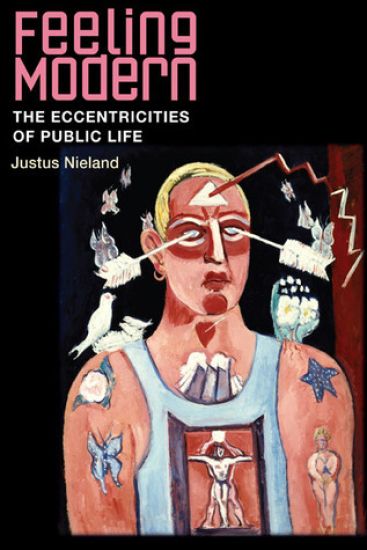
This rigorous and original study combines theories of the public sphere, cinema, and visual culture with a growing body of critical work on affect. While modernist feeling is often described either as a reservoir of romantic inwardness or as an inhuman hostility to sentiment, Justus Nieland challenges these notions by approaching emotion through a poetics of modernist publicity. He argues that modernists championed feelings as primarily public products of modernity rather than as the private property of the self. Nieland's fresh account of the moderns' revolutionary designs on feeling also offers a new understanding of modernist publicness that includes self-presentation in popular theatrical spaces and public feelings enabled by performance, film, and other public amusements. Positing Charlie Chaplin as the embodiment of the modern "eccentric," Nieland explores the wildness of feeling in the work of many other key modernists, including Wyndham Lewis, Sergei Eisenstein, Marsden Hartley, E. E. Cummings, Joseph Cornell, Nathanael West, and Djuna Barnes. Ranging widely across modernist literature, avant-garde film, popular performance, and the visual arts of the modernist period, this study demonstrates that eccentric feeling is the emotional climate of modern alienation. Nieland finds, at the eccentric heart of modernism, a critique of the role of emotional propriety in collective life and an ethos of public comportment. Feeling Modern recovers the affective and poetic dimensions of public life that make it ever worth living.
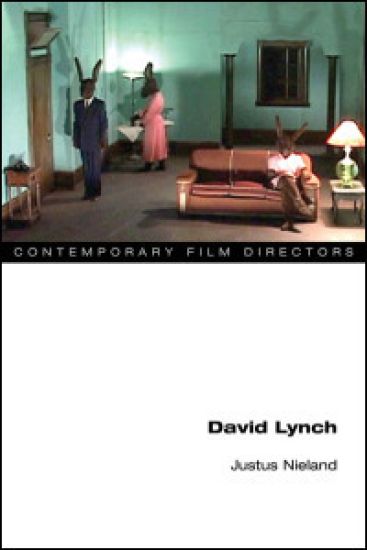
A key figure in the ongoing legacy of modern cinema, David Lynch designs environments for spectators, transporting them to inner worlds built by mood, texture, and uneasy artifice. We enter these famously cinematic interiors to be wrapped in plastic, the fundamental substance of Lynch’s work. This volume revels in the weird dynamism of Lynch’s plastic worlds. Exploring the range of modern design idioms that inform Lynch’s films and signature mise-en-scÈne, Justus Nieland argues that plastic is at once a key architectural and interior design dynamic in Lynch’s films, an uncertain way of feeling essential to Lynch’s art, and the prime matter of Lynch’s strange picture of the human organism. Nieland’s study offers striking new readings of Lynch’s major works (Eraserhead, Blue Velvet, Wild at Heart, Mulholland Dr., Inland Empire) and his early experimental films, placing Lynch’s experimentalism within the aesthetic traditions of modernism and the avant-garde; the genres of melodrama, film noir, and art cinema; architecture and design history; and contemporary debates about cinematic ontology in the wake of the digital. This inventive study argues that Lynch’s plastic concept of life -supplemented by technology, media, and sensuous networks of an electric world--is more alive today than ever.
Justus Hartnack offers a concise and clear introduction to Wittgenstein and traces the influence of these works in the schools of logical positivism and analytical philosophy. A philosopher as great and at the same time as difficult as Wittgenstein has been the subject of innumerable studies, and universal agreement on how to interpret him cannot be expected. This is true of almost all great thinkers, past and present. That is why we still benefit from studies of Plato, Aristotle, Descartes, Spinoza, Kant, or Hegel, to mention just a few. New studies and scholarly works on Wittgesntein will continue to appear. [A] reliable brief orientation to his thought is, if not essential, then at least a very useful way to begin a study of his philosophy. — From the Preface to the Second Edition
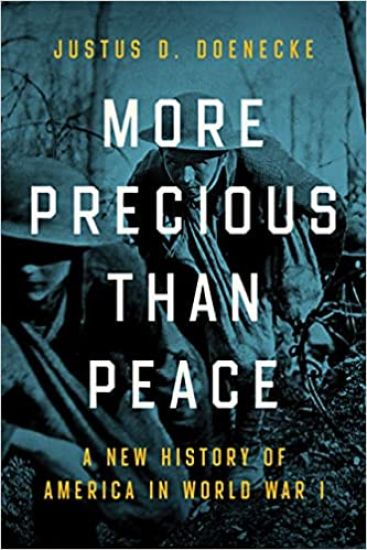
Justus D. Doenecke's monumental study covers diplomatic, military, and ideological aspects of U.S. involvement as a full-scale participant in World War I. The entry of America into the "war to end all wars" in April 1917 marks one of the major turning points in the nation's history. In the span of just nineteen months, the United States sent nearly two million troops overseas, established a robust propaganda apparatus, and created an unparalleled war machine that played a major role in securing Allied victory in the fall of 1918. At the helm of the nation, Woodrow Wilson and his administration battled against political dissidence, domestic and international controversies, and their own lack of experience leading a massive war effort. In More Precious than Peace, the long-awaited successor to his critically acclaimed work Nothing Less than War, Justus D. Doenecke examines the entirety of the American experience as a full-scale belligerent in World War I. This book covers American combat on the western front, the conscription controversy, and scandals in military training and production. Doenecke explores the Wilson administration's quest for national unity, the Creel Committee, and "patriotic" crusades. Weaving together these topics and many others, including the U.S. reaction to the Russian revolutions, Doenecke creates a lively and comprehensive narrative.
Führer Durch Das Hamburgische Museum Für Kunst Und Gewerbe
Justus Brinckmann
Wentworth Press
2018
sidottu

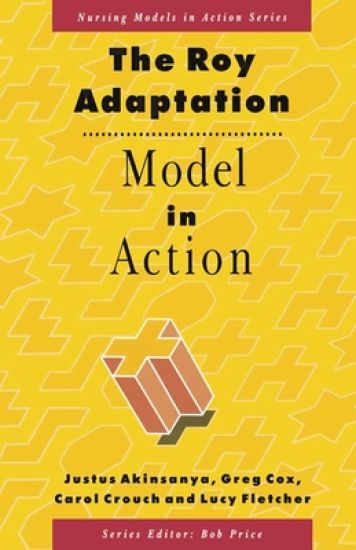
The Roy Adaptation Model in Action
Justus Akinsanya; Greg Cox; Carol Crouch; Lucy Fletcher
Red Globe Press
1994
nidottu
This book is part of the Nursing Models in Action Series, which provides in-depth theory and practical applications of the major nursing models. Roys Model allows nurses to examine both physiological and psychosocial issues related to the patients and their care. By confronting the way that individuals react to stress, nurses using Roys Model can achieve a holistic assessment and resulting quality of care. This book will provide the reader with a clear, easily understood review of the adaptation model and its application in practice. The authors of this book are all experienced teachers, who provide invaluable information on how to overcome conceptual and practical problems in the use of the model, using examples from their clinical experiences.
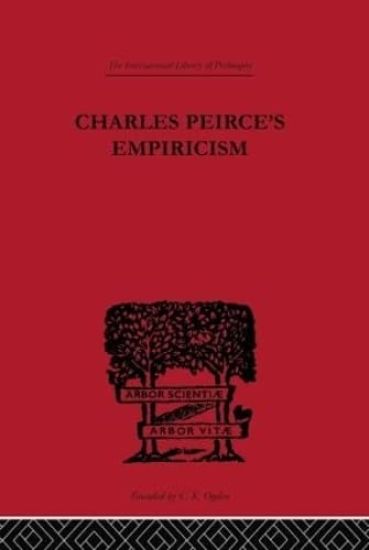
This is Volume I of six in a series on the Nineteenth and Twentieth Century Anglo-American Philosophy. Originally published in 1939, this study looks Charles Peirce, who characterized himself as a mere table of contents, so abstract, a very snarl of twine. The purpose of the following pages is to clarify Peirce in some measure, partly by restatement, partly by filling the lacunae in his thought with what the author thinks are its implications.
First published in 2005. Twentieth-century philosophy, more than that of any other period, has become deeply and sharply conscious of the connection between philosophical problems and language. We now seem to have entered what might well be called the Wittgensteinian 'moment' in philosophy. This volume seeks to provide a general survey of Wittgenstein's thought, considering both the Tractatus LogicoPhilosophicus (1922) and the Philosophical Investigations (1953), and also to give some account of the influence which these two very different books have exercised.
First published in 2005. Twentieth-century philosophy, more than that of any other period, has become deeply and sharply conscious of the connection between philosophical problems and language. We now seem to have entered what might well be called the Wittgensteinian 'moment' in philosophy. This volume seeks to provide a general survey of Wittgenstein's thought, considering both the Tractatus LogicoPhilosophicus (1922) and the Philosophical Investigations (1953), and also to give some account of the influence which these two very different books have exercised.
This is Volume I of six in a series on the Nineteenth and Twentieth Century Anglo-American Philosophy. Originally published in 1939, this study looks Charles Peirce, who characterized himself as a mere table of contents, so abstract, a very snarl of twine. The purpose of the following pages is to clarify Peirce in some measure, partly by restatement, partly by filling the lacunae in his thought with what the author thinks are its implications.