Designed for professionals and advanced students, Pointers On C provides a comprehensive resource for those needing in-depth coverage of the C programming language. An extensive explanation of pointer basics and a thorough exploration of their advanced features allows programmers to incorporate the power of pointers into their C programs. Complete coverage, detailed explanations of C programming idioms, and thorough discussion of advanced topics makes Pointers On C a valuable tutorial and reference for students and professionals alike.
The subject of C*-algebras received a dramatic revitalization in the 1970s by the introduction of topological methods through the work of Brown, Douglas, and Fillmore on extensions of C*-algebras and Elliott's use of $K$-theory to provide a useful classification of AF algebras. These results were the beginning of a marvelous new set of tools for analyzing concrete C*-algebras.This book is an introductory graduate level text which presents the basics of the subject through a detailed analysis of several important classes of C*-algebras. The development of operator algebras in the last twenty years has been based on a careful study of these special classes. While there are many books on C*-algebras and operator algebras available, this is the first one to attempt to explain the real examples that researchers use to test their hypotheses. Topics include AF algebras, Bunce-Deddens and Cuntz algebras, the Toeplitz algebra, irrational rotation algebras, group C*-algebras, discrete crossed products, abelian C*-algebras (spectral theory and approximate unitary equivalence) and extensions. It also introduces many modern concepts and results in the subject such as real rank zero algebras, topological stable rank, quasidiagonality, and various new constructions.These notes were compiled during the author's participation in the special year on C*-algebras at The Fields Institute for Research in Mathematical Sciences during the 1994-1995 academic year. The field of C*-algebras touches upon many other areas of mathematics such as group representations, dynamical systems, physics, $K$-theory, and topology. The variety of examples offered in this text expose the student to many of these connections. Graduate students with a solid course in functional analysis should be able to read this book. This should prepare them to read much of the current literature. This book is reasonably self-contained, and the author has provided results from other areas when necessary.
The C'EST LA VIE Short Story Collection is Fast-Paced Entertainment, ripped from the headlines, by Master Storyteller Kenneth Joyce, and a rollercoaster across human nature and the human condition. A new collection of short stories by Kenneth Joyce is now available. Readers will enjoy these exciting tales ripped from the headlines. The human condition is laid bare in stories of greed, fear, duplicity, corruption, revenge and murder. Based on real life events C'EST LA VIE boils over with love, lust, birth, death, desperation, and salvation. In the tradition of Patricia Highsmith, John Cheever, CBS Radio Mystery Theatre, and Georges Simenon, the panorama of human behavior is revealed in these fast-moving stories."Each story in the C'EST LA VIE collection is written with the reader in mind," says author Kenneth Joyce. "They're to-the-point, filled with vivid characters, dramatic action, and psychological tension. Readers will be emotionally moved and intellectually challenged by all of these timeless tales."
C# is a primarily object-oriented, and type-safe programming language. C# has its roots in the C family of languages and is familiar to C, C++, and Java programming languages.Although C# is primarily an object-oriented language, it further includes support for component-oriented programming. Nowadays software design increasingly relies on software components in the form of self-contained and self-describing packages of functionality. Key to such components is that they present a programming model with properties, methods, and events; they have attributes that provide declarative information about the component; and they incorporate their own documentation. C# provides language constructs to directly support these concepts, making C# a very natural language in which to create and use software components, and this book is part of the series will gracefully teach a reader programming in C# from the basics through to complex concepts.There are Many Books on C#, already... What was Missing? Many books teach concentrate in teaching you how to drive the steering wheel without spending time teaching you how to change the gears. There are so many software developers in the industry today who have been victim of that, and you can tell by how they lack in confidence, almost always relying on the likes of Stack-Overflow, which is not bad on its own but contributes on not having an identity as a developer if done at addiction levels that can be noticed in many.Finally Understand Programming, Don't Memorize ItThis is one of the core values that we try to stick to in introducing the language to first time learners, and it's not hard to see that it can be of help for anyone who is failing to find their confidence and footing as a programmer, feeling good about their programming skills at one moment, and feeling awful a couple of weeks later or a couple of problems later, like they know nothing.This book series attempts to cure the 'impostor syndrome' always knocking on software developers' doors.Progressive over Baseline Teaching MethodsMost books on the shelf today take an approach where they offer low-level details in a linear, seemingly logical sequence. This book and series focus on the bigger picture - the Eureka (I have found it - Archimedes) moment - and then the specifics.We start with a 10,000 feet aerial view that allows a reader to see forests first not trees, which will become more prominent as we hover down as an analogy to this picture analogy where everything is first fuzzy, but has fairly a full picture, and then becomes clearer and more focused as you go through the book and series.The results of this approach are quite phenomenal, you will agree after going through the series, and can assure you that you will be super-effective in whatever roles assigned related to programming in C#.Learning should not be about memorizing facts to pass an exam. It should be about unlocking the joy of discovery when a concept finally makes sense. If this approach resonates with you, welcome aboard to our book series We deliberately try to keep every book within in and around 100 pages, to encourage readers to FINISH reading a book, and once a book is finished it becomes psychologically easier to finish subsequent publications as well. Our experience with large books that have hundreds of pages, even thousands of pages is that 99% of the readers do not finish reading, and if they do, they skip through a lot of important content, and that defeats the whole purpose of reading the book.We learnt one thing that fatigue does not come from working or reading too much, but from not FINISHING your work, and the hanging on of an unfinished task, so if you finish this book, it will be easier to go on to the next...Universities and Colleges will find this book series, useful to teach practical programming from, taking into consideration practical industry perspectives targeted at an African reader.
The Elements of C# Style is for all C# practitioners, especially those working in teams where consistency is critical. Like previous Elements titles, the text furnishes a set of rules for writing clear, comprehensible and easy-to maintain code; this time for C#. The authors offer a collection of standards and guidelines for creating solid C# that can save time, effort and expense. The book provides conventions for: • formatting • naming • documentation • programming • packaging for C# 2.0 and includes discussion of advanced topics such as generics.
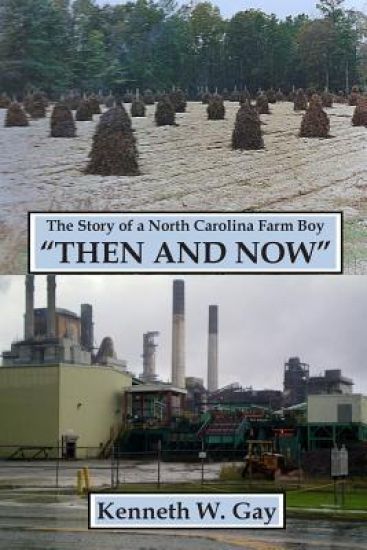
This book is about a North Carolina Farm boy that came about during the depression years and all the hardships. It is about his life on the farm and describes how they worked. It describes how they raised all the different crops and harvested them in those days. Later years of growing up, his life in the service and later working in a Paper Mill. It describes his ups and downs during these years and tells of his adventures to all fifty states with his family.The book is written in the language and type of southern expressions as a poor farm boy.
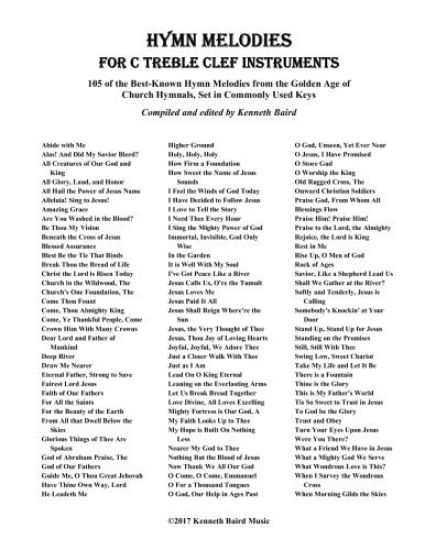
Hymn Melodies for C Treble Clef Instruments: : 105 of the Best-Known Hymn Melodies from the Golden Age of Hymnals, Set in Commonly Used Keys - Whether for your personal time of praise & worship, for your own spiritual refreshment, or for practicing phrasing or transposition, this collection of hymn melodies is sure to bless you. Contents include: Abide with Me; Alas And Did My Savior Bleed?; All Creatures of Our God and King; All Glory, Laud, and Honor; All Hail the Power of Jesus Name; Alleluia Sing to Jesus ; Amazing Grace; Are You Washed in the Blood?; Be Thou My Vision; Beneath the Cross of Jesus; Blessed Assurance; Blest Be the Tie That Binds; Break Thou the Bread of Life; Christ the Lord is Risen Today; Church in the Wildwood, The; Church's One Foundation, The; Come Thou Fount; Come, Thou Almighty King; Come, Ye Thankful People, Come; Crown Him With Many Crowns; Dear Lord and Father of Mankind; Deep River; Draw Me Nearer; Eternal Father, Strong to Save; Fairest Lord Jesus; Faith of Our Fathers; For All the Saints; For the Beauty of the Earth; From All that Dwell Below the Skies; Glorious Things of Thee Are Spoken; God of Abraham Praise, The; God of Our Fathers; Guide Me, O Thou Great Jehovah; Have Thine Own Way, Lord; He Leadeth Me; Higher Ground; Holy, Holy, Holy; How Firm a Foundation; How Sweet the Name of Jesus Sounds; I Feel the Winds of God Today; I Have Decided to Follow Jesus; I Love to Tell the Story; I Need Thee Every Hour; I Sing the Mighty Power of God; Immortal, Invisible, God Only Wise; In the Garden; It is Well With My Soul; I've Got Peace Like a River; Jesus Calls Us, O're the Tumult; Jesus Loves Me; Jesus Paid It All; Jesus Shall Reign Where're the Sun; Jesus, the Very Thought of Thee; Jesus, Thou Joy of Loving Hearts; Joyful, Joyful, We Adore Thee; Just a Closer Walk With Thee; Just as I Am; Lead On O King Eternal; Leaning on the Everlasting Arms; Let Us Break Bread Together; Love Divine, All Loves Excelling; Mighty Fortress is Our God, A; My Faith Looks Up to Thee; My Hope is Built On Nothing Less; Nearer My God to Thee; Nothing But the Blood of Jesus; Now Thank We All Our God; O Come, O Come, Emmanuel; O For a Thousand Tongues to Sing; O God, Our Help in Ages Past; O God, Unseen, Yet Ever Near; O Jesus, I Have Promised; O Store Gud; O Worship the King; Old Rugged Cross, The; Onward Christian Soldiers; Praise God, From Whom All Blessings Flow; Praise Him Praise Him ; Praise to the Lord, the Almighty; Rejoice, the Lord is King; Rest in Me; Rise Up, O Men of God; Rock of Ages; Savior, Like a Shepherd Lead Us; Shall We Gather at the River?; Softly and Tenderly, Jesus is Calling; Somebody's Knockin' at Your Door; Stand Up, Stand Up for Jesus; Standing on the Promises; Still, Still With Thee; Swing Low, Sweet Chariot; Take My Life and Let It Be; There is a Fountain Filled with Blood; Thine is the Glory; This is My Father's World; Tis So Sweet to Trust in Jesus; To God be the Glory; Trust and Obey; Turn Your Eyes Upon Jesus; Were You There?; What a Friend We Have in Jesus; What a Mighty God We Serve; What Wondrous Love is This?; When I Survey the Wondrous Cross; When Morning Gilds the Skies
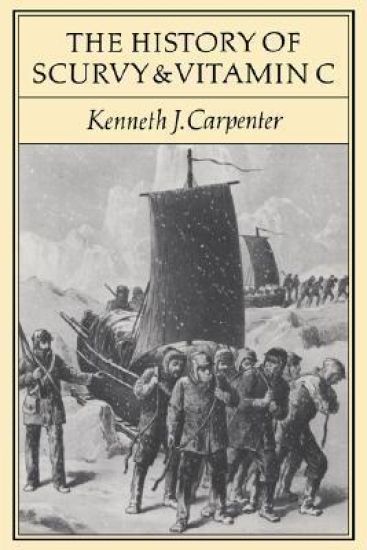
The first modern survey of the long and fascinating history of the various ideas and theories about the cause of scurvy, the nutritional deficiency disease that has caused (with the exception of famine) the most human suffering in recorded history. Professor Carpenter documents the arguments that led to the numerous theories about the disease and eventually to the isolation and synthesis of vitamin C (ascorbic acid), and illustrates how the changing ideas about scurvy reflected the scientific and medical beliefs of different periods in history. The author also examines the modern claims for the use of very high levels of vitamin C to bring about a state of super-health, and he analyses the most important evidence for and against this practice. This fascinating story in the history of science and medicine will be of interest to both the historian and scientist as well as the general reader.
The 11th Honourable Artillery Company Regiment RHA served in North Africa at the Battle of Knightsbridge with 25-pounder guns and, after re-equipping with the M7 Priest self-propelled gun, in the Second Battle of El Alamein where it was commanded by Bill Leggatt. The regiment's guns were the first guns ashore in the invasion of Sicily; then they took part in the Allied invasion of Italy and the Italian Campaign.A Roll of Honour and Awards complete this detailed account, one that was originally published shortly after cessation of hostilities.
Leaders of the American Revolution envisioned the United States as the next great world empire. George Washington and his allies, Thomas Jefferson and James Madison, believed that the capital of that empire should be a commercial as well as political emporium. They spearheaded the effort to place it on the Potomac and make Virginia a preeminent commercial state. The Creation of Washington, D.C. covers the political struggle between the North and the South over the location of the American capital city and explains the origin of Congress's exclusive jurisdiction over the city.
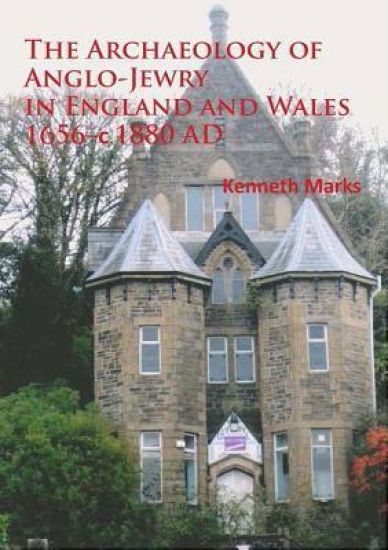
The Archaeology of Anglo-Jewry in England and Wales 1656–c.1880 is a comprehensive study of the urban topography of Anglo-Jewry in the period before the mass immigration of 1881. The book brings together the evidence for the physical presence of at least 80% of the Jewish community. London and thirty-five provincial cities and towns are discussed. The year 1656 marks the date of re-admission to the country by Cromwell. His purpose was to re-establish London as a major trading centre and the Jews were a key to this. The book traces the development of the community from a handful of families in 1656 to c.60,000 persons in 1880, mostly living in London. The immigrants who came to England and Wales in the early 18th century were in the main fleeing from poverty and persecution in Eastern Europe, and hoping to find a better life. The book discusses the evidence for the demographic shift out of the slum areas in the major cities, such as Liverpool, Manchester and Birmingham, to the suburbs and the decline of the early port communities from 1815.
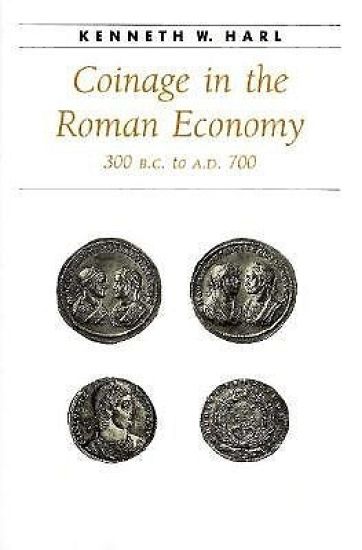
The premier form of Roman money since the time of the Second Punic War (218-201 B.C.), coins were vital to the success of Roman state finances, taxation, markets, and commerce beyond the frontiers. Yet until now, the economic and social history of Rome has been written independently of numismatic studies, which detail such technical information as weight standards, mint output, hoards, and finds at archaeological sites. In Coinage in the Roman Economy, 300 B.C. to A.D. 700, noted classicist and numismatist Kenneth W. Harl brings together these two fields in the first comprehensive history of how Roman coins were minted and used. Drawing on literary and documentary sources as well as on current methods of metallurgical study and statistical analysis of coins from archaeological sites, Harl presents a sweeping overview of a system of coinage in use for more than a millennium. Challenging much recent scholarship, he emphasizes the important role played by coins in the overseas expansion of the Roman Republic during the second century B.C., in imperial inflationary policies during the third and fourth centuries A.D., and in the dissolution of the Roman Mediterranean order in the seventh century A. D. He also offers the first region-by-region analysis of prices and wages throughout Roman history with reference to the changing buying power of the major circulating denominations. And he shows how the seldom-studied provincial, civic, and imitative coinages were in fact important components of Roman currency. Richly illustrated with photographic reproductions of nearly three hundred specimens, Coinage in the Roman Economy offers a significant contribution to Roman economic history. It will be of interest to scholars and students of classical antiquity and the Middle Ages, as well as to professional and amateur numismatists.
TCP/IP Sockets in C: Practical Guide for Programmers, Second Edition is a quick and affordable way to gain the knowledge and skills needed to develop sophisticated and powerful web-based applications. The book's focused, tutorial-based approach enables the reader to master the tasks and techniques essential to virtually all client-server projects using sockets in C. This edition has been expanded to include new advancements such as support for IPv6 as well as detailed defensive programming strategies. If you program using Java, be sure to check out this book’s companion, TCP/IP Sockets in Java: Practical Guide for Programmers, 2nd Edition.