Kirjojen hintavertailu. Mukana 11 717 486 kirjaa ja 12 kauppaa.

Kirjahaku

Etsi kirjoja tekijän nimen, kirjan nimen tai ISBN:n perusteella.

1000 tulosta hakusanalla Lars Vinx

Fire Witness

Fire Witness

Lars Kepler

Harpercollins Publishers
2018
pokkari
WAKE UP TO TRUE EVIL The third gripping thriller in Lars Keplerâ??s bestselling series featuring Joona Linna. Perfect for fans of Stieg Larsson and Jo Nesbo.
Sandman

Sandman

Lars Kepler

Harpercollins Publishers
2018
pokkari
HEâ??LL STEAL YOU IN YOUR SLEEP The fourth gripping serial killer thriller in the No.1 bestselling Joona Linna series. Perfect for fans of Jo Nesbo.
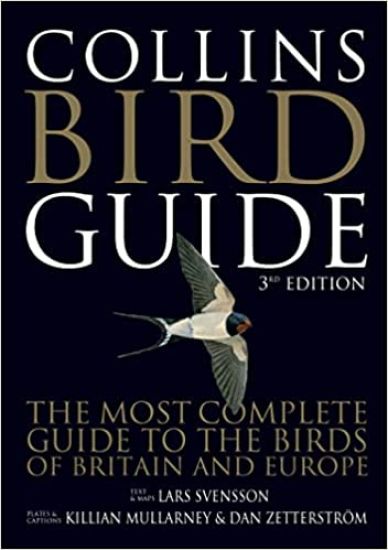
Collins Bird Guide

Collins Bird Guide

Lars Svensson; Killian Mullarney; Dan Zetterström

HARPERCOLLINS PUBLISHERS
2023
nidottu
The ultimate reference book for bird enthusiasts – now in its third edition. With expanded text and additional colour illustrations, the third edition of the hugely successful Collins Bird Guide is a must for every birdwatcher. The new edition has an extra 32 pages allowing several groups more space and completely or partly new plates with more detailed text: grouse, loons, several groups of raptors, terns, owls, swifts, woodpeckers, swallows, redstarts and some other relatives to the flycatchers (formerlyoften called ‘small thrushes’), tits and a few finches and buntings are some of these. More than 50 plates are either new or have been repainted, completely or partly. Apart from this, a few new vignettes have been added. The section with vagrants has been expanded to accommodate more images and longer texts for several species. The entire text and all maps have of course also been revised. The book provides all the information needed to identify any species at any time of the year, covering size, habitat, range, identification and voice. Accompanying every species entry is a distribution map and illustrations showing the species in all the major plumages (male, female, immature, in flight, at rest, feeding: whatever is important). In addition, each group of birds includes an introduction which covers the major problems involved in identifying or observing them: how to organise a sea watching trip, how to separate birds of prey in flight, which duck hybrids can be confused with which main species. These and many other common birdwatching questions are answered. The combination of definitive text, up-to-date distribution maps and superb illustrations, all in a single volume, makes this book the ultimate field guide, essential on every bookshelf and birdwatching trip.
Your Personal Horoscope 2025

Your Personal Horoscope 2025

Lars Mellis

HARPERCOLLINS PUBLISHERS
2024
nidottu
Your complete one-volume guide to the year 2025. This fantastic and in-depth book includes month-by-month forecasts for every sign and all you need to know to find out what is in store for you in the year ahead. The only one-volume horoscope you’ll ever need. Your essential guide to love, life and career success in 2025. This popular, complete one-volume guide contains all you need to know about your personal horoscope for the year 2025. Be prepared for the forthcoming year with monthly predictions for your own sign and discover how to maximise your opportunities and potential to make the most of 2025. This bestselling astrological guide contains: A personality profile for each signA forecast for the year ahead – what you can expect in terms of wealth, home, health, social and love lifeA month-by-month forecast of your best days and worst days – the ideal days to attract love, money or success, and when it’s better to just stay in bed!
Your Personal Horoscope 2026

Your Personal Horoscope 2026

Lars Mellis

HARPERCOLLINS PUBLISHERS
2025
nidottu
Your complete one-volume guide to the year 2026. This fantastic and in-depth book includes month-by-month forecasts for every sign and all you need to know to find out what is in store for you in the year ahead. The only one-volume horoscope you’ll ever need. This bestselling astrological guide contains: • A personality profile for each sign • A forecast for the year ahead – what you can expect in terms of wealth, home, health, social and love life • A month-by-month forecast of your best days and worst days – the ideal days to attract love, money or success, and when it’s better to just stay in bed!
Your Personal Horoscope 2027

Your Personal Horoscope 2027

Lars Mellis

HARPERCOLLINS PUBLISHERS
2026
nidottu
Your complete one-volume guide to the year 2027. This fantastic and in-depth book includes month-by-month forecasts for every sign and all you need to know to find out what is in store for you in the year ahead. The only one-volume horoscope you’ll ever need. This bestselling astrological guide contains: A personality profile for each sign A forecast for the year ahead – what you can expect in terms of wealth, home, health, social and love life A month-by-month forecast of your best days and worst days – the ideal days to attract love, money or success, and when it’s better to just stay in bed!
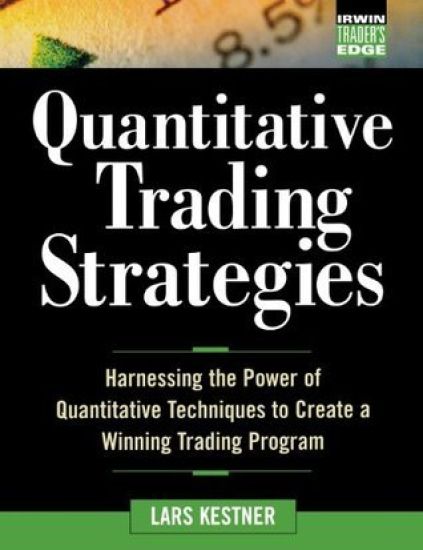
Quantitative Trading Strategies

Quantitative Trading Strategies

Lars Kestner

McGraw-Hill Professional
2003
sidottu
This book presents an in-depth look at today's top technical trading strategies - and how you can incorporate them into your personal trading program. By combining historical market performance with modern-day technology, technical traders often exhibit uncanny, seemingly intuitive abilities to control money-draining losses while letting profits run."Quantitative Trading Strategies" reviews today's most popular and effective methods, and explains how to incorporate their quantitative strengths into your own trading system to dramatically improve both your entry and exit timing and risk management. Exploring a wide range of systematic trading techniques and strategies for risk and money management, "Quantitative Trading Strategies" examines every vital aspect of today's technical trading arena to provide you with: performance summaries of specific trading strategies; all-new money management approaches based on optimal leverage; and step-by-step directions for creating a system built around our own trading style.For decades, millions of successful traders have relied on technical analysis to not only improve the timing of their entries and exits but also to see and avoid dangerous trades and situations. Let "Quantitative Trading Strategies" introduce you to the best-of-the-best, and provide you with the knowledge and tools you need to create and implement a trading methodology designed to fit your trading strengths - and improve your performance in virtually any market environment. 'First and foremost, this book explores the ability of quantitative trading strategies to time the markets. My goal in writing it is to set the record straight with time tested statistics - not untested theories and market lore passed down through the ages' - From the Prologue.Technical traders study - and build their trading programs around - aspects of market and investor behavior that lead to regularly occurring patterns in stock prices. These patterns can help traders dramatically improve the timing of when, and when not to, place buys and sells. And while there is never a guarantee whether a given trade will generate a profit or a loss, quantitative tools can show technicians how to identify, measure, and act upon opportunities for both reward and risk. "Quantitative Trading Strategies" examines today's most popular and proven technical trading strategies, explaining their pluses and minuses while providing the necessary data and research findings for determining which will work best for you.Drawing on current market research as well as strategies that are both statistically sound and rigorously backtested to determine their accuracy and effectiveness, this results-focused book features: 11 new techniques for trading stocks, futures, and the newly popular relative value markets; money management guidelines that can mean the difference between prospering - and going broke; methods for creating and implementing your own technical trading strategies; technical traders know that what has occurred before is destined to occur again, and they use this knowledge to enhance their trading performance across the board."Quantitative Trading Strategies" takes you through the development and evaluation stages of today's most popular technical trading techniques and - requiring nothing more than average market knowledge and math background - shows you how to accurately detect and exploit profitable patterns. From deciding which markets to trade to developing personalized trading strategies and money management plans, "Quantitative Trading Strategies" will give you the quantitative foundation you need to accurately buy and sell financial assets while controlling the risk associated with those assets. Along the way, it debunks numerous myths and misconceptions, and provides a clear understanding of the many profitable benefits quantitative analysis can provide traders and investors in today's technically driven marketplace.
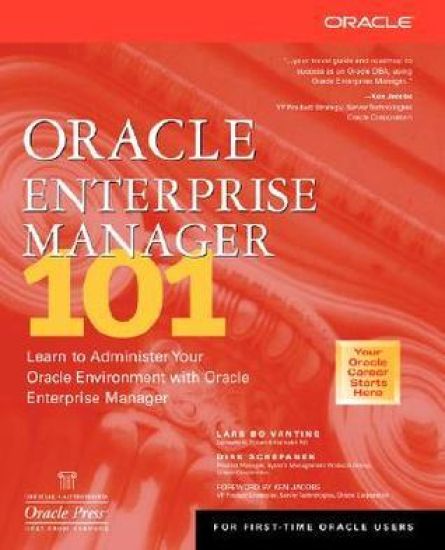
Oracle Enterprise Manager 101

Oracle Enterprise Manager 101

Lars Bo Vanting; Schepanek Dirk

MCGRAW-HILL EDUCATION - EUROPE
2002
nidottu
Your Oracle career starts here! Ideal for those new to Oracle technology, this officially authorized guide explains in easy-to-follow detail how to administer an Oracle database using this state-of-the-art tool. Inside, you'll learn to eliminate, simplify, and automate administrative tasks and use Oracle Enterprise Manager (EM) as a management framework for your entire Oracle environment.
Half Brother

Half Brother

Lars Saabye Christensen

Vintage
2004
pokkari
This novel follows the lives of four generations in a far from ordinary family in Oslo. This is a haunting novel about friendship and loneliness, as well as a poignant portrayal of life in an Oslo tenement building.
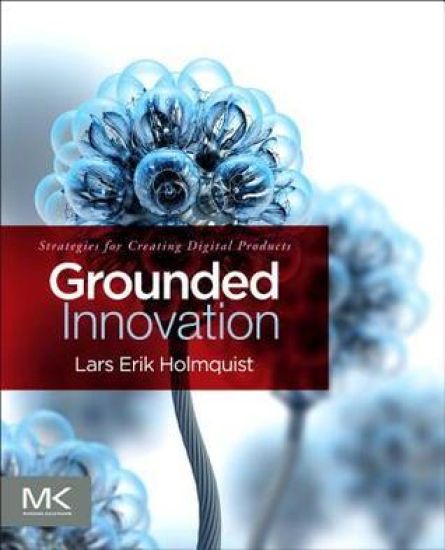
Grounded Innovation

Grounded Innovation

Lars Erik Holmquist

Morgan Kaufmann Publishers In
2012
nidottu
Grounded Innovation: Strategies for Creating Digital Products focuses on the innovation processes and technical properties of digital products. Drawing on case studies, the book looks at systematic ways to ground innovation in both technology and human needs, and it explores how digital products have become integrated in the real world. It provides guidelines to innovation in a new technical environment, including prototyping and testing, within the cultural or financial parameters of a business. The book is divided into two parts. Part 1 discusses the history and the basic properties of digital products; the different approaches to innovation; the concept of grounded innovation; and concepts and processes that are important for creating successful innovations such as inquiry, invention, and prototyping. Part 2 demonstrates how the basic properties of digital products can be used as raw material for new innovations, including interaction, networking, sensing, and proactivity. There is also a discussion on recent technology, such as rapid prototyping and mobile mash-ups. A wide variety of examples show how novel technical and conceptual innovations became commercial breakthroughs. Grounded Innovation is ideal for product designers, interaction designers, and design-oriented engineers. It will also be a valuable resource for anyone interested in understanding how digital products are created and in a general approach to information technology.
DSP Integrated Circuits

DSP Integrated Circuits

Lars Wanhammar

Academic Press Inc
1999
sidottu
DSP Integrated Circuits establishes the essential interface between theory of digital signal processing algorithms and their implementation in full-custom CMOS technology. With an emphasis on techniques for co-design of DSP algorithms and hardware in order to achieve high performance in terms of throughput, low power consumption, and design effort, this book provides the professional engineer, researcher, and student with a firm foundation in the theoretical as well as the practical aspects of designing high performance DSP integrated circuits. Centered around three design case studies, DSP Integrated Circuits thoroughly details a high-performance FFT processor, a 2-D Discrete Cosine Transform for HDTV, and a wave digital filter for interpolation of the sampling frequency. The case studies cover the essential parts of the design process in a top-down manner, from specification of algorithm design and optimization, scheduling of operations, synthesis of optimal architectures, realization of processing elements, to the floor-planning of the integrated circuit.
Corporate Decision-Making with Macroeconomic Uncertainty

Corporate Decision-Making with Macroeconomic Uncertainty

Lars Oxelheim; Clas Wihlborg

Oxford University Press Inc
2008
sidottu
Very few firms make any attempt in their annual reports to inform market participants about the impact of macroeconomic developments on performance. However, the market is not oblivious to this fact, so the firm, as well as financial analysts, need to pay attention. Corporate Decision-Making with Macroeconomic Uncertainty: Performance and Risk Management develops and presents in an easily comprehensible way the essential elements of a corporate strategy for managing uncertainty in the macroeconomic environment. This Macroeconomic Uncertainty Strategy, or MUST, enhances firm value by allowing management and external stakeholders to distinguish between changes in the intrinsic competitiveness of the firm and changes in performance caused by macroeconomic fluctuations. These fluctuations, manifested as changes in exchange rates, interest rates, and inflation rates, are beyond management's control, but they have a substantial impact on performance. The book includes methods to identify the impact of these fluctuations, to develop strategies for macroeconomic risk management, to develop reports to external stakeholders, to evaluate the relative performance of subsidiaries and business units in multinational companies, and to evaluate performance as part of the due diligence process in an M & A context. The authors' use of value-based management, various performance measurements, and the concept of real options makes the book rich and compelling.
The Republican Dilemma

The Republican Dilemma

Lars J. K. Moen

OXFORD UNIVERSITY PRESS INC
2024
sidottu
"Freedom" is a central concept in contemporary political philosophy and the history of political thought. Liberals tend to see freedom as the absence of any kind of interference, while republicans understand freedom as the absence of domination, by which they mean the absence of interference you, as a free person, have not yourself instructed. These two concepts inform a debate over the extent to which the republican freedom illuminates shortcomings in prominent liberal theories. Author Lars Moen claims that not only do we need more precise definitions of freedom, but that the republican critique of liberalism ironically promotes a liberal theory, giving us the same prescriptions for how institutions ought to promote freedom. While republicans can maintain that freedom as non-domination is an attractive ideal for a modern society, they cannot claim that it provides insight not found in liberalism and its focus on freedom from interference. Republicans can avoid this conclusion, however, by tying their freedom concept closer to civic virtue and political participation. But republican freedom then becomes an unsuitable ideal for a modern society. This is the republican dilemma. Moen shows, however, that while a distinctly republican view of freedom is too demanding to serve as a guiding ideal for a modern society, it can form the basis for a critique of liberalism. In particular, it can offer a critical perspective on a liberal acceptance of politically inactive citizens. The book thus points toward a distinctly republican position in contemporary political philosophy.
Curious Tales from Chemistry

Curious Tales from Chemistry

Lars Öhrström

Oxford University Press
2015
nidottu
This is a book about discovery and disaster, exploitation and invention, warfare and science - and the relationship between human beings and the chemical elements that make up our planet. Lars Ohrstrom introduces us to a variety of elements from S to Pb through tales of ordinary and extraordinary people from around the globe. We meet African dictators controlling vital supplies of uranium; eighteenth-century explorers searching out sources of precious metals; industrial spies stealing the secrets of steel-making. We find out why the Hindenburg airship was tragically filled with hydrogen, not helium; why nail-varnish remover played a key part in World War I; and the real story behind the legend of tin buttons and the downfall of Napoleon. In each chapter, we find out about the distinctive properties of each element and the concepts and principles that have enabled scientists to put it to practical use. These are the fascinating (and sometimes terrifying) stories of chemistry in action.
Tolerance

Tolerance

Lars Tonder

Oxford University Press Inc
2013
sidottu
The main task of Tolerance is to reorient discussions in democratic theory so as better to theorize how tolerance can operate as an active force in the context of deep pluralism. The objective is to develop a theory of active tolerance attentive to the many different ways in which societies can become tolerant, and to discuss what might get lost, conceptually as well as politically, if we don't pay attention to how active tolerance subsists within other practices of tolerance. Tolerance exceeds existing accounts, I argue, not because it cannot be domesticated for the purposes of either restraint or benevolence, but because this domestication does not preclude the possibility of another, more active tolerance. Tolerance develops this argument by mobilizing what I call a "sensorial orientation to politics." While a sensorial orientation does not refute the role of reason in democratic politics, it differs from its intellectualist counterpart by arguing that practices of reason-giving include ways of sensing the world, insisting that reason is always-already sensorial. A sensorial orientation, in other words, focuses on the embodied conditions of reasoning, which it takes to be neither completely synergistic nor immediately present, but reliant on representations, images, and memories, which situate sensory input within historically defined regimes of discourse and sensation, and which assume that sentient beings experience the world through both thought and action, mind and body. Theorists discussed in the book include Seneca, Spinoza, Nietzsche, Marcuse, and Merleau-Ponty, together with Descartes, Locke, Kant, Mill, Rawls, Forst, Scanlon, Taylor, Brown, and Connolly. Tolerance draws on a critical consideration of these thinkers in order to shed new light on the role of tolerance in both contemporary democratic theory and contemporary public discourse. The aim is to show how tolerance once again can become a practice of empowerment and pluralization.
Tolerance

Tolerance

Lars Tonder

Oxford University Press Inc
2013
nidottu
The main task of Tolerance is to reorient discussions in democratic theory so as better to theorize how tolerance can operate as an active force in the context of deep pluralism. The objective is to develop a theory of active tolerance attentive to the many different ways in which societies can become tolerant, and to discuss what might get lost, conceptually as well as politically, if we don't pay attention to how active tolerance subsists within other practices of tolerance. Tolerance exceeds existing accounts, I argue, not because it cannot be domesticated for the purposes of either restraint or benevolence, but because this domestication does not preclude the possibility of another, more active tolerance. Tolerance develops this argument by mobilizing what I call a "sensorial orientation to politics." While a sensorial orientation does not refute the role of reason in democratic politics, it differs from its intellectualist counterpart by arguing that practices of reason-giving include ways of sensing the world, insisting that reason is always-already sensorial. A sensorial orientation, in other words, focuses on the embodied conditions of reasoning, which it takes to be neither completely synergistic nor immediately present, but reliant on representations, images, and memories, which situate sensory input within historically defined regimes of discourse and sensation, and which assume that sentient beings experience the world through both thought and action, mind and body. Theorists discussed in the book include Seneca, Spinoza, Nietzsche, Marcuse, and Merleau-Ponty, together with Descartes, Locke, Kant, Mill, Rawls, Forst, Scanlon, Taylor, Brown, and Connolly. Tolerance draws on a critical consideration of these thinkers in order to shed new light on the role of tolerance in both contemporary democratic theory and contemporary public discourse. The aim is to show how tolerance once again can become a practice of empowerment and pluralization.
Entangled Narratives

Entangled Narratives

Lars-Christer Hyden

Oxford University Press Inc
2017
sidottu
As people are living longer on average than ever before, the number of those with dementia will increase. Because many will live a considerable time at home with their diagnosis, we need to know more about the ways people can adapt to and learn to live with dementia in their everyday lives. Lars-Christer Hydén argues in this book that to do so will involve re-imagining what dementia really is and what it can mean to the afflicted and their loved ones. One of the most important everyday opportunities for sharing experiences is the simple act of storytelling. But when someone close to you gradually loses the ability to tell stories and cherish the shared history you have together, this is seen as a threat to the relationship, to the feeling of belonging together, and to the identity of the person diagnosed. Therefore, learning about how people with dementia can participate in storytelling along with their families and friends helps to sustain those relationships and identities. In Entangled Narratives, Hydén not only emphasizes the possibilities that are inherent in collaborative storytelling, but instructs professionals and otherwise healthy relatives to learn how to effectively listen and, ultimately, re-imagine their patients and loved ones as collaborative meaning-makers in their lives.
An Archaeological History of Indian Buddhism

An Archaeological History of Indian Buddhism

Lars Fogelin

Oxford University Press Inc
2015
sidottu
An Archaeological History of Indian Buddhism is a comprehensive survey of Indian Buddhism from its origins in the 6th century BCE, through its ascendance in the 1st millennium CE, and its eventual decline in mainland South Asia by the mid-2nd millennium CE. Weaving together studies of archaeological remains, architecture, iconography, inscriptions, and Buddhist historical sources, this book uncovers the quotidian concerns and practices of Buddhist monks and nuns (the sangha), and their lay adherents--concerns and practices often obscured in studies of Buddhism premised largely, if not exclusively, on Buddhist texts. At the heart of Indian Buddhism lies a persistent social contradiction between the desire for individual asceticism versus the need to maintain a coherent community of Buddhists. Before the early 1st millennium CE, the sangha relied heavily on the patronage of kings, guilds, and ordinary Buddhists to support themselves. During this period, the sangha emphasized the communal elements of Buddhism as they sought to establish themselves as the leaders of a coherent religious order. By the mid-1st millennium CE, Buddhist monasteries had become powerful political and economic institutions with extensive landholdings and wealth. This new economic self-sufficiency allowed the sangha to limit their day-to-day interaction with the laity and begin to more fully satisfy their ascetic desires for the first time. This withdrawal from regular interaction with the laity led to the collapse of Buddhism in India in the early-to-mid 2nd millennium CE. In contrast to the ever-changing religious practices of the Buddhist sangha, the Buddhist laity were more conservative--maintaining their religious practices for almost two millennia, even as they nominally shifted their allegiances to rival religious orders. This book also serves as an exemplar for the archaeological study of long-term religious change through the perspectives of practice theory, materiality, and semiotics.
An Archaeological History of Indian Buddhism

An Archaeological History of Indian Buddhism

Lars Fogelin

Oxford University Press Inc
2015
nidottu
An Archaeological History of Indian Buddhism is a comprehensive survey of Indian Buddhism from its origins in the 6th century BCE, through its ascendance in the 1st millennium CE, and its eventual decline in mainland South Asia by the mid-2nd millennium CE. Weaving together studies of archaeological remains, architecture, iconography, inscriptions, and Buddhist historical sources, this book uncovers the quotidian concerns and practices of Buddhist monks and nuns (the sangha), and their lay adherents--concerns and practices often obscured in studies of Buddhism premised largely, if not exclusively, on Buddhist texts. At the heart of Indian Buddhism lies a persistent social contradiction between the desire for individual asceticism versus the need to maintain a coherent community of Buddhists. Before the early 1st millennium CE, the sangha relied heavily on the patronage of kings, guilds, and ordinary Buddhists to support themselves. During this period, the sangha emphasized the communal elements of Buddhism as they sought to establish themselves as the leaders of a coherent religious order. By the mid-1st millennium CE, Buddhist monasteries had become powerful political and economic institutions with extensive landholdings and wealth. This new economic self-sufficiency allowed the sangha to limit their day-to-day interaction with the laity and begin to more fully satisfy their ascetic desires for the first time. This withdrawal from regular interaction with the laity led to the collapse of Buddhism in India in the early-to-mid 2nd millennium CE. In contrast to the ever-changing religious practices of the Buddhist sangha, the Buddhist laity were more conservative--maintaining their religious practices for almost two millennia, even as they nominally shifted their allegiances to rival religious orders. This book also serves as an exemplar for the archaeological study of long-term religious change through the perspectives of practice theory, materiality, and semiotics.