
Kirjahaku
Etsi kirjoja tekijän nimen, kirjan nimen tai ISBN:n perusteella.
1000 tulosta hakusanalla Luke Pitcher
Luke 6:40 and the Theme of Likeness Education in the New Testament
Thomas W Hudgins; David Alan Black
Wipf Stock Publishers
2014
sidottu
As the first century came to a close, the church struggled with its identity due to its memories of a disconnected past. As the church reflected on recent history, it remembered the origins of Christianity as full of gaps and discontinuities, leaving it to question the validity of this new Jesus movement. How did Jesus' ministry relate to ancient Judaism? What was the relationship between John the Baptist and Jesus? What kind of transition occurred between Jesus and his followers? How did the Holy Spirit relate to Jesus? How could the controversial figure Paul have such an integral role in nascent Christianity? How could a heavily Gentile church preach about the Messiah of Israel? Using a musical metaphor, this book demonstrates how Luke replies to these staccato narratives of the first-century church with his own legato version of history. Luke accomplishes this bridging of past events primarily through the ancient practice of rhetorical transitions, and in the process reassures his audiences of the continuity of salvation history throughout the various stages of early Christianity. ""Brack's engaging work draws on both ancient rhetoric and contemporary social memory studies to show that Luke's portrayal of Jesus and the church was designed to produce a connected narrative that would shape the identity and purpose of the early church. Brack's attention to detail and method is coupled with salvation history in a thought-provoking manner that contributes to scholarship on Luke-Acts and memory and identity in the New Testament."" --Ruth Anne Reese, Professor of New Testament, Asbury Theological Seminary ""In a well-organized case, Brack models interdisciplinary competence by drawing insightfully on ancient practices to explain Luke's use of narrative/rhetorical transitions, and on social memory theory to offer an explanation as to why this matters. This is a brilliant work deserving careful attention by scholars working in Luke-Acts."" --Craig S. Keener, F. M. and Ada Thompson Professor of Biblical Studies, Asbury Theological Seminary David Brack is an adjunct professor at Asbury Theological Seminary. He lives in Cincinnati, Ohio with his wife and four children.


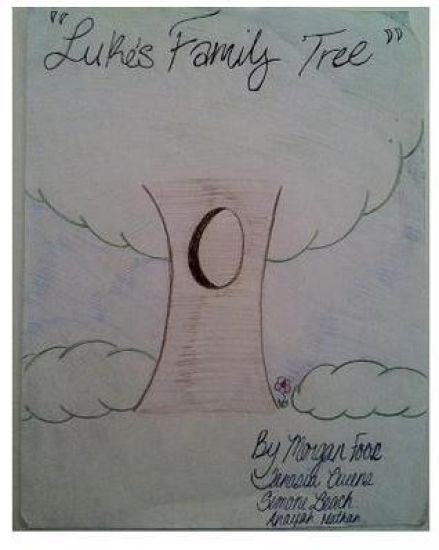
Luke's Family Tree
Tanasia Owens; Simone Beach; Anayah Nathan
Createspace Independent Publishing Platform
2014
nidottu
Luke is a bird, his Mom is a bee, and his Dad has chubby cheeks. What an unusual family When Heather asks why they are so different Luke explains they are really the same.Luke's Family Tree is one of three children's books picked as "Best" out of a competition held between six Honors English Classes taught by Mr. James Mascia at Westlake High School, Waldorf, MD.

Luke the Lion Cub: Yes He Can!
Tom Choquette
Createspace Independent Publishing Platform
2014
nidottu
Little Luke the Lion Cub wants to have success, but he can't find it anywhere. Could it be in the garage? "Tom Choquette has brought to life this lovable little lion cub whose innocence and curiosity will bring a smile to your child's face."




Luke Banderloft and the Great War
Rocky Perry
Createspace Independent Publishing Platform
2014
nidottu
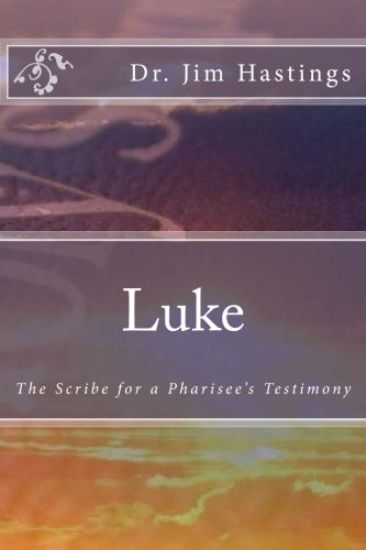
Luke: The Scribe for a Pharisee's Testimony
Jim Hastings
Createspace Independent Publishing Platform
2014
nidottu
Paul's faithful companion and doctor acts as a scribe to record Paul's eyewitness testimony of the Lord's birth and life as seen and encountered by a Pharisee of the Pharisees. As a Pharisee, Paul, then known as Saul, violently objected to the Lord's life and ministry. Thankfully, Dr. Luke provides in this transcript of Paul's testimony all the needed historical facts to identify the year and season of Jesus' birth and death and His wonderful ministry. It was a testimony to one Roman man, but it also contains all that Gentiles need to know to accept the Lord as the Savior of their lives. This commentary can be used for personal or group Bible Studies. The chapters in this commentary match the chapters in your Bible
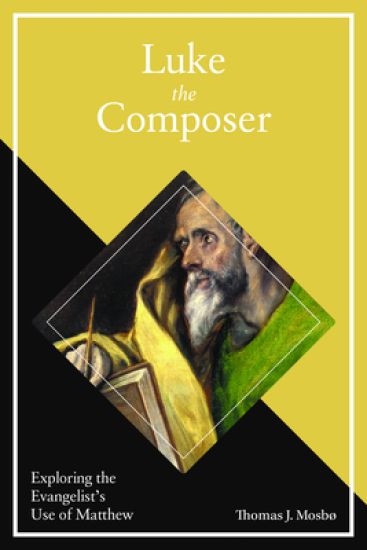
The literary relationships among the Synoptic Gospels have long attracted scholarly attention which has now generally coalesced into the predominant Two- (or Four-) Source Hypothesis and leading alternatives, the Griesbach (or Two-Gospel) Hypothesis (Mark used Matthew and Luke) and the Farrer Hypothesis (Luke used Mark and Matthew). Thomas J. Mosbo here argues that no theory of Synoptic relations is adequate unless it can satisfactorily explain the extensive middle third of Luke's Gospel, the so-called Travel Narrative (9:51-19:27), where Luke departs from the order shown in either Matthew or Mark and assembles stories and sayings that develop themes concerning discipleship that are important to Luke. Mosbo examines this narrative as a composed narrative, not merely an assembly of "materials," and finds that Luke has reordered materials taken from Matthew and from Mark in a very particular manner. He then examines Luke's purposes in the Gospel as a whole, then addresses objections raised by Q advocates to the hypothesis that Luke knew Matthew. At length Mosbo offers his own hypothesis of Synoptic relationships, including the relationship between Matthew and Mark.
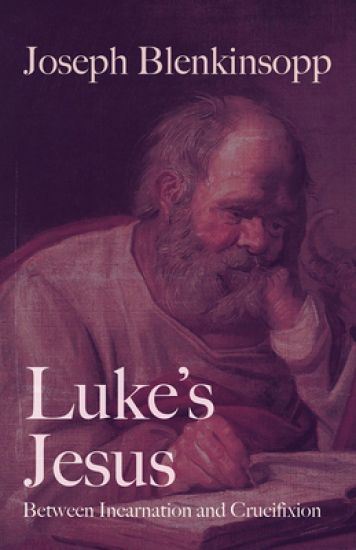
The third evangelist tells the story of Jesus in clear, dramatically compelling, and humanly moving terms. His Jesus is a man of great power, a deep sense of mission, and profound compassion for those on the outskirts of society. And Luke's Gospel has the best stories--that is, parables--including a number that are unique to him. Luke's story fills in the gap between born of the virgin Mary and suffered under Pontius Pilate in the Apostles' Creed. While it is usually important for those who write biography to report how the lives of their subjects began and ended, Luke's story of Jesus's birth differs from Matthew's version, and the conclusion to Luke's account of Jesus's life ends neither with his death nor with his resurrection but with his being taken up from the earth to the heavens. The Gospel of Luke is historical in its approach, for which there are no apologies: a historical reading follows necessarily from the Christian doctrine of the incarnation, which teaches that God has entered the history of humanity through Jesus. At the same time, Luke's approach is theological: together with the other evangelists, Luke intends to show his readers that in the person of Jesus of Nazareth, God has drawn near to humanity in an inexpressible and unique way.

Luke and Amandas Beloved life
Amanda Helles
Createspace Independent Publishing Platform
2015
nidottu

Chased by her criminal kingpin father, Katya Dalca runs to New Orleans and straight into the arms of Luke Hunter. Sucked into the carnal world of the French Quarter, she succumbs to Luke's potent sexuality. He not only steals her breath, he steals her heart and the only leverage she has against her father. She is left with no choice except to pick up the pieces and rebuild her life alone. Undercover DEA agent Luke Hunter thought his newest assignment--recover a stolen flash drive to gain the trust of the Russian mob--was like any other. But his target brings him to his knees, and after one taste of her intoxicating beauty, he's in too deep. Doing his job means walking away, leaving his heart behind with nothing but a promise to reunite. It's a promise he can't keep. When Katya's past reaches out and her world unravels, her only hope is the one man she is most vulnerable to--Luke.