Kirjojen hintavertailu. Mukana 11 342 296 kirjaa ja 12 kauppaa.

Kirjahaku

Etsi kirjoja tekijän nimen, kirjan nimen tai ISBN:n perusteella.

1000 tulosta hakusanalla Maral Atmaca

Moral Thinking, Fast and Slow

Moral Thinking, Fast and Slow

Hanno Sauer

Routledge
2020
nidottu
In recent research, dual-process theories of cognition have been the primary model for explaining moral judgment and reasoning. These theories understand moral thinking in terms of two separate domains: one deliberate and analytic, the other quick and instinctive. This book presents a new theory of the philosophy and cognitive science of moral judgment. Hanno Sauer develops and defends an account of "triple-process" moral psychology, arguing that moral thinking and reasoning are only insufficiently understood when described in terms of a quick but intuitive and a slow but rational type of cognition. This approach severely underestimates the importance and impact of dispositions to initiate and engage in critical thinking – the cognitive resource in charge of counteracting my-side bias, closed-mindedness, dogmatism, and breakdowns of self-control. Moral cognition is based, not on emotion and reason, but on an integrated network of intuitive, algorithmic and reflective thinking.Moral Thinking, Fast and Slow will be of great interest to philosophers and students of ethics, philosophy of psychology and cognitive science.
Moral Reality and the Empirical Sciences
Are there objective moral truths (things that are morally right or wrong independently of what anybody thinks about them)? To answer this question more and more scholars have recently begun to appeal to evidence from scientific disciplines such as psychology, neuroscience, biology, and anthropology. This book investigates this novel scientific approach in a comprehensive, empirically focused, partly clarificatory, and partly metatheoretical way. It argues for two main theses. First, it is possible for the empirical sciences to contribute to the moral realism/anti-realism debate. And second, most appeals to science that have so far been proposed are insufficiently empirically substantiated.The book’s main chapters address four prominent science-based arguments for or against the existence of objective moral truths: the presumptive argument, the argument from moral disagreement, the sentimentalist argument, and the evolutionary debunking argument. For each of these arguments Thomas Pölzler first identifies the sense in which its underlying empirical hypothesis would have to be true in order for the argument to work. Then he shows that the available scientific evidence fails to support this hypothesis. Finally, he also makes suggestions as to how to test the hypothesis more validly in future scientific research.Moral Reality and the Empirical Sciences is an important contribution to the moral realism/anti-realism debate that will appeal both to philosophers and scientists interested in moral psychology and metaethics.
Moral Talk

Moral Talk

Joe Spencer-Bennett

Routledge
2020
nidottu
This book is about moral talk in contemporary British political discourse, drawing on speeches, debates and radio phone-ins. Using a critical sociolinguistic approach, Spencer-Bennett explores the language people use to communicate moral judgement and highlights the relations between the things that people say, the contexts in which they are said and the circulating ideologies about meaning and morality. This is key reading for students and scholars studying language, politics and critical discourse analysis, within linguistics and anthropology.
Moral Concepts and their History
This edited volume is devoted to the history of moral concepts, including shame, contempt, happiness, conscience, cleanliness and 'the brick'.The chapters in this book are written from the diverse perspectives of the philosopher, theologian, linguist and historian of ideas. However, they are united in the conviction that these concepts are illuminated by being treated historically; or even, more strongly, that we cannot fully understand what they are now without knowing the history of how they have come to be. Viewed in this way, the history of moral concepts is a crucial preliminary to moral self-understanding, as well as an interesting enquiry in its own right.The chapters in this book were originally published as a special issue of the History of European Ideas.
Moral Concepts and their History
This edited volume is devoted to the history of moral concepts, including shame, contempt, happiness, conscience, cleanliness and 'the brick'.The chapters in this book are written from the diverse perspectives of the philosopher, theologian, linguist and historian of ideas. However, they are united in the conviction that these concepts are illuminated by being treated historically; or even, more strongly, that we cannot fully understand what they are now without knowing the history of how they have come to be. Viewed in this way, the history of moral concepts is a crucial preliminary to moral self-understanding, as well as an interesting enquiry in its own right.The chapters in this book were originally published as a special issue of the History of European Ideas.
Moral Play and Counterpublic

Moral Play and Counterpublic

Ineke Murakami

Routledge
2019
nidottu
In this study, Murakami overturns the misconception that popular English morality plays were simple medieval vehicles for disseminating conservative religious doctrine. On the contrary, Murakami finds that moral drama came into its own in the sixteenth century as a method for challenging normative views on ethics, economics, social rank, and political obligation. From its inception in itinerate troupe productions of the late fifteenth century, "moral play" served not as a cloistered form, but as a volatile public forum. This book demonstrates how the genre’s apparently inert conventions—from allegorical characters to the battle between good and evil for Mankind’s soul—veiled critical explorations of topical issues. Through close analysis of plays representing key moments of formal and ideological innovation from 1465 to 1599, Murakami makes a new argument for what is at stake in the much-discussed anxiety around the entwined social practices of professional theater and the emergent capitalist market. Moral play fostered a phenomenon that was ultimately more threatening to ‘the peace’ of the realm than either theater or the notorious market--a political self-consciousness that gave rise to ephemeral, non-elite counterpublics who defined themselves against institutional forms of authority.
Moral Rationalism and Shari'a

Moral Rationalism and Shari'a

Ali-Reza Bhojani

Routledge
2019
nidottu
Moral Rationalism and Shari'a is the first attempt at outlining the scope for a theological reading of Shari'a, based on a critical examination of why 'Adliyya theological ethics have not significantly impacted Shi'i readings of Shari'a. Within Shi'i works of Shari 'a legal theory (usul al-fiqh) there is a theoretical space for reason as an independent source of normativity alongside the Qur’an and the Prophetic tradition. The position holds that humans are capable of understanding moral values independently of revelation. Describing themselves as 'Adliyya (literally the people of Justice), this allows the Shi 'a, who describe themselves as 'Adiliyya (literally, the People of Justice), to attribute a substantive rational conception of justice to God, both in terms of His actions and His regulative instructions. Despite the Shi'i adoption of this moral rationalism, independent judgments of rational morality play little or no role in the actual inference of Shari 'a norms within mainstream contemporary Shi'i thought. Through a close examination of the notion of independent rationality as a source in modern Shi'i usul al-fiqh, the obstacles preventing this moral rationalism from impacting the understanding of Shari 'a are shown to be purely epistemic. In line with the ‘emic’ (insider) approach adopted, these epistemic obstacles are revisited identifying the scope for allowing a reading of Shari'a that is consistent with the fundamental moral rationalism of Shi'i thought. It is argued that judgments of rational morality, even when not definitively certain, cannot be ignored in the face of the apparent meaning of texts that are themselves also not certain. An 'Adliyya reading of Shari'a demands that the strength of independent rational evidence be reconciled against the strength of any other apparently conflicting evidence, such that independent
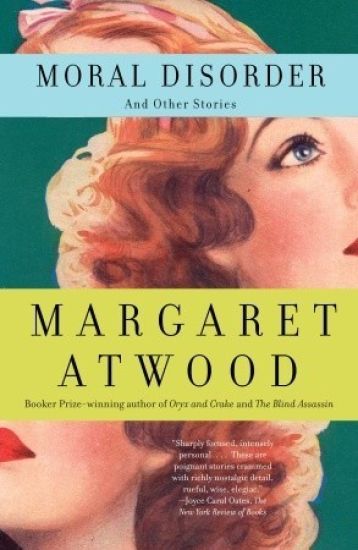
Moral Disorder and Other Stories

Moral Disorder and Other Stories

Margaret Atwood

ANCHOR BOOKS
2008
nidottu
From the bestselling author of The Handmaid's Tale and The Testaments - This brilliant collection of connected short stories strings together several decades of moments in the life of one woman--as an ambitious girl in the 1930s, as a young professional coming of age in the uncertain '50s and '60s, and as half of a couple growing old together. In a series of vividly evoked settings that span cities, backwoods, and farm country, we see this woman contending over time with an unstable sister, a married lover, aging parents, mystifying stepchildren, vulnerable farm animals, and her own changing self. By turns funny, lyrical, earthy, shocking, and deeply personal, Moral Disorder displays Margaret Atwood's celebrated storytelling gifts and unmistakable style to their best advantage.
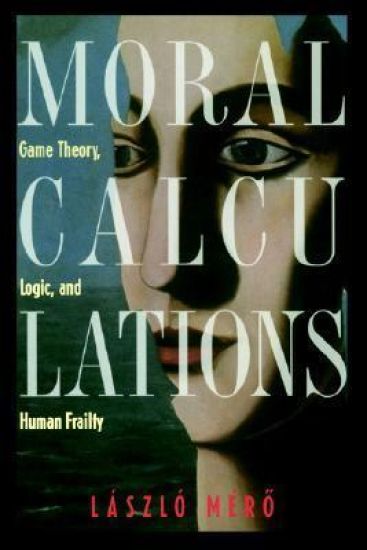
Moral Calculations

Moral Calculations

Laszlo Mero

Copernicus Books
1998
sidottu
Are people ever rational? Consider this: You auction off a one-dollar bill to the highest bidder, but you set the rules so that the second highest bidder also has to pay the amount of his last bid, even though he gets nothing. Would people ever enter such an auction? Not only do they, but according to Martin Shubik, the game's inventor, the average winning bid (for a dollar, remember) is $3.40. Many winners report that they bid so high only because their opponent "went completely crazy." This game lies at the intersection of three subjects of eternal fascination: human psychology, morality, and John von Neumann's game theory. Hungarian game-theorist Laszlo Mero introduces us to the basics of game theory, including such concepts as zero-sum games, Prisoner's Dilemma and the origins of altruism; shows how game theory is applicable to fields ranging from physics to politics; and explores the role of rational thinking in the context of many different kinds of thinking. This fascinating, urbane book will interest everyone who wonders what mathematics can tell us about the human condition.
Moral Values and Political Behaviour in Ancient Greece
In this book, Professor Adkins undertakes an examination of certain key value-words in the period between Homer and the end of the fifth century. The behavior of these words both affected and was affected by the nature of the society in which their usage developed. The author shows how only with a complete understanding of the implications and significance of these value-words can the essence of the Greeks and their society be grasped.
Moral Freedom

Moral Freedom

Alan Wolfe

WW Norton Co
2002
nidottu
What is the difference between right and wrong? What does it mean to lead a good life? How binding is the marriage vow? What are your obligations to an employer? To your friends? To yourself? Is it always immoral to tell a lie? "[A]n alert and knowledgeable social critic," Alan Wolfe asked Americans around the country such questions in "his intriguing exploration of our collective character, testing prevailing notions of the culture war" (New York Times Book Review). Focusing on the traditional virtues of loyalty, honesty, self-restraint, and forgiveness, Wolfe "strips away ulterior agendas to give us a look at the raw material of the American conscience" (New York Observer) and discovers that "Americans...have not so much left traditional morality behind as they have redefined it in ways that suit their individual tastes, purposes, and situations" (Washington Post). "Wolfe is right that [the search for moral freedom] is a revolution...a very American revolution."—Newsweek
Moral Compass

Moral Compass

Danielle Steel

Dell
2020
pokkari
#1 NEW YORK TIMES BESTSELLER - At an elite private school in Massachusetts, a wide circle of lives will be forever changed by a devastating series of events in Danielle Steel's riveting new novel. Saint Ambrose Prep is a place where the wealthy send their children for the best possible education, with teachers and administrators from the Ivy League, and graduates who become future lawyers, politicians, filmmakers, and CEOs. Traditionally a boys-only school, Saint Ambrose has just enrolled one hundred and forty female students for the first time. Even though most of the kids on the campus have all the privilege in the world, some are struggling, wounded by their parents' bitter divorces, dealing with insecurity and loneliness. In such a heightened environment, even the smallest spark can become a raging fire. One day after the school's annual Halloween event, a student lies in the hospital, her system poisoned by dangerous levels of alcohol. Everyone in this sheltered community--parents, teachers, students, police, and the media--are left trying to figure out what actually happened. Only the handful of students who were there when she was attacked truly know the answers and they have vowed to keep one another's secrets. As details from the evening emerge, powerful families are forced to hire attorneys and less powerful families watch helplessly. Parents' marriages are jeopardized, and students' futures are impacted. No one at Saint Ambrose can escape the fallout of a life-altering event. In this compelling novel, Danielle Steel illuminates the dark side of one drunken night, with its tragic consequences, from every possible point of view. As the drama unfolds, the characters will reach a crossroads where they must choose between truth and lies, between what is easy and what is right, and find the moral compass they will need for the rest of their lives.
Moral Realities

Moral Realities

Mark Platts

Routledge
1991
sidottu
Scepticism about morality is as old as morality itself. Philosophers have attacked the `singular institution' of morality, but have these sceptics correctly identified their target? In this book a descriptive metaphysics of morals is presented, revealing how philosophical critics have consistently misidentified the institution of morality. Mark Platts' influential first book Ways of Meaning argued within the context of the philosophy of language that a `realist' account of moral thought was possible; Moral Realities defends the same possibility from the perspective of the philosophy of psychology. Platts engages the classical moral philosophies of Hume, Mandeville and Nietzsche, and tackles the powerful arguments of the contemporary moral relativists. His critique of the existing philosophical notions of desire and value enables him to clarify both what morality is and what it is not.
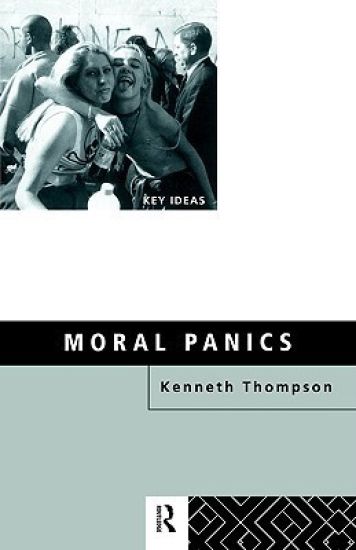
Moral Panics

Moral Panics

Kenneth Thompson

Routledge
1998
sidottu
It is widely acknowledged that this is the age of moral panics. From the Bulger case to mad cow disease, newspaper headlines continually warn of some new danger and television programmes echo the theme with sensational docmenturies. This concise survey will help student trace the development of ideas of moral panic and to analyse how changing public perceptions are shaped and reflected through the media over time. Using examples drawn from: * club culture and raves * mugging * sex and AIDS * children, violence and the family.
Moral Panics

Moral Panics

Kenneth Thompson

Routledge
1998
nidottu
It is widely acknowledged that this is the age of moral panics. From the Bulger case to mad cow disease, newspaper headlines continually warn of some new danger and television programmes echo the theme with sensational docmenturies. This concise survey will help student trace the development of ideas of moral panic and to analyse how changing public perceptions are shaped and reflected through the media over time. Using examples drawn from: * club culture and raves * mugging * sex and AIDS * children, violence and the family.
Moral Agendas For Children's Welfare
Moral Agendas for Children's Welfare examines the roles played by politics, religion, ethics, aesthetics, law and science in identifying children's needs and rights and critically analyses existing child welfare policies.Five sections cover the following Agendas:* Philosophical and Psychoanalytical* Psychological and Sociological* Religious * Social Policy* Child Protection.Moral Agendas for Children's Welfare will provide invaluable reading for students in law, social work and policy and sociology and professionals in welfare, health care and law.
Moral Agendas For Children's Welfare
Moral Agendas for Children's Welfare examines the roles played by politics, religion, ethics, aesthetics, law and science in identifying children's needs and rights and critically analyses existing child welfare policies.Five sections cover the following Agendas:* Philosophical and Psychoanalytical* Psychological and Sociological* Religious * Social Policy* Child Protection.Moral Agendas for Children's Welfare will provide invaluable reading for students in law, social work and policy and sociology and professionals in welfare, health care and law.
Moral Disagreements
Can moral disagreements be rationally resolved? Can universal human rights be defended in face of moral disagreements? The problem of moral disagreement is one of the central problems in moral thinking. It also provides a stimulating stepping-stone to some of the perennial problems of philosophy, such as relativism, scepticism, and objectivity. Moral Disagreements is the first anthology to bring together classic and contemporary readings on this key topic. Clearly divided into five parts; The Historical Debate; Voices from Anthropology; Challenges to Moral Objectivity; Defenses of Moral Objectivity; and New Directions, the anthology presents readings from the following key thinkers:* Sextus, Empiricus, Chagnon, Wong, MacIntyre* Aquinas, Shweder, Brink, Rawls* Montaigne, Turner, Nussbaum, Narayan* Hume, Mackie, Gewirth* Nietzsche, Williams, Berlin.A distinctive feature of the anthology is that it brings philosophers into dialogue with well-known anthropologists. Also included is a comprehensive introduction by Christopher Gowans, introducing the problem of moral disagreement to those coming to the topic for the first time.