

Kirjahaku
Etsi kirjoja tekijän nimen, kirjan nimen tai ISBN:n perusteella.
1000 tulosta hakusanalla Mary Ann Loop
Mary Ann Tolbert, George H. Atkinson Professor of Biblical Studies at Pacific School of Religion in Berkeley, California, offers one of the freshest interpretations of Mark's Gospel I have ever had the privilege to read. . . . It marks a milestone in the recent history of Markan research (Jack Dean Kingsbury).
Mark
Mary Ann Beavis; Mikeal Parsons; Charles Talbert
Baker Academic, Div of Baker Publishing Group
2011
nidottu
In this addition to the well-received Paideia series, Mary Ann Beavis examines cultural context and theological meaning in Mark. Paideia commentaries explore how New Testament texts form Christian readers by• attending to the ancient narrative and rhetorical strategies the text employs• showing how the text shapes theological convictions and moral habits• commenting on the final, canonical form of each New Testament book• focusing on the cultural, literary, and theological settings of the text• making judicious use of maps, photos, and sidebars in a reader-friendly formatStudents, pastors, and other readers will appreciate the insights that Beavis derives from interrogating the text through multiple perspectives.
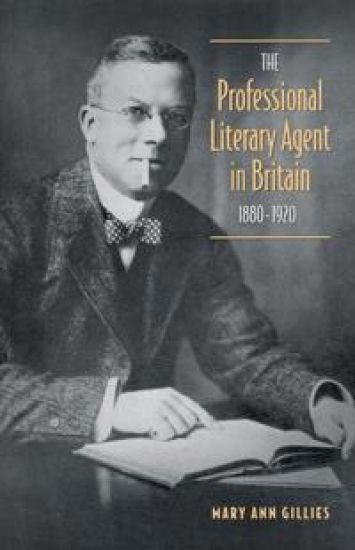
Breaking new ground in the study of British literary culture during an important, transitional period, this new work by Mary Ann Gillies focuses on the professional literary agent whose emergence in Britain around 1880 coincided with, and accelerated, the transformation of both publishing and authorship. Like other recent studies in book and print culture, The Professional Literary Agent in Britain, 1880-1920 starts from the central premise that the business of authorship is inextricably linked with the aesthetics of literary praxis. Rather than provide a broad overview of the period, however, Gillies focuses on a specific figure, the professional literary agent. She then traces the influence of two prominent agents - A. P. Watt (generally acknowledged as the first professional literary agent) and J. B. Pinker (the leading figure in the second wave of agents) - focusing on their respective relationships with two key clients. The case studies not only provide insight into the business dynamics of the literary world at this time, but also illustrate the shifting definition of literature itself during the period.
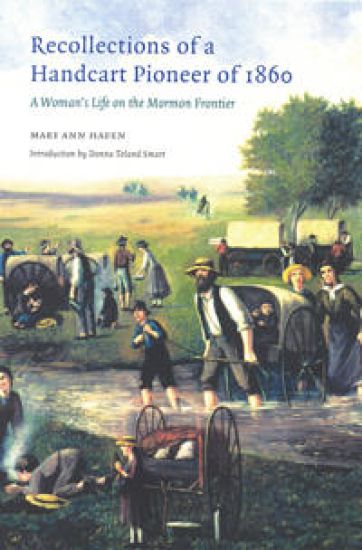
In the summer of 1860 the author of these recollections, Mary Ann Stucki, then six years old, walked beside her parents' handcart from Florence (Omaha), Nebraska, to Salt Lake City, Utah. The family, converts to Mormonism, had left their comfortable home near Bern, Switzerland, to make the long journey to the Mormon Zion. Nearly eighty years later, Mary Ann Hafen published this account of her life, giving us an unparalleled, candid, inside view of the Mormon woman's world. Called to go with the Swiss company to settle the "Dixieland" region of southern Utah —a hot, dry, inhospitable land—Mary Ann's family lived in thatch, dugout, and adobe houses they built themselves. While still hardly more than a child, Mary Ann cut wheat with a sickle, gleaned cotton fields, made braided straw hats for barter, and spun and dyed cloth for her dresses. Always sustained by her faith in the church, she took part in a millenarian scheme that failed—a communal order—and entered a polygamous marriage, raising almost single-handedly a large family.Mary Ann Hafen has left an authentic, matter-of-fact record of poverty, incredibly hard work, and loss of loved ones, but also of pleasures great and small. It is a unique document of a little-known way of life.
Group Treatment of Adult Incest Survivors
Mary Ann Donaldson; Susan Cordes-Green
SAGE Publications Inc
1994
sidottu
The accounts of group work are fascinating. . . . The authors' experience over many years is well organized and presented, and the level of detail given enables the real dilemmas and problems presented by this work to be dealt with. The role of education concerning the effects of abuse in order to enable participants to better understand their own reactions is helpfully explained, and is relevant in dealing with victimization generally. . . . This is a book that raises important issues for practitioners in this field. --Anne Viney in Criminal Behavior and Mental Health As a widely used and accepted form of intervention, group therapy has been successfully applied to a variety of populations. Group Treatment of Adult Incest Survivors explores the benefits of this treatment modality in ameliorating symptoms experienced by adult incest survivors and provides the practitioner with assistance in working with both content and process issues in incest therapy groups. Drawing from the most recent research literature and their own clinical expertise, Donaldson and Cordes-Green present a thorough discussion of group treatment research issues, a review of problems experienced by clients, a preparation for both therapist and client for the group therapy process, a sample group "walk-through," and a description of typical group phases. Attention is also given to special problems within the group and individual group members. The practical advice and guidance offered in Group Treatment of Adult Incest Survivors skillfully addresses the here-and-now needs of practitioners working with this client population. "This is a good, practical model by two social workers who are knowledgeable and experienced in group therapy for adult incest survivors. It is simply and clearly written, with a framework that is easy to understand. The book presents 'teachable' systems of keeping group leaders on track [the Four Ms for Group Therapy]. . . . I liked this how-to book and will use it in training group therapists." --Canadian Medical Association
Group Treatment of Adult Incest Survivors
Mary Ann Donaldson; Susan Cordes-Green
SAGE Publications Inc
1994
nidottu
The accounts of group work are fascinating. . . . The authors' experience over many years is well organized and presented, and the level of detail given enables the real dilemmas and problems presented by this work to be dealt with. The role of education concerning the effects of abuse in order to enable participants to better understand their own reactions is helpfully explained, and is relevant in dealing with victimization generally. . . . This is a book that raises important issues for practitioners in this field. --Anne Viney in Criminal Behavior and Mental Health As a widely used and accepted form of intervention, group therapy has been successfully applied to a variety of populations. Group Treatment of Adult Incest Survivors explores the benefits of this treatment modality in ameliorating symptoms experienced by adult incest survivors and provides the practitioner with assistance in working with both content and process issues in incest therapy groups. Drawing from the most recent research literature and their own clinical expertise, Donaldson and Cordes-Green present a thorough discussion of group treatment research issues, a review of problems experienced by clients, a preparation for both therapist and client for the group therapy process, a sample group "walk-through," and a description of typical group phases. Attention is also given to special problems within the group and individual group members. The practical advice and guidance offered in Group Treatment of Adult Incest Survivors skillfully addresses the here-and-now needs of practitioners working with this client population. "This is a good, practical model by two social workers who are knowledgeable and experienced in group therapy for adult incest survivors. It is simply and clearly written, with a framework that is easy to understand. The book presents 'teachable' systems of keeping group leaders on track [the Four Ms for Group Therapy]. . . . I liked this how-to book and will use it in training group therapists." --Canadian Medical Association

Ten Mile Day: And the Building of the Transcontinental Railroad
Mary Ann Fraser
Square Fish
1996
nidottu
Chronicles the building by two companies of the first railroad to cross the North American continent
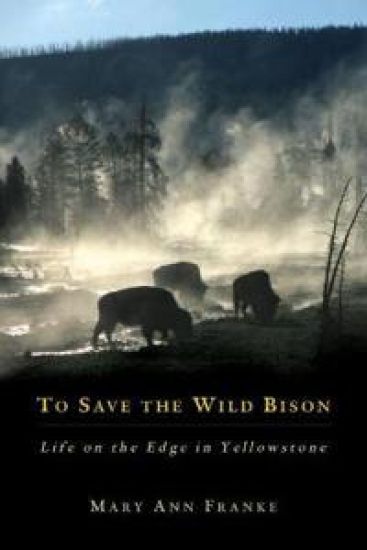
Although the American bison was saved from near-extinction in the nineteenth century, today almost all herds are managed like livestock. The Yellowstone area is the only place in the United States where wild bison have been present since before the first Euro-Americans arrived. But these bison pose risks to property and people when they roam outside the park, including the possibility that they can spread the abortion-inducing disease brucellosis to cattle. Yet measures to constrain the population threaten their status as wild animals.Mary Ann Franke's To Save the Wild Bison is the first book to examine the ecological and political aspects of the bison controversy and how it reflects changing attitudes toward wildlife. The debate has evoked strong emotions from all sides, including park officials, environmentalists, livestock growers, and American Indians. In describing political compromises among competing positions, Franke does not so much champion a cause as critique the process by which federal and state officials have made and carried out bison management policies. She shows that science, however valuable a tool, cannot by itself resolve what is ultimately a choice among conflicting values.
Everybody in the bar had to drop a quarter in the jukebox or be shamed by ""Momo"" Villarreal. It wasn't about the money, Mary Ann Villarreal's grandmother insisted. It was about the music - more songs for all the patrons of the Pecan Lounge in Tivoli, Texas. But for Mary Ann, whose schoolbooks those quarters bought, the money didn't hurt. When as an adult Villarreal began to wonder how the few recordings of women singers made their way into that jukebox, questions about the money seemed inseparable from those about the music. In Listening to Rosita, Villarreal seeks answers by pursuing the story of a small group of Tejana singers and entrepreneurs in Corpus Christi, Houston, and San Antonio - the ""Texas Triangle"" - during the mid-twentieth century. Ultimately she recovers a social world and cultural landscape in central south Texas where Mexican American women negotiated the shifting boundaries of race and economics to assert a public presence. Drawing on oral history, interviews, and insights from ethnic and gender studies, Listening to Rosita provides a counternarrative to previous research on la música tejana, which has focused almost solely on musicians or musical genres. Villarreal instead chronicles women's roles and contributions to the music industry. In spotlighting the sixty-year singing career of San Antonian Rosita Fernández, the author pulls the curtain back on all the women whose names and stories have been glaringly absent from the ethnic and economic history of Tejana music and culture. In this oral history of the Tejana cantantes who performed and owned businesses in the Texas Triangle, Listening to Rosita shows how ethnic Mexican entrepreneurs developed a unique identity in striving for success in a society that demeaned and segregated them. In telling their story, this book supplies a critical chapter long missing from the history of the West.
Everybody in the bar had to drop a quarter in the jukebox or be shamed by ""Momo"" Villarreal. It wasn't about the money, Mary Ann Villarreal's grandmother insisted. It was about the music - more songs for all the patrons of the Pecan Lounge in Tivoli, Texas. But for Mary Ann, whose schoolbooks those quarters bought, the money didn't hurt. When as an adult Villarreal began to wonder how the few recordings of women singers made their way into that jukebox, questions about the money seemed inseparable from those about the music. In Listening to Rosita, Villarreal seeks answers by pursuing the story of a small group of Tejana singers and entrepreneurs in Corpus Christi, Houston, and San Antonio - the ""Texas Triangle"" - during the mid-twentieth century. Ultimately she recovers a social world and cultural landscape in central south Texas where Mexican American women negotiated the shifting boundaries of race and economics to assert a public presence. Drawing on oral history, interviews, and insights from ethnic and gender studies, Listening to Rosita provides a counternarrative to previous research on la másica tejana, which has focused almost solely on musicians or musical genres. Villarreal instead chronicles women's roles and contributions to the music industry. In spotlighting the sixty-year singing career of San Antonian Rosita Fernández, the author pulls the curtain back on all the women whose names and stories have been glaringly absent from the ethnic and economic history of Tejana music and culture. In this oral history of the Tejana cantantes who performed and owned businesses in the Texas Triangle, Listening to Rosita shows how ethnic Mexican entrepreneurs developed a unique identity in striving for success in a society that demeaned and segregated them. In telling their story, this book supplies a critical chapter long missing from the history of the West.
Although the American bison was saved from near-extinction in the nineteenth century, today almost all herds are managed like livestock. The Yellowstone area is the only place in the United States where wild bison have been present since before the first Euro-Americans arrived. But these bison pose risks to property and people when they roam outside the park, including the possibility that they can spread the abortion-inducing disease brucellosis to cattle. Yet measures to constrain the population threaten their status as wild animals.Mary Ann Franke's To Save the Wild Bison is the first book to examine the ecological and political aspects of the bison controversy and how it reflects changing attitudes toward wildlife. The debate has evoked strong emotions from all sides, including park officials, environmentalists, livestock growers, and American Indians. In describing political compromises among competing positions, Franke does not so much champion a cause as critique the process by which federal and state officials have made and carried out bison management policies. She shows that science, however valuable a tool, cannot by itself resolve what is ultimately a choice among conflicting values.
Major Fiction of William Gilmore Simms
Mary Ann Wimsatt
Louisiana State University Press
1999
nidottu
William Gilmore Simms (1806-1870) was the preeminent southern man of letters in the antebellum period, a prolific, talented writer in many genres and an eloquent intellectual spokesman of r his region. During his long career, he wrote plays, poetry, literary criticism, biography and history; but he is best remembered for his numerous novels and tales. Many Ann Wimsatt provides the first significant full-length evaluation of Simms's achievement in his long fiction, selected poetry, essays, and short fiction.Wimsatt's chief emphasis is on the thirty-odd novels that Simms published from the mid-1830s until after the Civil War. In bringing his impressive body of work to life, she makes use of biographical and historical information and also of twentieth-century literary theories of the romance, Simm's principal genre. Through analyses of such seminal works as Guy Rivers, The Yemassee, The Cassique of Kiawah, and Woodcraft, Wimsatt illuminates Simm's contributions to the romance tradition, contributions misunderstood by previous critics, and suggests how to view his novels within the light of recent literary criticism. She also demonstrates how Simms used the historical conditions of southern culture as well as events of his own life to flesh out literary patterns, and she analyses his use of low-country, frontier and mountain settings.Although critics praised Simms early in his career as ""the first American novelist of the day,"" the panic of 1837 and the changes in the book market that it helped foster severely damaged his prospects for wealth and fame. The financial recession, Wimsatt finds, together with shifts in literary taste, contributed to the decline of Simms's reputation. Simms attempted to adjust to the changing climate for fiction by incorporating two modes of nineteenth-century realism, the satiric portrayal of southern manners and southern backwoods humor, into the framework of his long romances; but his accomplishments in these areas have been undervalued or misunderstood by critics since is time.Wimsatt's book is the first to survey Simms's fiction and much of his other writing against the background of his life and literary career and the first to make extensive use of his immense correspondence. It is an important study of a neglected author who once served as the leafing symbol of literary activity in the South. It fills what has heretofore been a serious gap in southern literary studies.
Once considered one of the most important waterways in the American southeast and a vital link in a shortcut from the Mississippi River to the Gulf of Mexico, Louisiana's Bayou Manchac rests in virtual obscurity today. Few now notice the bayou- which runs for eighteen miles, forming the boundary between several south Louisiana parishes- or remember that everyone from French explorers and steamboat captains to modern-day loggers and fishermen have plied its waters and lived along its banks. Even fewer are aware that the bayou remains a place of striking, intense beauty in spots untouched by development and pollution. In Winding through Time, Mary Ann Sternberg interweaves the bayou's history with tales, anecdotes, and personal observations, creating an entertaining and educational introduction to this overlooked natural haven.With the tenacity and skill of a historical detective, Sternberg uncovers Bayou Manchac's rich and colorful past. She reveals that the waterway that most know only by weathered highway signs on the parish line served, several times in its history, as an international border, forming part of the northern boundary of the ""Isle of Orleans."" She recalls the flourishing Native American cultures that occupied sites along the bayou as early as 250 b.c. and describes the many unsuccessful schemes over the years to make it navigable and thus provide a major commercial artery connecting the Mississippi River with Lakes Maurepas and Pontchartrain. Bayou Manchac survives still, she shows, as a somewhat frayed relic of our natural past valued mainly for its drainage capacity and abused by polluters.More than simply an environmental history, however, Sternberg's Winding through Time offers her personal narrative of ""discovering"" Bayou Manchac a few years ago and her growing awareness of its untamed beauty, historical significance, and threatened well-being. She traveled the bayou, meeting some of the people who live along its banks and who shared many of their stories. Through her engaging prose and lively commentary, she succeeds in providing a life-history and, indeed, a personality, for this geographical feature.Sternberg shines a long overdue spotlight on Bayou Manchac, questioning how such a valuable resource could have become so diminished. As she eloquently illustrates, the wandering tale of this little waterway, though unique, also strikes a cautionary note for other small historic American streams.
Few thoroughfares offer as rich a history as Louisiana's River Road between New Orleans and Baton Rouge. In this third edition of her extremely popular guide, Along the River Road, Mary Ann Sternberg provides a revised introduction, new images, and updated information on sites and attractions as well as tales and local lore about favorite and overlooked destinations. Featuring background information about the area and a detailed guided tour- upriver on the east bank and downriver along the west- the book gives an overview of the River Road, serving as an accessible and definitive companion to exploring the corridor. Sternberg's abiding appreciation of the area's allure- garnered over twenty years of visiting- produces a must-have travel companion to a place that far exceeds its common reputation as only a parade of elegant antebellum mansions. In this new edition, she again encourages travelers to experience the many treasures of this wondrous byway for themselves, seeing how much it has changed over the last decade.
The River Road between New Orleans and Baton Rouge hosts a fascinating mix of people, traditions, and stories. Author Mary Ann Sternberg has spent over two decades exploring this richly historic corridor, uncovering intriguing and often underappreciated places. In River Road Rambler, she presents fifteen sketches about sites along this scenic route. From familiar stops, such as the National Hansen's Disease Center Museum at Carville, with its octogenarian guide, and the sui generis perique tobacco area of St. James Parish to the less well-noted yet highly distinctive Our Lady of Lourdes grotto in Convent and the gradually disappearing Colonial Sugars Historic District, Sternberg presents a new perspective on some of the region's most colorful places. While many of the places remain easily accessible to any River Road rambler, Sternberg also presents others closed to the public, giving armchair travelers an introduction to these otherwise unreachable attractions. Throughout, Sternberg captures the ambiance of her surroundings with a clear, engaging, and sometimes quirky examination of the relationships between past and present. In a poignant piece on the Valcour Aime garden, for example, she delves into the history of this lavish, nationally acclaimed planter's garden, created and abandoned in the mid-nineteenth century. Her visit to the now private and protected site, which has never been altered or replanted since its origins, reveals an extraordinary landscape- the relic of what Valcour Aime created, slowly overwhelmed by nature. The essay-like stories brim with insights and observations about everything from the fire that razed The Cottage plantation to the failed attempts to salvage the reproduction of the seventeenth- century French warship Le Pelican from the bottom of the Mississippi. River Road Rambler takes us along to River Road treasures, linking us to both past and present and bringing some delightful and unexpected surprises in the process.
Few thoroughfares offer as rich a history as Louisiana's River Road between New Orleans and Baton Rouge. In this third edition of her extremely popular guide, Along the River Road, Mary Ann Sternberg provides a revised introduction, new images, and updated information on sites and attractions as well as tales and local lore about favorite and overlooked destinations. Featuring background information about the area and a detailed guided tour- upriver on the east bank and downriver along the west- the book gives an overview of the River Road, serving as an accessible and definitive companion to exploring the corridor. Sternberg's abiding appreciation of the area's allure- garnered over twenty years of visiting- produces a must-have travel companion to a place that far exceeds its common reputation as only a parade of elegant antebellum mansions. In this new edition, she again encourages travelers to experience the many treasures of this wondrous byway for themselves, seeing how much it has changed over the last decade.
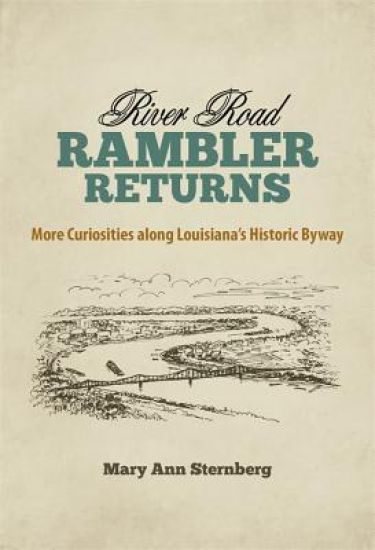
In River Road Rambler Returns: More Curiosities along Louisiana's Historic Byway, Mary Ann Sternberg follows up her successful River Road Rambler with new delightful histories from Louisiana's most famous route. Her latest explorations include a trip on a towboat as it pushes a fleet of barges down the river; the true story behind the Sunshine Bridge, fondly called the Bridge to Nowhere; a tour of one of the last working sugar mills along the River Road; stories about how two iconic plantation houses were saved; and much more.Well researched and engagingly written, River Road Rambler Returns provides keen observations on unappreciated places and offers rich histories of unusual attractions along the winding road that lines the Mississippi River between New Orleans and Baton Rouge.
Assessing Writing, Teaching Writers
Mary Ann Smith; Sherry Seale Swain
Teachers' College Press
2016
nidottu
Many writing teachers are searching for a better way to turn student writing into teaching and learning opportunities without being crushed under the weight of student papers. This book introduces a rubric designed by the National Writing Project—the Analytic Writing Continuum (AWC)—that is making its way into classrooms across the country at all grade levels. The authors use sample student writing and multiple classroom scenarios to illustrate how teachers have adapted this flexible tool to meet the needs of their students, including using the AWC to teach revision, give feedback, direct peer-to-peer response groups, and serve as a formative assessment guide. This resource also discusses how to set up a local scoring session and how to use the AWC in professional development.