Kirjojen hintavertailu. Mukana 11 627 362 kirjaa ja 12 kauppaa.

Kirjahaku

Etsi kirjoja tekijän nimen, kirjan nimen tai ISBN:n perusteella.

1000 tulosta hakusanalla Max Pece

Max Saves Christmas

Max Saves Christmas

Nicole Rivera

Max P. Productions
2015
pokkari
Max's Epic Christmas Rescue Get ready for the most amazing adventure ever The Great Mother has picked Max for a super important mission - he has to save Santa from a super mean wizard This awesome story of how Max saves Christmas will make you love Christmas even more and remind you how much joy you have inside. It's a super fun and creative story that teaches us to not judge people based on stereotypes and to conquer our fears and challenges with positive thinking. If you're in 3rd or 4th grade and love reading, this book is perfect for you Even if you're 10 years old or older, you'll totally enjoy this cool modern fairy tale.
Max Your Talents: Despite All Odds

Max Your Talents: Despite All Odds

Gary Calhoun

Join with Destiny
2017
nidottu
Max Your Talents is a powerful guide for changing your LIFE to live Your DESTINY But, it's not business as usual. There's a twist that will get you thinking in a different way This book details Gary's real-life story of success, devastation, loss, and shame, but most of all - his comeback "It was written to teach and inspire readers." explained Gary Calhoun. You can Max Your Talents by following this... Step by Step Guide for achieving your comeback "MAX YOUR TALENTS is so inspiring. I read the entire book in one sitting. It's chock-full of inspiration " Papa Don Schroeder, WPNN 103.7FM / 790AM Radio Station owner "A few years ago I hit my own "rock bottom." Starting all over again in my fifties, I felt like I'd failed and blown my destiny - at least one I planned. Surely, God wouldn't make something beautiful out of this mess I'd made. What you will find in the pages of this book is how to hope again and that through adversity if you trust God through the process you will have a head-on collision with your destiny " Lisa St Pierre, Realtor/Entrepreneur "Gary has written a powerful mini-book... full of real life hardship where these truths revealed aren't theory, but have proven to help Gary triumph and will help you do so as well Prepare to laugh, be inspired, informed and ready to overcome life's trials yourself "David Mayo, WHBR TV General Manager "I want to thank Gary for introducing me several years ago to the 'core truth' of the principles contained in MAX YOUR TALENTS. The knowledge of and doing this has changed my life " Gary Watson, CCIM, EXIT Realty NFI-Commercial "Gary delivers a power-packed message in his easy, down-home style that will inspire and challenge you to step up and step out to begin to live the life you were created for. He uses Biblical principles and personal experiences to share a Blueprint for Success that is clear and achievable no matter where life has taken you. This Book left me with a renewed sense of purpose and determined to dream bigger Seekers of all ages will benefit from this roadmap to Destiny " Kristi Parrish, Entrepreneur
Max and the Mouse Safe in Cyberspace: STEM Series Book 1

Max and the Mouse Safe in Cyberspace: STEM Series Book 1

Elizabeth Moreira; Kimberly Franklin

Fam Books
2017
nidottu
This lighthearted book focuses on the serious subject of children's cybersafety and the essentials of being a good digital citizen. The setting is an adventure in cyberspace with a curious cat and studious mouse, Max and Dean. During their travels, they remember the ABC's that every good cybercitizen should follow: ACT Safely, BEHAVE Respectfully, CHOOSE Responsibly. As they navigate the web, they protect their password, keep friends from downloading viruses, and block a cyberbully. Max and the Mouse: Safe in Cyberspace is the perfect book for families or teachers of elementary school age children in the 21st Century. Max and Dean make it easy to open up the conversation about how to be safe in cyberspace. Strongly focusing on digital citizenship, the young reader can conclude their learning experience by taking the pledge to follow the ABC's and in turn receive a good cybercitizen certificate. In addition to the story, this book is uniquely formatted with over a dozen Pawlinks. Max's Pawlinks are QR "Quick Response" Code Links that can be scanned by a mobile device during or after the reading to uncover bonus learnings such as definitions, videos, and even a coloring page of the ABC's. This is the first STEM book in a series focused on promoting education in the subjects of SCIENCE, TECHNOLOGY, ENGINEERING, MATHEMATICS. Everything within the book that is STEM related is in color, while the rest of the book is in black and white. Max and the Mouse was created by FAM Books.
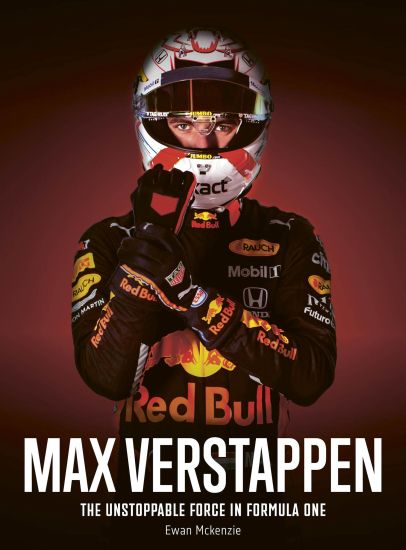
Max Verstappen

Max Verstappen

Ewan McKenzie

Quarto Publishing Plc
2024
sidottu
A fully illustrated biography of Max Verstappen, from karting in the junior races at age 10 to his third time winning the world championship at the end of 2023. Max’s journey to Formula 1 stardom was not a typical one. His parents are both motorsport talents. He was born in Belgium to mum Sophie Kumpen, a champion karter, while dad Jos Verstappen was Benetton team-mate to Michael Schumacher and survived perhaps the scariest F1 pitlane incident when his car caught fire during a refuelling stop. As well as being good team-mates, his dad and Michael Schumacher became great friends over the years. Max grew up going on family holidays with Schumacher and his son, fellow F1 star Mick. Max broke all the records for youngest driver after he made his official debut in 2015, including youngest ever driver to win an F1 race after he transferred from Red Bull’s junior team Toro Rosso to Red Bull in 2016. However, his move was at the expense of Daniil Kvyat who was demoted to Toro Rosso in his place. Verstappen then started dating Kvyat’s girlfriend, Kelly Piquet, and is now stepfather to Kvyat’s son. Complicated to say the least! Max’s career has barely spanned a decade and he’s already gained the title of the most popular Formula One driver. With incredible skills on the track and a legion of travelling Dutch fans, he’s a force to be reckoned with and the one to watch in racing. This fully illustrated biography explores his youth karting through to the end of the 2023 season, interspersed with 10 key races, including: His debut F1 race for Toro Rosso His wholly unexpected win on debut for the Red Bull team in 2016, the Spanish Grand Prix where Lewis Hamilton and Nico Rosberg took themselves out on the opening lap The 2021 British Grand Prix at Silverstone where he survived a 56G deceleration as he hit the barriers at Copse corner His titanic showdown in Abu Dhabi where he won his first controversial world championship His second world championship win in 2022 His latest win and third world championship in 2023 This detailed biography with high-quality photographs is the perfect gift for any fan of the rising F1 star Max Verstappen. It’s a standout collector’s item full of impactful info about a racing maverick. Relive Max’s formative moments, racing success and explore what the future holds for this young talent. Though things are going well right now, the volatility that led him to a physical altercation with Esteban Ocon in the 2020 Brazilian Grand Prix still appears from time to time when things don’t go his way. And soon Red Bull want a team-mate who can really push him…
Max the Brave

Max the Brave

Ed Vere

Puffin
2015
nidottu
Meet Max - the mighty kitten and New York Times bestseller.Max is Brave, Max is Fearless, Max is a Mouse-catcher...But, in order to be a Mouse-catcher, Max needs to know what a mouse is, so off he goes to find out. This hilarious new picture book from the phenomenally-talented Ed Vere introduces a new and lovable character, with Ed's trademark bold illustrations and clever story.Other Ed Vere titles to look out for:Banana; Bedtime for Monsters; Mr. Big; The Getaway
Max at Night

Max at Night

Ed Vere

Puffin
2015
nidottu
Meet Max - the mighty kitten and New York Times bestseller.This is Max. Max is very sleepy. It's way past Max's bedtime. Max has drunk his milk. Max has brushed his teeth. Max has cleaned behind his ears. Now Max just needs to say goodnight. . .Max is tired and all ready for bed, but when he can't find the moon to say goodnight to, he sets out to find it. But that's not as easy as Max had hoped. . . Witty and heart-warming, this stylish and beautifully illustrated book is the perfect bedtime read.
Max Stirner's Dialectical Egoism

Max Stirner's Dialectical Egoism

John F. Welsh

Lexington Books
2010
sidottu
Max Stirner (1806-1856) is recognized in the history of political thought because of his egoist classic The Ego and Its Own. Stirner was a student of Hegel, and a critic of the Young Hegelians and the emerging forms of socialist and communist thought in the 1840s. Max Stirner's Dialectical Egoism: A New Interpretation examines Stirner's thought as a critique of modernity, by which he meant the domination of culture and politics by humanist ideology. In Stirner's view, "humanity" is the supreme being of modernity and "humanism" is the prevailing legitimation of social and political domination. Welsh traces Stirner's thought from his early essays to The Ego and Its Own and Stirner's responses to his critics. He also examines how Benjamin Tucker, James L. Walker, and Dora Marsden applied Stirner's dialectical egoism to the analysis of (a) the transformations of capitalism, (b) culture, ethics, and mass psychology, and (c) feminism, socialism, and communism. All three viewed Stirner as a champion of individuality against the collectivizing and homogenizing forces of the modern world. Welsh also takes great care to dissociate Stirner's thought from that of the other great egoist critic of modernity, Friedrich Nietzsche. He argues that the similarities in the dissidence of Stirner and Nietzsche are superficial. The book concludes with an interpretation of Stirner's thought as a form of dialectical egoism that includes (a) a multi-tiered analysis of culture, society, and individuality; (b) the basic principles of Stirner's view of the relationship between individuals and social organization; and (c) the forms of critique he employs. Stirner's critique of modernity is a significant contribution to the growing literature on libertarianism, dialectical analysis, and post-modernism.
Max Stirner's Dialectical Egoism

Max Stirner's Dialectical Egoism

John F. Welsh

Lexington Books
2010
nidottu
Max Stirner (1806-1856) is recognized in the history of political thought because of his egoist classic The Ego and Its Own. Stirner was a student of Hegel, and a critic of the Young Hegelians and the emerging forms of socialist and communist thought in the 1840s. Max Stirner's Dialectical Egoism: A New Interpretation examines Stirner's thought as a critique of modernity, by which he meant the domination of culture and politics by humanist ideology. In Stirner's view, 'humanity' is the supreme being of modernity and 'humanism' is the prevailing legitimation of social and political domination. Welsh traces Stirner's thought from his early essays to The Ego and Its Own and Stirner's responses to his critics. He also examines how Benjamin Tucker, James L. Walker, and Dora Marsden applied Stirner's dialectical egoism to the analysis of (a) the transformations of capitalism, (b) culture, ethics, and mass psychology, and (c) feminism, socialism, and communism. All three viewed Stirner as a champion of individuality against the collectivizing and homogenizing forces of the modern world. Welsh also takes great care to dissociate Stirner's thought from that of the other great egoist critic of modernity, Friedrich Nietzsche. He argues that the similarities in the dissidence of Stirner and Nietzsche are superficial. The book concludes with an interpretation of Stirner's thought as a form of dialectical egoism that includes (a) a multi-tiered analysis of culture, society, and individuality; (b) the basic principles of Stirner's view of the relationship between individuals and social organization; and (c) the forms of critique he employs. Stirner's critique of modernity is a significant contribution to the growing literature on libertarianism, dialectical analysis, and post-modernism.
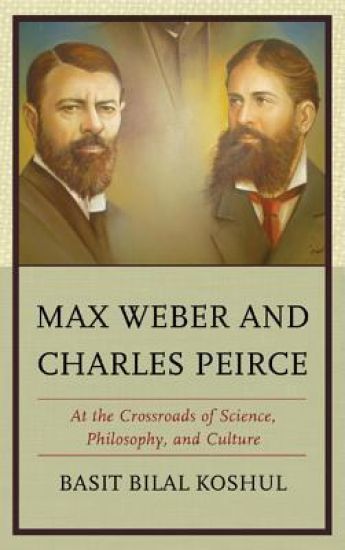
Max Weber and Charles Peirce

Max Weber and Charles Peirce

Basit Bilal Koshul

Lexington Books
2014
sidottu
Max Weber and Charles Peirce: At the Crossroads of Science, Philosophy, and Culture shows that a relational conception of science is implicit in Max Weber’s reflections on scientific inquiry as a bridge between the Geisteswissenschaften (soft sciences) and Naturwissenschaften (hard sciences). Because he is not a trained philosopher, Weber does not have the precise philosophical language in which to articulate his ideas clearly. Consequently, his relational vision of science remains obscure. Basit Bilal Koshul brings clarity and precision to Weber’s insights using the pragmaticist philosophy of Charles Peirce. He makes explicit the phenomenology, semiotics, and logic that are implicit in Weber’s methodological writings and translates them into Peircean terms. Since Peirce explicitly offers his philosophy of science as a critique of the modern divide between the humanistic and natural sciences and of the divide between religion and science, this translation has a double effect. It clarifies Weber’s insights on the methodology of scientific inquiry, and it extends the reparative force of these insights into the larger culture of which science is one part. The reconstruction of Weber’s relational conception of science along the lines of Peirce’s pragmaticism, in turn, reveals that Weber’s work points toward deep affinities between religion and science. Given the fact that the same phenomenology, semiotics, and logic that underpin Peirce’s philosophy of science are also at the root of his philosophy of religion, we can begin to appreciate the fact that Weber’s work makes an important contribution to bridging the divide between religion and science. In providing models that bridge divides and move towards complementary relationships, Weber and Peirce not only help us to better understand disenchantment as the fate of our times, but also offer uniquely valuable resources to reach for cultural horizons that lie beyond it.
Max Weber and the Theory of Modern Politics
Max Weber's writings on the politics of Wilhelmine in Germany and the Russian revolutions of 1905 and 1917 are much less well known than his contributions to historical and theoretical sociology, yet they are essential to any overall assessment of his thought. Drawing on these writings, still mostly untranslated, David Beetham offers the most comprehensive account available in English of Weber's political theory. The book explores Weber's central concern with the prospects for liberal Parliamentarism in authoritarian societies and in an age of mass politics and bureaucratic organization, and shows how this concern led him to a revision of democratic theory which is still influential. It argues that Weber's analyzis of the class basis of contemporary politics necessitate a modification in some of the accepted interpretations of his sociology of modern capitalism. A special feature of the book is its full treatment of the extensive German literature on Weber's political thought. This second edition contains a substantial new critical introduction and an expanded bibliography. Otherwise the text of the widely acclaimed first edition remains unaltered. This is a book which adds an essential dimension to the understanding of Max Weber for students of sociology and politics who have previously only approached his work through his sociological writings.
Max Weber's Comparative Historical Sociology
In this accessible and engaging work, Kalberg shows how Weber's work casts a direct light upon issues of pressing importance for comparative-historical research today addressing in a forceful way the whole range of problems and dilemmas confronted by the comparative-historical enterprise.
Max Weber's Methodologies

Max Weber's Methodologies

Sven Eliaeson

Polity Press
2002
nidottu
Max Weber is widely regarded as the most important and influential figure in the history of the social sciences. Among other things, he wrote extensively on the methodology of the social sciences, but his writings on methodology are complex and are the subject of many conflicting interpretations. In this authoritative new book, Sven Eliaeson provides a comprehensive introduction to Weber's methodology and to the various ways it has been interpreted by subsequent scholars in Europe and the United States. Eliaeson shows how the vested interests of scholars have resulted in biased interpretations of Weber's work. Weber was preoccupied with the intellectual problems of his time and not with our current disciplinary crises. By placing Weber's thought and methodology in its historical context, Eliaeson is able to provide a masterly reconstruction of his central concerns while at the same time exploring the enduring relevance of Weber's work for sociology today. This book will be recognized as a definitive work on Weber's methodology and will be an indispensable text for students and scholars in sociology and the social sciences.
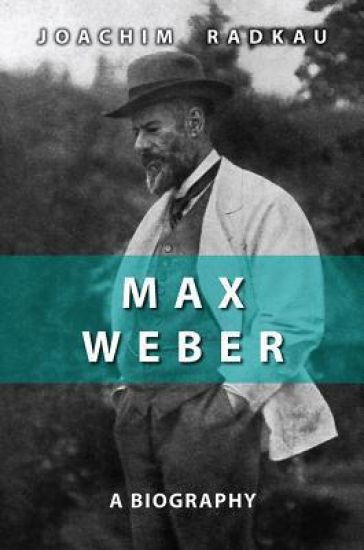
Max Weber

Max Weber

Joachim Radkau

Polity Press
2009
sidottu
Max Weber (1864-1920) is recognized throughout the world as the most important classic thinker in the social sciences – there is simply no one in the history of the social sciences who has been more influential. The affinity between capitalism and protestantism, the religious origins of the Western world, the force of charisma in religion as well as in politics, the all-embracing process of rationalization and the bureaucratic price of progress, the role of legitimacy and of violence as offsprings of leadership, the ‘disenchantment’ of the modern world together with the never-ending power of religion, the antagonistic relation between intellectualism and eroticism: all these are key concepts which attest to the enduring fascination of Weber’s thinking. The tremendous influence exerted by Max Weber was due not only to the power of his ideas but also to the fact that behind his theories one perceived a man with a marked character and a tragic destiny. However, for nearly 80 years, our understanding of the life of Max Weber was dominated by the biography published in 1926 by his widow, Marianne Weber. The lack of a great Weber biography was one of the strangest and most glaring gaps in the literature of the social sciences. For various reasons the task was difficult; time and again, attempts to write a new biography of Max Weber ended in failure. When Joachim Radkau’s biography appeared in Germany in 2005 it caused a sensation. Based on an abundance of previously unknown sources and richly embedded in the German history of the time, this is the first fully comprehensive biography of Max Weber ever to appear. Radkau brings out, in a way that no one has ever done before, the intimate interrelations between Weber’s thought and his life experience. He presents detailed revelations about the great enigmas of Weber’s life: his suffering and erotic experiences, his fears and his desires, his creative power and his methods of work as well as his religious experience and his relation to nature and to death. By understanding the great drama of his life, we discover a new Max Weber, until now unknown in many respects, and, at the same time, we gain a new appreciation of his work. Joachim Radkau, born in 1943, is Professor of Modern History at the Bielefeld University, Germany. His interest in Max Weber dates back nearly forty years when he worked together with the German-American historian George W. F. Hallgarten (Washington), a refugee who left Germany in 1933 and who, as a student, listened to Weber’s last lecture in summer 1920. Radkau’s main works include Die deutsche Emigration in den USA (1971); Deutsche Industrie und Politik (together with G. W. F. Hallgarten, 1974), Aufstieg und Krise der deutschen Atomwirtschaft (1983), Technik in Deutschland (1989), Das Zeitalter der Nervosität (1998), Natur und Macht: Eine Weltgeschichte der Umwelt (2000).
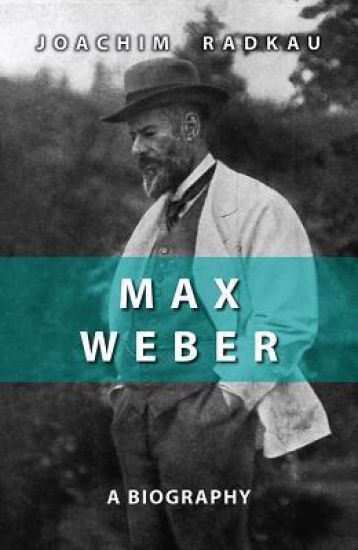
Max Weber

Max Weber

Joachim Radkau

Polity Press
2011
nidottu
Max Weber (1864-1920) is recognized throughout the world as the most important classic thinker in the social sciences – there is simply no one in the history of the social sciences who has been more influential. The affinity between capitalism and protestantism, the religious origins of the Western world, the force of charisma in religion as well as in politics, the all-embracing process of rationalization and the bureaucratic price of progress, the role of legitimacy and of violence as offsprings of leadership, the ‘disenchantment’ of the modern world together with the never-ending power of religion, the antagonistic relation between intellectualism and eroticism: all these are key concepts which attest to the enduring fascination of Weber’s thinking. The tremendous influence exerted by Max Weber was due not only to the power of his ideas but also to the fact that behind his theories one perceived a man with a marked character and a tragic destiny. However, for nearly 80 years, our understanding of the life of Max Weber was dominated by the biography published in 1926 by his widow, Marianne Weber. The lack of a great Weber biography was one of the strangest and most glaring gaps in the literature of the social sciences. For various reasons the task was difficult; time and again, attempts to write a new biography of Max Weber ended in failure. When Joachim Radkau’s biography appeared in Germany in 2005 it caused a sensation. Based on an abundance of previously unknown sources and richly embedded in the German history of the time, this is the first fully comprehensive biography of Max Weber ever to appear. Radkau brings out, in a way that no one has ever done before, the intimate interrelations between Weber’s thought and his life experience. He presents detailed revelations about the great enigmas of Weber’s life: his suffering and erotic experiences, his fears and his desires, his creative power and his methods of work as well as his religious experience and his relation to nature and to death. By understanding the great drama of his life, we discover a new Max Weber, until now unknown in many respects, and, at the same time, we gain a new appreciation of his work. Joachim Radkau, born in 1943, is Professor of Modern History at the Bielefeld University, Germany. His interest in Max Weber dates back nearly forty years when he worked together with the German-American historian George W. F. Hallgarten (Washington), a refugee who left Germany in 1933 and who, as a student, listened to Weber’s last lecture in summer 1920. Radkau’s main works include Die deutsche Emigration in den USA (1971); Deutsche Industrie und Politik (together with G. W. F. Hallgarten, 1974), Aufstieg und Krise der deutschen Atomwirtschaft (1983), Technik in Deutschland (1989), Das Zeitalter der Nervosität (1998), Natur und Macht: Eine Weltgeschichte der Umwelt (2000).