Kirjojen hintavertailu. Mukana 11 342 296 kirjaa ja 12 kauppaa.

Kirjahaku

Etsi kirjoja tekijän nimen, kirjan nimen tai ISBN:n perusteella.

1000 tulosta hakusanalla Maya Eisel

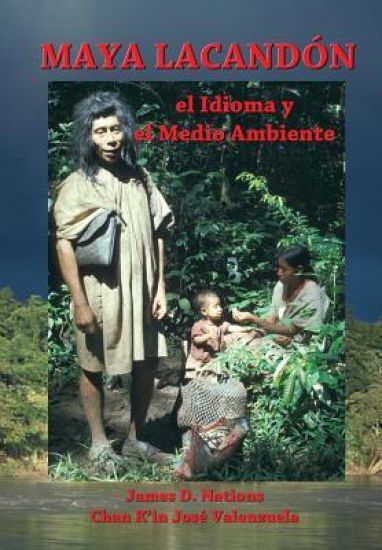
Maya Lacandon

Maya Lacandon

Chan K'In Jose Valenzuela; James D Nations

Createspace Independent Publishing Platform
2017
pokkari
Los Mayas Lacandones son herederos de una gran riqueza de conocimiento tradicional cultivado a lo largo de cientos de a os de existencia en la selva tropical mexicana. Maya Lacand n: el Idioma y el Medio Ambiente es un vocabulario y una gram tica de su idioma nativo. La obra capta el ambiente en que se desenvuelven los Lacandones y ofrece una mirada hacia la complejidad de su cultura.
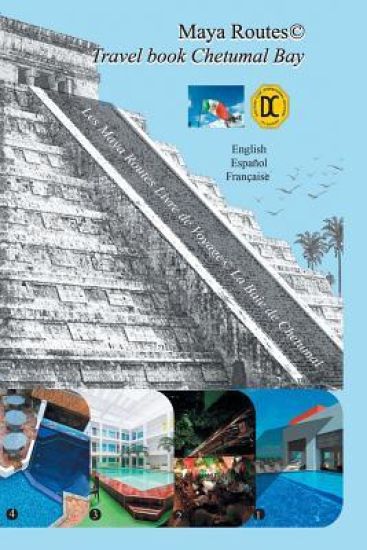
Maya Routes Travel Book Series

Maya Routes Travel Book Series

Lisset Duke Cross

Xlibris
2017
pokkari
The Maya Routes Travel Book Series is a compilation of the tourist routes of the countries of Mexico, Belize, Guatemala, and El Salvador taken from the book Maya Latin and Caribbean Routes published in 2006 and edited in English, Spanish, and French. Its contents include parts of the next published books--The Audio-Visual Course: Bilingual People for Simultaneous Teaching of English and Spanish. Also, a description of the industrial design 114002, Pyraland Homes was taken from the book Pyramidal Architectural and Engineering by the same author. This edition, Chetumal Bay, includes a business directory with pictures and maps of this Mayan region in the Southern Mexican State of Quintana Roo. Lisset Duke Cross is the publisher and sole owner of all copyrights, CIPO, Canada, seven trademark registrations in Central America, and owner of nine copyrights in Washington, USA.
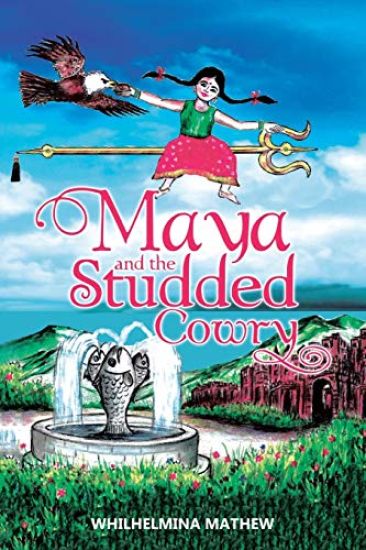
Maya and the Studded Cowry

Maya and the Studded Cowry

Whilhelmina Mathew

Partridge Publishing India
2018
pokkari
In an unfair world for girls, Maya is an iconic protagonist having learnt to balance riding on a trident with single minded focus in her quest for the Studded Cowry. This can set her free from her present state of affairs and she can seek her identity, ambitions and aspirations. The Studded Cowry is symbolic with a precious gem inside that has a discrete substance with amazing powers. The gem can change any gem into the most precious gem: A magic formula that can automatically melt away all hurdles and set free her ancient and traditional beliefs. The two in one "The Magical Elixirs" an alchemical, the discovery of a Universal concept to transform things for the better from the ancient world of social, cultural and religious taboos. Mrs. Rumberstin Maya's step aunt a crafty and ostentatious woman runs a Trident Riding school for girls. The riding school is a cover up, to distract Maya and keep her away from the Studded Cowry that had an unambiguous meaning to her. Amulets, charms, magical formulas- Nothing could hamper her search. The Apartment Castle is abstruse with ancient Asian magical enchantments. Can she break the barrier of finding the Studded Cowry?
Maya and the Studded Cowry

Maya and the Studded Cowry

Whilhelmina Mathew

Partridge Publishing India
2018
sidottu
In an unfair world for girls, Maya is an iconic protagonist having learnt to balance riding on a trident with single minded focus in her quest for the Studded Cowry. This can set her free from her present state of affairs and she can seek her identity, ambitions and aspirations. The Studded Cowry is symbolic with a precious gem inside that has a discrete substance with amazing powers. The gem can change any gem into the most precious gem: A magic formula that can automatically melt away all hurdles and set free her ancient and traditional beliefs. The two in one "The Magical Elixirs" an alchemical, the discovery of a Universal concept to transform things for the better from the ancient world of social, cultural and religious taboos. Mrs. Rumberstin Maya's step aunt a crafty and ostentatious woman runs a Trident Riding school for girls. The riding school is a cover up, to distract Maya and keep her away from the Studded Cowry that had an unambiguous meaning to her. Amulets, charms, magical formulas- Nothing could hamper her search. The Apartment Castle is abstruse with ancient Asian magical enchantments. Can she break the barrier of finding the Studded Cowry?
Maya Pill

Maya Pill

Sadulaev German

Dalkey Archive Press
2013
nidottu
German Sadulaev's follow-up to his acclaimed "I am a Chechen! "is set in a twenty-first century Russia, phantasmagorical and violent. A bitingly funny twenty-first century satire, "The Maya Pill" is strange, savage, bizarre, and uproarious.
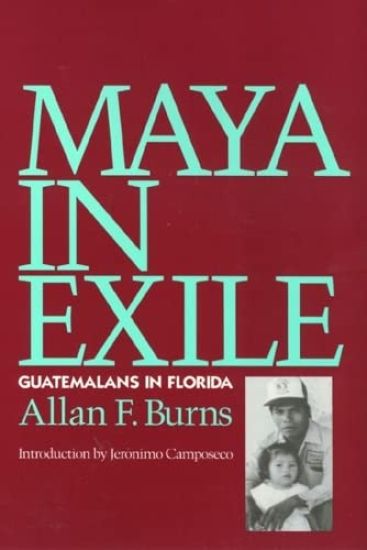
Maya in Exile

Maya in Exile

Allan Burns

Temple University Press,U.S.
1993
sidottu
The Maya are the single largest group of indigenous people living in North and Central America. Beginning in the early 1980s, hundreds of thousands of Maya fled the terror of Guatemalan civil strife to safety in Mexico and the U.S. This ethnography of Mayan immigrants who settled in Indiatown, a small agricultural community in south central Florida, presents the experiences of these traditional people, their adaptations to life in the U.S., and the ways they preserve their ancestral culture. For more than a decade, Allan F. Burns has been researching and doing advocacy work for these immigrant Maya, who speak Kanjobal, Quiche, Maman , and several other of the more than thirty distinct languages in southern Mexico and Guatemala. In this fist book on the Guatemalan Maya in the U.S, he uses their many voices to communicate the experience of the Maya in Florida and describes the advantages and results of applied anthropology in refugee studies and cultural adaptation. Burns describes the political and social background of the Guatemalan immigrants to the U.S. and includes personal accounts of individual strategies for leaving Guatemala and traveling to Florida. Examining how they interact with the community and recreate a Maya society in the U.S., he considers how low-wage labor influences the social structure of Maya immigrant society and discusses the effects of U.S. immigration policy on these refugees. Allan F. Burns is Professor of Anthropology and Latin American Studies at the University of Florida. The author of "An Epoch of Miracles", he has produced four video programs on Maya refugees in Florida.
Maya in Exile

Maya in Exile

Allan Burns

Temple University Press,U.S.
1993
pokkari
The Maya are the single largest group of indigenous people living in North and Central America. Beginning in the early 1980s, hundreds of thousands of Maya fled the terror of Guatemalan civil strife to safety in Mexico and the U.S. This ethnography of Mayan immigrants who settled in Indiatown, a small agricultural community in south central Florida, presents the experiences of these traditional people, their adaptations to life in the U.S., and the ways they preserve their ancestral culture. For more than a decade, Allan F. Burns has been researching and doing advocacy work for these immigrant Maya, who speak Kanjobal, Quiche, Maman , and several other of the more than thirty distinct languages in southern Mexico and Guatemala. In this fist book on the Guatemalan Maya in the U.S, he uses their many voices to communicate the experience of the Maya in Florida and describes the advantages and results of applied anthropology in refugee studies and cultural adaptation. Burns describes the political and social background of the Guatemalan immigrants to the U.S. and includes personal accounts of individual strategies for leaving Guatemala and traveling to Florida. Examining how they interact with the community and recreate a Maya society in the U.S., he considers how low-wage labor influences the social structure of Maya immigrant society and discusses the effects of U.S. immigration policy on these refugees. Author note: Allan F. Burns is Professor of Anthropology and Latin American Studies at the University of Florida. The author of "An Epoch of Miracles", he has produced four video programs on Maya refugees in Florida.
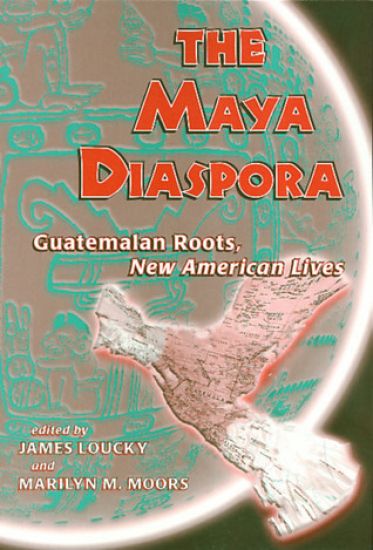
Maya Diaspora

Maya Diaspora

James Loucky

Temple University Press,U.S.
2000
sidottu
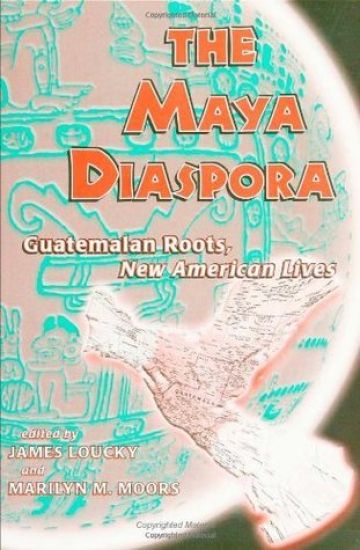
Maya people have lived for thousands of years in the mountains and forests of Guatemala, but they lost control of their land, becoming serfs and refugees, when the Spanish invaded in the sixteenth century. Under the Spanish and the Guatemalan non-Indian elites, they suffered enforced poverty as a resident source of cheap labor for non-Maya projects, particularly agriculture production. Following the CIA-induced coup that toppled Guatemala's elected government in 1954, their misery was exacerbated by government accommodation to United States \u0022interests,\u0022 which promoted crops for export and reinforced the need for cheap and passive labor. This widespread poverty was endemic throughout northwestern Guatemala, where 80 percent of Maya children were chronically malnourished, and forced wide-scale migration to the Pacific coast. The self-help aid that flowed into the area in the 1960s and 1970s raised hopes for justice and equity that were brutally suppressed by Guatemala's military government. This military reprisal led to a massive diaspora of Maya throughout Canada, the United States, Mexico, and Central America. This collection describes that process and the results. The chapters show the dangers and problems of the migratory/refugee process and the range of creative cultural adaptations that the Maya have developed. It provides the first comparative view of the formation and transformation of this new and expanding transnational population, presented from the standpoint of the migrants themselves as well as from a societal and international perspective. Together, the chapters furnish ethnographically grounded perspectives on the dynamic implications of uprooting and resettlement, social and psychological adjustment, long-term prospects for continued links to migration history from Guatemala, and the development of a sense of co-ethnicity with other indigenous people of Maya descent. As the Maya struggle to find their place in a more global society, their stories of quiet courage epitomize those of many other ethnic groups, migrants, and refugees today.
Maya Diaspora

Maya Diaspora

James Loucky

Temple University Press,U.S.
2000
pokkari
Maya people have lived for thousands of years in the mountains and forests of Guatemala, but they lost control of their land, becoming serfs and refugees, when the Spanish invaded in the sixteenth century. Under the Spanish and the Guatemalan non-Indian elites, they suffered enforced poverty as a resident source of cheap labor for non-Maya projects, particularly agriculture production. Following the CIA-induced coup that toppled Guatemala's elected government in 1954, their misery was exacerbated by government accommodation to United States \u0022interests,\u0022 which promoted crops for export and reinforced the need for cheap and passive labor. This widespread poverty was endemic throughout northwestern Guatemala, where 80 percent of Maya children were chronically malnourished, and forced wide-scale migration to the Pacific coast. The self-help aid that flowed into the area in the 1960s and 1970s raised hopes for justice and equity that were brutally suppressed by Guatemala's military government. This military reprisal led to a massive diaspora of Maya throughout Canada, the United States, Mexico, and Central America. This collection describes that process and the results. The chapters show the dangers and problems of the migratory/refugee process and the range of creative cultural adaptations that the Maya have developed. It provides the first comparative view of the formation and transformation of this new and expanding transnational population, presented from the standpoint of the migrants themselves as well as from a societal and international perspective. Together, the chapters furnish ethnographically grounded perspectives on the dynamic implications of uprooting and resettlement, social and psychological adjustment, long-term prospects for continued links to migration history from Guatemala, and the development of a sense of co-ethnicity with other indigenous people of Maya descent. As the Maya struggle to find their place in a more global society, their stories of quiet courage epitomize those of many other ethnic groups, migrants, and refugees today.

Maya 6 Revealed

Maya 6 Revealed

Murdock Kelly

Course Technology Inc
2004
nidottu
This text shows readers how to use this popular 3D modeling, animation and rendering package. 3D graphics such as those created using Maya have appeared in movies, television and games and as the demand for these types of images increase, so will the number of 3D artists wishing to learn these skills.
Maya Achi Marimba Music In Guatemala

Maya Achi Marimba Music In Guatemala

Sergio Navarrete Pellicer

Temple University Press,U.S.
2005
sidottu
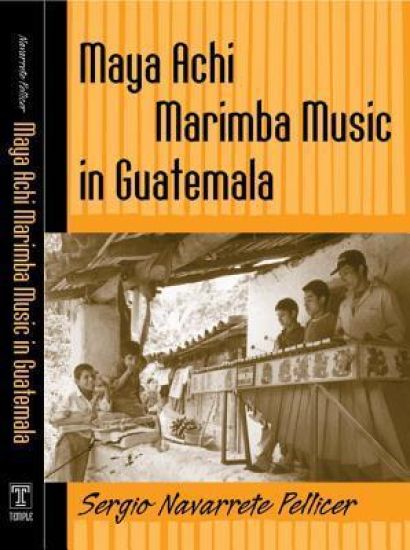
For the Achi, one of the several Mayan ethnic groups indigenous to Guatemala, the music of the marimba serves not only as a form of entertainment but also as a form of communication, a vehicle for memory, and an articulation of cultural identity. Sergio Navarrete Pellicer examines the marimba tradition -- the historical confluence of African musical influences, Spanish colonial power, and Indian ethnic assimilation -- as a driving force in the dynamics of cultural continuity and change in Rabinal, the heart of Achi culture and society. By examining the performance and consumption of marimba music as complementary parts of a system of social interaction, religious belief, and ethnic identification, Navarrete Pellicer reveals how the strains of the marimba resonate with the spiritual yearnings and cultural negotiations of the Achi as they try to come to terms with the political violence and economic hardship wrought by their colonial past.
Maya Achi Marimba Music In Guatemala

Maya Achi Marimba Music In Guatemala

Sergio Navarrete Pellicer

Temple University Press,U.S.
2005
pokkari
For the Achi, one of the several Mayan ethnic groups indigenous to Guatemala, the music of the marimba serves not only as a form of entertainment but also as a form of communication, a vehicle for memory, and an articulation of cultural identity. Sergio Navarrete Pellicer examines the marimba tradition - the historical confluence of African musical influences, Spanish colonial power, and Indian ethnic assimilation - as a driving force in the dynamics of cultural continuity and change in Rabinal, the heart of Achi culture and society. By examining the performance and consumption of marimba music as complementary parts of a system of social interaction, religious belief, and ethnic identification, Navarrete Pellicer reveals how the strains of the marimba resonate with the spiritual yearnings and cultural negotiations of the Achi as they try to come to terms with the political violence and economic hardship wrought by their colonial past.