Kirjojen hintavertailu. Mukana 12 016 292 kirjaa ja 12 kauppaa.

Kirjahaku

Etsi kirjoja tekijän nimen, kirjan nimen tai ISBN:n perusteella.

1000 tulosta hakusanalla Michael Part

Profiling or Prejudice: Part 1 and 2

Profiling or Prejudice: Part 1 and 2

Michael Kenneth Jones

Createspace Independent Publishing Platform
2017
nidottu
These books are racially explicit and written for the not-so sensitive and serious minded people. Tyrone Jenkins is a college graduate who lives at home and falls in love with a women who has a specific agenda all of her own.
The Sixth Realm Part 1 (Ten Realms Series)

The Sixth Realm Part 1 (Ten Realms Series)

Michael Chatfield

Michael Chatfield Publications Inc.
2020
sidottu
As the fighting competition grips Vuzgal, the city-state declares its independence and strength.Alva prepares to retake the lost floor of Water.The Adventurer Guild hones their blades, training and cultivating. They prepare for war, for the Willful Institute to reap what they have sown.Erik and Rugrat's travels take them to the sixth realm, a realm with cities under the sun and dungeons beneath.Not all of Earth's modern knowledge is used to help or heal. The Beast Mountain Range is United under the Empire.Join Erik and Rugrat on their Epic Fantasy journey, even a small party's adventures can build a city and give rise to an Empire.If you love heart-pounding video game action, stats, loot, crafting and matching of realistic technologies with magical abilities. Well, why aren't you reading already?Grab the 6th realm part 1 today
Tamburlaine the Great — Part 1 (Edition1)
Tom Cringle's Log, a classical book, has been considered important throughout the human history, and so that this work is never forgotten we at Alpha Editions have made efforts in its preservation by republishing this book in a modern format for present and future generations. This whole book has been reformatted, retyped and designed. These books are not made of scanned copies of their original work and hence the text is clear and readable.
World power Water: Part 1: Overview and review 2026
Water is such a matter of course that people, especially in the rich countries of the North, do not give any thought to the fact that water is the most valuable commodity on earth. Water itself is abundant on earth thanks to the oceans, but drinking water is a scarce commodity - even in the so-called rich countries. Developments over the last 200 years, particularly in Europe, America and Asia, show that as prosperity increases, humans not only consume more and more drinking water, but also waste and pollute it. Humans have still not learned to make do with this scarce resource. Climate change, the fact that approximately 3.5 billion people have no direct access to drinking water, and the fact that the quality of drinking water is significantly inadequate in most developing countries and emerging powers have still not changed behaviour. The fact that migration caused by climate change, the increase in deserts and uninhabitable areas of the earth solely due to the lack of drinking water highlights the scale of the current problem and the future challenges facing humanity. Since white people, and Europeans and Americans in particular, still show no consideration for the world's drinking water, they should not be surprised if, in the face of massive refugee movements, Western populations no longer feel safe in their oases of prosperity. This also applies to Germany, and above all to Germany. Water is a human right. There is no life on earth without water. Nothing, absolutely nothing, has changed in this principle since time immemorial. And more than that: water is a global power that influences everything that happens in the world and determines the survival of humanity.
World power Water: Part 1: Overview and review 2026
Water is such a matter of course that people, especially in the rich countries of the North, do not give any thought to the fact that water is the most valuable commodity on earth. Water itself is abundant on earth thanks to the oceans, but drinking water is a scarce commodity - even in the so-called rich countries. Developments over the last 200 years, particularly in Europe, America and Asia, show that as prosperity increases, humans not only consume more and more drinking water, but also waste and pollute it. Humans have still not learned to make do with this scarce resource. Climate change, the fact that approximately 3.5 billion people have no direct access to drinking water, and the fact that the quality of drinking water is significantly inadequate in most developing countries and emerging powers have still not changed behaviour. The fact that migration caused by climate change, the increase in deserts and uninhabitable areas of the earth solely due to the lack of drinking water highlights the scale of the current problem and the future challenges facing humanity. Since white people, and Europeans and Americans in particular, still show no consideration for the world's drinking water, they should not be surprised if, in the face of massive refugee movements, Western populations no longer feel safe in their oases of prosperity. This also applies to Germany, and above all to Germany. Water is a human right. There is no life on earth without water. Nothing, absolutely nothing, has changed in this principle since time immemorial. And more than that: water is a global power that influences everything that happens in the world and determines the survival of humanity.

Concepts of Elementary Particle Physics

Concepts of Elementary Particle Physics

Michael E. Peskin

Oxford University Press
2019
sidottu
The purpose of this textbook is to explain the Standard Model of particle physics to a student with an undergraduate preparation in physics. Today we can claim to have a fundamental picture of the strong and weak subnuclear forces. Through an interplay between theory and experiment, we have learned the basic equations through which these forces operate, and we have tested these equations against observations at particle accelerators. The story is beautiful and full of surprises. Using a simplified presentation that does not assume prior knowledge of quantum field theory, this book begins from basic concepts of special relativity and quantum mechanics, describes the key experiments that have clarified the structure of elementary particle interactions, introduces the crucial theoretical concepts, and builds up to the full description of elementary particle interactions as we know them today.
Concepts of Elementary Particle Physics

Concepts of Elementary Particle Physics

Michael E. Peskin

Oxford University Press
2019
nidottu
The purpose of this textbook is to explain the Standard Model of particle physics to a student with an undergraduate preparation in physics. Today we can claim to have a fundamental picture of the strong and weak subnuclear forces. Through an interplay between theory and experiment, we have learned the basic equations through which these forces operate, and we have tested these equations against observations at particle accelerators. The story is beautiful and full of surprises. Using a simplified presentation that does not assume prior knowledge of quantum field theory, this book begins from basic concepts of special relativity and quantum mechanics, describes the key experiments that have clarified the structure of elementary particle interactions, introduces the crucial theoretical concepts, and builds up to the full description of elementary particle interactions as we know them today.
Nationalism and the Irish Party

Nationalism and the Irish Party

Michael Wheatley

Oxford University Press
2005
sidottu
John Redmond's constitutional, parliamentary, Irish Party went from dominating Irish politics to oblivion in just four years from 1914-1918. The goal of limited Home Rule, peacefully achieved, appeared to die with it. Given the speed of the party's collapse, its death has been seen as inevitable. Though such views have been challenged, there has been no detailed study of the Irish Party in the last years of union with Britain, before the world war and the Easter Rising transformed Irish politics. Through a study of five counties in provincial Ireland - Leitrim, Longford, Roscommon, Sligo, and Westmeath - that history has now been written. Far from being 'rotten', the Irish Party was representative of nationalist opinion and still capable of self-renewal and change. However, the Irish nationalism at this time was also suffused with a fierce anglophobia and sense of grievance, defined by its enemies, which rapidly came to the fore, first in the Home Rule crisis and then in the war. Redmond's project, the peaceful attainment of Home Rule, simply could not be realised.
The Politics of Party Funding

The Politics of Party Funding

Michael Koß

Oxford University Press
2010
sidottu
Recently there has been a convergence of party funding regimes across many states of Western Europe. The driving force behind this process has been the introduction of state funding to political parties. This book subsequently asks why state funding to political parties has been introduced in ever more countries and yet there still remain some places where it has only been introduced to a decidedly limited degree? It argues that a consensus of the relevant parties is a prerequisite for the introduction of state funding, thereby assuming a nexus between particular forms of party competition and the outcome of party funding reforms. The author shows how the introduction of state funding is more likely to occur in countries where parties have a high number of institutional veto points at their disposal, where both policy- and office-seeking play a more important role in parties' strategic preferences than vote-seeking, and where the discourse on political corruption identifies state funding as a remedy against corrupt practices. These assumptions are confirmed for four cases: Germany, Sweden, the UK, and France. He argues that two constellations of independent variables facilitate the introduction or reform of state subsidies. On the one hand, in political systems that provide parties with a considerable number of veto points, vote-seeking generally plays a minor role in decisions about party funding. On the other hand parties can reach a consensus independently of the institutional environment and their strategic preferences by engaging in the discourse on political corruption. Decreasing levels of ideological polarisation prior to the introduction of state funding imply that causal mechanisms similar to the ones identified in the four case studies are at work in established democracies in Western Europe more generally. Thus, the book represents a first step towards a theory which explains differences and similarities in party funding regimes.
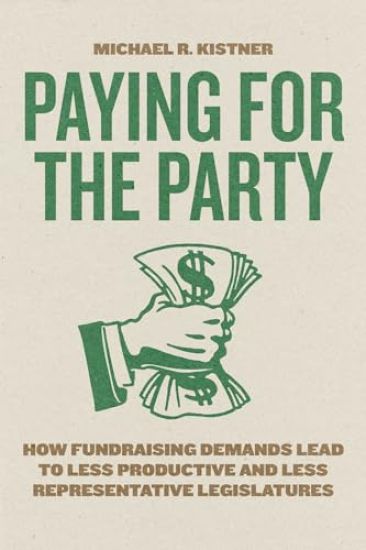
Paying for the Party

Paying for the Party

Michael R. Kistner

THE UNIVERSITY OF CHICAGO PRESS
2026
sidottu
A revealing, data-rich exploration of how American legislators transformed from active policymakers into party fundraisers. Lawmakers in Congress and state legislatures across the United States spend enormous amounts of time and effort fundraising, not just for their own seats but for the party. Whether dialing for dollars or hosting high-priced fundraising events, the pursuit of campaign funds is now a massive part of the American legislator’s job description. What explains this transformation, and what are the consequences for public policy? In Paying for the Party, Michael Kistner uses new theory and new data to answer these questions. He shows that state legislative party organizations—Democratic and Republican caucuses in capitols across the country—are responsible for turning their members into single-minded seekers of money. Parties reward legislators who contribute the most with powerful leadership and committee positions. Consequently, the members who now hold these agenda-setting positions are increasingly neither the most productive nor knowledgeable lawmakers, but rather those who can raise the most money. And when legislators are asked to raise more money, they skip committee hearings for fundraising events, enacting fewer substantive policies as a result. Paying for the Party shows that parties in contemporary American legislatures have hollowed out the policymaking capacity of their institutions and empowered a decidedly non-representative set of legislators.
Paying for the Party

Paying for the Party

Michael R. Kistner

THE UNIVERSITY OF CHICAGO PRESS
2026
nidottu
A revealing, data-rich exploration of how American legislators transformed from active policymakers into party fundraisers. Lawmakers in Congress and state legislatures across the United States spend enormous amounts of time and effort fundraising, not just for their own seats but for the party. Whether dialing for dollars or hosting high-priced fundraising events, the pursuit of campaign funds is now a massive part of the American legislator’s job description. What explains this transformation, and what are the consequences for public policy? In Paying for the Party, Michael Kistner uses new theory and new data to answer these questions. He shows that state legislative party organizations—Democratic and Republican caucuses in capitols across the country—are responsible for turning their members into single-minded seekers of money. Parties reward legislators who contribute the most with powerful leadership and committee positions. Consequently, the members who now hold these agenda-setting positions are increasingly neither the most productive nor knowledgeable lawmakers, but rather those who can raise the most money. And when legislators are asked to raise more money, they skip committee hearings for fundraising events, enacting fewer substantive policies as a result. Paying for the Party shows that parties in contemporary American legislatures have hollowed out the policymaking capacity of their institutions and empowered a decidedly non-representative set of legislators.
Building Democracy in One-Party Systems

Building Democracy in One-Party Systems

Michael Kelley; Michael Maggiotto; Gary Wekkin; Donald Whistler

Praeger Publishers Inc
1993
sidottu
With democratic capitalism appearing to sweep the world, this timely collection addresses theoretical and practical aspects of building democracy in one-party systems. Contributions examine the progress and condition of democracy in Central and Eastern Europe, Africa, and the two Chinas; the fall of Gorbachev; and the Serbian drive for hegemony in the Balkans. Focusing upon four main areas, the volume analyzes (1) the theoretical challenge of creating and sustaining democracy, (2) the experience of operating democracy in the absence of two-party competition, as found in the Southern United States, (3) building democracy in the place of communism, and (4) building democracy in less-developed countries.
An Introduction to Partial Differential Equations

An Introduction to Partial Differential Equations

Michael Renardy; Robert C. Rogers

Springer-Verlag New York Inc.
2004
sidottu
Partial differential equations are fundamental to the modeling of natural phenomena, arising in every field of science. Consequently, the desire to understand the solutions of these equations has always had a prominent place in the efforts of mathematicians; it has inspired such diverse fields as complex function theory, functional analysis and algebraic topology. Like algebra, topology, and rational mechanics, partial differential equations are a core area of mathematics. This book aims to provide the background necessary to initiate work on a Ph.D. thesis in PDEs for beginning graduate students. Prerequisites include a truly advanced calculus course and basic complex variables. Lebesgue integration is needed only in Chapter 10, and the necessary tools from functional analysis are developed within the course. The book can be used to teach a variety of different courses. This new edition features new problems throughout and the problems have been rearranged in each section from simplest to most difficult. New examples have also been added. The material on Sobolev spaces has been rearranged and expanded. A new section on nonlinear variational problems with "Young-measure" solutions appears. The reference section has also been expanded.
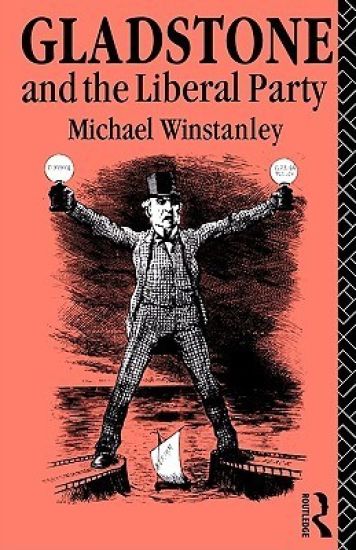
Gladstone and the Liberal Party

Gladstone and the Liberal Party

Michael J. Winstanley

Routledge
1990
nidottu
With a public career spanning 62 years, Gladstone dominated the Victorian political arena. Yet he remains an enigmatic figure; a high Anglican, Tory protectionist who became leader of the Liberals, a party associated with free trade and religious Nonconformity. Michael Winstanley examines both Gladstone and the environment in which he operated, concentrating in particular on the political and social composition of the party which he led. He argues that the parliamentary `Gladstonian Liberals' were far from unqualified supporters of Gladstone and that much of his power was derived from his popularity amongst the electorate. He concludes with an assessment of Gladstone's achievements and his political legacy.