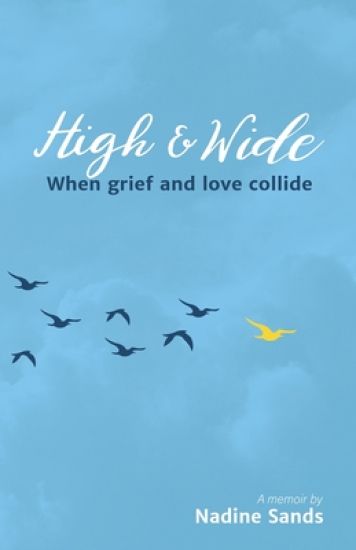
High and Wide is the intimate story of grief and healing, leading up to and proceeding the earthly farewell of Nadine's husband Michael. Nadine shares the wonder of prayer and the reservoir of comfort she experiences during the ongoing grieving process, while embracing God's continual plan for her life--which, to her surprise, included opening her heart and allowing the love of another man inside. For her, the journey of grief and love is a never-ending and ever-expanding one.
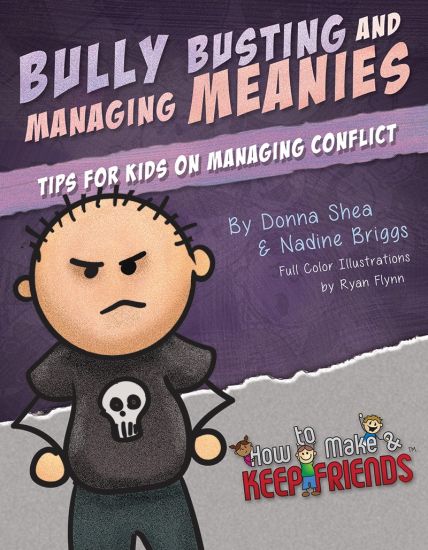
Bully Busting & Managing Meanies is the 4th in the series of workbooks authored by social-emotional learning experts, Donna Shea and Nadine Briggs. The co-authors of the How to Make and Keep Friends book series have more than 30 years of combined experience in social coaching children. Donna and Nadine's books teach children to use their simple, actionable, and proven strategies for increased social success.Bullying is a serious and complex problem and touches the lives of nearly all children, some as victims of bullying, some as the bullies, and some as the bystanders who do not know how to help. Bullying is difficult to prevent, and children need support in learning how to protect themselves when mean or bullying situations arise. The workbook offers ways for children to become more bully-proofUsing our easy-to-read and interactive guide, kids will learn: The distinct differences between bullying and conflict;How reactions and responses to conflict and meanness matter;Steps on how to build self-confidence and defend themselves;How and when to ask for help from an adult;What to do if they see other kids being mean to someone; and, Our tips on how to get along and make recess more fun.The full-color, beautifully illustrated workbook also includes questions, quizzes, and scenarios for discussion and practice.
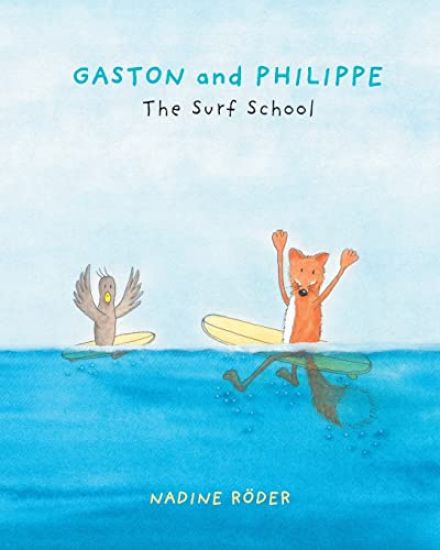
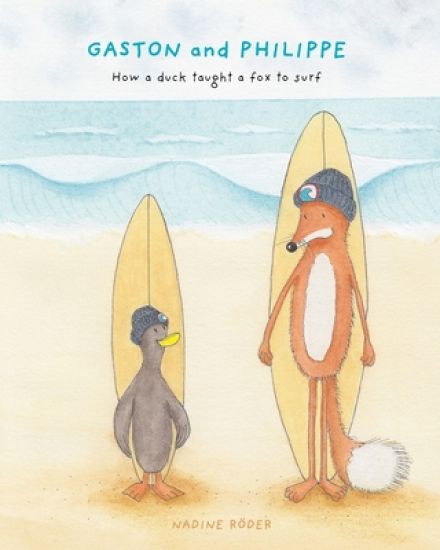
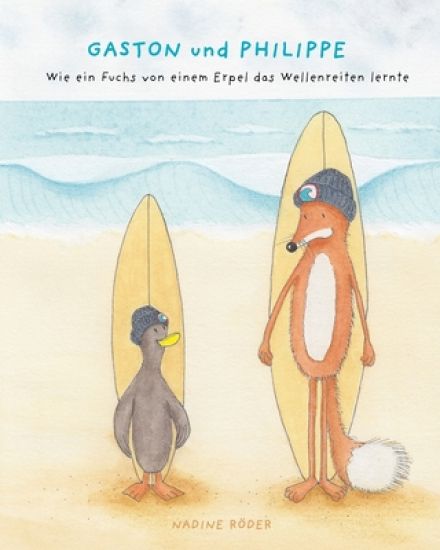
Gaston, the duck, and Philippe, the fox, are the proud owners of the SURFING ANIMALS CLUB surf school. They teach their students all they need to know about surfing, for example, how waves originate or why currents can be dangerous in the sea. The surfing friends are so eager to learn that they fail to notice the mysterious creatures that are watching them. And on top of that, someone gets into terrible trouble
Gaston, der Erpel, und Philippe, der Fuchs, sind stolze Besitzer der Surfschule SURFING ANIMALS CLUB. Ihren Surfsch lern bringen sie jede Menge ber das Wellenreiten bei, zum Beispiel, wie Wellen entstehen oder warum Str mungen im Meer gef hrlich sein k nnen. Bei all dem Eifer bemerken die Surffreunde gar nicht, dass sie von mysteri sen Gestalten beobachtet werden. Und dann ger t auch noch jemand in Not
SSR is a key element of the transitions out of war, aiming at the establishment of accountable and legitimate institutions able to prevent and sanction the use of violence. While recognizing the need to include local actors, donor policies still focus mostly on the state as a provider of security. Second generation SSR has emphasized the need to include local communities and recognize the existence of non-state actors in the provision of security and justice. However, recognition is not enough. This Element promotes a radical re-think of SSR in the context of conflict and war. Guiding question for the considerations is how can security sector reform be set up and implemented to contribute to constructive and inclusive state-society relations, and build the path to long-lasting peace? This Element argues that a focus on functional equivalents, minorities, gender, and human rights is key for the design, implementation, and success of SSR. This title is also available as open access on Cambridge Core.
SSR is a key element of the transitions out of war, aiming at the establishment of accountable and legitimate institutions able to prevent and sanction the use of violence. While recognizing the need to include local actors, donor policies still focus mostly on the state as a provider of security. Second generation SSR has emphasized the need to include local communities and recognize the existence of non-state actors in the provision of security and justice. However, recognition is not enough. This Element promotes a radical re-think of SSR in the context of conflict and war. Guiding question for the considerations is how can security sector reform be set up and implemented to contribute to constructive and inclusive state-society relations, and build the path to long-lasting peace? This Element argues that a focus on functional equivalents, minorities, gender, and human rights is key for the design, implementation, and success of SSR. This title is also available as open access on Cambridge Core.
We are surrounded by thousands of animals, alive and dead. They are an intimate and ever-present part of our human lives. As a society, we privilege veterinarians as experts on these animals: they are our educators and teachers in what they say, what they do, and the decisions that they make. Yet, within the field of education, there is little research on the curriculum, pedagogy, and experiences of veterinary school and students. What do veterinarians learn in veterinary school? How do their experiences during those four years shape their perceptions of animals? How do the structures, curriculum, and pedagogy of veterinary college create and influence these experiences? Learning Animals opens up this conversation through an exploration of the complicated, fascinating and often painful stories of a cohort of veterinary students as they make their four-year journey from matriculation through graduation. The book examines how the experiences of veterinary students shape how humans relate to animals, from public policy and decision-making about the environment and animals slaughtered for food, to the most personal decisions about euthanizing companion animals. The first full-length, critical, qualitative study of the perspectives of our primary teachers about animals, this will be a thought-provoking read for those in the fields of both educational research and veterinary education.
We are surrounded by thousands of animals, alive and dead. They are an intimate and ever-present part of our human lives. As a society, we privilege veterinarians as experts on these animals: they are our educators and teachers in what they say, what they do, and the decisions that they make. Yet, within the field of education, there is little research on the curriculum, pedagogy, and experiences of veterinary school and students. What do veterinarians learn in veterinary school? How do their experiences during those four years shape their perceptions of animals? How do the structures, curriculum, and pedagogy of veterinary college create and influence these experiences? Learning Animals opens up this conversation through an exploration of the complicated, fascinating and often painful stories of a cohort of veterinary students as they make their four-year journey from matriculation through graduation. The book examines how the experiences of veterinary students shape how humans relate to animals, from public policy and decision-making about the environment and animals slaughtered for food, to the most personal decisions about euthanizing companion animals. The first full-length, critical, qualitative study of the perspectives of our primary teachers about animals, this will be a thought-provoking read for those in the fields of both educational research and veterinary education.
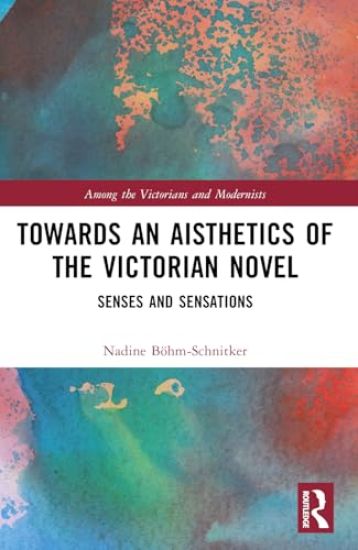
Towards an Aisthetics of the Victorian Novel: Senses and Sensations establishes a new analytical method in the broader context of sensory studies in order to explain how the genre of the novel can impact on our perception of ourselves and our social contexts. Taking cultural literary studies ahead, the book re-integrates aesthetics – a much fraught concept in cultural studies that long favoured ‘popular’ over ‘high culture’ – into cultural studies as aisthetics in the word’s root sense of ‘perception’. Zooming in on period shifts and changes in taste spanning realism, sensation fiction and aestheticism, aisthetics reveals how these shifts also pertain to new ways of perceiving in selected novels by George Eliot, Wilkie Collins and Vernon Lee. Connecting Victorian and current literary theories, aisthetics helps explore the way in which the novel can shape the way we perceive the world, what remains excluded from the realm of the perceivable and how our conduct is consequently always also influenced by the dominant genres of our time.
Towards an Aisthetics of the Victorian Novel: Senses and Sensations establishes a new analytical method in the broader context of sensory studies in order to explain how the genre of the novel can impact on our perception of ourselves and our social contexts. Taking cultural literary studies ahead, the book re-integrates aesthetics – a much fraught concept in cultural studies that long favoured ‘popular’ over ‘high culture’ – into cultural studies as aisthetics in the word’s root sense of ‘perception’. Zooming in on period shifts and changes in taste spanning realism, sensation fiction and aestheticism, aisthetics reveals how these shifts also pertain to new ways of perceiving in selected novels by George Eliot, Wilkie Collins and Vernon Lee. Connecting Victorian and current literary theories, aisthetics helps explore the way in which the novel can shape the way we perceive the world, what remains excluded from the realm of the perceivable and how our conduct is consequently always also influenced by the dominant genres of our time.
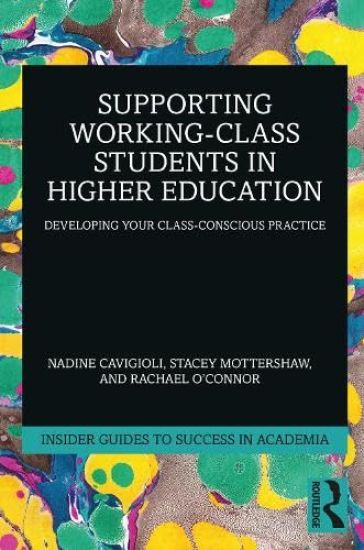
Placing a spotlight on the classism inherent in higher education, this book highlights the realities that working-class students face when navigating elite higher education spaces, and the rewards and challenges of supporting these students in these spaces.Drawing on the life experiences of academics of working-class heritage and a Student Advisory Board, each chapter is positioned around a ‘myth’ which is debunked with examples, practice, student perspectives and research. Alongside this, the book serves as a support mechanism for practitioners to learn from working-class experiences in order to improve their own practice, and be able to support their working-class students through the exploration of an intersectional, class-conscious pedagogy. It argues that classism should be a central item on the agenda of all those working in higher education if they are truly committed to making institutions spaces where all students feel they belong and have a voice.This ground-breaking book will support and enhance the practice of anyone with a role that engages with or impacts upon the lives and experiences of historically excluded students, whether directly through teaching, pastoral and administrative support or, indirectly through leadership, governance and policy making.‘Insider Guides to Success in Academia’ offers support and practical advice to doctoral students and early-career researchers. Covering the topics that really matter, but which often get overlooked, this indispensable series provides practical and realistic guidance to address many of the needs and challenges of trying to operate, and remain, in academia.These neat pocket guides fill specific and significant gaps in current literature. Each book offers insider perspectives on the often-implicit rules of the game – the things you need to know but usually aren’t told by institutional postgraduate support, researcher development units, or supervisors – and will address a practical topic that is key to career progression. They are essential reading for doctoral students, early-career researchers, supervisors, mentors, or anyone looking to launch or maintain their career in academia.
Placing a spotlight on the classism inherent in higher education, this book highlights the realities that working-class students face when navigating elite higher education spaces, and the rewards and challenges of supporting these students in these spaces.Drawing on the life experiences of academics of working-class heritage and a Student Advisory Board, each chapter is positioned around a ‘myth’ which is debunked with examples, practice, student perspectives and research. Alongside this, the book serves as a support mechanism for practitioners to learn from working-class experiences in order to improve their own practice, and be able to support their working-class students through the exploration of an intersectional, class-conscious pedagogy. It argues that classism should be a central item on the agenda of all those working in higher education if they are truly committed to making institutions spaces where all students feel they belong and have a voice.This ground-breaking book will support and enhance the practice of anyone with a role that engages with or impacts upon the lives and experiences of historically excluded students, whether directly through teaching, pastoral and administrative support or, indirectly through leadership, governance and policy making.‘Insider Guides to Success in Academia’ offers support and practical advice to doctoral students and early-career researchers. Covering the topics that really matter, but which often get overlooked, this indispensable series provides practical and realistic guidance to address many of the needs and challenges of trying to operate, and remain, in academia.These neat pocket guides fill specific and significant gaps in current literature. Each book offers insider perspectives on the often-implicit rules of the game – the things you need to know but usually aren’t told by institutional postgraduate support, researcher development units, or supervisors – and will address a practical topic that is key to career progression. They are essential reading for doctoral students, early-career researchers, supervisors, mentors, or anyone looking to launch or maintain their career in academia.