Kirjojen hintavertailu. Mukana 11 342 296 kirjaa ja 12 kauppaa.

Kirjahaku

Etsi kirjoja tekijän nimen, kirjan nimen tai ISBN:n perusteella.

1000 tulosta hakusanalla Philip Perry

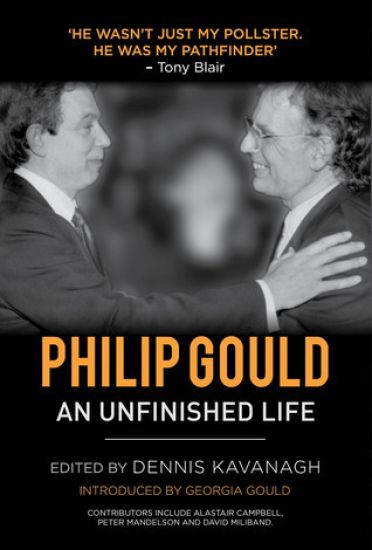
Philip Gould

Philip Gould

Palgrave Macmillan
2012
sidottu
The death of Philip Gould, former Labour Party Communications Director, in 2011 deprived Britain of one of its most acute and well-respected political minds. In this book his friends and colleagues including David Miliband and Lord Mandelson discuss his life from his early years in the Labour Party to his ultimately doomed fight against cancer.
Philip Pullman

Philip Pullman

Catherine Butler; Tommy Halsdorf

Red Globe Press
2014
sidottu
Pullman's His Dark Materials trilogy enthrals children through its storytelling but is also an ambitious and sophisticated work. This collection, consisting of brand new essays by an international team of scholars, provides both an overview and a critical assessment of the trilogy's reputation and its place within modern children's literature.
Philip Larkin

Philip Larkin

Robert C. Evans

Red Globe Press
2016
nidottu
Philip Larkin is widely regarded as one of the greatest English poets of the 20th century. As such, there is a vast amount of literary criticism surrounding his work.This Readers' Guide provides a comprehensive and accessible overview of the key reactions to Larkin’s poetry. Using a chronological structure, Robert C. Evans charts critical responses to Larkin’s work from his arrival on the British literary scene in the 1950s to the decades after his death. This includes analyses of critical material from around the world, making this an excellent guide for all students of Larkin.
Philip Larkin

Philip Larkin

Robert C. Evans

Red Globe Press
2016
sidottu
Philip Larkin is widely regarded as one of the greatest English poets of the 20th century. As such, there is a vast amount of literary criticism surrounding his work.This Readers' Guide provides a comprehensive and accessible overview of the key reactions to Larkin’s poetry. Using a chronological structure, Robert C. Evans charts critical responses to Larkin’s work from his arrival on the British literary scene in the 1950s to the decades after his death. This includes analyses of critical material from around the world, making this an excellent guide for all students of Larkin.
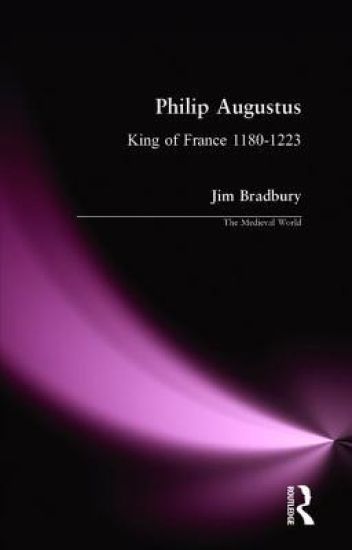
Philip Augustus

Philip Augustus

Jim Bradbury

Routledge
2016
sidottu
This is the first major study in English of the reign of Philip Augustus who ruled France from 1180 - 1223. Outshone for posterity, by his flamboyant contemporaries, the Angevin family of Henry II and his feuding sons, Philip was in fact far more successful than any of them, astutely playing them off against each other and recovering for the French crown their vast estates in Northern France including Normandy itself. As well as reasserting the power of the Capetian monarchy, he was also leader of the Third Crusade. Drawing together all the threads in the life of one of France's most forceful rulers, this new study offers a study of the nature of monarchy in late medieval Europe as well as an insight into a subtle and secretive personality.
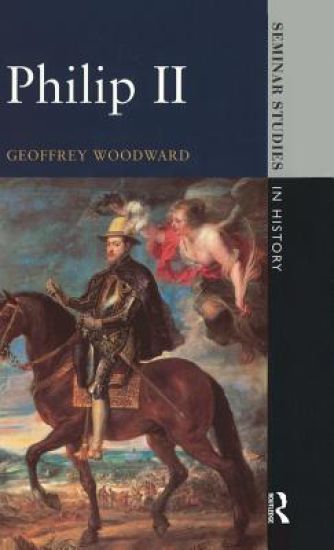
Philip II

Philip II

Geoffrey Woodward

Routledge
2015
sidottu
Any assessment of Philip II's rule assumes the appearance of a paradox. In analysing the nature and impact of Philip II's rule and government, the author seeks to examine the extent of the changes in royal finance, the economic and social issues, the impact of religion -- both within Spain and throughout its Empire -- and the aims and motives behind the king's foreign policy.
Philip Roth Considered

Philip Roth Considered

Steven Milowitz

Routledge
2016
nidottu
This book comprehensively surveys Philip Roth's published and unpublished works, focusing on the thematic unity which binds them together: the memory of the Holocaust and the altered universe born of that memory. The Holocaust is understood as the orienting event for Roth's fiction and non-fiction, the force that surrounds the characters and the narratives at all times. Roth's obsession with questions of the Holocaust, questions of responsibility, meaning, and powerlessness, explains his recurring discussion of entrapment, dehumanization, nihilism, guilt, and coercion. The concentrationary universe of the title is defined, in this work, as not only the universe of camps, but also the universe that exists after the devastation. Moral and philosophical norms are revoked in this new world. Roth's early works are presented on a desolate landscape. The introduction explicates this landscape, specifically by invoking an early play of Roth's, a play which is set in a Jewish ghetto during the Holocaust. This unpublished work introduces the historical period that shapes the visions of Roth's future protagonists. The next three chapters study Roth's relentless excavation of the dilemmas of fathers, mothers, authority figures, and the inner discord of need and purpose. These seemingly quotidian problems are exacerbated and intensified by the Holocaust's shadowy presence. No relationship, no effort at fulfillment, no action is untempered by history in Roth's varied fictions. Chapters four and five look directly at Roth's allusions to the Holocaust. They explore, through each of Roth's works, how the Holocaust-thematic -the play of ideology and nihilism-and the Holocaust-pattern -the idea of the past encroaching upon the present -work through Roth's career, informing his readers not only of his fascination with the Holocaust, but of his particularly human way of dealing with it. The last chapter briefly summarizes the findings of the previous chapter and connects Roth's specific concentrationary universe to the larger world. The linguistic clues of Roth's novels are revealed and investigated, pointing to Roth's celebration of ambiguity and individuality as parts of an imperfect formula for writing and living in the debased aftermath of the Holocaust.