Kirjojen hintavertailu. Mukana 11 699 587 kirjaa ja 12 kauppaa.

Kirjahaku

Etsi kirjoja tekijän nimen, kirjan nimen tai ISBN:n perusteella.

1000 tulosta hakusanalla Pi Eriksson

Raspberry Pi for Secret Agents

Raspberry Pi for Secret Agents

Stefan Sjogelid

Packt Publishing Limited
2013
nidottu
A playful, informal approach to using the Raspberry Pi for mischief! Raspberry Pi for Secret Agents is for all mischievous Raspberry Pi owners who'd like to see their computer transform into a neat spy gadget to be used in a series of practical pranks and projects. No previous skills are required to follow along and if you're completely new to Linux, you'll pick up much of the basics for free. Apart from the Raspberry Pi board itself, a USB microphone and/or a webcam is required for most of the audio/video topics and a Wi-Fi dongle is recommended for the networking examples. A Windows/Mac OS X/Linux computer (or second Raspberry Pi) is also recommended for remote network access.
Raspberry Pi Cookbook for Python Programmers

Raspberry Pi Cookbook for Python Programmers

Tim Cox

Packt Publishing Limited
2014
nidottu
"Raspberry Pi Cookbook for Python Programmers" is written in a Cookbook format, presenting examples in the style of recipes.This allows you to go directly to your topic of interest, or follow topics throughout a chapter to gain a thorough indepth knowledge. The aim of this book is to bring you a broad range of Python 3 examples and practical ideas which you can develop to suit your own requirements. By modifying and combining the examples to create your own projects you learn far more effectively with a much greater understanding. Each chapter is designed to become a foundation for further experimentation and discovery of the topic, providing you with the tools and information to jump right in. Readers are expected to be familiar with programming concepts and Python (where possible Python 3 is used), although beginners should manage with the help of a good Python reference book and background reading. No prior knowledge of the Raspberry Pi or electronics is required; however for the hardware sections you will need some basic electronic components/household tools to build some of the projects.
Raspberry Pi IoT In C

Raspberry Pi IoT In C

Harry Fairhead

I/O Press
2016
nidottu
The Raspberry Pi makes an ideal match for the Internet of Things. But to put it to good use in IoT you need two areas of expertise, electronics and programming and because of the way hardware and software engineering tend to occupy separate niches you may need help with combining the two. This book teaches you to think like an IoT programmer.In Raspberry Pi IoT in C you will find a practical approach to understanding electronic circuits and datasheets and translating this to code, specifically using the C programming language. The main reason for choosing C is speed, a crucial factor when you are writing programs to communicate with the outside world. If you are familiar with another programming language, C shouldn't be hard to pick up. Here it is used in conjunction with NetBeans and with the bcm2835 library.The main idea in this book is to not simply install a driver, but to work directly with the hardware. So rather than using Raspberry Pi HATs or other expansion boards we use the Pi's GPIO (General Purpose Input Output) and connect off-the-shelf sensors. If you want to know how to work with the GPIO lines directly, how to work with near realtime Linux and generally take control of the Pi this is the book you need. It explains how to use the standard bus types - SPI, I2C, PWM - and with custom protocols including an in-depth exposition of the 1-wire bus. You will also discover how to put the Internet into the IoT using sockets and the low cost ESP8266.After reading this book you will be in a better position to tackle interfacing anything-with-anything without the need for custom drivers and prebuilt hardware modules.Having written a Blinky program to check that everything we need is installed and working we move on to exploring the basics of using the GPIO and also master memory mapping, pulse width modulation and other more sophisticated bus types. From here we can start connecting sensors, which is a core requirement for IoT. First we'll meet the ubiquitous I2C bus, next we'll implement a custom protocol for a one-wire bus, and eventually we'll add eight channels of 12-bit AtoD with the SPI bus, which involves overcoming some subtle difficulties. Next we look at the traditional serial interface how to use it to communicate with other devices. This paves the way for getting the Pi on the web - after all this is a book about the Internet of Things -using first a USB WiFi adapter and sockets and then the low cost ESP8266, which is particularly useful with the Pi Zero which has only one USB port. Having transformed the Pi into both a web client and a web server we can then use them to exchange information.
Raspberry Pi IoT In C

Raspberry Pi IoT In C

Harry Fairhead

I/O Press
2020
nidottu
Third Edition Now Available. The Raspberry Pi makes an ideal match for the Internet of Things. But to put it to good use in IoT you need two areas of expertise, electronics and programming and, because of the way hardware and software engineering tend to occupy separate niches, you may need help with combining the two. This book teaches you to think like an IoT programmer.In Raspberry Pi IoT in C you will find a practical approach to understanding electronic circuits and datasheets and translating this to code, specifically using the C programming language. The main reason for choosing C is speed, a crucial factor when you are writing programs to communicate with the outside world. If you are familiar with another programming language, C shouldn't be hard to pick up. This Second Edition has been brought up-to-date and focuses mainly on the Pi 4 and the Pi Zero. There is new material on the recently introduced GPIO character driver and using the Pi 4's additional ports and scheduling.Although NetBeans is used to develop programs, VS Code is now considered an alternative remote development environment and all the book's code, which is available for download, has been tested with VS Code.The main idea in this book is to not simply install a driver, but to work directly with the hardware using the Raspberry Pi's GPIO (General Purpose Input Output) to connect with off-the-shelf sensors. It explains how to use its standard output with custom protocols, including an in-depth exposition of the 1-wire bus. You will also discover how to put the Internet into the IoT using sockets.After reading this book you will be in a better position to tackle interfacing anything-with-anything without the need for custom drivers and prebuilt hardware modules.Harry Fairhead has worked with microprocessors and electronics in general for many years and is an enthusiastic proponent of the IoT. As well as being the Editor of IoT-Programmer.com, he is a regular contributor to I-Programmer.info, where he covers all aspects of hardware. His other recent books include Applying C For The IoT With Linux as well as Fundamental C: Getting Closer To The Machine and Micro: bit IoT in C.
Raspberry Pi IoT In C Using Linux Drivers
There is a new edition of this book.The Raspberry Pi makes an ideal match for the Internet of Things. To put it to good use in IoT you need two areas of expertise, electronics and programming and this presents a barrier to getting started. However, there is an overlooked route that can provide a shortcut. Pi OS, the Raspberry Pi's operating system is Linux based and Linux drivers are available for many off-the-shelf IoT devices. These provide a very easy-to-use, high-level way of working. The problem that this book solves is that there is very little documentation to help you get started. In it Harry Fairhead explains the principles so that you can tackle new devices and he also guides you through of using external hardware via standard Linux drivers. Throughout this book you will find a practical approach to understanding electronic circuits and datasheets and translating this to code, specifically using the C programming language. The main reason for choosing C is speed, a crucial factor when you are writing programs to communicate with the outside world and if you are familiar with another programming language, C shouldn't be hard to pick up.After a quick tour of the Raspberry Pi ecosystem, Visual Studio Code (VS Code) and how it can be used to develop remotely, is introduced. The first IoT program anyone writes is "blinky" to flash an LED and this book is no exception, but it might not be quite what you expect. Instead of using a GPIO line it uses the Linux LED driver - no hardware and no fuss. The GPIO isn't left out, however, as the next three chapters focus on its use via the new GPIO character driver, which replaces the old and very common sysfs GPIO driver. This is the way to do modern GPIO. A key component in any look at Linux and its relationship to hardware is the relatively new Device Tree. While most accounts of this resource are aimed at device driver writers, this one is aimed at device driver users and to this end we look at the DHT22 temperature and humidity driver. After a brief detour into some basic electronics, we look at Pulse Width Modulation supported via a driver rather than needing to be implemented using the GPIO. From here we tackle the two standard buses, I2C and SPI, first going through the basics and then looking at the two attempts to impose a higher organization, the hardware monitoring system, Hwmon, and Industrial I/O, IIO. The third standard bus, although generally not supported in hardware is the 1-Wire bus. This is covered in detail and even includes an introduction to using Netlink, which uses the sockets API to send messages to and from the kernel to access the driver. The final chapter takes things to the next level and considers creating your own custom overlays by writing fragments to the device tree.Harry Fairhead has worked with microprocessors, and electronics in general, for many years and is an enthusiastic proponent of the IoT. He is the author of Raspberry Pi IoT in C, which has recently been republished in its second edition, updated for Raspberry Pi 4 and co-author of Raspberry Pi IoT in Python Using GPIO Zero. His other recent books include Micro: bit IoT in C, Fundamental C: Getting Closer To The Machine and Applying C For The IoT With Linux.
Raspberry Pi IoT In Python Using Linux Drivers

Raspberry Pi IoT In Python Using Linux Drivers

Mike James; Harry Fairhead

I/O Press
2021
nidottu
There is a new edition of this book.The Raspberry Pi makes an ideal match for the Internet of Things. To put it to good use in IoT you need two areas of expertise, electronics and programming, and this presents a barrier to getting started. However, there is an overlooked route that can provide a shortcut. Pi OS, the Raspberry Pi's operating system, is Linux- based and Linux drivers are available for many off-the-shelf IoT devices. These provide a very easy-to-use, high-level, way of working. The problem that this book solves is that there is very little documentation to help you get started.Throughout this book you will find a practical approach to understanding electronic circuits and datasheets and translating this to code, specifically using Python. Python is an excellent language for learning about the IoT or physical computing. It might not be as fast as C, but it is much easier to use for complex data processing. The emphasis in this book is on understanding how things work so that you can apply your new knowledge to your own projects. You can use any Python development system that you know, but the programs in the book have been developed using Visual Studio Code and its remote development facilities.The first IoT program anyone writes is "Blinky" to flash an LED and this book is no exception, but it might not be quite what you expect. Instead of using a GPIO line, it uses the Linux LED driver - no hardware and no fuss. The GPIO isn't left out, however, as the next three chapters focus on its use via the new GPIO character driver, which replaces the old and very common sysfs GPIO driver. This is the way to do modern GPIO.A key component in any look at Linux and its relationship to hardware is the relatively new Device Tree. While most accounts of this resource are aimed at device driver writers, this one is aimed at device driver users and to this end we look at several devices, including the DHT22 temperature and humidity sensor. After a brief detour into some basic electronics, we see how Pulse Width Modulation is supported via a driver. From here we tackle the two standard buses, I2C and SPI, first going through the basics and then looking at the two attempts to impose a higher organization, the hardware monitoring system, Hwmon, and Industrial I/O, IIO. The third standard bus, although generally not supported in hardware, is the 1-Wire bus. This is covered in detail and even includes an introduction to using Netlink, which uses the sockets API to send messages to and from the kernel to access the driver. The final chapter takes things to the next level and considers creating your own custom overlays by writing fragments to the device tree.This is the second title jointly authored by Harry Fairhead and Mike James and can be seen as the alternative approach to that outlined in Raspberry Pi IoT In Python Using GPIO Zero. For both books, Harry brings his expertise in electronics and the IoT and Mike contributes the Python code.Harry Fairhead is the author of other IoT-related titles including Raspberry Pi IoT in C, Second Edition; Micro: bit IoT in C, Second Edition; Applying C For The IoT With Linux and Fundamental C: Getting Closer To The Machine.Mike James is the author of Programmer's Python: Everything is an Object and other programming and computer science titles in the I Programmer Library.
Raspberry Pi IoT In Python Using GPIO Zero

Raspberry Pi IoT In Python Using GPIO Zero

Mike James; Harry Fairhead

I/O Press
2020
nidottu
There is a new edition of this book covering GPIO Zero 2 and the Pi 5 The Raspberry Pi makes an ideal match for the Internet of Things. But to put it to good use in IoT you need two areas of expertise, electronics and programming and because of the way hardware and software engineering tend to occupy separate niches, you may need help with combining the two. Python is an excellent language with which to learn about the IoT or physical computing. It might not be as fast as C, but it is much easier to use for complex data processing. One reason for Python's popularity is its wealth of supporting libraries and there are several for interfacing hardware. The GPIO Zero library is the official way to use Python with the GPIO and other devices and this book looks at how to use it to interface to fundamental IoT devices - from LEDs and buzzers to servos and stepper motors and several off-the-shelf Raspberry Pi add-ons. Importantly, it explains how it works so that you can extend it to custom devices. Studying GPIO Zero is also a great way to improve your Python and this book teaches you to think like an IoT programmer. After reading it, you will be in a better position to tackle interfacing anything-with-anything without the need for custom drivers and prebuilt hardware modules.The emphasis in this book on understanding how things work and using this knowledge to create new devices and integrate them into GPIO Zero. You can use any Python development system that you know, but the programs in the book have been developed using Visual Studio Code and its remote development facilities. All the code is available on the book's web page along with everything you need to get started.Harry Fairhead has worked with microprocessors, and electronics in general, for many years and is an enthusiastic proponent of the IoT. He is the author of Raspberry Pi IoT in C, which has recently been republished in its second edition, updated for Raspberry Pi 4. His other recent books include Applying C For The IoT With Linux and Fundamental C: Getting Closer To The Machine.Mike James is the author of Programmer's Python: Everything is an Object and other programming and computer science titles in the I Programmer Library. His programming career spans several generations of computer technology, but he keeps his skills completely up to date and has a PhD in Computer Science.
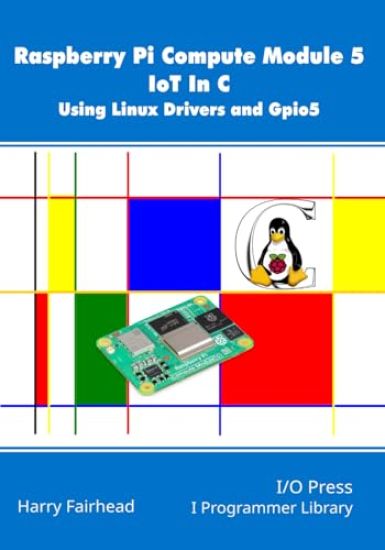
Raspberry Pi IoT In C, 3rd Edition

Raspberry Pi IoT In C, 3rd Edition

Harry Fairhead

I/O Press
2024
pokkari
Reviews of the previous edition: "A complete explanation that makes it straightforward to interface I/O options to the Pi. Good examples are easy to follow and well explained - starting with "Hello World" and then walks through the various interface options available with GPIO. I highly recommend this to anyone using the Pi for any embedded system application requiring various types of interfaces.""This is the book to read to get deep into Raspberry IoT. Programming examples are provided. Great book " The Raspberry Pi makes an ideal match for the Internet of Things. But to put it to good use in IoT you need two areas of expertise, electronics and programming and, because of the way hardware and software engineering tend to occupy separate niches, you may need help with combining the two which is the role of this book.This 3rd Edition was prompted by the arrival of the Pi 5. Unfortunately, as the Pi 5 uses the new RP1 chip to implement its peripherals, it is incompatible with all of the IoT libraries that work directly with the hardware. As a result it is excluded from much of this book. A whole chapter is, however, devoted to getting started with an IoT project with the Pi 5 and it is also covered in chapters on the Linux GPIO driver and on the use of the Pi's serial ports and in a chapter, which describes how to access the Pi 5's registers directly.What is more important than the Pi 5 from the point of view of IoT is the Pi Zero 2W, which is a much faster, quad-core, version of the Pi Zero W making it an excellent choice for IoT projects. It is covered for the first time in this edition. Another reason for a new edition is to update its programs to the new versions of Pi OS, Bookworm and Bullseye. Finally, a major change is that VS Code is now the book's IDE of choice and to make it easy to use as a remote development environment with all versions of Pi from Pi Zero to Pi 5, a set of custom VS Code tasks are supplied, which are downloadable as well as included in the book.The main idea in this book is to work directly with the hardware using the Raspberry Pi's GPIO (General Purpose Input Output) to connect with off-the-shelf sensors. After reading it you will be in a better position to tackle interfacing anything-with-anything without the need for custom drivers and prebuilt hardware modules. Harry Fairhead has worked with microprocessors and electronics for many years and is an enthusiastic proponent of the IoT. C is his programming language of choice and he has written several books on programming the Raspberry Pi and other devices in an IOT context, including Raspberry Pi IoT in C With Linux Drivers, Second Edition, Programming the ESP32 in MicroPython and Fundamental C: Getting Closer To The Machine. Currently, his most popular title is Programming the Raspberry Pi Pico/W in C.
Raspberry Pi IoT In Python Using Linux Drivers, 2nd Edition
The Raspberry Pi makes an ideal match for the Internet of Things. To put it to good use in IoT you need two areas of expertise, electronics and programming, and this presents a barrier to getting started. However, there is an overlooked route that can provide a shortcut. Pi OS, the Raspberry Pi's operating system, is Linux- based and Linux drivers are available for many off-the-shelf IoT devices. Using Linux drivers saves the effort of implementing low-level code and has the advantage of working the same on all versions of the Pi, including the recently launched Pi 5 which isn't hardware compatible with earlier versions. This Second Edition has been updated to cover the Pi 5 and also the Pi Zero 2W, which is an ideal candidate for use in IoT projects. It has also been updated to use the latest versions of Pi OS, Bullseye and Bookworm. Throughout this book you will find a practical approach to understanding electronic circuits and datasheets and translating this to code, specifically using Python and VS Code. The first IoT program anyone writes is "Blinky" to flash an LED and this book is no exception, but it might not be quite what you expect. Instead of using a GPIO line driver, it uses the Linux LED driver. The GPIO isn't left out, however, as the next three chapters focus on its use via the GPIO character driver, which replaces the old, but very common, sysfs GPIO driver. This is the way to do modern GPIO. A key component in any look at Linux and its relationship to hardware is the relatively new Device Tree. While most accounts of this resource are aimed at device driver writers, this one is aimed at device driver users and to this end we look at several devices, including the DHT22 temperature and humidity sensor. After a brief detour into some basic electronics, we see how Pulse Width Modulation is supported via a driver. From here we tackle the two standard buses, I2C and SPI, first going through the basics and then looking at the two attempts to impose a higher organization, the hardware monitoring system, hwmon, and Industrial I/O, IIO. The 1-Wire bus is also covered in detail. The final chapter takes things to the next level and considers creating your own custom overlays by writing fragments to the device tree. Harry Fairhead's other books include Applying C For The IoT With Linux; Programming the Raspberry Pi Pico/W, 2nd Ed, Raspberry Pi IoT in C, 3rd Ed, Raspberry Pi IoT in C Using Linux Drivers, 2nd Ed, Programming the Raspberry Pi Pico/W, 2nd Ed and Programming the ESP32 in MicroPython. Mike James is the author of the Programmer's Python: Something Completely Different series of books and several other programming and computer science titles in the I Programmer Library.
AI projects with Raspberry Pi

AI projects with Raspberry Pi

Raspberry Pi

Raspberry Pi Press
2025
pokkari
The Raspberry Pi 5 is the perfect computer to experiment with the world of neural networks, artificial intelligence, and machine learning.Coupled with the Raspberry Pi AI Kit, you can integrate local, high-performance, power-efficient inferencing into your projects. WIth the AI Kit, you can build complex AI vision applications, running in real time, with low latency and low power requirements.This book shows you how to get up and running with pretrained models or models you train yourself. You'll learn how to work with models that can:Identify a variety of objects and highlight them for youEstimate the pose of a personal, animal, or robotDiscern facial landmarks such as eyes, nose, and mouthClassify things based on their appearanceWhen you combine Raspberry Pi with artificial intelligence, it gives you the power to create all sorts of things: robots that can interact intelligently with their surroundings, games that use the physical world as a playing field, and home automation systems that adjust to the environment in real time. You're not limited by the pretrained models; with the Hailo Dataflow Compiler (DFC), you can fine-tune the kit for a variety of use cases. With this guide, you'll be up and running with your own Raspberry Pi-powered applications in no time!
Gua Pi Keday or I Went to the Shops

Gua Pi Keday or I Went to the Shops

Theresa Fuller; Timothy Fuller

Subsidia Pty Ltd
2024
pokkari
'I went to the shops and bought...' has been a popular listening game for families for hundreds of years. Besides teaching children the rules for taking turns, this traditional past-time helps with memory and can be an invaluable aid to socialization. It is certainly one of my family's favorite go-to activities on long car trips and before bedtime, and I can testify that it brings our family closer together.So, it was little wonder that when the time came to create the first ever Baba Malay Reader that I fell back on an old and trusty treasure.Gua Pi Keday or I went to the Shops, is now being used to teach the Peranakan vocabulary (kata-kata) and to introduce beginners to the 22 letters that compose the Baba Malay alphabet. Fun, educational and challenging: a new tool in the introduction of our beloved Baba Malay language.The first book in the series New Peranakan Tales created to complement the Baba Malay Today series.
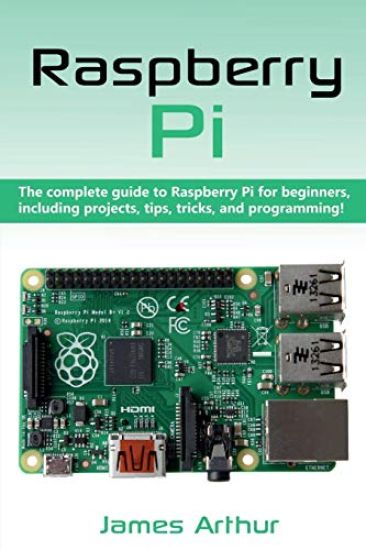
Raspberry Pi

Raspberry Pi

James Arthur

Ingram Publishing
2019
pokkari
RASPBERRY PIThis book serves as a beginner's guide to the world of Raspberry Pi, the different models, how to use them, and what their capabilities are. Inside, you will discover the power of the Raspberry Pi microcomputer, which model is the right one for you, how to set up your Pi for use, and how to get started on your very first Raspberry Pi project You will discover the different programming languages that can be used on the Pi, and which ones are best for you to start with. Also included are some fun and simple projects that you can try, that are perfect for the beginner Pi user Here Is What You'll Learn About... What Is The Raspberry Pi? Raspberry Pi 101 The Different Models Setting It Up Coding For The Raspberry Pi Different Uses Of The Pi Raspberry Pi Projects Much, Much More
Raspberry Pi

Raspberry Pi

Craig Newport

Ingram Publishing
2019
pokkari
RASPBERRY PIThe Raspberry Pi is an impressive, yet affordable Microcomputer, capable of performing hundreds of different tasks. This small computer can be used to perform simple tasks such as making lights flash, as well as perform more complicated processes such as powering a robot This book aims to explain to you how the Raspberry Pi works, and how you can get the most out of it. Focusing primarily on the newest model, the Raspberry Pi 3, this book provides you with step by step instructions for completing a number of projects with the Pi. Inside, you will learn the many different commands needed for controlling your Raspberry Pi, as well as how exactly the Pi functions. This book is well suited for beginners, although a lot of the information will still be able to teach advanced users a thing or two they might not have known about the Pi Get more out of your Pi today, with the help of this 2017 edition user guide Here Is What You'll Learn About Inside... How The Raspberry Pi Works Initial Raspbian Setup Debian Administration Python 3 Raspberry Pi Systems Projects For Your Raspberry Pi Much, Much More
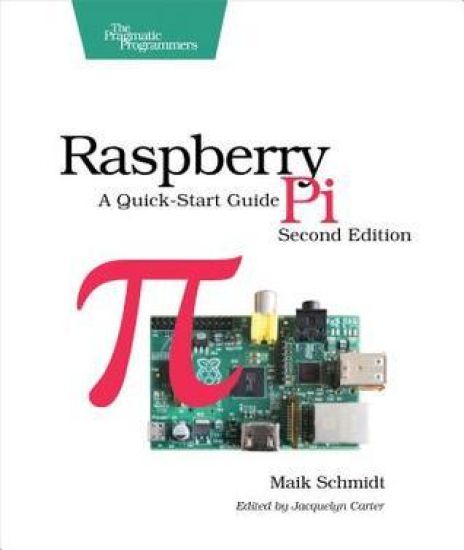
Raspberry Pi 2ed

Raspberry Pi 2ed

Mail Schmidt

The Pragmatic Programmers
2014
nidottu
User Level: Most of the book is targeted at beginners in computing and programming. A few parts, such as the small electronics project and setting up a web server, assume some intermediate skills. The Raspberry Pi is one of the most successful open source hardware projects ever. For only $35, you get a full-blown PC, a multimedia center, and a web server--and this book gives you everything you need to get started. You'll learn the basics, progress to controlling the Pi, and then build your own electronics projects. This new edition is revised and updated with two new chapters on adding digital and analog sensors, and creating videos and a burglar alarm with the Pi camera. Get your Raspberry Pi up and running and doing cool stuff. You'll start with the basics: adding hardware, installing and configuring Debian Linux, and customizing the Pi's firmware to get the most out of your hardware. Then the fun begins. You'll connect the Pi to your home network, surf the web, and tweet messages. You'll learn how to get the most out of Midori, the Pi's standard browser, and control the desktops of other PCs with the Pi. Then you'll explore the Pi's versatility with a series of home projects. Turn it into a web server in your home network; convert the Pi into a powerful multimedia center so you can watch high-definition video and listen to your favorite music; and play classic video games. Then you'll use the GPIO pins on the Raspberry Pi to build your own electronics projects, such as an "out of memory" alarm. You'll learn how to use digital and analog sensors with the Pi, even though the Pi doesn't have analog input ports! Finally, you'll set up the Pi camera, create your own time-lapse videos, and build an automatic e-mailing burglar alarm. Power to the Pi! What You Need You need a Raspberry Pi and several things that you probably already have at home, such as a keyboard, a mouse, a monitor/TV set, and an SD card. To build the electronic projects you need a few cheap parts and the Pi camera.