Kirjojen hintavertailu. Mukana 12 016 292 kirjaa ja 12 kauppaa.

Kirjahaku

Etsi kirjoja tekijän nimen, kirjan nimen tai ISBN:n perusteella.

1000 tulosta hakusanalla Roberta Griffith

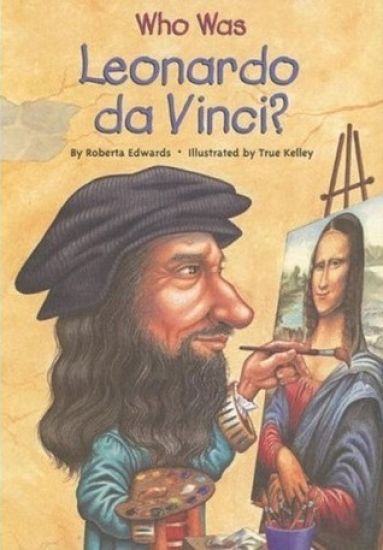
Who Was Leonardo da Vinci?

Who Was Leonardo da Vinci?

Roberta Edwards

Grosset and Dunlap
2005
pokkari
Leonardo da Vinci was a gifted painter, talented musician, and dedicated scientist and inventor, designing flying machines, submarines, and even helicopters. Yet he had a hard time finishing things, a problem anyone can relate to. Only thirteen paintings are known to be his - as for the illustrated encyclopedia he intended to create, all that he left were thousands of disorganised notebook pages. Here is an accessible portrait of a fascinating man who lived at a fascinating time - Italy during the Renaissance.
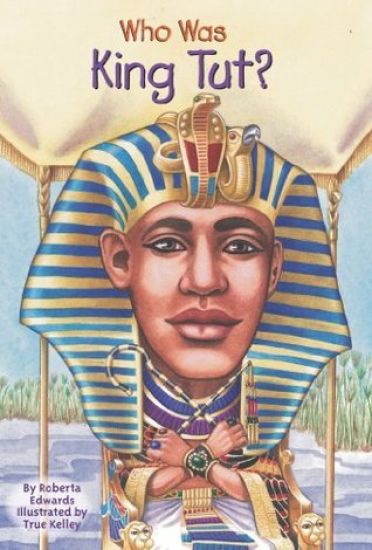
Who Was King Tut?

Who Was King Tut?

Roberta Edwards

Grosset and Dunlap
2006
pokkari
Explains the life and times of King Tutankhamen, an ancient Egyptian ruler, covering the story of his tomb's discovery by Howard Carter in 1922 as well as myths and so-called mummy curses. Original.
Who Was George Washington?

Who Was George Washington?

Roberta Edwards

Grosset Dunlap Inc.,U.S.
2009
pokkari
In 1789, George Washington became the first president of the United States. He has been called the father of our country for leading America through its early years. Washington also served in two major wars during his lifetime: the French and Indian War and the American Revolution. With over 100 black-and-white illustrations, Washington's fascinating story comes to life?revealing the real man, not just the face on the dollar bill
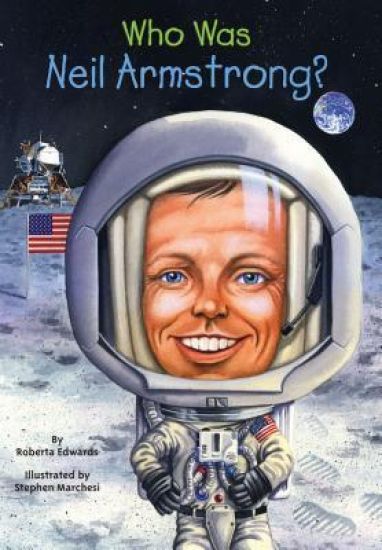
Who Was Neil Armstrong?

Who Was Neil Armstrong?

Roberta Edwards; Stephen (ILT) Marchesi

Grosset Dunlap Inc.,U.S.
2008
pokkari
On July 20, 1969, Neil Armstrong stepped on the moon and, to an audience of over 450 million people, proclaimed his step a ?giant leap for mankind.? This Eagle Scout built his own model planes as a little boy and then grew up to be a test pilot for experimental aircraft before becoming an astronaut. Over 100 black-and-white illustrations bring Armstrong's story to life.
Who Is Barack Obama?

Who Is Barack Obama?

Roberta Edwards

Penguin Workshop
2009
pokkari
As the world now knows, Barack Obama has made history as our first African-American president. With black-and-white illustrations throughout, this biography is perfect for primary graders looking for a longer, fuller life story than is found in the author's bestselling beginning reader Barack Obama: United States President.
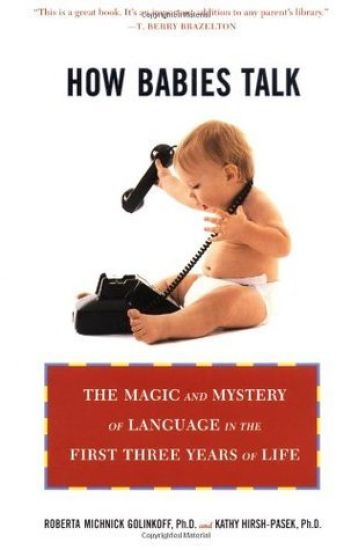
How Babies Talk: The Magic and Mystery of Language in the First Three Years of Life

How Babies Talk: The Magic and Mystery of Language in the First Three Years of Life

Roberta Michnick Golinkoff; Kathy Hirsh-Pasek

Plume Books
2000
nidottu
In their first three years of life, babies face the most complex learning endeavor they will ever undertake as human beings: They learn to talk. Now, as researchers make new forays into the mystery of the development of the human brain, Golinkoff and Hirsh-Pasek, both developmental psychologists and language experts, offer parents a powerfully insightful guidebook to how infants--even while in the womb--begin to learn language. Along the way, the authors provide parents with the latest scientific findings, developmental milestones, and important advice on how to create the most effective learning environments for their children. This book takes readers on a fascinating, vitally important exploration of the dance between nature and nurture, and explains how parents can help their children learn more successfully.
Glutathione and Sulfur Amino Acids in Human Health and Disease

Glutathione and Sulfur Amino Acids in Human Health and Disease

Roberta Masella; Giuseppe Mazza

John Wiley Sons Inc
2009
sidottu
The complex roles of glutathione and sulfur amino acids in human health Glutathione (?-L-glutamyl-L-cysteinylglycine, GSH) is a major antioxidant acting as a free radical scavenger that protects the cell from reactive oxygen species (ROS). Sulfur amino acids (SAAs), such as methionine and cysteine, play a critical role in the maintenance of health. GSH depletion as well as alterations of SAA metabolism are linked to a host of disease states including liver cirrhosis, various pulmonary diseases, myocardial ischemia and reperfusion injury, aging, Parkinson's disease, Alzheimer's disease, sepsis, and others. This book provides researchers with a comprehensive review of the biochemistry, absorption, metabolism, biological activities, disease prevention, and health promotion of glutathione and sulfur amino acids. The twenty-two chapters explore such topics as: Chemistry, absorption, transport, and metabolism of GSH and sulfur amino acidsAntioxidant and detoxification properties of GSH and sulfur amino acids, highlighting the enzymatic systems involved in antioxidant defensesBiological activities of GSH and sulfur amino acids and their role in modulating cell processesRole of GSH and sulfur amino acid deficiency and alteration in the onset of diseases and in agingProtective effects exerted by GSH and sulfur amino acids when used as drugs, functional foods, and nutraceuticals in humans and animals Special attention is paid to the molecular mechanisms for the modulation of transcription factors and enzyme activities, as well as the nutritional and therapeutic significance of dietary sulfur amino acids as shown in human and animal models. With more than 2,000 scientific references, this book provides food scientists, nutritionists, biochemists, food technologists, chemists, molecular biologists, and public health professionals with a comprehensive and up-to-date examination of glutathione and sulfur amino acids in human health and disease.
Cities Back from the Edge

Cities Back from the Edge

Roberta Brandes Gratz; Norman Mintz

John Wiley Sons Inc
1998
sidottu
Gratz takes us on tours of places that are doing better and actually getting somewhere, because, against all odds, they have abandoned conventional wisdom's unworkable and oversimplified formulas and re-embraced new opportunities as complex and rewarding as life itself. It's roll-up-our-sleeves time in America, folks, and now we have no more excuses. Roberta Gratz has assembled the examples worth learning from, and her book is an excellent teacher." — Tony Hiss author of The Experience of Place "Roberta Gratz is wonderful at discovering important things that are going on that most of us have not heard of yet." — Jane Jacobs author of Death and Life of Great American Cities "I read the newspaper differently every day since I read this book." —Anthony Mancini author, professor of journalism at Brooklyn College, and former reporter for the New York Post After decades of decline and decay, scores of downtowns in urban America are coming to life once again. Others continue to languish despite massive public investment. In Cities Back from the Edge, acclaimed author Roberta Brandes Gratz teams up with Main Street expert Norman Mintz to tell us why. Based on their firsthand observations of downtown change throughout the country, this book is filled with stories of urban recovery from Mansfield, Ohio to Los Angeles, from Pasco, Washington to SoHo. Rejecting simplistic cookie-cutter prescriptions for success, Gratz and Mintz instead identify a more flexible and effective approach to downtown rejuvenation: Urban Husbandry. They illustrate how this organic, sustainable process is already producing real-world results. What's more, they show the tremendous advantages of low-cost, modest initiatives over the blockbuster resuscitation efforts of traditional large-scale Project Planning—the budget-busting convention centers, aquariums, stadiums, and other stand-alone solutions that do little to improve the city around them. Throughout this book the authors address the key issues facing the nation's cities and towns today, including transportation planning and sprawl containment, the threat of big-box superstore retailers, and the preservation of the essential downtown components necessary to anchor a thriving, vibrant community. Gratz and Mintz show us that rebuilding authentic places, reconnecting communities, and stimulating innovative change are within everyone's reach. Cities Back from the Edge turns the spotlight on the resurgence of downtown America in a new and insightful way. With proven ideas on how to correct the mistakes of the past several decades, this book offers new hope that our cities will not merely be rebuilt—but reborn.
The Living City

The Living City

Roberta Brandes Gratz

John Wiley Sons Inc
1995
nidottu
THE LIVING CITY "An intelligent analysis. Sensible, undoctrinaire, even good-humored. An appealing mixture of passion and clinical dispassion." –Washington Post Book World "The best antidote I’ve read to the doom-and-gloom prophecies concerning the future of urban America." –Bill Moyers "This is fresh and fascinating material; it is essential for understanding not only how to avoid repeating terrible mistakes of the past, but also how to recover from them." –Jane Jacobs, author of The Death and Life of Great American Cities From coast to coast across America there are countless urban success stories about rejuvenated neighborhoods and resurgent business districts. Roberta Brandes Gratz defines the phenomenon as "urban husbandry"–the care, management, and preservation of the built environment nurtured by genuine participatory planning efforts of government, urban planners, and average citizens.
The Skeptic's Dictionary

The Skeptic's Dictionary

Roberta Carroll

John Wiley Sons Inc
2003
nidottu
A wealth of evidence for doubters and disbelievers ""Whether it's the latest shark cartilage scam, or some new 'repressed memory' idiocy that besets you, I suggest you carry a copy of this dictionary at all times, or at least have it within reach as first aid for psychic attacks. We need all the help we can get.""-James Randi, President, James Randi Educational Foundation, randi.org ""From alternative medicine, aliens, and psychics to the farthest shores of science and beyond, Robert Carroll presents a fascinating look at some of humanity's most strange and wonderful ideas. Refreshing and witty, both believers and unbelievers will find this compendium complete and captivating. Buy this book and feed your head ""-Clifford Pickover, author of The Stars of Heaven and Dreaming the Future ""A refreshing compendium of clear thinking, a welcome and potent antidote to the reams of books on the supernatural and pseudoscientific.""-John Allen Paulos, author of Innumeracy and A Mathematician Reads the Newspaper ""This book covers an amazing range of topics and can protect many people from being scammed.""-Stephen Barrett, M.D., quackwatch.org Featuring close to 400 definitions, arguments, and essays on topics ranging from acupuncture to zombies, The Skeptic's Dictionary is a lively, commonsense trove of detailed information on all things supernatural, occult, paranormal, and pseudoscientific. It covers such categories as alternative medicine; cryptozoology; extraterrestrials and UFOs; frauds and hoaxes; junk science; logic and perception; New Age energy; and the psychic. For the open-minded seeker, the soft or hardened skeptic, and the believing doubter, this book offers a remarkable range of information that puts to the test the best arguments of true believers.
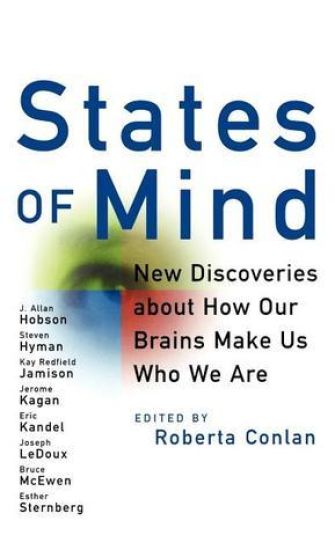
States of Mind

States of Mind

Roberta Conlan

John Wiley Sons Inc
1999
sidottu
"Most neuroscientists now argue that the biological organ inside our skulls is both the source and repository of our elusive identity, and of all aspects of cognition and emotion. The balance of chemicals in our individual brains may predispose us to react to life's ups and downs with a characteristic tranquility or agitation. Disturbances of that chemical balance can trigger mood disorders and mental illness. And burgeoning research into the connection between the brain and the body is reinforcing the idea that the influence flows in both directions—that is, our attitudes and emotions, once regarded as purely a function of 'mind,' can affect the health of the body, and vice versa. . . . As all of this research reaffirms, the fundamental characteristic of human consciousness and identity is that they are shaped and reshaped by a brain that is continually adapting to the world around us. Whether we're reading or walking, dreaming or talking, the particular impulses and pathways of the brain's billions of neurons are storing experience, learning and unlearning, and creating us anew in the process."—from the Introduction. States of Mind is a wonderfully accessible introduction to the most important recent findings about how our health, behavior, feelings, and identities are influenced by the workings of our brains. Eight pioneering researchers present remarkable new insights about how our inner lives—both of the mind and of the body—are generated and regulated by the marvelous biology going on inside our heads. These preeminent scientists offer a new way of understanding ourselves—of peering into the workings of our brains in order to appreciate how our emotions and moods, our memories and dreams come about. They also reveal a new understanding of health and illness and how important the interconnections between our minds and bodies are. Are we born to be shy? Why do we remember some events so clearly and others not at all? Do our dreams really have deeper meanings? Are creativity and depression somehow linked? How does stress affect our vulnerability to illness? Whether discussing the brain-body connection, the sources of emotion, or the ethereal world of dreams, these top experts offer lively and stimulating introductions to the most exciting findings, and a new way of understanding our lives. An all-star lineup of scientists takes you to the front lines of brain research. J. ALLAN HOBSON, author of the groundbreaking The Dreaming Brain, leads us on a tour of dream states, the reasons we dream, and what dream studies reveal about our minds. *STEVEN HYMAN, director of the National Institute of Mental Health, traces the links between nature and nurture, particularly in addiction and mental illness, to explain the relationship between inherited tendencies and the impact of life experience. *KAY REDFIELD JAMISON, bestselling author of An Unquiet Mind, explains manic depression, its prevalence among gifted artists, writers, and musicians, and the societal questions raised by trying to eradicate the "depression gene." *JEROME KAGAN, director of Harvard's Mind-Brain-Behavior Initiative, presents the latest findings on how a child's environment and inborn biology combine to shape and reshape personality and temperament. *ERIC KANDEL, director of Columbia's Center for Neurobiology and Behavior, takes us along the chain of biological events that create long-term memories, revealing how we stand at the brink of helping those who suffer from grave mental and memory disorders. *JOSEPH LEDOUX, author of the acclaimed The Emotional Brain, guides us through the pathways of emotion and describes his pioneering work in the biology of the emotion of fear. *BRUCE MCEWEN, director of the Laboratory of Neuroendocrinology at Rockefeller University, reports on the growing problem of stress and reveals the damage it can inflict on both biological health and cognitive abilities, such as memory. *ESTHER STERNBERG, chief of the section on neuroendocrine immunology and behavior at the National Institute of Mental Health, shares her findings in the study of the brain and disease, demonstrating the substances at work in the nervous and immune systems and the reaction of these systems to strong emotions. States of Mind enables you to share in the thrill and wonder of the very latest explorations into the nature and function of the human mind. ROBERTA CONLAN is a regular contributor to the publications of the National Academy of Sciences.
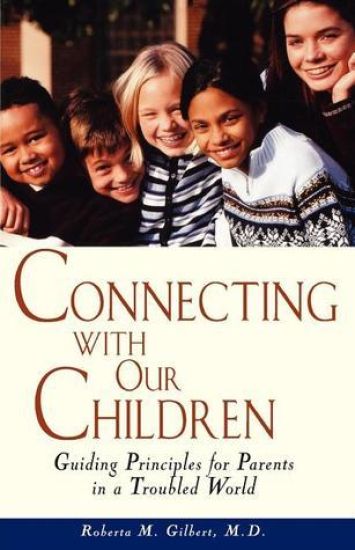
Connecting with Our Children

Connecting with Our Children

Roberta M. Gilbert

John Wiley Sons Inc
1999
nidottu
Parents want a special relationship with their children Parents care. They want to guide their children through the rough spots in life and help them make the right decisions. Research shows that a special parental connection is extremely important in safeguarding children against dangers such as substance abuse, sexual promiscuity, criminal activity, and suicide. This is more important than ever before in today’s troubled world. But what does making this connection mean? Based on Bowen family systems theory, Connecting with Our Children shows parents how to build the connection found in better relationships. Now parents have a new way to think about and respond to family problems. The author examines common concerns, such as:*How substance abuse can repeat through generations*Why fusions between family members drive conflict*How family anxiety can erupt into violence*Whether stepfamilies can create a new family unit*What roles faith and humor play in a family*How effective are special contributions made by connections with grandparentsNumerous practical examples and stories illustrate familiar situations and concerns, so that parents can learn how to deal with the often confusing situations surrounding their children, as well as those within their own lives. With a different perspective, parents can learn to overcome these difficulties, creating a stronger family and a happier, more open relationship between parent and child.
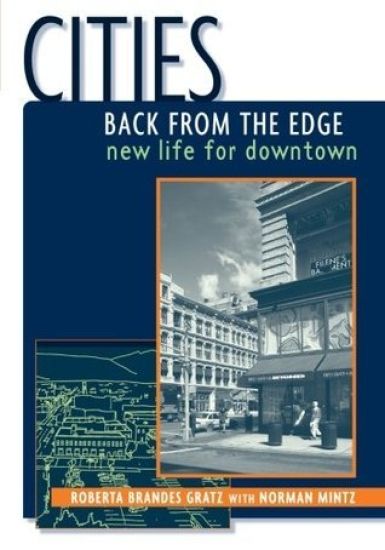
Cities Back from the Edge

Cities Back from the Edge

Roberta Brandes Gratz; Norman Mintz

John Wiley Sons Inc
2000
nidottu
"A love song for the city . . . [this] volume, attractively packaged and richly illustrated, is really a cookbook for downtown revitalization." —Wall Street JournalIn this pioneering book on successful urban recovery, two urban experts draw on their firsthand observations of downtown change across the country to identify a flexible, effective approach to urban rejuvenation. From transportation planning and sprawl containment to the threat of superstore retailers, they address a host of key issues facing our cities today.Roberta Brandes Gratz (New York, NY), an award-winning journalist and urban critic, is author of the urban design classic The Living City. A former staff reporter for the New York Post, Gratz has written for the New York Times Magazine and other publications. Norman Mintz (New York, NY) has played a leading role in the field of downtown revitalization for more than twenty-five years. He is Design Director at the 34th Street Partnership in New York City and a consultant on downtown revitalization across the country.
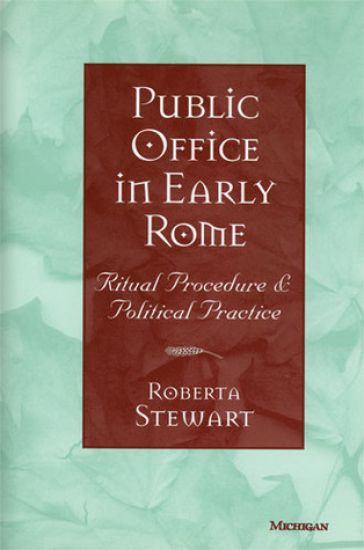
Public Office in Early Rome

Public Office in Early Rome

Roberta L. Stewart

The University of Michigan Press
2010
nidottu
". . . [A]n excellent, erudite book."---Bryn Mawr Classical Review Studies of Roman politics have traditionally emphasized individual personalities or groups of personalities and have explained political behavior in terms of contests for individual power or group power. By contrast, Roberta Stewart focuses on being the religious institution of the "allotment" of duties among elected officials as a primary control on Roman politics. She examines in detail the procedure of allotment, the roles of popular election and allotment in defining public authority and duty, and the relationship between the Roman Senate and elected officials. Allotment is seen to reflect Republican ideology about the divine sanction of Roman leadership, military enterprise, and empire. Allotment is examined in particular historical contexts, and the successive formations of public office in 444, 367, and 242 b.c.e. are analyzed as a series of political solutions in an evolving cultural context. The discussion documents the ritual definition of allotments and the historical development of distinctive features of Republican political office: the equal authority of colleagues (collegiality), the individual authority and accountability for an allotted function (provincia), the procedural alternative to allotment (comparatio), and the hierarchy of offices with imperium (the consuls and praetors).Public Office in Early Rome will be of great interest for scholars and students of Roman religion, government, and history. Roberta Stewart is Associate Professor of Classics, Dartmouth College.
Eloquent Gestures

Eloquent Gestures

Roberta Pearson

University of California Press
1992
pokkari
Between 1908 and 1913, D. W. Griffith played a key role in the reformulating of film's narrative techniques, thus contributing to the creation of what we now think of as the classical Hollywood cinema. This book is the only extensive treatment of a critical period in the history of film acting: the emergence of the realistic "verisimilar" style in Griffith's biograph films. Roberta Pearson shows how Griffith gradually abandoned the deliberately affected "histrionic" acting style derived from the nineteenth-century stage. No longer did actors mime distress by raising their arms to heaven or clutching their heads--a subtle facial expression, a slight change in posture would convey a character's extreme emotions instead. Pearson makes detailed comparisons of certain Biograph films and brings a freshness to her analysis by closely examining contemporary journalistic writing, acting manuals, and the recollections of actors of the time. Her work is important for anyone interested in early cinema and performance, and it will enliven the study of American cultural history and mass communications.
Star Trek and American Television

Star Trek and American Television

Roberta Pearson; Máire Messenger Davies; Patrick Stewart

University of California Press
2014
sidottu
At the heart of one of the most successful transmedia franchises of all time, Star Trek, lies an initially unsuccessful 1960s television production, Star Trek: The Original Series. In Star Trek and American Television, Pearson and Messenger Davies, take their cue from the words of the program's first captain, William Shatner, in an interview with the authors: "It's a television show." In focusing on Star Trek as a television show, the authors argue that the program has to be seen in the context of the changing economic conditions of American television throughout the more than four decades of Star Trek's existence as a transmedia phenomenon that includes several films as well as the various television series. The book is organized into three sections, dealing with firstly, the context of production, the history and economics of Star Trek from the original series (1966-1969) to its final television incarnation in Enterprise (2002-2005). Secondly, it focuses on the interrelationships between different levels of production and production workers, drawing on uniquely original material, including interviews with star captains William Shatner and Sir Patrick Stewart, and with production workers ranging from set-builders to executive producers, to examine the tensions between commercial constraints and creative autonomy. These interviews were primarily carried out in Hollywood during the making of the film Nemesis (2002) and the first series of Star Trek: Enterprise. Thirdly, the authors employ textual analysis to study the narrative "storyworld" of the Star Trek television corpus and also to discuss the concept and importance of character in television drama. The book is a deft historical and critical study that is bound to appeal to television and media studies scholars, students, and Star Trek fans the world over. With a foreword by Sir Patrick Stewart, Captain Jean-Luc Picard in Star Trek: The Next Generation.
Star Trek and American Television

Star Trek and American Television

Roberta Pearson; Máire Messenger Davies; Patrick Stewart

University of California Press
2014
pokkari
At the heart of one of the most successful transmedia franchises of all time, Star Trek, lies an initially unsuccessful 1960s television production, Star Trek: The Original Series. In Star Trek and American Television, Pearson and Messenger Davies, take their cue from the words of the program's first captain, William Shatner, in an interview with the authors: "It's a television show." In focusing on Star Trek as a television show, the authors argue that the program has to be seen in the context of the changing economic conditions of American television throughout the more than four decades of Star Trek's existence as a transmedia phenomenon that includes several films as well as the various television series. The book is organized into three sections, dealing with firstly, the context of production, the history and economics of Star Trek from the original series (1966-1969) to its final television incarnation in Enterprise (2002-2005). Secondly, it focuses on the interrelationships between different levels of production and production workers, drawing on uniquely original material, including interviews with star captains William Shatner and Sir Patrick Stewart, and with production workers ranging from set-builders to executive producers, to examine the tensions between commercial constraints and creative autonomy. These interviews were primarily carried out in Hollywood during the making of the film Nemesis (2002) and the first series of Star Trek: Enterprise. Thirdly, the authors employ textual analysis to study the narrative "storyworld" of the Star Trek television corpus and also to discuss the concept and importance of character in television drama. The book is a deft historical and critical study that is bound to appeal to television and media studies scholars, students, and Star Trek fans the world over. With a foreword by Sir Patrick Stewart, Captain Jean-Luc Picard in Star Trek: The Next Generation.
The Dignity of Resistance

The Dignity of Resistance

Roberta M. Feldman; Susan Stall

Cambridge University Press
2004
sidottu
This chronicles the four decade history of Chicago’s Wentworth Gardens public housing residents’ activism. This case study explores why and how these African-American women engaged in organizing efforts to resist government disinvestment in public housing and the threat of demolition. Feldman and Stall, utilizing a multi-disciplinary lens, explore the complexity and resourcefulness of Wentworth women’s grassroots organizing - the ways in which their identities as poor African-American women and mothers both circumscribe their lives and shape their resistance. Through the inspirational voices of the activists, Feldman and Stall challenge portrayals of public housing residents as passive, alienated, victims of despair. We learn instead how women residents collectively have built a cohesive, vital community, have cultivated outside technical assistance, organizational and institutional supports, and have attracted funding - all to support the local facilities, services, and programs necessary for the everyday needs for survival, and ultimately to save their home from demolition.