

Kirjahaku
Etsi kirjoja tekijän nimen, kirjan nimen tai ISBN:n perusteella.
1000 tulosta hakusanalla S. Elizabeth Cook

At Elizabeth David's Table: Classic Recipes and Timeless Kitchen Wisdom
Elizabeth David
Ecco Press
2011
sidottu
At Elizabeth David's Table offers classic recipes and timeless kitchen wisdom from the woman who revolutionized British cuisine. Elizabeth David, the acclaimed counterpart to Julia Child, is considered the greatest food writer of the twentieth century--and this lavishly illustrated collection of inspiring everyday recipes celebrates chef David's culinary genius. Published to celebrate the 60th anniversary of Mediterranean Food, her classic first book, At Elizabeth David's Table is a wonderful gift from the revolutionary chef who introduced a weary, post-war nation to the sun-drenched tastes and delights of the Mediterranean.

Indulge your sweet tooth with eighty of Elizabeth Alston's most beloved and delicious baking recipes. A compilation of her popular Tea Breads and Coffeecakes and Simply Cakes, Best Baking features such delectable delights as Brown Sugar--Brown Butter--Hazelnut Pound Cake, Tennessee Whiskey Cake, Plum-Walnut Kuchen, and Chocolate Orange Crumb Cake, as well as tempting toppings and sauces to accompany these treats. Alston's helpful tips will guide every baker, from the novice to the professional, and make home baking fun and easy. You'll be getting rave reviews in no time So whether it's for breakfast, afternoon tea, dessert, or a midnight snack, you'll find the perfect recipe in Elizabeth Alston's Best Baking.
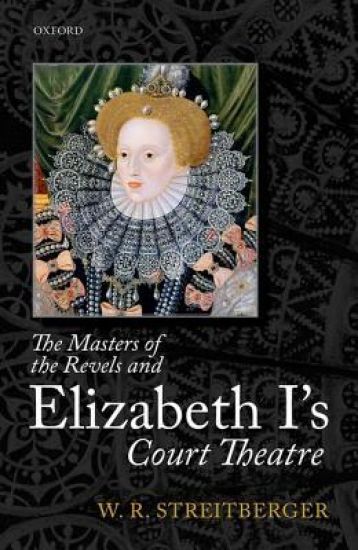
The Masters of the Revels and Elizabeth I's Court Theatre
W. R. Streitberger
Oxford University Press
2016
sidottu
The Masters of the Revels and Elizabeth I's Court Theatre places the Revels Office and Elizabeth I's court theatre in a pre-modern, patronage and gift-exchange driven-world of centralized power in which hospitality, liberality, and conspicuous display were fundamental aspects of social life. W.R. Streitberger reconsiders the relationship between the biographies of the Masters and the conduct of their duties, rethinking the organization and development of the Office, re-examining its productions, and exploring its impact on the development of the commercial theatre. The nascent capitalist economy that developed alongside and interpenetrated the gift-driven system that was in place during Elizabeth's reign became the vehicle through which the Revels Office along with the commercial theatre was transformed. Beginning in the early 1570s and stretching over a period of twenty years, this change was brought about by a small group of influential Privy Councillors. When this project began in the early 1570s the Queen's revels were principally in-house productions, devised by the Master of the Revels and funded by the Crown. When the project was completed in the late 1590s, the Revels Office had been made responsible for plays only and put on a budget so small that it was incapable of producing them. That job was left to the companies performing at court. Between 1594 and 1600, the revels consisted almost entirely of plays brought in by professional companies in the commercial theatres in London. These companies were patronized by the queen's relatives and friends and their theatres were protected by the Privy Council. Between 1594 and 1600, for example, all the plays in the revels were supplied by the Admiral's and Chamberlain's Players which included writers such as Shakespeare, and legendary actors such as Edward Alleyn, Richard Burbage, and Will Kempe. The queen's revels essentially became a commercial enterprise, paid for by the ordinary Londoners who came to see these companies perform in selected London theatres which were protected by the Council.
This book subjects the works of Elizabeth Spencer, critically acclaimed but canonically marginalized, to a study that reveals their interaction with the southern canon as they question its boundaries and remap the long-established landscapes of southern identity.
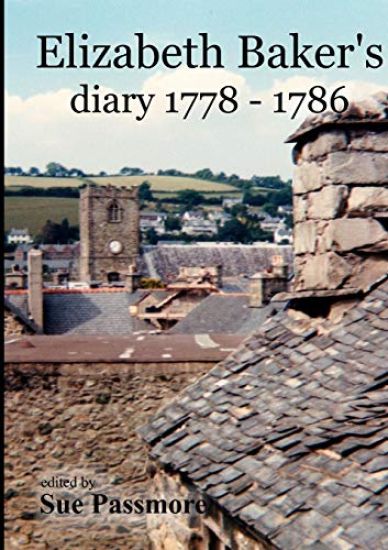
This diary is a wonderful source for eighteenth century women's history and for life in a small town in rural Wales recorded by an English exile. It is rare for anyone described as abjectly poor by her contemporaries to keep a diary but Elizabeth Baker's excellent education gave her status and value in her community. She has been described as a snob who had, as she liked to recall, dined with aristocrats in her London life, but living as she did on a level with the poor, she wrote of them with immense sympathy and understood how circumstances beyond their control could lead them to fall into the pit of poverty. Her pen could be occasionally malicious, recording the foibles of her neighbours in Dolgellau, and it is invaluable for anyone researching their family history in Merioneth.

By offering a fresh look at Bishop criticism that has moved from purely formal concerns and post-modern interpretations to more recent feminist analysis, Victoria Harrison traces Elizabeth Bishop's career, dividing her work into three chronological periods of activity: her early work, her writing in Brazil, and her late retrospective verse. By examining letters and notebooks, Harrison unfolds the biographical events that influenced Bishop's poetic style, addressing her treatment of such topics as family relations, history, politics, war, love, sexuality and ethnic differences. Elizabeth Bishop's Poetics of Intimacy delves extensively into the Bishop archives. Making wider use of Bishop's unpublished work, Harrison explores Bishop's childhood memoirs, journals, letters, Brazilian travel prose, unfinished poems and draft material. The reproduction of these archival materials - with revisions, cancelled lines, notes - shows a mind at work and a career in evolution.

By offering a fresh look at Bishop criticism that has moved from purely formal concerns and post-modern interpretations to more recent feminist analysis, Victoria Harrison traces Elizabeth Bishop's career, dividing her work into three chronological periods of activity: her early work, her writing in Brazil, and her late retrospective verse. By examining letters and notebooks, Harrison unfolds the biographical events that influenced Bishop's poetic style, addressing her treatment of such topics as family relations, history, politics, war, love, sexuality and ethnic differences. Elizabeth Bishop's Poetics of Intimacy is one of the first books to delve extensively into the Bishop archives. Making wider use of Bishop’s unpublished work than in any other book, Harrison explores Bishop’s childhood memoirs, journals, letters, Brazilian travel prose, unfinished poems and draft material. The reproduction of these archival materials - with revisions, cancelled lines, notes - shows a mind at work and a career in evolution.

A beautiful and timeless new edition of the ultimate festive food book, from the most loved and respected British cookery writer of the 20th centuryElizabeth David's Christmas is a celebration of every traditional recipe and favourite indulgence that we savour during the festive season. Containing over 150 classic recipes, together with a selection of wonderful articles, notes and observations from the Elizabeth David archive, this timeless book will inspire an elegant and memorable Christmas while taking the strain out of cooking for a crowd.All the classics are here: mince pies, stuffings, sauces and, of course, the perfect turkey, as well as simple first courses, party dishes and a range of desserts that make Elizabeth David's Christmas irresistible seasonal fare and a unique festive resource to treasure, hand down and return to year after year.
Elizabeth Barrett Browning's 'Aurora Leigh'
Michele C Martinez
Edinburgh University Press
2012
sidottu
Introduces new readers and students to a celebrated and controversial Victorian novel-poem Michele Martinez guides readers through the poem's major themes and literary and socio-cultural contexts, introducing a range of interpretive frameworks. Long extracts from the poem are accompanied by helpful explanatory commentary. The text's composition history, major influences and modes of poetic expression are also discussed. The teaching and bibliographic chapters offer supplementary materials including print and internet resources. Key Features *Ideal guide for readers coming to the text for the first time, or teaching the text at University level * Fully contextualised and annotated sections of the poem * Detailed exploration of key themes: poetic vision; love and poetry; epistolary fiction; epic and society; motherhood and sexual transgression; poetry and prophecy * Innovative teaching suggestions * Advice and guidance for further reading
Elizabeth Barrett Browning's 'Aurora Leigh'
Michele C Martinez
Edinburgh University Press
2012
nidottu
Introduces new readers and students to a celebrated and controversial Victorian novel-poem Michele Martinez guides readers through the poem's major themes and literary and socio-cultural contexts, introducing a range of interpretive frameworks. Long extracts from the poem are accompanied by helpful explanatory commentary. The text's composition history, major influences and modes of poetic expression are also discussed. The teaching and bibliographic chapters offer supplementary materials including print and internet resources. Key Features *Ideal guide for readers coming to the text for the first time, or teaching the text at University level * Fully contextualised and annotated sections of the poem * Detailed exploration of key themes: poetic vision; love and poetry; epistolary fiction; epic and society; motherhood and sexual transgression; poetry and prophecy * Innovative teaching suggestions * Advice and guidance for further reading
Elizabeth Tyrwhit's Morning and Evening Prayers
Ashgate Publishing Limited
2008
sidottu
In 1574, Christopher Barker published a volume of prayers and poems collected and composed by Elizabeth Tyrwhit, an intimate member of Katherine Parr's circle, governess to the princess Elizabeth, wife of a Tudor court functionary, and a wealthy widow. Later, Tyrwhit's Morning and Evening Prayers was selected by Thomas Bentley to be republished in his 1582 compilation of devotional works, The Monument of Matrones. This volume presents critical, old-spelling editions of both versions of Morning and Evening Prayers. Placing them side by side, Susan Felch discloses that the second version contains nearly a quarter more material that the first, and is organized quite differently. Felch convincingly argues that the additional material and revised arrangement of the longer version are likely copied direct from another, no longer extant authorial version, either printed or manuscript. In the volume's introduction, Felch provides background on Tyrwhit's life and family, including new information unearthed in her research; and sets Tyrwhit's work within the context of sixteenth- century English prayerbooks. Felch here posits that Tyrwhit's reorganization and framing of traditional material indicates her own considerable creativity. The Textual Notes and Appendix A compare the 1574 and 1582 versions and identify the source texts from which Tyrwhit derives her prayers and poems. The edition is completed by an autograph note by Tyrwhit; a discussion of the Tyrwhit family connections, and several versions of the rhymed Hours of the Cross as background to Tyrwhit's rendition entitled, 'An Hymne of the Passion of Christ'.

Elizabeth Tanfield Cary’s History of Edward II
Ashgate Publishing Limited
2026
sidottu
The full texts of both 1680 editions of Elizabeth Cary's History of Edward II are here reproduced completely, along with an extensive introduction including biographical, cultural, and literary commentary on Elizabeth Cary, and also background on the debate surrounding the texts' authorship. In the recovery of women writers of early modern England, Elizabeth Tanfield Cary, Viscountess Falkland, has drawn substantial interest. Swan examines the post-publication history of both 1680 editions, revealing how the many hands at work in various subsequent editions have resulted in the obfuscation of the textual history, which has, in the past, led to the misattribution of the history to Henry Cary, Elizabeth's husband. The reproduction of both versions allows scholars to easily compare the two, which is important in order to understand Cary's reworking of her text from early to late drafts. Both versions represent intentions and socially received states which are useful in presenting the text, in documenting Cary's changing attitudes and discursive strategies in the mid-1620's-the period of composition for all the manuscript states and a period of particular biographical significance-and in accounting for the more recent reception of the history. Swan showcases here how Cary contributes significantly both to the development of resistance theory (essential to democratic-republican ideals at the root of Anglo-American politics and government), and to the development of non-fiction prose style in English. This volume will be of interest to literary scholars working on Early Modern women as well as to historians and queer theorists, both of whom have made Edward II an important intellectual site in the last generation of scholarship.

Elizabeth Elstob's Writings on Anglo-Saxon (1709–1715?)
John Considine; Sylvia Brown
Ashgate Publishing Limited
2026
sidottu
Blurb to come.
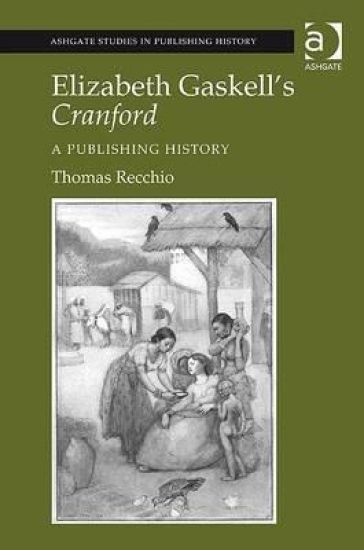
Tracing the publishing history of Elizabeth Gaskell's Cranford from its initial 1851-53 serialization in Dickens's Household Words through its numerous editions and adaptations, Thomas Recchio focuses especially on how the text has been deployed to support ideas related to nation and national identity. Recchio maps Cranford's nineteenth-century reception in Britain and the United States through illustrated editions in England dating from 1864 and their subsequent re-publication in the United States, US school editions in the first two decades of the twentieth century, dramatic adaptations from 1899 to 2007, and Anglo-American literary criticism in the latter half of the twentieth century. Making extensive use of primary materials, Recchio considers Cranford within the context of the Victorian periodical press, contemporary reviews, theories of text and word relationships in illustrated books, community theater, and digital media. In addition to being a detailed publishing history that emphasizes the material forms of the book and its adaptations, Recchio's book is a narrative of Cranford's evolution from an auto-ethnography of a receding mid-Victorian English way of life to a novel that was deployed as a maternal model to define an American sensibility for early twentieth-century Mediterranean and Eastern European immigrants. While focusing on one novel, Recchio offers a convincing micro-history of the way English literature was positioned in England and the United States to support an Anglo-centric cultural project, to resist the emergence of multicultural societies, and to ensure an unchanging notion of a stable English culture on both sides of the Atlantic.
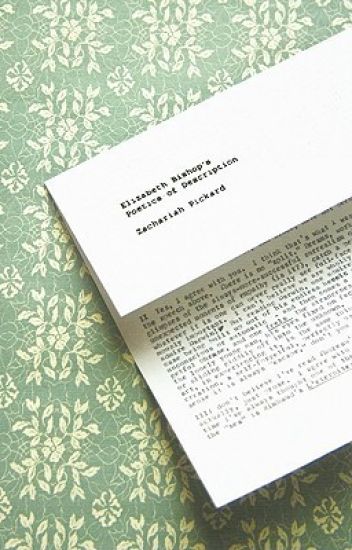
Elizabeth Bishop's Poetics of Description
Zachariah Pickard
McGill-Queen's University Press
2009
sidottu
A long-overdue account of how Bishop's commitment to scrutiny and description shapes her poetry
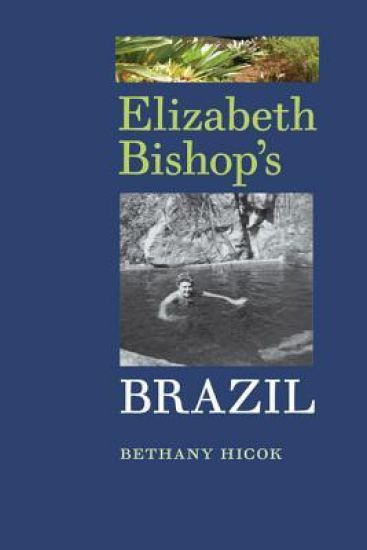
When the American poet Elizabeth Bishop arrived in Brazil in 1951 at the age of forty, she had not planned to stay, but her love affair with the Brazilian aristocrat Lota de Macedo Soares and with the country itself set her on another course, and Brazil became her home for nearly two decades. In this groundbreaking new study, Bethany Hicok offers Bishop’s readers the most comprehensive study to date on the transformative impact of Brazil on the poet’s life and art. Based on extensive archival research and travel, Elizabeth Bishop’s Brazil argues that the whole shape of Bishop’s writing career shifted in response to Brazil, taking on historical, political, linguistic, and cultural dimensions that would have been inconceivable without her immersion in this vibrant South American culture.Hicok reveals the mid-century Brazil that Bishop encountered--its extremes of wealth and poverty, its spectacular topography, its language, literature, and people--and examines the Brazilian class structures that placed Bishop and Macedo Soares at the center of the country’s political and cultural power brokers. We watch Bishop develop a political poetry of engagement against the backdrop of America’s Cold War policies and Brazil’s political revolutions. Hicok also offers the first comprehensive evaluation of Bishop’s translations of Brazilian writers and their influence on her own work. Drawing on archival sources that include Bishop’s unpublished travel writings and providing provocative new readings of the poetry, Elizabeth Bishop’s Brazil is a long-overdue exploration of a pivotal phase in this great poet’s life and work.
When the American poet Elizabeth Bishop arrived in Brazil in 1951 at the age of forty, she had not planned to stay, but her love affair with the Brazilian aristocrat Lota de Macedo Soares and with the country itself set her on another course, and Brazil became her home for nearly two decades. In this groundbreaking new study, Bethany Hicok offers Bishop’s readers the most comprehensive study to date on the transformative impact of Brazil on the poet’s life and art. Based on extensive archival research and travel, Elizabeth Bishop’s Brazil argues that the whole shape of Bishop’s writing career shifted in response to Brazil, taking on historical, political, linguistic, and cultural dimensions that would have been inconceivable without her immersion in this vibrant South American culture.Hicok reveals the mid-century Brazil that Bishop encountered--its extremes of wealth and poverty, its spectacular topography, its language, literature, and people--and examines the Brazilian class structures that placed Bishop and Macedo Soares at the center of the country’s political and cultural power brokers. We watch Bishop develop a political poetry of engagement against the backdrop of America’s Cold War policies and Brazil’s political revolutions. Hicok also offers the first comprehensive evaluation of Bishop’s translations of Brazilian writers and their influence on her own work. Drawing on archival sources that include Bishop’s unpublished travel writings and providing provocative new readings of the poetry, Elizabeth Bishop’s Brazil is a long-overdue exploration of a pivotal phase in this great poet’s life and work.

Sir Humphrey Gilbert, Elizabeth's Racketeer
Donald Barr 1902-1981 Chidsey
Hassell Street Press
2021
sidottu
This work has been selected by scholars as being culturally important and is part of the knowledge base of civilization as we know it.This work is in the public domain in the United States of America, and possibly other nations. Within the United States, you may freely copy and distribute this work, as no entity (individual or corporate) has a copyright on the body of the work.Scholars believe, and we concur, that this work is important enough to be preserved, reproduced, and made generally available to the public. To ensure a quality reading experience, this work has been proofread and republished using a format that seamlessly blends the original graphical elements with text in an easy-to-read typeface.We appreciate your support of the preservation process, and thank you for being an important part of keeping this knowledge alive and relevant.