Kirjojen hintavertailu. Mukana 11 699 587 kirjaa ja 12 kauppaa.

Kirjahaku

Etsi kirjoja tekijän nimen, kirjan nimen tai ISBN:n perusteella.

1000 tulosta hakusanalla S. Englander

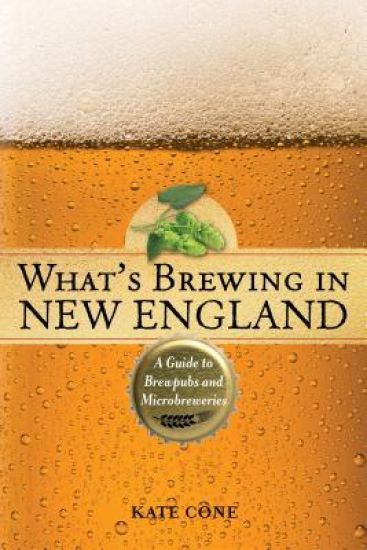
What's Brewing in New England

What's Brewing in New England

Kate Cone

Down East Books,U.S.
2016
pokkari
The Northeast has experienced an explosion of microbreweries and brew pubs producing a fascinating array of beers from IPAs to stouts, lagers, and porters. The number of microbreweries has grown by leaps and bounds since the first edition of this guide was published nearly twenty years. Now, Kate Cone has traveled the length and breadth of the region to both research the breweries profiled in the first edition and the newcomers that have sprung up since, and of course to sample their products. The new volume includes interviews with the brewers, anecdotes and stories about the breweries and brewpubs, as well as directions, information about their hours of operation, their menus, and even some recipes. The breweries are not ranked, as beer preference is so subjective, but Cone does share her personal experiences and opinions. She covers every brewery in the region, so she's able to help you find the places, but it's up to you to determine which you like the best.
Poison's Dark Works in Renaissance England

Poison's Dark Works in Renaissance England

Miranda Wilson

Bucknell University Press
2013
sidottu
Poison's Dark Works in Renaissance England considers the ways sixteenth- and seventeenth-century fears of poisoning prompt new models for understanding the world even as the fictive qualities of poisoning frustrate attempts at certainty. Whether English writers invoke literal poisons, as they do in so many revenge dramas, homicide cases, and medical documents, or whether poisoning appears more metaphorically, as it does in a host of theological, legal, philosophical, popular, and literary works, this particular, “invisible” weapon easily comes to embody the darkest elements of a more general English appetite for imagining the hidden correlations between the seen and the unseen. This book is an inherently interdisciplinary project. This book works from the premise that accounts of poisons and their operations in Renaissance texts are neither incidental nor purely sensational; rather, they do moral, political, and religious work which can best be assessed when we consider poisoning as part of the texture of Renaissance culture. Placing little known or less-studied texts (medical reports, legal accounts, or anonymous pamphlets) alongside those most familiar to scholars and the larger public (such as poetry by Edmund Spenser and plays by William Shakespeare and Thomas Middleton) allows us to appreciate the almost gravitational pull exerted by the notion of poison in the Renaissance. Considering a variety of texts, written for disparate audiences, and with diverse purposes, makes apparent the ways this crime functions as both a local problem to be solved and as an apt metaphor for the complications of epistemology.
Poison's Dark Works in Renaissance England

Poison's Dark Works in Renaissance England

Miranda Wilson

Bucknell University Press
2017
nidottu
Poison's Dark Works in Renaissance England considers the ways sixteenth- and seventeenth-century fears of poisoning prompt new models for understanding the world even as the fictive qualities of poisoning frustrate attempts at certainty. Whether English writers invoke literal poisons, as they do in so many revenge dramas, homicide cases, and medical documents, or whether poisoning appears more metaphorically, as it does in a host of theological, legal, philosophical, popular, and literary works, this particular, “invisible” weapon easily comes to embody the darkest elements of a more general English appetite for imagining the hidden correlations between the seen and the unseen. This book is an inherently interdisciplinary project. This book works from the premise that accounts of poisons and their operations in Renaissance texts are neither incidental nor purely sensational; rather, they do moral, political, and religious work which can best be assessed when we consider poisoning as part of the texture of Renaissance culture. Placing little known or less-studied texts (medical reports, legal accounts, or anonymous pamphlets) alongside those most familiar to scholars and the larger public (such as poetry by Edmund Spenser and plays by William Shakespeare and Thomas Middleton) allows us to appreciate the almost gravitational pull exerted by the notion of poison in the Renaissance. Considering a variety of texts, written for disparate audiences, and with diverse purposes, makes apparent the ways this crime functions as both a local problem to be solved and as an apt metaphor for the complications of epistemology.
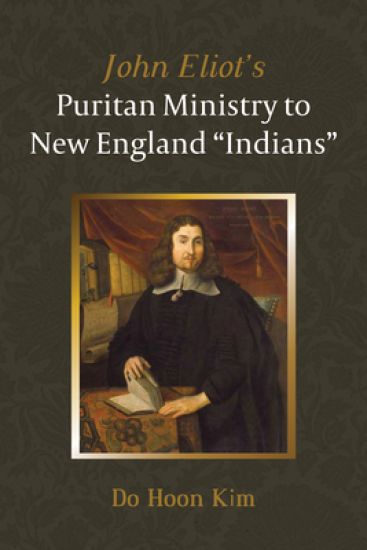
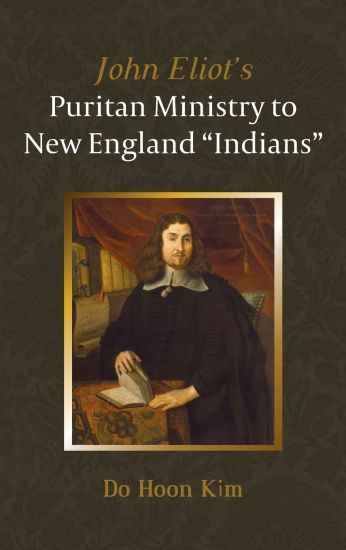
John Eliot's Puritan Ministry to New England "Indians"
John Eliot (1604-90) has been called "the apostle to the Indians." This book looks at Eliot not from the perspective of modern Protestant "mission" studies (the approach mainly adopted by previous research) but in the historical and theological context of seventeenth-century puritanism. Drawing on recent research on migration to New England, the book argues that Eliot, like many other migrants, went to New England primarily in search of a safe haven to practice pure reformed Christianity, not to convert Indians. Eliot's Indian ministry started from a fundamental concern for the conversion of the unconverted, which he derived from his experience of the puritan movement in England. Consequently, for Eliot, the notion of New England Indian "mission" was essentially conversion-oriented, Word-centered, and pastorally focused, and (in common with the broader aims of New England churches) pursued a pure reformed Christianity. Eliot hoped to achieve this through the establishment of Praying Towns organized on a biblical model--where preaching, pastoral care, and the practice of piety could lead to conversion--leading to the formation of Indian churches composed of "sincere converts."
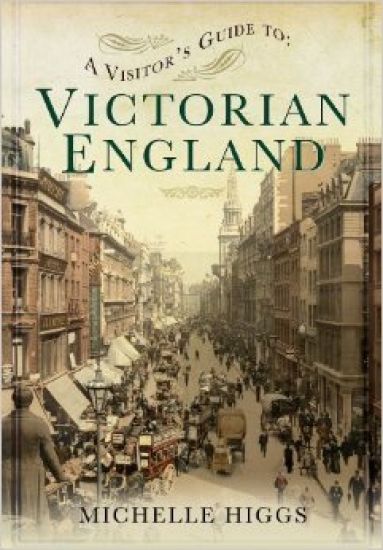
Visitor's Guide to Victorian England

Visitor's Guide to Victorian England

Michelle Higgs

Pen Sword Books Ltd
2014
nidottu
A colourful introduction to the realities of life in the 19th century. Readers will learn hidden details of history, from how to fend off pickpockets to the correct way to fasten a corset. This title will appeal to both seasoned social history fans, costume drama lovers, history students and anyone with an interest in the Victorian era.
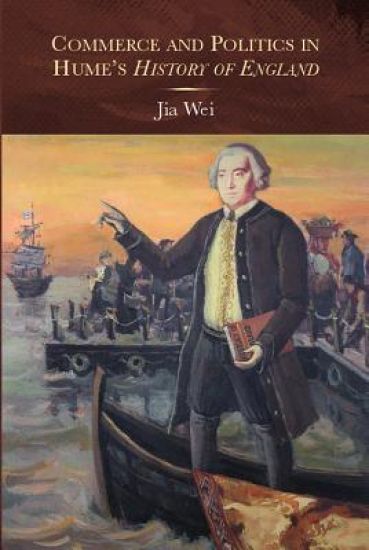
Commerce and Politics in Hume's History of England
Illuminates the relationship between Hume the political thinker, Hume the historian, and Hume the political economist and highlights the social, economic and institutional changes which he wove into an innovative theory of causation David Hume's six-volume History of England: From the Invasion of Julius Caesar to the Revolution in 1688 (1754-61) is probably his most important work as a constitutional historian and political theorist. Jia Wei's book shows that the History can be understood in two ways: firstly, as Hume's own narrative of England's state formation, and secondly, as his answer to the question of how eighteenth-century Britain could cope with the challengesof commercial revolution. It illuminates the relationship between Hume the political thinker, Hume the historian, and Hume the political economist and highlights the social, economic and institutional changes which he wove into aninnovative theory of causation. The first part of the book considers Hume's account of the fundamental rationale of maritime trade and England's unique approach to liberty in the modern era. The second part looks at his views concerning the profound impact of maritime trade on English politics. From his perspective, the problem of how to cope with the challenges posed by the commercial revolution in eighteenth-century Britain was closely linked tothe question of how transoceanic trade had fundamentally recast English politics from the sixteenth century onwards. This study shows how these two narratives were interwoven into Hume's History and will be of interest to scholars and students not only of David Hume and political theory but of historiography, eighteenth-century British history and Enlightenment studies. JIA WEI received her PhD from the University of Cambridge.
God's Kingdom in England

God's Kingdom in England

Euan K. Cameron

I.B. Tauris
2020
sidottu
The Anglican Church remains a pillar of the British establishment. It is the state church, both venerable and dependable – and is often taken for granted. Yet its history is far from comfortable. It was born into an age of bloody turmoil, marked by Henry VIII’s divisive secession from Rome in 1534. And between the sixteenth and seventeenth centuries Anglicanism became the bitter battleground for some of the fiercest contests in Europe over interpretations of the Bible, liturgy and theology. Reformed or Catholic? Puritan or Arminian? Bishops or elders? As Euan Cameron reveals, in his much-anticipated new book, these were among the crucial questions facing men such as Cranmer, Latimer, Lancelot Andrewes, Laud and Traherne. In addressing them, the Anglican divines created not just their own national church but also timeless masterpieces of world literature such as the Book of Common Prayer, the King James Bible, Richard Hooker’s Laws of Ecclesiastical Polity and the sublime verse of the scholar-lyricist George Herbert. This `golden age’ of devotional writing was inseparable from the volatile politics of the age.
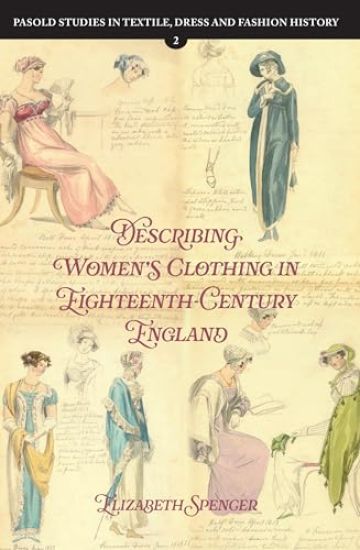
Describing Women’s Clothing in Eighteenth-Century England
Uncovers sources from the parish pauper to the gentlewoman to consider relationships with clothing across the social hierarchy in the long eighteenth century. Descriptions of women's clothing increasingly circulated across textual genres and beyond in eighteenth-century England. This book explores the significance of these descriptions across a range of sources including wills, newspapers, accounts, court records, and the records of the old poor law. Attention has rested on women literate and wealthy enough to leave behind textual or material traces, but this book ranges from the parish pauper to the gentlewoman to consider descriptive languages, rhetorical strategies, and relationships with clothing across the social hierarchy. It explores how women described their own clothing, but also looks at how it was described by overseers, family members, retailers, and even strangers. It shows that we must look beyond isolated descriptions to how, why, and who was describing clothing to understand its role. Chapters uncover themes of material obligation, expectation, and entitlement. This book also contributes to our understanding of the material literacy of eighteenth-century consumers. It traces the role of textual description in this dissemination of knowledge about clothing, but also alerts us to what was happening beyond the written word, drawing attention to the communication of multisensory information. Above all, it demonstrates that there remains much still to be unpicked from textual sources.
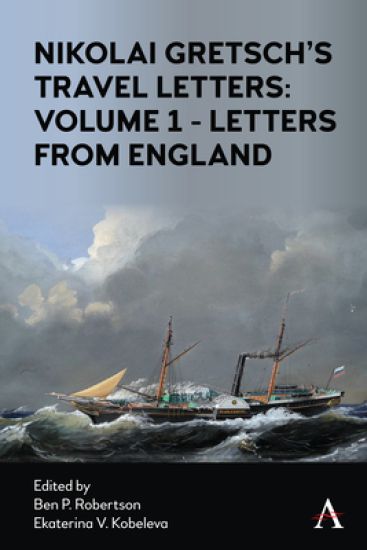
Nikolai Gretsch's Travel Letters: Volume 1 - Letters from England
Nikolai Gretsch's Travel Letters is a fully translated English edition of a three-volume account published by Nikolai Gretsch (1787–1867) in St. Petersburg in 1839. In the original Russian, Gretsch describes his travels in post-Napoleonic England, France, and Germany in 1837 at the behest of the Russian Empire. His official task was to examine educational systems, but as he travelled, he also noticed the cultural norms in his surroundings, the history of each country, and the personal experiences of the people he met. On his return home, Gretsch assembled his entertaining and often humorous personal observations into the edition that forms the basis for the present translation. His astute observations provide a rich contemporary resource for information about the countries he visited, especially given his status as an outsider. Additionally, as a result of his government position, Gretsch was able to move in social circles that would have been closed to many other people. In England, he once found himself in the same room with Princess (the future Queen) Victoria, and in France, he dined with Victor Hugo. Gretsch’s observations offer a treasure-trove of contextual information that will be valuable to anyone interested in cultural interactions during the nineteenth century.
Early Responses to Hume's 'History Of England'
In his day, Hume was as famous for his history as his philosophy: quickly established as a classic, his masterpiece History of England was enormously popular, going through over one hundred editions. Most of the 41 articles contained in these volumes appear for the first time since their original publication, making it possible to assess the shifting attitudes about Hume's History during its first century of life.
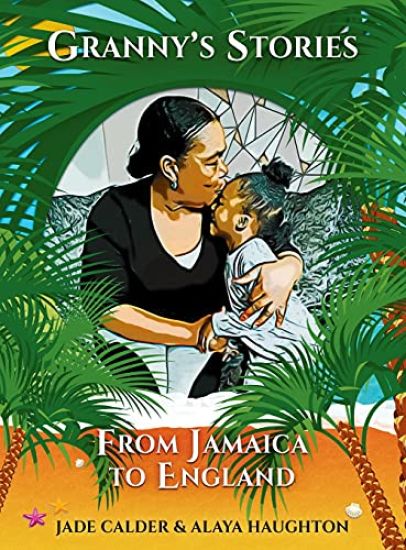
Granny's Stories...From Jamaica to England

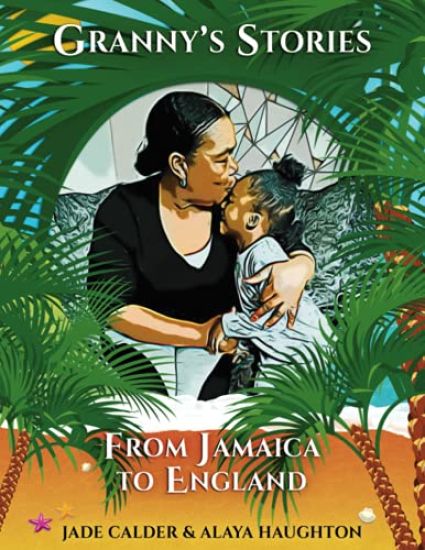
Granny's Stories...From Jamaica to England

Alaya Haughton; Jade Calder

Jade Calder Books
2021
sidottu
Little Alaia goes to stay with her granny on the weekends.Granny tells stories from when she was a little girl, when she first came to live in England.She says, "It was like stepping out of an oven into a freezer."Granny has a strong Jamaican accent in the story, which captures the reader.
Shakespeare's Elephant in Darkest England

Shakespeare's Elephant in Darkest England

Wes Jamroz

Troubadour Publications
2016
nidottu
A fascinating narrative is hidden within Shakespeare's plays. "Shakespeare's Elephant in Darkest England" summarizes this narrative. The narrative consists of 37 chapters that are presented in Shakespeare's 37 plays. This means that all the plays are linked together. They are linked through a subtle signal superimposed on the plays' plots. Shakespeare refers to this signal as the "music that may not be heard". In order to discern Shakespeare's tale, the readers have to recognize and follow this non audible music. Then this "music" will guide them; it will allow them to walk out of the darkness of their ordinary reasoning and intellect. They will be encouraged to move forward and get closer to understanding their ultimate evolutionary purpose.
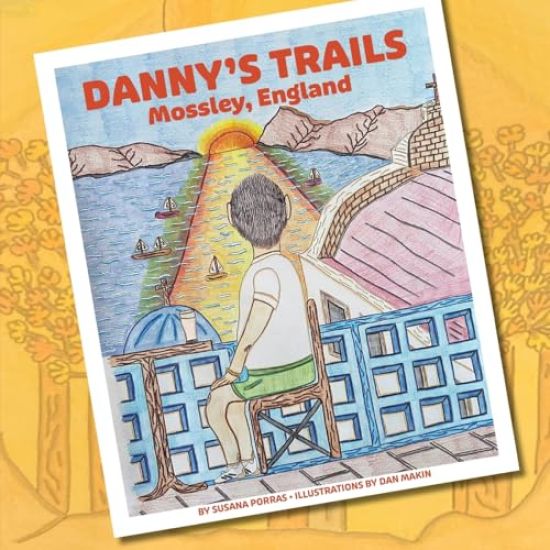
DANNY'S TRAILS - Mossley, England

DANNY'S TRAILS - Mossley, England

Susana Porras

Legacy Publications LLC
2025
pokkari
Danny's Trails: Mossley, England, is loosely based on a true story and is filled with youthful creativity, and lessons in inner awakening, and mindfulness. This children's book is appropriate for children ages 6-9. Consequently, the story's imaginative use of real landmarks, walkable trail, and map makes it engaging for readers of all ages.
Bede's Ecclesiastical History of England: Historia Ecclesiastica Gentis Anglorum
Bede's Ecclesiastical History of England. A Revised Translation. With Introduction, Life, and Notes by A. M. Sellar late Vice-Principal of Lady Margaret Hall, Oxford. The Ecclesiastical History of the English People (Latin: Historia ecclesiastica gentis Anglorum), written by the Venerable Bede in about AD 731, is a history of the Christian Churches in England, and of England generally; its main focus is on the conflict between the pre-Schism Roman Rite and Celtic Christianity. It was originally composed in Latin, is considered to be one of the most important original references on Anglo-Saxon history and has played a key role in the development of an English national identity. It is believed to have been completed in 731 when Bede was approximately 59 years old. There are, it has been estimated, in England and on the Continent, in all about 140 manuscripts of the