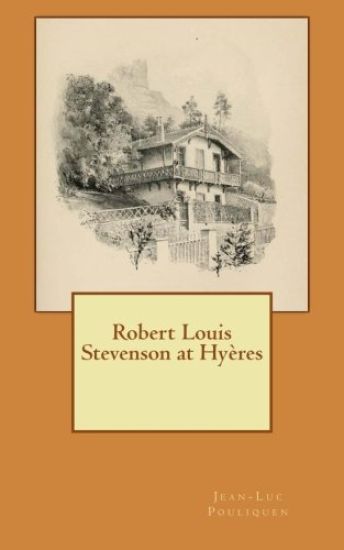
Robert Louis Stevenson lived in Hy res from February 1883 until June 1884. Through his letters written at the time to family and friends, the precious testimonies of his wife and stepson, and the references to his work, we understand why the time spent in the Mediterranean resort became so special to the author. "I was only happy once: that was at Hy res" Robert Louis Stevenson wrote this in 1891, in a letter to his friend Sidney Colvin from his last abode in Samoa, in the Pacific.
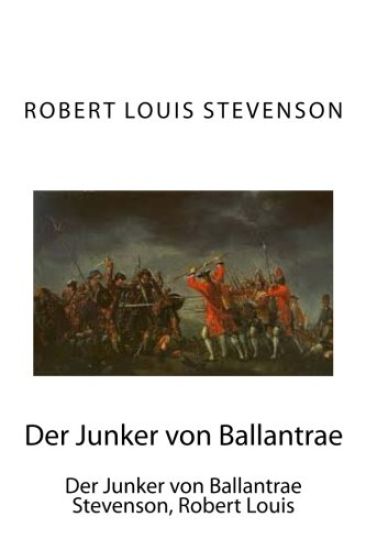
Die Handlung l uft ber zwanzig Jahre. Ich-Erz hler ist Mr. Ephraim Mackellar, Verwalter auf dem Gut Durrisdeer. Im Stile eines souver nen Herausgebers flicht dieser Magister von der philosophischen Fakult t der Universit t Edinburgh Berichte zweier Herren in seinen Text ein, wenn er nicht vor Ort gewesen war. Als erstens der Junker aus Schottland in den Osten Nordamerikas flieht, l sst Mackellar einen Augenzeugen, den Iren Oberst Francis Burke, erz hlen. Der Oberst, Tr ger des St.-Louis-Ordens, ist ein Busenfreund des Junkers. Und als zweitens der Junker gegen Romanende sich in die Indianer-Wildnis n rdlich von Albany wagt, um seinen Schatz zu bergen, kommt der H ndler John Mountain, ein weiterer Augenzeuge, zu Wort.
Kidnapped is an historical fiction adventure novel by Scottish author Robert Louis Stevenson, written as a "boys' novel" and first published in the magazine Young Folks from May to July 1886. The novel has attracted the praise and admiration of writers as diverse as Henry James, Jorge Luis Borges, and Hilary Mantel.A sequel, Catriona, was published in 1893. Kidnapped is set around 18th-century Scottish events, notably the "Appin Murder", which occurred near Ballachulish in 1752 in the aftermath of the Jacobite rising of 1745Many of the characters were real people, including one of the principals, Alan Breck Stewart. The political situation of the time is portrayed from multiple viewpoints, and the Scottish Highlanders are treated sympathetically. The full title of the book gives away major parts of the plot and creates the false impression that the novel is autobiographical. It is Kidnapped: Being Memoirs of the Adventures of David Balfour in the Year 1751: How he was Kidnapped and Cast away; his Sufferings in a Desert Isle; his Journey in the Wild Highlands; his acquaintance with Alan Breck Stewart and other notorious Highland Jacobites; with all that he Suffered at the hands of his Uncle, Ebenezer Balfour of Shaws, falsely so-called: Written by Himself and now set forth by Robert Louis Stevenson. The central character and narrator is 17-year-old David Balfour. (Balfour is Stevenson's mother's maiden name.) His parents have recently died, and he is out to make his way in the world. He is given a letter by the minister of Essendean, Mr. Campbell, to be delivered to the House of Shaws in Cramond, where David's uncle, Ebenezer Balfour, lives. On his journey, David asks many people where the House of Shaws is, and all of them speak of it darkly as a place of fear and evil. David arrives at the ominous House of Shaws and is confronted by his paranoid Uncle Ebenezer, who is armed with a blunderbuss. His uncle is also miserly, living on "parritch" and small ale, and the House of Shaws itself is partially unfinished and somewhat ruinous. David is allowed to stay and soon discovers evidence that his father may have been older than his uncle, thus making David the rightful heir to the estate. Ebenezer asks David to get a chest from the top of a tower in the house but refuses to provide a lamp or candle. David is forced to scale the stairs in the dark and realizes that not only is the tower unfinished in some places, but the steps simply end abruptly and fall into an abyss. David concludes that his uncle intended for him to have an "accident" so as not to have to give over his nephew's inheritance..... Robert Louis Balfour Stevenson (13 November 1850 - 3 December 1894) was a Scottish novelist, poet, essayist, and travel writer. His most famous works are Treasure Island, Kidnapped, Strange Case of Dr Jekyll and Mr Hyde and A Child's Garden of Verses.
Prince Otto: A Romance is a novel written by Robert Louis Stevenson, first published in 1885. The novel was largely written during 1883. Robert Louis Balfour Stevenson (13 November 1850 - 3 December 1894) was a Scottish novelist, poet, essayist, and travel writer. His most famous works are Treasure Island, Kidnapped, Strange Case of Dr Jekyll and Mr Hyde and A Child's Garden of Verses. A literary celebrity during his lifetime, Stevenson now ranks among the 26 most translated authors in the world.His works have been admired by many other writers, including Jorge Luis Borges, Bertolt Brecht, Marcel Proust, Arthur Conan Doyle, Henry James, Cesare Pavese, Ernest Hemingway, Rudyard Kipling, Jack London, Vladimir Nabokov, J. M. Barrie, and G. K. Chesterton, who said of him that he "seemed to pick the right word up on the point of his pen, like a man playing spillikins." Childhood and youth--Stevenson was born at 8 Howard Place, Edinburgh, Scotland, on 13 November 1850 to Thomas Stevenson (1818-87), a leading lighthouse engineer, and his wife Margaret Isabella (n e Balfour; 1829-97). He was christened Robert Lewis Balfour Stevenson. At about age 18, Stevenson was to change the spelling of "Lewis" to "Louis", and in 1873 he dropped "Balfour." Lighthouse design was the family's profession: Thomas's father (Robert's grandfather) was the famous Robert Stevenson, and both of Thomas's brothers (Robert's uncles) Alan and David, were in the same field.Indeed, even Thomas's maternal grandfather, Thomas Smith, had been in the same profession. However, Robert's mother's family were not of the same profession. Margaret's natal family, the Balfours, were gentry, tracing their lineage back to a certain Alexander Balfour who had held the lands of Inchyra in Fife in the fifteenth century. Margaret's father, Lewis Balfour (1777-1860), was a minister of the Church of Scotland at nearby Colinton, and her siblings included the physician George William Balfour and the marine engineer James Balfour. Stevenson spent the greater part of his boyhood holidays in his maternal grandfather's house. "Now I often wonder," wrote Stevenson, "what I inherited from this old minister. I must suppose, indeed, that he was fond of preaching sermons, and so am I, though I never heard it maintained that either of us loved to hear them." Lewis Balfour and his daughter both had weak chests, so they often needed to stay in warmer climates for their health. Stevenson inherited a tendency to coughs and fevers, exacerbated when the family moved to a damp, chilly house at 1 Inverleith Terrace in 1851.The family moved again to the sunnier 17 Heriot Row when Stevenson was six years old, but the tendency to extreme sickness in winter remained with him until he was eleven. Illness would be a recurrent feature of his adult life and left him extraordinarily thin. Contemporary views were that he had tuberculosis, but more recent views are that it was bronchiectasisor even sarcoidosis.Stevenson's parents were both devout and serious Presbyterians, but the household was not strict in its adherence to Calvinist principles................
The Merry Men and Other Tales and Fables is a collection of short stories by Robert Louis Stevenson. The title derives from the local name given to a group of waves in the title short story, not from the Merry Men of Robin Hood tales. Robert Louis Balfour Stevenson (13 November 1850 - 3 December 1894) was a Scottish novelist, poet, essayist, and travel writer. His most famous works are Treasure Island, Kidnapped, Strange Case of Dr Jekyll and Mr Hyde and A Child's Garden of Verses. A literary celebrity during his lifetime, Stevenson now ranks among the 26 most translated authors in the world.His works have been admired by many other writers, including Jorge Luis Borges, Bertolt Brecht, Marcel Proust, Arthur Conan Doyle, Henry James, Cesare Pavese, Ernest Hemingway, Rudyard Kipling, Jack London, Vladimir Nabokov, J. M. Barrie, and G. K. Chesterton, who said of him that he "seemed to pick the right word up on the point of his pen, like a man playing spillikins." Childhood and youth--Stevenson was born at 8 Howard Place, Edinburgh, Scotland, on 13 November 1850 to Thomas Stevenson (1818-87), a leading lighthouse engineer, and his wife Margaret Isabella (n e Balfour; 1829-97). He was christened Robert Lewis Balfour Stevenson. At about age 18, Stevenson was to change the spelling of "Lewis" to "Louis", and in 1873 he dropped "Balfour." Lighthouse design was the family's profession: Thomas's father (Robert's grandfather) was the famous Robert Stevenson, and both of Thomas's brothers (Robert's uncles) Alan and David, were in the same field.Indeed, even Thomas's maternal grandfather, Thomas Smith, had been in the same profession. However, Robert's mother's family were not of the same profession. Margaret's natal family, the Balfours, were gentry, tracing their lineage back to a certain Alexander Balfour who had held the lands of Inchyra in Fife in the fifteenth century. Margaret's father, Lewis Balfour (1777-1860), was a minister of the Church of Scotland at nearby Colinton, and her siblings included the physician George William Balfour and the marine engineer James Balfour. Stevenson spent the greater part of his boyhood holidays in his maternal grandfather's house. "Now I often wonder," wrote Stevenson, "what I inherited from this old minister. I must suppose, indeed, that he was fond of preaching sermons, and so am I, though I never heard it maintained that either of us loved to hear them." Lewis Balfour and his daughter both had weak chests, so they often needed to stay in warmer climates for their health. Stevenson inherited a tendency to coughs and fevers, exacerbated when the family moved to a damp, chilly house at 1 Inverleith Terrace in 1851.The family moved again to the sunnier 17 Heriot Row when Stevenson was six years old, but the tendency to extreme sickness in winter remained with him until he was eleven. Illness would be a recurrent feature of his adult life and left him extraordinarily thin. Contemporary views were that he had tuberculosis, but more recent views are that it was bronchiectasisor even sarcoidosis.Stevenson's parents were both devout and serious Presbyterians, but the household was not strict in its adherence to Calvinist principles.............
Kidnapped is an historical fiction adventure novel by Scottish author Robert Louis Stevenson, written as a "boys' novel" and first published in the magazine Young Folks from May to July 1886. The novel has attracted the praise and admiration of writers as diverse as Henry James, Jorge Luis Borges, and Hilary Mantel.A sequel, Catriona, was published in 1893.Kidnapped is set around 18th-century Scottish events, notably the "Appin Murder", which occurred near Ballachulish in 1752 in the aftermath of the Jacobite rising of 1745;Many of the characters were real people, including one of the principals, Alan Breck Stewart. The political situation of the time is portrayed from multiple viewpoints, and the Scottish Highlanders are treated sympathetically. Plot summary--The full title of the book gives away major parts of the plot and creates the false impression that the novel is autobiographical. It is Kidnapped: Being Memoirs of the Adventures of David Balfour in the Year 1751: How he was Kidnapped and Cast away; his Sufferings in a Desert Isle; his Journey in the Wild Highlands; his acquaintance with Alan Breck Stewart and other notorious Highland Jacobites; with all that he Suffered at the hands of his Uncle, Ebenezer Balfour of Shaws, falsely so-called: Written by Himself and now set forth by Robert Louis Stevenson.The central character and narrator is 17-year-old David Balfour. (Balfour is Stevenson's mother's maiden name.) His parents have recently died, and he is out to make his way in the world. He is given a letter by the minister of Essendean, Mr. Campbell, to be delivered to the House of Shaws in Cramond, where David's uncle, Ebenezer Balfour, lives. On his journey, David asks many people where the House of Shaws is, and all of them speak of it darkly as a place of fear and evil. David arrives at the ominous House of Shaws and is confronted by his paranoid Uncle Ebenezer, who is armed with a blunderbuss. His uncle is also miserly, living on "parritch" and small ale, and the House of Shaws itself is partially unfinished and somewhat ruinous. David is allowed to stay and soon discovers evidence that his father may have been older than his uncle, thus making David the rightful heir to the estate. Ebenezer asks David to get a chest from the top of a tower in the house but refuses to provide a lamp or candle. David is forced to scale the stairs in the dark and realizes that not only is the tower unfinished in some places, but the steps simply end abruptly and fall into an abyss. David concludes that his uncle intended for him to have an "accident" so as not to have to give over his nephew's inheritance.David confronts his uncle, who promises to tell David the whole story of his father the next morning. A ship's cabin boy, Ransome, arrives the next day and tells Ebenezer that Captain Hoseason of the brig Covenant needs to meet him to discuss business. Ebenezer takes David to a pier on the Firth of Forth, where Hoseason awaits, and David makes the mistake of leaving his uncle alone with the captain while he visits the shore with Ransome. Hoseason later offers to take them on board the brig briefly, and David complies, only to see his uncle returning to shore alone in a skiff. David is then immediately struck senseless.... Robert Louis Balfour Stevenson (13 November 1850 - 3 December 1894) was a Scottish novelist, poet, essayist, and travel writer. His most famous works are Treasure Island, Kidnapped, Strange Case of Dr Jekyll and Mr Hyde and A Child's Garden of Verses............
The Black Arrow: A Tale of the Two Roses is an 1888 novel by Robert Louis Stevenson. It is both an historical adventure novel and a romance novel. It first appeared as a serial in 1883 with the subtitle "A Tale of Tunstall Forest" beginning in Young Folks; A Boys' and Girls' Paper of Instructive and Entertaining Literature, vol. XXII, no. 656 (Saturday, June 30, 1883)and ending in the issue for Saturday, October 20, 1883-Stevenson had finished writing it by the end of summer.It was printed under the pseudonym Captain George North.He alludes to the time gap between the serialization and the publication as one volume in 1888 in his preface "Critic parodying Dickens's 'Cricket'] on the Hearth": "The tale was written years ago for a particular audience..."The Paston Letters were Stevenson's main literary source for The Black Arrow. Plot introduction--The Black Arrow tells the story of Richard (Dick) Shelton during the Wars of the Roses: how he becomes a knight, rescues his lady Joanna Sedley, and obtains justice for the murder of his father, Sir Harry Shelton. Outlaws in Tunstall Forest organized by Ellis Duckworth, whose weapon and calling card is a black arrow, cause Dick to suspect that his guardian Sir Daniel Brackley and his retainers are responsible for his father's murder. Dick's suspicions are enough to turn Sir Daniel against him, so he has no recourse but to escape from Sir Daniel and join the outlaws of the Black Arrow against him. This struggle sweeps him up into the greater conflict surrounding them all. Plot summary--The novel is set in the reign of "old King Henry VI" (1422-1461, 1470-1471) and during the Wars of the Roses (1455-1487). The story begins with the Tunstall Moat House alarm bell, rung to summon recruits for its absent lord Sir Daniel Brackley, to join the Battle of Risingham; at which the outlaw "fellowship" known as "the Black Arrow" begins to strike with its "four black arrows" for the "four black hearts" of Brackley and three of his retainers: Nicholas Appleyard, Bennet Hatch, and Sir Oliver Oates, the parson. The rhyme posted in explanation of this attack, makes the protagonist Richard ('Dick') Shelton, ward of Sir Daniel, curious about the death of his father Sir Harry Shelton. Having been dispatched to Kettley, where Sir Daniel was quartered, and sent to Tunstall Moat House by return dispatch, he falls in with a fugitive, Joanna Sedley, disguised as a boy with the alias of John Matcham: an heiress kidnapped by Sir Daniel to obtain guardianship over her and to retain his control over Richard by marrying her to him.As they travel through Tunstall Forest, Joanna tries to persuade Dick to turn against Sir Daniel in sympathy with the Black Arrow outlaws, whose camp they discover near the ruins of Grimstone manor. The next day they are met in the forest by Sir Daniel himself, disguised as a leper and returning to the Moat House after his side was defeated at Risingham. Dick and Joanna then follow Sir Daniel to the Moat House. ... Robert Louis Balfour Stevenson (13 November 1850 - 3 December 1894) was a Scottish novelist, poet, essayist, and travel writer. His most famous works are Treasure Island, Kidnapped, Strange Case of Dr Jekyll and Mr Hyde and A Child's Garden of Verses..........
Weir of Hermiston (1896) is an unfinished novel by Robert Louis Stevenson. Many who?] have considered it his masterpiece. It was cut short by Stevenson's sudden death in 1894 from a cerebral hemorrhage. The novel is set at the time of the Napoleonic Wars. Plot summary--The novel tells the story of Archie Weir, a youth born into an upper-class Edinburgh family. Because of his Romantic sensibilities and sensitivity, Archie is estranged from his father, who is depicted as the coarse and cruel judge of a criminal court. By mutual consent, Archie is banished from his family of origin and sent to live as the local laird on a family property in the vicinity of the Borders hamlet Hermiston.While serving as the laird, Archie meets and falls in love with Kirstie (Christina). As the two are deepening their relationship, the book breaks off. Confusingly, there are two characters in the novel called Christina, the younger of whom is Archie's sweetheart. Sequel--According to Sir Sidney Colvin, quoting Stevenson's stepdaughter, Stevenson intended the story to continue with the seduction of (young) Kirstie by Archie's dissolute friend Frank Innes. Kirstie's four brothers believe that Archie is the culprit and vow revenge on him. However, Archie has meanwhile confronted Frank and killed him, and is arrested for murder. He is tried for his life before his father (this is legally implausible as Weir Snr. could have excused himself from presiding) and condemned to death. But the older Kirstie discovers the truth and tells the brothers, who break the jail and release Archie. Archie and his beloved Kirstie flee to America, presumably to live happily ever after...... Robert Louis Balfour Stevenson (13 November 1850 - 3 December 1894) was a Scottish novelist, poet, essayist, and travel writer. His most famous works are Treasure Island, Kidnapped, Strange Case of Dr Jekyll and Mr Hyde and A Child's Garden of Verses. A literary celebrity during his lifetime, Stevenson now ranks among the 26 most translated authors in the world.His works have been admired by many other writers, including Jorge Luis Borges, Bertolt Brecht, Marcel Proust, Arthur Conan Doyle, Henry James, Cesare Pavese, Ernest Hemingway, Rudyard Kipling, Jack London, Vladimir Nabokov, J. M. Barrie, and G. K. Chesterton, who said of him that he "seemed to pick the right word up on the point of his pen, like a man playing spillikins." Childhood and youth--Stevenson was born at 8 Howard Place, Edinburgh, Scotland, on 13 November 1850 to Thomas Stevenson (1818-87), a leading lighthouse engineer, and his wife Margaret Isabella (n e Balfour; 1829-97). He was christened Robert Lewis Balfour Stevenson. At about age 18, Stevenson was to change the spelling of "Lewis" to "Louis", and in 1873 he dropped "Balfour." Lighthouse design was the family's profession: Thomas's father (Robert's grandfather) was the famous Robert Stevenson, and both of Thomas's brothers (Robert's uncles) Alan and David, were in the same field.Indeed, even Thomas's maternal grandfather, Thomas Smith, had been in the same profession. However, Robert's mother's family were not of the same profession. Margaret's natal family, the Balfours, were gentry, tracing their lineage back to a certain Alexander Balfour who had held the lands of Inchyra in Fife in the fifteenth century. Margaret's father, Lewis Balfour (1777-1860), was a minister of the Church of Scotland at nearby Colinton, and her siblings included the physician George William Balfour and the marine engineer James Balfour. Stevenson spent the greater part of his boyhood holidays in his maternal grandfather's house. "Now I often wonder," wrote Stevenson, "what I inherited from this old minister. I must suppose, indeed, that he was fond of preaching sermons, and so am I, though I never heard it maintained that either of us loved to hear them."............
New Arabian Nights by Robert Louis Stevenson, first published in 1882, is a collection of short stories previously published in magazines between 1877 and 1880. Robert Louis Balfour Stevenson (13 November 1850 - 3 December 1894) was a Scottish novelist, poet, essayist, and travel writer. His most famous works are Treasure Island, Kidnapped, Strange Case of Dr Jekyll and Mr Hyde and A Child's Garden of Verses. A literary celebrity during his lifetime, Stevenson now ranks among the 26 most translated authors in the world.His works have been admired by many other writers, including Jorge Luis Borges, Bertolt Brecht, Marcel Proust, Arthur Conan Doyle, Henry James, Cesare Pavese, Ernest Hemingway, Rudyard Kipling, Jack London, Vladimir Nabokov, J. M. Barrie, and G. K. Chesterton, who said of him that he "seemed to pick the right word up on the point of his pen, like a man playing spillikins.