Kirjojen hintavertailu. Mukana 12 016 292 kirjaa ja 12 kauppaa.

Kirjahaku

Etsi kirjoja tekijän nimen, kirjan nimen tai ISBN:n perusteella.

1000 tulosta hakusanalla Sheldon 1834- Jackson

Latin America in Transition

Latin America in Transition

Sheldon Smith

University Press of America
2003
sidottu
This book relies on a global studies (interdisciplinary) paradigm to study the basic transitions through which Latin America has gone over the last millennium. The global studies approach relies on an understanding of the distinct transitions through which cultures of Latin America have passed as they have adapted to global economic and political forces since the Sixteenth Century. Unlike dependency or world systems theories, a global studies paradigm does not accept the idea that cultures and peoples are passive to globalization or capitalism. This work shows that Latin American institutions can only be understood as embedded in Latin American culture, which is a product of history and adaptation, and has interacted with quite distinct global systems for the last five centuries. The book presents the case that, until very recently, the economic institutions of Latin America were not capitalistic, but either mercantilist or corporatist. Only since 1985 have Latin American countries adopted capitalism and democracy, and these have not been a failure. While this book stresses political and economic analyses, it also examines the impact of corporatism (state capitalism) on ecosystems, demographics, social systems, and cultural forms. The book is a largely upbeat and positive examination of the new phenomenon of globalization in Latin America.

Latin America in Transition

Latin America in Transition

Sheldon Smith

University Press of America
2003
nidottu
This book relies on a global studies (interdisciplinary) paradigm to study the basic transitions through which Latin America has gone over the last millennium. The global studies approach relies on an understanding of the distinct transitions through which cultures of Latin America have passed as they have adapted to global economic and political forces since the Sixteenth Century. Unlike dependency or world systems theories, a global studies paradigm does not accept the idea that cultures and peoples are passive to globalization or capitalism. This work shows that Latin American institutions can only be understood as embedded in Latin American culture, which is a product of history and adaptation, and has interacted with quite distinct global systems for the last five centuries. The book presents the case that, until very recently, the economic institutions of Latin America were not capitalistic, but either mercantilist or corporatist. Only since 1985 have Latin American countries adopted capitalism and democracy, and these have not been a failure. While this book stresses political and economic analyses, it also examines the impact of corporatism (state capitalism) on ecosystems, demographics, social systems, and cultural forms. The book is a largely upbeat and positive examination of the new phenomenon of globalization in Latin America.

Group Therapy with Troubled Youth

Group Therapy with Troubled Youth

Sheldon D. (David) Rose

SAGE Publications Inc
1998
nidottu
A valuable reference guide, Group Therapy with Troubled Youth offers practical strategies for treating adolescents in a variety of group settings. As a unique feature of this book, author Sheldon Rose incorporates cognitive, behavioral, and social resources along with small-group theory into one model. He presents a general overview of group work and related issues and then leads the reader directly into assessment, intervention, and treatment. The book closes with specific applications, as well as chapters on training and research issues. Throughout the book, the author addresses such questions as how to deal with disruptive youth in a group session, how to use the group itself to develop home tasks that are completed, how to increase the attraction of the group, how to formulate goals so they can be achieved, how to employ a range of procedures in the group to achieve these goals, how to involve youth in their own therapy, how to assist youth in helping others in the group, and how to coordinate family therapy and group therapy. Group Therapy with Troubled Youth includes case studies, as well as short exercises with applications to practice. It covers current key topics such as anger management, negotiation, using the social support network, integrating group and family therapy, and training for therapy. As such, it will be extremely useful to professionals practicing in the fields of social work, group work, counseling and clinical psychology, and multicultural counseling.
The Language of Perversion and the Language of Love

The Language of Perversion and the Language of Love

Sheldon Bach

Jason Aronson Inc. Publishers
1999
sidottu
From long before the Trojan War to the ethnic cleansings of our own century, people have often used their potential to treat other human beings as things. It is this treatment of another person as a thing rather than as a human being that the eminent psychoanalyst, Dr. Sheldon Bach, sees as a perversion of object relationships and that forms the background of this powerful book. Perversion is a lack of capacity for whole object love, and while this includes the sexual perversions it also includes certain character perversions, character disorders and psychotic conditions. Dr. Bach's clinical work has led him to conclude that sexual perversions are generally inconsistent with whole object love. Therapeutic experience suggests that the pathways to object love may be strewn with outgrown and discarded sexual perversions. But whether a sexual perversion per se exists or not, the issue of how it happens that one person can degrade another to the status of a thing is an issue of importance not only for the psychoanalysis of character but for our larger understanding of human nature as well. Perversions are attempts to simplistically resolve or defend against some of the central paradoxes of human existence. How is it possible for us to be born of someone's flesh yet be separate from them, or to live in one's own experience yet observe oneself from the outside? How are we able to deal with feelings of being both male and female, child and adult, or to negotiate between the worlds of internal and external stimulation? People with perversions have special difficulty in dealing with the ambiguity of human relationships. They have not developed the transitional psychic space that would allow them to contain paradox, making it difficult for them to recognize the reality and legitimacy of multiple points of view. Thus they tend to think in either/or dichotomies, to search for dominant/submissive relationships and to perceive the world from idiosyncratically subjective or coldly objective perspectives. In this
Psychotherapy

Psychotherapy

Sheldon Roth

Jason Aronson Inc. Publishers
2000
nidottu
An immense value to all students and practitioners of psychotherapy, Psychotherpy: The Art of Wooing Nature, masterfully integrates Sheldon Roth's clinical wisdom and theoretical knowledge. In a clear, jargon-free writing style, Roth explains how a therapist heals. This book is a both a description of the emotional experience of being a psychotherapist as well as a primer of the basic concepts essential to have in mind through the many hours of therapy.
Magnolias without Moonlight

Magnolias without Moonlight

Sheldon Hackney

Transaction Publishers
2005
sidottu
The eleven ex-Confederate states continue to be thoroughly American and at the same time an exception to the national mainstream. The region's dual personality, how it came into being, and the purposes and interests it served is examined here, as well as its central role in the politics and "culture wars" flowing from the transformative Civil Rights Movement and the other social justice movements of the 1950s and 1960s.The essays on this theme include a penetrating explication of C. Vann Woodward's masterpiece, Origins of the New South, 1877-1913, which is explicitly informed by the scholarship of the fifty years since the book's original publication. Hackney explores the political transformation of the South and the "identity politics" that continue to structure national political competition. The bi-racial nature of Southern society lies at the heart of Southern identity in all of its varieties. Understanding that identity is a purpose that underlies all of the chapters. Hackney uses quantitative analysis of hom-icide data to establish beyond doubt for the first time that the South has long been more violent, and that there is a cultural component of that violence that exists beyond the usual social predictors of higher homicide rates in the United States. He muses over the failure of the usual social predictors of votes for the Democratic Party to predict the party's performance in the region.Timely, elegantly written, and wide in intellectual scope, Magnolias without Moonlight will be of interest to a broad readership of historians, cultural studies specialists, political scientists, and sociologists.
Search Out the Land

Search Out the Land

Sheldon J. Godfrey; Judith C. Godfrey

McGill-Queen's University Press
1995
sidottu
Mapping the history of Canadian Jews from the arrival of the first settlers before 1750 through to the 1860s, Search Out the Land introduces a new set of colourful players on Canada's stage. Ezekiel Solomons, John Franks, Jacob Franks, Chapman Abraham, Rachel Myers, Moses David, Samuel Hart, Elizabeth Lyons, and a host of others now take their appropriate place in Canadian history. Focusing on the significant role played by Jews in British North America in the fight for civil and political rights, the authors compare the development of Canadians' rights with that in other British jurisdictions of the time and set the contribution of Jews within the context of other minority groups, including French Catholics, Presbyterians, Methodists, and Quakers. Using extensive archival, genealogical, and legal research, the authors prove that settlers other than those of British and French origins were building, exploring, and developing Canada from its inception.
The Beauty of Short Hops

The Beauty of Short Hops

Sheldon Hirsch; Alan Hirsch

McFarland Co Inc
2011
pokkari
Sabermetrics, the search for objective knowledge about baseball through statistical analysis, has taken over the national pastime. The authors argue that this approach began as a useful corrective but has come to harm baseball. The book demonstrates that the so-called moneyball approach, based on sabermetrics, offers only limited guidance for assembling a team, managing games, and evaluating player performance. Equally important, the obsession with statistics and vision of the game as wholly predictable obscure baseball's spectacular improvisational quality. It is the game's unquantifiable and relentless capacity to surprise--the source of wonder so central to its greatest stories and personalities--that informs any real appreciation of baseball.
Children's Social Consciousness and the Development of Social Responsibility
Breaks new ground in our understanding of the development of social consciousness and social responsibility in young people and the educational practices that promote this development.This book breaks new ground in our understanding of the development of social consciousness and social responsibility in young people and the educational practices that promote this development. Berman shows that children's awareness of the social and political world emerges far earlier and their social and moral abilities are more advanced than we thought. Drawing on the research literature in such fields as moral development, citizenship education, political socialization, prosocial development, and psychosocial development, Berman provides educators and researchers with the developmental understandings and instructional strategies necessary to enable students to become active, caring, and responsible members of our social and political community.
War, Revenue, and State Building

War, Revenue, and State Building

Sheldon Pollack

Cornell University Press
2009
sidottu
In a relatively short time, the American state developed from a weak, highly decentralized confederation composed of thirteen former English colonies into the foremost global superpower. This remarkable institutional transformation would not have been possible without the revenue raised by a particularly efficient system of public finance, first crafted during the Civil War and then resurrected and perfected in the early twentieth century. That revenue financed America's participation in two global wars as well as the building of a modern system of social welfare programs.Sheldon D. Pollack shows how war, revenue, and institutional development are inextricably linked, no less in the United States than in Europe and in the developing states of the Third World. He delineates the mechanisms of political development and reveals to us the ways in which the United States, too, once was and still may be a "developing nation." Without revenue, states cannot maintain political institutions, undergo development, or exert sovereignty over their territory. Rulers and their functionaries wield the coercive powers of the state to extract that revenue from the population under their control. From this perspective, the state is seen as a highly efficient machine for extracting societal revenue that is used by the state to sustain itself.War, Revenue, and State Building traces the sources of public revenue available to the American state at specific junctures of its history (in particular, during times of war), the revenue strategies pursued by its political leaders in response to these factors, and the consequential impact of those strategies on the development of the American state.
War, Revenue, and State Building

War, Revenue, and State Building

Sheldon Pollack

CORNELL UNIVERSITY PRESS
2011
muu
Pollack shows how war, revenue, and institutional development are inextricably linked in the United States, delineating the mechanisms of political development and revealing the ways in which the United States, too, once was a "developing nation."
War, Revenue, and State Building

War, Revenue, and State Building

Sheldon Pollack

Cornell University Press
2009
pokkari
In a relatively short time, the American state developed from a weak, highly decentralized confederation composed of thirteen former English colonies into the foremost global superpower. This remarkable institutional transformation would not have been possible without the revenue raised by a particularly efficient system of public finance, first crafted during the Civil War and then resurrected and perfected in the early twentieth century. That revenue financed America's participation in two global wars as well as the building of a modern system of social welfare programs.Sheldon D. Pollack shows how war, revenue, and institutional development are inextricably linked, no less in the United States than in Europe and in the developing states of the Third World. He delineates the mechanisms of political development and reveals to us the ways in which the United States, too, once was and still may be a "developing nation." Without revenue, states cannot maintain political institutions, undergo development, or exert sovereignty over their territory. Rulers and their functionaries wield the coercive powers of the state to extract that revenue from the population under their control. From this perspective, the state is seen as a highly efficient machine for extracting societal revenue that is used by the state to sustain itself.War, Revenue, and State Building traces the sources of public revenue available to the American state at specific junctures of its history (in particular, during times of war), the revenue strategies pursued by its political leaders in response to these factors, and the consequential impact of those strategies on the development of the American state.
The Presence of the Past

The Presence of the Past

Sheldon Wolin

Johns Hopkins University Press
1990
pokkari
All constitutions are ultimately about power, Sheldon Wolin writes: about how power is used and by whom, according to what understandings, and to whose advantage. The provisions of our own Constitution regarding slavery—and disregarding women—show that even a liberal constitution does not legitimate all types of politics. What is constituted, rather, are conditions that favor certain forms of politics over others.The Presence of the Past explores the relationship between present-day American politics and the COnstitution of 1787. Wolin does not attempt to establish the "real" meaning of the document or the "intent" of the Founders. ("A constitution is not a revelation and the Philadelphia Convention was not an epiphanic moment.") Instead, he examines the Constitution from a breathtaking variety of perspectives, drawing meanings from the text that is our richest source of American values, myths, ideologies, and theories. And he shows how the Constitution created the American version of the modern state and how the ideology of bicentennialism works to obscure the contradictions between the state and democracy.In a variety of ways, The Presence of the Past concerns itself with kinds of loss—the loss of democratic values, the weakening of democratic elements in our institutions, the stifling of democratic hopes. In the explorations of our constitutional culture, Wolin connects a wide range of topics, from a discussion of the Federalist Papers to the Irangate scandal, from the dieas of Montesquieu and Tocqueville to the political implications of Allan Bloom's polemic on education.
Hormonal Chaos

Hormonal Chaos

Sheldon Krimsky; Lynn Goldman

Johns Hopkins University Press
2003
pokkari
In Hormonal Chaos, Sheldon Krimsky traces the emergence of an unorthodox hypothesis that casts new suspicions on a broad range of modern industrial chemicals. At the heart of his story is the "Environmental Endocrine Hypothesis," the assertion that a class of chemicals called "endocrine disruptors" are interfering with the normal functioning of hormones in animals and humans. Krimsky describes how this controversial theory was first elaborated and explores the complex factors that have contributed to its increased legitimacy and continued controversy.
The Geometric Unconscious

The Geometric Unconscious

Sheldon Museum of Art

University of Nebraska Press
2012
pokkari
Inspired by the Sheldon Museum of Art's holdings in geometric abstraction, this book introduces adventurous new thinking about a visual approach that has captivated both artists and viewers for more than a century. Four richly illustrated essays explore the European genesis of geometric abstraction, its translation into an American context, and its current direction, charting the style's aesthetic, intellectual, and social implications. Sharon L. Kennedy's essay draws on the Sheldon's collection to trace the style's beginnings and its various transformations by twentieth-century American artists. Peter Halley invokes contemporary theory in rethinking how postmodern artists engage with geometry while challenging its most basic presumptions. Jeremy Gilbert-Rolfe delves into the work of four contemporary artists who are taking geometry in new directions, and Jorge Daniel Veneciano reveals the persistent manner in which theorists and defenders of geometric abstraction have obscured aspects of its history and contributed to the esoteric aura of modern art. Featured throughout are full-color reproductions of art from both the Sheldon and private collections, including paintings, sculptures, and works on paper by diverse artists such as Ilya Bolotowsky, Carmen Herrera, Donald Judd, Agnes Martin, Piet Mondrian, Odili Donald Odita, Frank Stella, and Charmion von Wiegand.
Encounters

Encounters

Sheldon Museum of Art

University of Nebraska Press
2013
pokkari
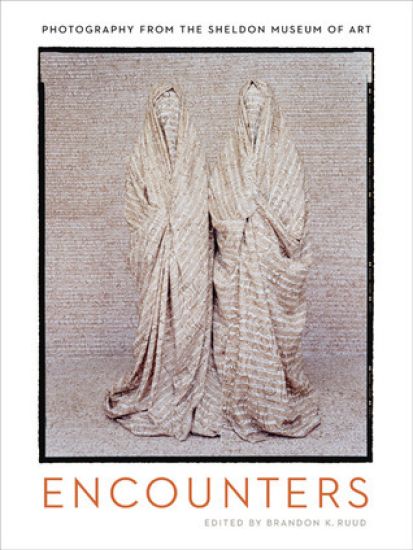
In this volume, the Sheldon Museum of Art presents more than one hundred examples from its distinguished photography collection, which contains nearly twenty-five hundred objects. Encompassing the full range of photographic history, Encounters showcases recognized masterpieces, recent acquisitions, and rarely seen treasures by a diverse range of artists, including Berenice Abbott, Manuel Álvarez Bravo, Julia Margaret Cameron, Gertrude Käsebier, André Kertész, Robert Mapplethorpe, Yinka Shonibare, Paul Strand, William Henry Fox Talbot, and Carrie Mae Weems. Encounters explores photography through the lens of transnationalism, highlighting the artistic, cultural, geographic, scientific, and technological conflicts and concurrences that have shaped the modern photographic image. Arranged thematically rather than chronologically, the catalog addresses issues such as tourism, souvenir production, and the search for authenticity in the face of increasing industrialization; the transmission of American, European, and Mexican forms of modernism; gender identity and sexuality; the real and perceived tensions between nature and the built environment; and the convergences of art and science, craft and technology. Images are set within their context by the catalog's principal author, Brandon K. Ruud, and are accompanied by lively, thought-provoking essays by a team of scholars that includes Zeynep Çelik, Keith F. Davis, Gregory Nosan, Robert G. O'Meally, Britt Salveson, and the museum's director, Jorge Daniel Veneciano.
China, Transnational Visuality, Global Postmodernity

China, Transnational Visuality, Global Postmodernity

Sheldon H. Lu

Stanford University Press
2002
sidottu
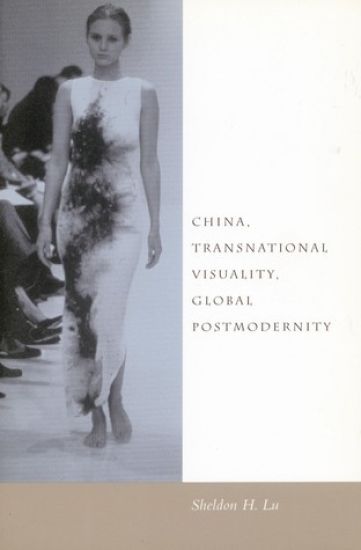
This ambitious work offers a comprehensive mapping of the cultural landscape of China in the late twentieth century. By focusing on Chinese cultural formations and critical discourses of the last decade of the century, the book dissects the intellectual, economic, and political contradictions of a turbulent era—post-cold war, postsocialist, and postmodern—in China's history. The author defines the emergent logic of Chinese postmodernity within a dominant system of global capitalism and points to the central role of the transnational flow of visual culture in the establishment of local and national identity. The Chinese case demonstrates that the old conceptual scheme of Euro-American postmodernism versus Third World national culture is no longer feasible. This wide-ranging, deeply interdisciplinary work demarcates the cultural terrain by examining diverse media: film, television, avant-garde art, and literature, as well as critical theory and intellectual history. Part I reviews the raging critical debates about the public sphere, the academy, intellectual identity, cultural politics, and economic globalization, in the process examining the Chinese appropriation of discourses of modernity, postmodernity, and postcoloniality. Part II investigates the impact of globalization and diaspora on the formation of citizenship and nationality as articulated in mainland Chinese and Hong Kong films. Part III probes issues of post-orientalism, postmodernism, and strategies of representation in contemporary Chinese art. Part IV studies pop music, soap opera, and literary bestsellers, pinpointing the dialectic and mediating function of popular culture amid the forces of official socialist ideology, capitalist commodification, mass entertainment, and transnational images in contemporary China. Overall, the book is an insightful analysis of the ironies of the cultural logic of Chinese socialism in a period that has seen accelerated economic integration into the capitalist world system, but without major political change.
China, Transnational Visuality, Global Postmodernity

China, Transnational Visuality, Global Postmodernity

Sheldon H. Lu

Stanford University Press
2002
pokkari
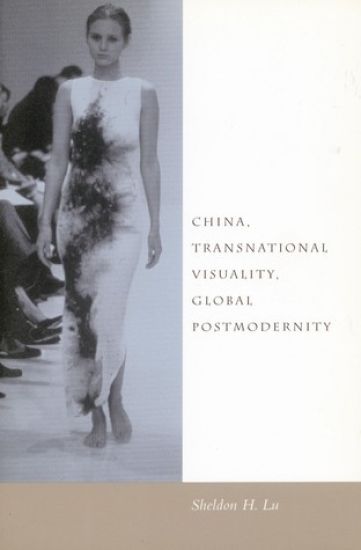
This ambitious work offers a comprehensive mapping of the cultural landscape of China in the late twentieth century. By focusing on Chinese cultural formations and critical discourses of the last decade of the century, the book dissects the intellectual, economic, and political contradictions of a turbulent era—post-cold war, postsocialist, and postmodern—in China's history. The author defines the emergent logic of Chinese postmodernity within a dominant system of global capitalism and points to the central role of the transnational flow of visual culture in the establishment of local and national identity. The Chinese case demonstrates that the old conceptual scheme of Euro-American postmodernism versus Third World national culture is no longer feasible. This wide-ranging, deeply interdisciplinary work demarcates the cultural terrain by examining diverse media: film, television, avant-garde art, and literature, as well as critical theory and intellectual history. Part I reviews the raging critical debates about the public sphere, the academy, intellectual identity, cultural politics, and economic globalization, in the process examining the Chinese appropriation of discourses of modernity, postmodernity, and postcoloniality. Part II investigates the impact of globalization and diaspora on the formation of citizenship and nationality as articulated in mainland Chinese and Hong Kong films. Part III probes issues of post-orientalism, postmodernism, and strategies of representation in contemporary Chinese art. Part IV studies pop music, soap opera, and literary bestsellers, pinpointing the dialectic and mediating function of popular culture amid the forces of official socialist ideology, capitalist commodification, mass entertainment, and transnational images in contemporary China. Overall, the book is an insightful analysis of the ironies of the cultural logic of Chinese socialism in a period that has seen accelerated economic integration into the capitalist world system, but without major political change.
Corporate America and Environmental Policy

Corporate America and Environmental Policy

Sheldon Kamieniecki

Stanford University Press
2006
sidottu
This book adds to the environmental politics and policy literature by conducting a comprehensive investigation of business influence in agenda building and environmental policymaking in the United States over time. As part of this investigation, the author presents an analysis of six cases in which private firms were involved in disputes concerning pollution control and natural resource management. In addition to determining how much business interests influence environmental and natural resource policy, the book tests possible explanations for their level of success in shaping the government's agenda and policy. The study offers a general conceptual framework for analyzing the influence of corporate America over environmental policymaking. The research then explores how much firms have influenced Congress, the U.S. Environmental Protection Agency and certain natural resource agencies, and the courts on environmental and natural issues since the beginning of the environmental movement in 1970. No other study has examined the ability of business to influence environmental policy in all three branches of government and in such detail.