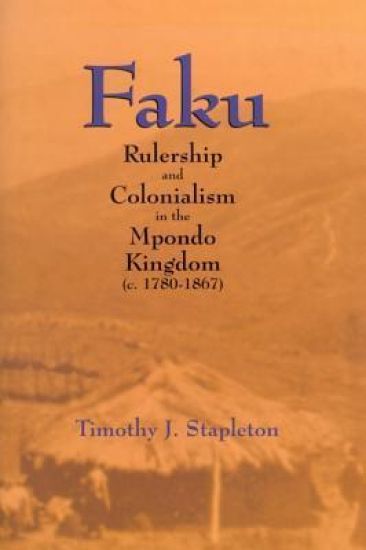
From roughly 1818 to 1867, Faku was ruler of the Mpondo Kingdom located in what is now the north-east section of the Eastern Cape, South Africa. Because of Faku's legacy, the Mpondo Kingdom became the last African state in Southern Africa to fall under colonial rule. When his father died, Faku inherited his power. In a period of intense raiding, migration and state formation, he transformed the Mpondo polity from a loosely organized constellation of tributary groups to a centralized and populous state with effective military capabilities and a prosperous agricultural foundation. In 1830, Faku allowed Wesleyan missionaries to establish a station within his kingdom and they became his main channel of communication with the Cape Colony, and later Natal. Ironically, he never showed any serious inclination to convert to Christianity. From the 1840s to early 1850s, this Mpondo king played a central, yet often understated, role in the British colonization of South Africa. While over the years his territory and power declined, Faku remained quite astute in diplomatic negotiations with colonial officials and used his missionary connections to optimum advantage. Timothy J. Stapleton's narrative and use of oral history paint a clear and remarkable portrait of Faku and how he was able to manipulate missionaries, neighbours, colonists and circumstances to achieve his objectives. As a result, Faku: Rulership and Colonialism in the Mpondo Kingdom (c.1780-1867) helps illuminate the history of the entire Cape region.
Wondering what the next move of your life is or where you will go next, this 31 day devotional will empower you in your next journey in Life. Pastor Bobby will encourage you to never sleep on yourself when it comes to goals and dreams. He will encourage the Believer to dream big and think Amazing. God did not create us to be mediocre or average, but He created us to be Super. This 31 day journal will tremendously lead you into the right direction in helping you to get to where you are supposed to be in Life.
99 Chapters. Imprimatur. Excerpt: CHAPTER I BELIEVING AND DOING MORALS pertain to right living, to the things we do, in relation to God and His law, as opposed to right thinking, to what we believe, to dogma. Dogma directs our faith or belief, morals shape our lives. By faith we know God, by moral living we serve Him; and this double homage, of our mind and our works, is the worship we owe our Creator and Master and the necessary condition of our salvation. Faith alone will save no man. It may be convenient for the easy-going to deny this, and take an opposite view of the matter; but convenience is not always a safe counsellor. It may be that the just man liveth by faith; but he lives not by faith alone. Or, if he does, it is faith of a different sort from what we define here as faith, viz., a firm assent of the mind to truths revealed. We have the testimony of Holy Writ, again and again reiterated, that faith, even were it capable of moving mountains, without good works is of no avail. The Catholic Church is convinced that this doctrine is genuine and reliable enough to make it her own; and sensible enough, too. For faith does not make a man impeccable; he may believe rightly, and live badly. His knowledge of what God expects of him will not prevent him from doing just the contrary; sin is as easy to a believer as to an unbeliever. And he who pretends to have found religion, holiness, the Holy Ghost, or whatever else he may call it, and can therefore no longer prevaricate against the law, is, to common-sense people, nothing but a sanctified humbug or a pious idiot. Nor are good works alone sufficient. Men of emancipated intelligence and becoming breadth of mind, are often heard to proclaim with a greater flourish of verbosity than of reason and argument, that the golden rule is religion enough for them, without the trappings of creeds and dogmas; they respect themselves and respect their neighbors, at least they say they do, and this, according to them, is the fulfillment of the law. We submit that this sort of worship was in vogue a good many centuries before the God-Man came down upon earth; and if it fills the bill now, as it did in those days, it is difficult to see the utility of Christ's coming, of His giving of a law of belief and of His founding of a Church. It is beyond human comprehension that He should have come for naught, labored for naught and died for naught. And such must be the case, if the observance of the natural law is a sufficient worship of the Creator. Besides, morals are based on dogma, or they have no basis at all; knowledge of the manner of serving God can only proceed from knowledge of who and what He is; right living is the fruit of right thinking. Not that all who believe rightly are righteous and walk in the path of salvation: losing themselves, these are lost in spite of the truths they know and profess; nor that they who cling to an erroneous belief and a false creed can perform no deed of true moral worth and are doomed; they may be righteous in spite of the errors they profess, thanks alone to the truths in their creeds that are not wholly corrupted. But the natural order of things demands that our works partake of the nature of our convictions, that truth or error in mind beget truth or error correspondingly in deed and that no amount of self-confidence in a man can make a course right when it is wrong, can make a man's actions good when they are materially bad. This is the principle of the tree and its fruit and it is too old-fashioned to be easily denied. True morals spring from true faith and true dogma; a false creed cannot teach correct morality, unless accidentally, as the result of a sprinkling of truth through the mass of false teaching. The only accredited moral instructor is the true Church.
99 Chapters. Imprimatur. Excerpt: CHAPTER I BELIEVING AND DOING MORALS pertain to right living, to the things we do, in relation to God and His law, as opposed to right thinking, to what we believe, to dogma. Dogma directs our faith or belief, morals shape our lives. By faith we know God, by moral living we serve Him; and this double homage, of our mind and our works, is the worship we owe our Creator and Master and the necessary condition of our salvation. Faith alone will save no man. It may be convenient for the easy-going to deny this, and take an opposite view of the matter; but convenience is not always a safe counsellor. It may be that the just man liveth by faith; but he lives not by faith alone. Or, if he does, it is faith of a different sort from what we define here as faith, viz., a firm assent of the mind to truths revealed. We have the testimony of Holy Writ, again and again reiterated, that faith, even were it capable of moving mountains, without good works is of no avail. The Catholic Church is convinced that this doctrine is genuine and reliable enough to make it her own; and sensible enough, too. For faith does not make a man impeccable; he may believe rightly, and live badly. His knowledge of what God expects of him will not prevent him from doing just the contrary; sin is as easy to a believer as to an unbeliever. And he who pretends to have found religion, holiness, the Holy Ghost, or whatever else he may call it, and can therefore no longer prevaricate against the law, is, to common-sense people, nothing but a sanctified humbug or a pious idiot. Nor are good works alone sufficient. Men of emancipated intelligence and becoming breadth of mind, are often heard to proclaim with a greater flourish of verbosity than of reason and argument, that the golden rule is religion enough for them, without the trappings of creeds and dogmas; they respect themselves and respect their neighbors, at least they say they do, and this, according to them, is the fulfillment of the law. We submit that this sort of worship was in vogue a good many centuries before the God-Man came down upon earth; and if it fills the bill now, as it did in those days, it is difficult to see the utility of Christ's coming, of His giving of a law of belief and of His founding of a Church. It is beyond human comprehension that He should have come for naught, labored for naught and died for naught. And such must be the case, if the observance of the natural law is a sufficient worship of the Creator. Besides, morals are based on dogma, or they have no basis at all; knowledge of the manner of serving God can only proceed from knowledge of who and what He is; right living is the fruit of right thinking. Not that all who believe rightly are righteous and walk in the path of salvation: losing themselves, these are lost in spite of the truths they know and profess; nor that they who cling to an erroneous belief and a false creed can perform no deed of true moral worth and are doomed; they may be righteous in spite of the errors they profess, thanks alone to the truths in their creeds that are not wholly corrupted. But the natural order of things demands that our works partake of the nature of our convictions, that truth or error in mind beget truth or error correspondingly in deed and that no amount of self-confidence in a man can make a course right when it is wrong, can make a man's actions good when they are materially bad. This is the principle of the tree and its fruit and it is too old-fashioned to be easily denied. True morals spring from true faith and true dogma; a false creed cannot teach correct morality, unless accidentally, as the result of a sprinkling of truth through the mass of false teaching. The only accredited moral instructor is the true Church.
Jacqueline Groag was probably the most influential textile designer in Britain in the post Second World War era. Although originally Czech, she studied textile and pattern design in Austria in the 1920s. During the late twenties and early thirties she designed textiles for the Wiener Werkstatte in Vienna and subsequently designed and produced unique hand printed lengths of fabrics for many of the leading Parisian fashion houses, including Chanel, Lanvin, Worth, Schiaparelli and Paul Poiret. She was awarded a gold medal for textile design at the Milan Triennale in 1933 and another gold medal for printed textiles at the Paris World Fair in 1937. Jacqueline was not only a serious and highly respected contender in the field of textile and pattern design but, with her husband, the Modernist architect Jacques Groag, was also deeply immersed in the intellectual life of Vienna. In 1938 the sophisticated world of Jacques and Jacqueline was brutally shattered when the Anschluss, the political unification of Austria and Germany, occurred and the German army entered Vienna. Faced with the actuality of the Nazi terror the Groags, who were Jewish, fled to Czechoslovakia and their home city of Prague. After a brief respite they were once more forced to flee in 1939, this time to London. On their arrival in England they were welcomed and championed by leading members of the British design fraternity, amongst whom were Sir Gordon Russell, the doyen of British architects Sir Charles Reilly and Jack Pritchard, founder of the modernist design company, Isokon. Much of the Contemporary style of the textiles and wallpapers shown at the 1951 Festival of Britain were heavily indebted to Jacqueline's influential designs of the 1940s. Many examples of her work were featured prominently at the Festival and from then on she became a major influence on pattern design internationally. She developed a large client group in the United States during the fifties and sixties, amongst whom were Associated American Artists, Hallmark Cards and American Greetings Ohio. In the later 1950s and throughout the 1960s she became increasingly involved with Sir Misha Black and the Design Research Unit (D.R.U.), working on the interiors for boats and planes and trains, particularly the design of textiles and plastic laminates for BOAC and British Rail. One of her last commissions from Misha Black, in the mid-seventies was a distinctive moquette for London Transport, for seating on both buses and tube trains. Her work and influence did not just extend to the large corporations and exclusive couturiers but was familiar to the general public through stores and companies such as John Lewis, Liberty of London, David Whitehead, Edinburgh Weavers, Sandersons, Warerite and Formica. Her remarkable achievement finally received public recognition in 1984 when, at the age of 81, she was made an R.D.I. - a Royal Designer for Industry - the ultimate accolade for any designer in Britain.
In The Art of UnLearning: Finding Light Through the Darkness are the stories of five extraordinary women who have experienced a vast array of adversities. While the events and circumstances are different for each author, as are the solutions they've chosen, the common thread that binds them together is their ability to rise up and confront the challenges they've faced head on. Yes Every woman featured here has made a conscientious decision to fight her way out of her own personal darkness and into the light.
Le esperienze quotidiane danno forma alla nostra vita, esperienza dopo esperienza. L'autrice condivide le sue esperienze e come queste hanno influenzato il suo modo di vivere nel passato e continuano ad influenzarla come vive ora. Tutti noi abbiamo queste esperienze che l'autrice chiama "Momenti Decisivi" Condividendo questi momenti, rendiamo la vita pi ricca per noi stessi e per le persone intorno a noi. Momenti Decisivi - Riafferma Te Stesso & Vivi La Vita Che Ami un libro per coloro che credono a livello profondo di poter scegliere come dirigere il percorso della propria vita. Tutti abbiamo ostacoli - alcuni ovvi, alcuni invisibili - che ci impediscono di ottenere il livello di controllo che desideriamo. quindi necessario avere una struttura che ci permetta di trovare un modo per eliminare quegli ostacoli. In questo libro, l'autrice, che un Mental & Emotional Freedom Coach, condivide come i momenti decisivi della propria vita hanno influenzato il suo comportamento e come le sue credenze limitanti si sono create e sviluppate e come riuscita a stabilire delle strategie che le permettono di vivere una vita di equilibrio e serenit . La consapevolezza dell'impatto che i momenti decisivi hanno avuto sulla tua vita ti permetter di stabilire un nuovo livello di chiarezza e libert mentale. I messaggi fondamentali in questo libro sono: l'importanza di assumersi la responsabilit per la propria vita, l'impegno a fare tutto ci che serve per sviluppare le competenze necessarie per avere successo a livello individuale e comunitario ed esercitare la volont di andare oltre la zona di comfort. Leggendo il libro, svilupperai una strategia che ti permetter di scoprire le tue credenze limitanti e chiarire se le tue azioni sono il risultato dell' ispirazione o del condizionamento del passato. Diventa cosciente delle conseguenze delle tue scelte quotidiane e impara a gestire la tua vita con coraggio e forza d'animo.
Graanmarkt 13 is a well-known destination for cutting edge design and locally-sourced food in the heart of Antwerp's historic theatre district. Rosa Park and Rich Stapleton from the hip travel and style magazine Cereal authored the book in collaboration with Graanmarkt's founders, Ilse Cornelissens and Tim Van GelovenLocated in a renovated townhouse in historic central Antwerp, Graanmarkt 13 is a multi-floor concept store, restaurant, and hotel/event space. It is considered a mecca for timeless quality in cutting edge contemporary design, fashion, and gastronomy. Each floor of Graanmarkt 13 expresses the visual minimalism and carefully curated sensibility of its founders, Ilse Cornelissens and Tim Van Geloven. This beautifully illustrated book, created in collaboration with Rosa Park and Rich Stapleton, editors of the cult lifestyle magazine Cereal, is a celebration of the vision that Graanmarkt 13 embodies. The authors, whose understated aesthetics make them ideal partners in telling each floor's story, explore the evolution of this very personal project, including the renovation by renowned Belgian architect Vincent Van Duysen, and the choices that support the founders' underlying dedication to craftsmanship and sustainability.
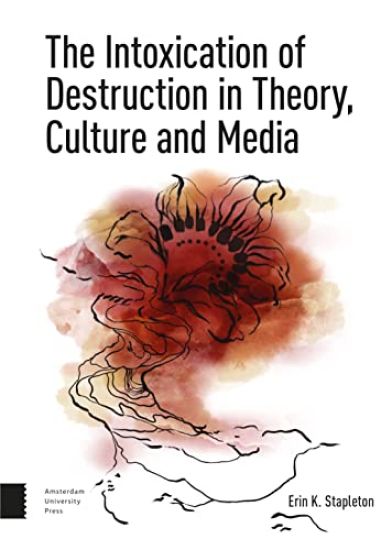
This book examines the desire for, and intoxication with destruction as it appears in cultural objects and representation, arguing that all cultural and aesthetic value is fundamentally predicated on its own fragility, as well as the living transience of those who make and encounter it. Beginning with a philosophy of expenditure after Georges Bataille, each chapter maps different operations of destruction in media and culture. These operations are expressed and located in representations of human extinction and explosive architecture, in execution and in eroticism, and in media and digital archives, which constitute a further destabilization of the notion of destruction in the dynamic between aspirational immortality and material volatility embedded in the archival systems of digital cultures.
EMT Prehospital Care, Revised Fourth Edition. The revised fourth edition of this comprehensive and visually rich textbook makes learning the EMT curriculum easy. The text's rationale-based learning format explains not only how, but also why procedures and treatment protocols are performed. This textbook not only covers all of the essential points of EMT patient care, it also goes far beyond the depth and breadth of basic content, making it an excellent resource for students and practicing EMTs.