

Kirjahaku
Etsi kirjoja tekijän nimen, kirjan nimen tai ISBN:n perusteella.
1000 tulosta hakusanalla Stephan Mitsch

Wedged between China, Korea, Japan, and the United States, the Russian Far East has for centuries been a meeting ground for Eurasian and American peoples and cultures. Conventionally regarded as perimeter, it is in fact a collage of overlapping borderlands with a distinct historical identity. Based on a quarter-century of research by a leading authority on the area, this is a monumental survey of Pacific Siberia from prehistoric times to the present. Drawing from political, diplomatic, economic, geographical, social, and cultural evidence, the book reveals that this vast, rugged, and supposedly insular land has harbored vibrantly cosmopolitan lifestyles. For over a millennium, Chinese culture found expression in Tungus, Mongol, and Korean polities. Russian penetration in the seventeenth century eventually turned the region into a colony sustained by state subsidies, foreign enterprise, and a mosaic of Ukrainian, Estonian, Finnish, German, Chinese, Korean, and Japanese communities. Tsarists and Soviet penal policies contributed to the diversity and volatility of Far Eastern society. Regional aspirations articulated by Siberian intellectuals, disingenuously institutionalized in a Far Eastern Republic (1920-22), survived lethal bouts of economic and demographic engineering to come to life again in the post-Soviet era. The Russian Far East today reverberates with autonomist rhetoric, but if the region is no longer an appanage, it is still far short of independence. For the time being, the robust tradition of cosmopolitanism is reinventing itself under the banner of capitalism. Reexamining twentieth-century history through a Far Eastern prism, the book offers fresh and often provocative perspectives on imperial rivalries, colonialism, revolution, civil war, and utopianism gone awry in Northeast Asia.
Innovations in pricing can be transformative, but to reach their potential companies must devote equal attention to technical and organizational capabilities. Most firms, however, only pay attention to the technical dimensions of pricing, which severely limits the success of their initiatives. To remedy this, The Pricing Journey provides an integrated guide to the organizational, social, and behavioral aspects of pricing—drawing on principles of socio-technical change. Based on extensive qualitative and quantitative research in an array of firms around the world, Stephan M. Liozu provides a practical roadmap for management teams that aim to reach a new level of pricing power. Liozu introduces the 5 C model of transformation, which relies on change, capabilities, champions, confidence, and center-led organizational design to create effective and lasting pricing strategies. Rooting his recommendations in research and practice, Liozu proposes specific capabilities to develop on the road to pricing excellence. This book prepares pricing and marketing professionals to be true strategic partners, while contributing the study of pricing transformation.
The problem of prosecuting individuals complicit in the Nazi regime's "Final Solution" is almost insurmountably complex and has produced ever less satisfying results as time has passed. In Crimes of the Holocaust, Stephan Landsman provides detailed analysis of the International Military Tribunal prosecution at Nuremberg in 1945, the Eichmann trial in Israel in 1961, the 1986 Demanjuk trial in Israel, and the 1990 prosecution of Imre Finta in Canada. Landsman presents each case and elaborates the difficulties inherent in achieving both a fair trial and a measure of justice in the aftermath of heinous crimes. In the face of few historical and legal precedents for such war crime prosecutions, each legal action relies on the framework of its predecessors. However, this only compounds the problematic issues arising from the Nuremberg proceedings. Meticulously combing volumes of testimony and documentary information about each case, Landsman offers judicious and critical assessments of the proceedings. He levels pointed criticism at numerous elements of this relatively recent judicial invention, sparing neither judges nor counsel and remaining keenly aware of the human implications. Deftly weaving legal analysis with cultural context, Landsman offers the first rigorous examination of these problematic proceedings and proposes guideposts for contemporary tribunals. Crimes of the Holocaust is an authoritative account of the Gordian knot of genocide prosecution in the world courts, which will persist as a confounding issue as we are faced with a trial of Saddam Hussein. This volume will be compelling reading for legal scholars as well as laypersons interested in these cases and the issues they address.
Everyone knows about the business potential represented by the huge millennial age group. But how do you manage the next generation millennial sales force required to reach this gigantic market? Meet your new sales force: They love collaboration, live and breathe technology, and happily bring assignments home. They also show up late, resist authority, text their friends in meetings, and job hop like there's no tomorrow.You can bark orders all you want, but it won't work with millennials. To get great sales results, you need to let go of old school approaches and learn to speak their language.Creating Sales Stars is your field guide to managing today's emerging sales professionals. Packed with generational insights and surefire strategies, the book helps you: Create a back bench of future sales leadersFire them up and keep them focused on salesEstablish a fun, meaningful environmentTrain them and retain themApply the right pressureTeach without preachingEnsure they feel valuedMine their tech savvyMillennials crave feedback, flexibility, and opportunities to grow. This frank and incisive book shows how to give them what they need--and achieve the results you want.

Developing Nations and the Politics of Global Integration
Stephan Haggard
Brookings Institution
1995
nidottu
Developing countries are becoming important players in the world economy. Although they were slow to liberalize trade, they are now joining the more economically advanced nations in implementing trade reforms and in taking steps to deepen global integration. The lowering of trade barriers and the growth of foreign investment have benefited the developing countries but have also created vulnerabilities, including risks of dependence and political interference. Is deeper integration in the best interest of developing countries?In this book, part of the Integrating National Economies series, Stephen Haggard examines the position of the developing countries in the international trade regime. Focusing on the nations of East and Southeast Asia and Latin American, Haggard explores the cause of economic liberalization policies in the developing nations. He argues that various international constraints, such as economic shocks and political pressures from the economically advanced nations, pushed developing countries to open up to internatioal competition and to pursue economic relations with advanced industrial states.Haggard addresses such central questions as: Will developing countries benefit from the deep integration agenda? Will they instead join closed regional blocs that fragment the international economy? Will the developing nations orient themselves toward the multilateral institutions, particularly the World Trade Organization, or will they gravitate toward regional arrangements. Haggard argues that the advanced developing countries have become strong supporters of the multilateral system and that the extent of regionalism has been over stated. He contends that a more serious threat is the lure of biliteralism and the effort of the advanced industrial states to impose standards on developing countries that are inappropriate or politically counterproductive.A volume of Brookings' Integrating National Economies Series

In Wizards and Scientists Stephan Palmié offers a corrective to the existing historiography on the Caribbean. Focusing on developments in Afro-Cuban religious culture, he demonstrates that traditional Caribbean cultural practices are part and parcel of the same history that produced modernity and that both represent complexly interrelated hybrid formations. Palmié argues that the standard narrative trajectory from tradition to modernity, and from passion to reason, is a violation of the synergistic processes through which historically specific, moral communities develop the cultural forms that integrate them.Highlighting the ways that Afro-Cuban discourses serve as a means of moral analysis of social action, Palmié suggests that the supposedly irrational premises of Afro-Cuban religious traditions not only rival Western rationality in analytical acumen but are integrally linked to rationality itself. Afro-Cuban religion is as “modern” as nuclear thermodynamics, he claims, just as the Caribbean might be regarded as one of the world’s first truly “modern” locales: based on the appropriation and destruction of human bodies for profit, its plantation export economy anticipated the industrial revolution in the metropolis by more than a century. Working to prove that modernity is not just an aspect of the West, Palmié focuses on those whose physical abuse and intellectual denigration were the price paid for modernity’s achievement. All cultures influenced by the transcontinental Atlantic economy share a legacy of slave commerce. Nevertheless, local forms of moral imagination have developed distinctive yet interrelated responses to this violent past and the contradiction-ridden postcolonial present that can be analyzed as forms of historical and social analysis in their own right.
This volume focuses on developments in Afro-Cuban religious culture, demonstrating that traditional Caribbean cultural practices are steeped in the same history that produced modernity and represent complex hybrid formations.

In the Upper Amazon, mestizos are the Spanish-speaking descendants of Hispanic colonizers and the indigenous peoples of the jungle. Some mestizos have migrated to Amazon towns and cities, such as Iquitos and Pucallpa; most remain in small villages. They have retained features of a folk Catholicism and traditional Hispanic medicine, and have incorporated much of the religious tradition of the Amazon, especially its healing, sorcery, shamanism, and the use of potent plant hallucinogens, including ayahuasca. The result is a uniquely eclectic shamanist culture that continues to fascinate outsiders with its brilliant visionary art. Ayahuasca shamanism is now part of global culture. Once the terrain of anthropologists, it is now the subject of novels and spiritual memoirs, while ayahuasca shamans perform their healing rituals in Ontario and Wisconsin.Singing to the Plants sets forth just what this shamanism is about--what happens at an ayahuasca healing ceremony, how the apprentice shaman forms a spiritual relationship with the healing plant spirits, how sorcerers inflict the harm that the shaman heals, and the ways that plants are used in healing, love magic, and sorcery.
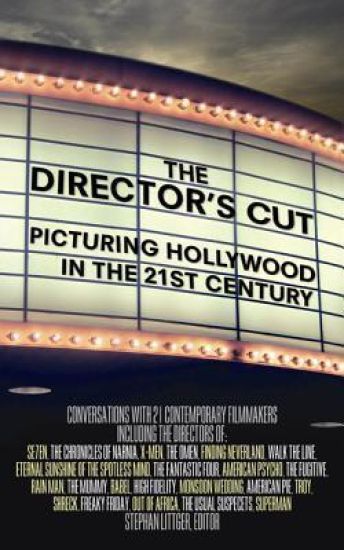
In "The Director's Cut", 21 Hollywood filmmakers share the thrilling accounts of their creative journeys into the film industry's most coveted positions. Together, their films have won dozens of Oscars. Each conversation provides a revealing and in-depth exploration of each director's artistic roots - giving readers an unparalleled understanding of the very different environments and attitudes that these outstanding filmmakers have experienced and embraced in their careers and personal lives. The directors in this book have been chosen on grounds of their reputation, sustained popularity at the box office, and diversity of background - both professional (genre, style, etc) and personal (family, origin, etc). The book truly reflects the variety of talent that has arrived from all over the world to make movies in Hollywood today. Thanks to the candid honesty and openness of these directors, this collection offers illuminating insights into their creative decision-making processes and the key biographical moments in their lives. Stephan Littger's own background as a young filmmaker and an Oxford graduated psychologist enables him to approach these star directors in an empathetic and focused manner, helping them to talk openly about the years of emotional struggle, personal doubt and tentative success that are part of every filmmaker's life. "The Director's Cut" should become a standard volume for aspiring filmmakers. And it's also a compelling and entertaining read for committed moviegoers and anyone interested in the marriage between artistic creation and commercial success. It includes conversations with: Andrew Adamson - "Shrek"; Andrew Davis - "The Fugitive"; Richard Donner - "Lethal Weapon"; David Fincher - "Se7en"; Marc Foster - "Monster's Ball"; Stephen Frears - "High Fidelity"; Michel Gondry - "Eternal Sunshine of the Spotless Mind"; Mary Harron - "American Psycho"; Alejandro Gonzalez Inarritu - "21 Grams" Barry Levinson - "Good Morning Vietnam"; James Mangold - "Walk the Line"; Mira Nair - "Vanity Fair"; Wolfgang Peterson - "The Perfect Storm"; Sydney Pollack - "Tootsie"; Brett Rutner - "Rush Hour"; Peter Segal - "50 First Dates"; Bryan Singer - "X-Men"; Stephen Sonners - "The Mummy"; Tim Story - "Barbershop"; Mark S. Waters - "Mean Girls"; and, Chris Weitz - "In Good Company".
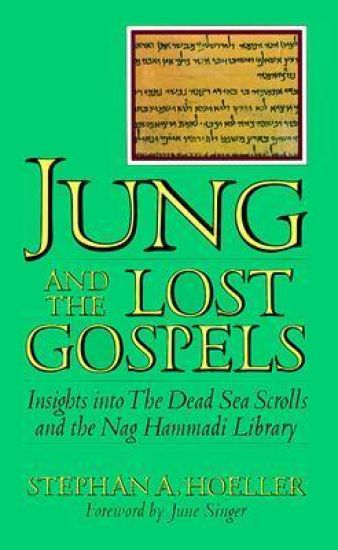
The "Lost Gospels" refer to the Dead Sea Scrolls and the Nag Hammadi Library, both discovered in the 1940s. The Nag Hammadi Library consists of writings found by two peasants who unearthed clay jars in 1945 in upper Egypt. These did not appear in English for 32 years, because the right to publish was contended by scholars, politicians, and antique dealers. The Dead Sea Scrolls, discovered in clay jars in Palestine by a goatherder in 1947, weathered similar storms. The first team of analysts were mostly Christian clergy, who weren't anxious to share material that frightened church leaders. As Dr. Hoeller shows, they rightly feared the documents would reveal information that might detract from unique claims of Christianity. Indeed, the Dead Sea Scrolls and Nag Hammadi Library both contradict and complement accepted tenets of the Old and New Testaments.As to the connection with Jung, Dr. Hoeller states, "Jung knew that the one and only tradition associated with Christianity that regarded the human psyche as the container of the divine-human encounter was that of the Gnostics of the the first three centuries of our era. For this reason he called for a renewed appreciation of this ancient tradition, and particularly for a return to the Gnostic sense of God as an inner directing and transforming presence." Dr. Hoeller goes on in his preface, "His sympathetic insight into the myths, symbols, and metaphors of the Gnostics, whom by his own admission he regarded as long-lost friends, continues as the brightest beacon of our day..."
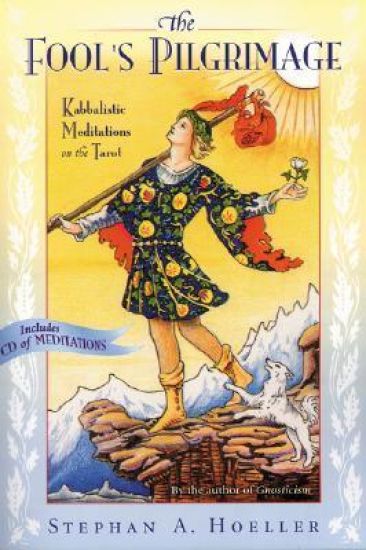
Stephan Hoeller's handbook for heightening consciousness is unrivaled for its clarity in explaining the ancient mystical Kabbalah in relation to the Tarot's Major Arcana. On the new enclosed CD, Dr. Hoeller narrates twenty-two meditations to guide the reader easily into a contemplative state.


Two of the most destructive moments of state violence in the twentieth century occurred in Europe between 1933 and 1945 and in China between 1959 and 1961 (the Great Leap famine). This is the first book to bring the two histories together in order to examine their differences and to understand if there are any similar processes of transmission at work. The author expertly ties in the Taiwanese civil war between Nationalists and Communists, which included the White Terror from 1947 to 1987, a less well-known but equally revealing part of twentieth-century history. Personal and family stories are told, often in the individual’s own words, and then compared with the public accounts of the same events as found in official histories, commemorations, school textbooks and other forms of public memory. The author presents innovative and constructive criticisms of social memory theories in order to make sense both of what happened and how what happened is transmitted.
This fourth selection of articles by Professor Kuttner complements the volumes previously published by Variorum. Its subject is the history of the Church law of the Middle Ages, and the manner in which it has been studied. One group of articles is particularly concerned with the broader implications of medieval law, with its role in the history of doctrines and ideas: other sections focus on the history of the Glossators in modern research, and on the canonists of the period following the Decretals of Pope Gregory IX ” the Glossa Ordinaria and the works of St Raymond of Peñafort and Johannes Andreae form specific areas of interest. As in the previous volumes, there is an extensive section of 'Retractiones", recording the results of further research and assiduously detailing and commenting upon work done in the field since the articles were first published. To facilitate access to all this material, important indexes have also been provided. Cette quatrième collection d'articles du Professeur Kuttner complète les volumes préablement publiés par Variorum. Elle a pour sujet l'histoire du droit l'Eglise au Moyen Age et la manière dont il a été étudie. Un des groupes d'articles traite en particulier des implications plus larges medieval et de son rôle dans l'histoire doctrines et des idées. D'autres se concentrent sur l'histoire des Glossateurs au travers de la recherche moderne et sur les canonistes de la période suivant les décrétales du pape Grégoire IX ” les Glossa Ordinaria et les travaux de St Raymond de Penafort et de Johannes Andreae constituent des passages d'interet spécifiques. De même que dans les volumes précédentes, il existe une importante section de 'Retractiones' ou sont enregistres les résultants de recherches supplémentaires et ou y sont faits un compte-rendu assidueusement détaille, ainsi que des commentaires sur le travail accompli dans la domaine en question depuis la première publication des articles. Afin de faciliter
Medieval Councils, Decretals and Collections of Canon Law
Stephan Kuttner
Ashgate Publishing Limited
1992
sidottu
First published in 1980, but then out of print for several years, this collection, together with The History of Ideas and Doctrines of Canon Law in the Middle Ages, presents a series of fundamental articles by the acknowledged master of medieval canon law studies. For this second edition they have been provided with extensive sections of new notes and references and the detailed indexes have been wholly revised and expanded. The volumes therefore now constitute essential works of reference for all those interested in the study of the medieval Church and its law. Ces deux collections, tout d’abord publiées en 1980, mais actuellement hors impression depuis plusieurs années, présentent une série de textes fondamentaux du mâitre incontesté de l’étude du droit canon médiéval. Pour cette seconde édition, elles ont été enrichies de sections importantes de nouvelles notes et références et les index détaillés ont été entiérement révisés et approfondis. De ce fait, ces ouvrages constituent aujourd’hui des travaux essentiels de référence pour tous ceux intéressés par l’étude de l’Eglise médiévale et de son droit.

Collected Studies CS1071The central figure in this volume is that of Gratian, whose monumental compilation of canon law sparked off the revival of legal studies in the medieval West. In other collections of essays, Stephan Kuttner dealt with the development of canon law in the two centuries that followed the publication of Gratian's Decretum, and the ideas that this engendered; here he is concerned with the foundations upon which all these later efforts were based. The work of Gratian is, of course, the principal focus, but the studies then follow the spread of the teaching of law, from its inception at Bologna in the 1140s to its appearance soon after in other centres of learning in the West especially in France, in the Anglo-Norman schools and in Germany. With a quarter of the volume consisting of additional notes and extensive indexes, it makes a contribution of the greatest importance to the historical study of canon law. For this second edition, a new section of additional notes has been supplied, and the volume is introduced with an essay by Peter Landau; these take account of the important recent work on Gratian and the Decretum and chart the significance of Stephan Kuttner's work.
Unpredictable, discontinuous change is an unavoidable consequence of doing business in the Information Age. Because this intense turbulence demands fast - even instantaneous - response, many large companies are fragmenting themselves into smaller, quick-response units. But in doing so, they relinquish important advantages of scale and scope. Is it possible to have it both ways? Can large, complex firms adapt successfully and systematically to unexpected change? Yes, says Stephan Haeckel, but only if leaders learn how to manage their organizations as adaptive systems. In "Adaptive Enterprise", Haeckel updates the concept of the corporation for the Information Age with a radical and comprehensive rethinking of organizational strategy, structure, and leadership. He outlines the new sense-and-respond business model that is helping companies systematically cope with the unexpected. Haeckel argues that when unpredictability is a given, the only strategy that makes sense is a strategy to become adaptive - to sense early and respond quickly to abrupt changes in individual customer needs.As a result, a firm's operations must be driven by current customer requests - implicit as well as articulated - rather than by plans to make and sell what customers are forecasted to want in the future. Here, for the first time, is a clear and comprehensive strategy for transforming firms into adaptive systems. "Adaptive Enterprise" is both a new way of thinking about business and a handbook for leadership of postindustrial organizations. It maps out, with examples and illustrations, a step-by-step plan that companies can use to transform themselves into a new type of organization - one in which change is not a problem to be solved, but rather an indispensable source of energy, growth, and value.