Kirjojen hintavertailu. Mukana 12 016 292 kirjaa ja 12 kauppaa.

Kirjahaku

Etsi kirjoja tekijän nimen, kirjan nimen tai ISBN:n perusteella.

1000 tulosta hakusanalla Thomas Sharp

Thomas J. Wise

Thomas J. Wise

University of Texas Press
1960
pokkari
Thomas James Wise (1859–1937), though destined to receive in his own lifetime practically every honor the world of letters could bestow, is remembered today as perhaps the greatest malefactor in all of literary history. From 1934 to 1957 various enquiries have implicated him first in the manufacture of more than fifty predated "original" editions of eminent Victorian authors, then in seven additional forgeries, later in countless piracies of other nineteenth-century work, and finally in repeated acts of vandalism upon forty-one seventeenth-century plays. It is fitting that Wise himself appears as a contributor to this volume. Included are his original introduction to the Browning Library, his letters to bookseller J. E. Cornish, his extraordinary letter to Sir Edmund Gosse, and a note to H. Buxton Forman. These Centenary Studies review the course of research over twenty-five years, designate topics requiring further investigation, and assess new evidence of Wise's villainies. One more forgery is identified, the provenance of others reexamined, the forger's method of purveying his wares closely appraised, his association with H. Buxton Forman and Sir Edmund Gosse more precisely defined, and the range of his activities summarized in an annotated handlist. The record includes at least 400 printings directly attributed to Wise, as well as 23 suppressed or abortive issues, and 29 others in which he seems to be somewhat involved. Through these perspectives the culprit appears even more contemptible and, possibly for this very reason, ever more intriguing as a cause célèbre in literary scholarship. The illustration on the cover of this book reproduces, through a magnifying glass, the peculiar question mark appearing in certain forgeries printed for Wise by the firm of Richard Clay & Sons. The mark may also implicate Wise in other irregular printings, including The Death of Balder.
Thomas Wolfe

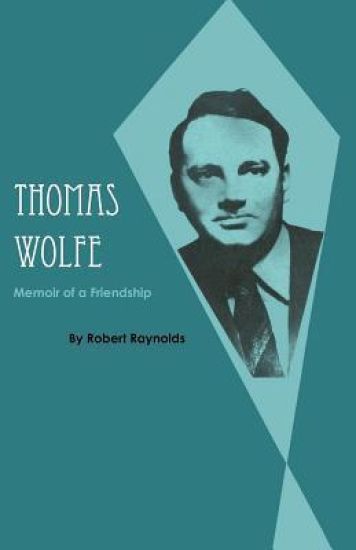
Thomas Wolfe

Robert Raynolds

University of Texas Press
1965
nidottu
This is a story that no one else could tell. It tells how Thomas Wolfe and Robert Raynolds happened to meet, how they became friends, and how their friendship grew, survived a crisis, and continued until the death of Thomas Wolfe. "We met in the city," says Raynolds, "but Tom and I were both mountain-born and small-town bred; we were more at home with cows and rattlesnakes than with subways and city slickers, and we were very much at home with one another." The story is told with understanding, with humor, and with compassion. Robert Raynolds began writing it in 1942—four years after the death of his friend and companion novelist—and finished it twenty-three years later, in 1965. It is a responsible and considered memoir in honor of human friendship, and it brings the vivid character of Thomas Wolfe directly into the presence of the reader. The story is full of daily portraits of Thomas Wolfe. What did he look like in his room, pacing the floor, or writing? How did he appear on the streets of Brooklyn or Manhattan, day or night? Or walking in the morning in a pine forest, or running his hand gently over a block of marble in an abandoned quarry, or tramping fields of snow after midnight? What was it like to eat with him at night in New York, or at noon in a Vermont farmhouse, or at breakfast in a home made lively by the laughter and play of children? He was shy. "Why don't you find me a nice little wife?" he would ask Mrs. Raynolds. He was emotional, often speaking in the style of his writing: "And the whistle-wail of the great train. . ." He was profound, brooding after his break with his first publishers: could a man who had left a friend as he had left Maxwell Perkins ever be a "righteous man" again? This is a story of the plain and real Thomas Wolfe, of his human goodness, his bone-deep weariness in labor, his sudden joy in being understood and loved by a fellow man. And this is the story of how Robert Raynolds honored the grace of being a friend of Thomas Wolfe.
Thomas T. Wilson

Thomas T. Wilson

Sally Hayman; Peter Simpson

University of Washington Press
2004
sidottu
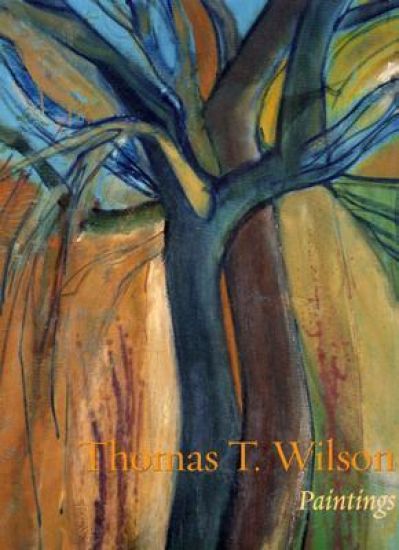
Thomas T. Wilson is described in the preface of this book as "probably the best-known unknown painter in the Northwest." Most of his early paintings still hang within the houses of his original buyers. Very few of his paintings are in public spaces, and the artist has never sought or received formal gallery representation. Thomas T. Wilson: Paintings brings the hidden career and life of a masterful Pacific Northwest artist to light.The bold lyricism and originality of Wilson's work is revealed in the lush farmlands of his native Illinois, his fascination with light and space in his tree compositions, and his vibrant landscapes and cloudscapes inspired by the dramatic environment of the Pacific Northwest. Wilson is also a prolific portraitist. He captured Seattle society after the dramatic impact of the 1962 World's Fair, a period which saw significant growth in the city's theater, opera, dance, music, and visual arts. Many of the people who were a part of this pre-Microsoft flourishing are Wilson's subjects. Even multiple generations within single families are represented in the painter's career. The artist also painted several self-portraits, and his works are unsparing progress reports of his life.Thomas Wilson's work is a valuable record of a society within the cultural world it helped to create. This collection of portraits, self-portraits, and landscapes promises to be a revelation to all those unfamiliar with the artist and his work.
Thomas Vinterberg's Festen (the Celebration)

Thomas Vinterberg's Festen (the Celebration)

C. Claire Thomson

University of Washington Press
2015
sidottu
Danish filmmaker Thomas Vinterberg's searing film Festen ("The Celebration") was the first film from the Dogme 95 stable. Adhering to Dogme's cinematic purity — no artificial lighting, no superficial action, no credit for the director, and only handheld cameras for equipment — Festen was a commercial and critical success, winning the Jury Prize at Cannes in 1998 and garnering worldwide attention.The film is set at the sixtieth birthday party of Helge, the wealthy patriarch of a large Danish family. The birthday festivities take a turn when Helge's son Christian raises a toast and denounces Helge for having raped and abused him as a child, along with his twin sister, who recently committed suicide. The film explores the escalating consequences of Christian's announcement, from the stunned dinner party's collective denial, to violence, to an unexpected catharsis.
The Yale Edition of The Complete Works of St. Thomas More
More's Latin reply to Bugenhagen (1526), given here with a facing English translation, is a comparatively brief but intense rebuttal of the principal points of Lutheran teaching concerning scripture ant tradition, faith and works, grace and free will, clerical celibacy, and the sacraments. It presents arguments elaborated at much greater length in More's other polemical works. Supplication of Souls (1529) refutes A Supplication for the Beggars, an anticlerical pamphlet by Simon Fish which Henry VIII seems to have regarded with some favor. More places his response in the mouths of the souls in purgatory. In the first book, he contemptuously demolished Fish's loose railery with accurate statistics and historical analysis. In the second, he defends the traditional doctrine of purgatory with brief arguments drawn from reason and a detailed analysis of scriptural passages. Letter against Frith (1532) answers John Frith's Zwinglian arguments against the physical presence of Christ in the more. Written to an unknown correspondent, it is the briefest and mildest of More's polemical works and anticipates arguments presented moer elaborately in More's The Answer to a Poisoned Book (1533). Besides full introductions and commentaries, a glossary, and an index, this volume contains seven appendices giving the works to which More is replying and other thematic, historical, and bibliographical matter closely related to the three works by More.
Thomas More

Thomas More

Louis L. Martz

Yale University Press
1992
pokkari
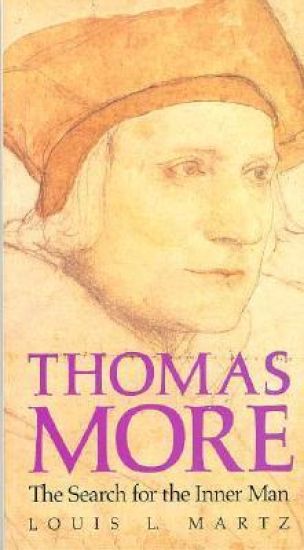
Recent writings about Thomas More have questioned his integrity and motivation and have challenged the long-held view of him as a humane, wise, and heroic "man for all seasons." This new book responds to these revisionist studies by closely and persuasively analyzing More's writings as well as Holbein's portraits of More and his family. "Martz cuts down the revived charge of More as a bloodthirsty hunter of heretics, a furious, sexually repressed, and frustrated man. . . . This penetrating rebuttal of the revisionists deserves high commendation."—Choice "Martz draws a compelling picture of More's attempts during his lonely imprisonment to adjust to his human fear of death and to see his own plight in the perspective of the universal human condition. In these essays More's voice and personality speak to us from his own literate and humorous prose."—M. Edmund Hussey, Antioch Review "In his gracefully written Thomas More: The Search for the Inner Man, Louis L. Martz provides a sharply different account of the 'dark side' of More. . . . [He] lays out the case for a more complex, ironic construction of More's texts."—Stanley Stewart, Studies in English Literature "This . . . book is a gemstone."—Terence R. Murphy, History: Reviews of New Books "Correcting the view of Thomas More as a cold-blooded prosecutor of heresy, Martz here considers the gentle, affectionate, yet upright man pictured in Holbein's family portraits and implicit in More's prose."—Judith Fair, Theological Studies
Selected Writings of Thomas Paine

Selected Writings of Thomas Paine

Thomas Paine

Yale University Press
2014
pokkari
A central figure in Western history and American political thought, Thomas Paine continues to provoke debate among politicians, activists, and scholars. People of all ideological stripes are inspired by his trenchant defense of the rights and good sense of ordinary individuals, and his penetrating critiques of arbitrary power. This volume contains Paine’s explosive Common Sense in its entirety, including the oft-ignored Appendix, as well as selections from his other major writings: The American Crisis, Rights of Man, and The Age of Reason. It also contains several of Paine’s shorter essays. All the documents have been transcribed directly from the originals, making this edition the most reliable one available. Essays by Ian Shapiro, Jonathan Clark, Jane Calvert, and Eileen Hunt Botting bring Paine into sharp focus, illuminating his place in the tumultuous decades surrounding the American and French Revolutions and his larger historical legacy.
Thomas Bernhard

Thomas Bernhard

Gitta Honegger

Yale University Press
2012
pokkari
Thomas Bernhard (1931–1989), a literary figure of international acclaim and arguably Austria’s greatest post–World War II writer, became the first of his generation to expose unrelentingly his country’s pathological denial of complicity in the Holocaust. Bernhard’s writings and indeed his own biography reflect Austria’s fraught efforts to define itself as a nation following the collapse of the Habsburg monarchy and the trauma of World War II. Repeatedly he scandalized the nation with novels, plays, and public statements that exposed the convoluted ways Austrians were attempting to come to terms with their Nazi past—or defiantly avoiding doing so. This book, the first comprehensive biography of Thomas Bernhard in English, examines his life and work and their intricate relationship to Austria’s geographical, political, and cultural transformations in the twentieth century. While Bernhard was the scourge of his native culture, Honegger explains, he was also a product of that same culture. Appreciation of his controversial impact on his society is possible only through an understanding of the contradictions, the shame, and the achievements that mark Austrians’ self-perception in the postwar years. Honegger shows that for Bernhard the theater was not only a profession but also a paradigm for his life, and that performance was the primary force animating his writing and self-construction. Even after his death, Bernhard’s carefully constructed biography continues to fascinate, shock, and expose the Austrian culture at large.
Thomas Sully

Thomas Sully

William Keyse Rudolph; Carol Eaton Soltis

Yale University Press
2013
sidottu
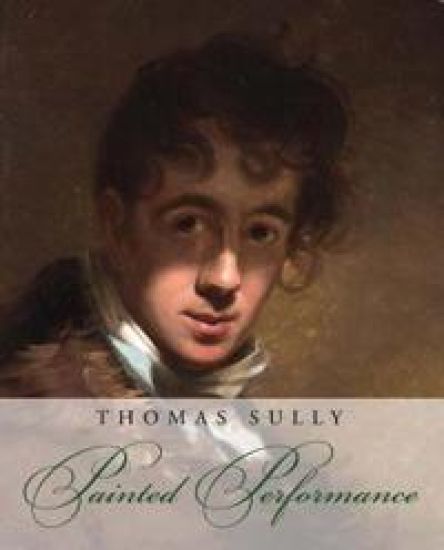
Thomas Sully (1783–1872) painted some of the most dynamic personalities of the 19th century, including Queen Victoria, Thomas Jefferson, and the Marquis de Lafayette. Although he created more than two thousand portraits and subject paintings, his full production has never before been examined in depth. The child of actors, Sully’s lifelong connection to the theater informed his imagination. His portraits of 19th-century actors, celebrities, royalty, and politicians established his reputation, and would mark all his works, particularly his “fancy pictures,” portraits evoking scenes from literature, fairy tales, Shakespeare, or of his own devising. This essential introduction demonstrates how the artist interpreted the nature of painting as performance, manifested in his dazzling productions. Three essays, 160 color reproductions, and an illustrated chronology survey and elucidate his career.Distributed for the Milwaukee Art MuseumExhibition Schedule:Milwaukee Art Museum(10/11/13–01/05/14) San Antonio Museum of Art (02/07/14–05/11/14)
Thomas Aquinas

Thomas Aquinas

Denys Turner

Yale University Press
2014
pokkari
An illuminating introduction to the elusive Thomas Aquinas—the man and the saint"A marvellous introduction to the thought of the most daring and most important thinker of the Christian Middle Ages. . . . The best single-volume introduction to St. Thomas.”—Eamon Duffy, The Tablet"Rich, provocative and sophisticated, a work of both passion and serious scholarship. It is a triumph."—Jonathan Wright, Catholic Herald Leaving so few traces of himself behind, Thomas Aquinas seems to defy the efforts of the biographer. Highly visible as a public teacher, preacher, and theologian, he nevertheless has remained nearly invisible as man and saint. What can be discovered about Thomas Aquinas as a whole? In this short, compelling portrait, Denys Turner clears away the haze of time and brings Thomas vividly to life for contemporary readers—those unfamiliar with the saint as well as those well acquainted with his teachings. Building on the best biographical scholarship available today and reading the works of Thomas with piercing acuity, Turner seeks the point at which the man, the mind, and the soul of Thomas Aquinas intersect. Reflecting upon Thomas, a man of Christian Trinitarian faith yet one whose thought is grounded firmly in the body’s interaction with the material world, a thinker at once confident in the powers of human reason and a man of prayer, Turner provides a more detailed human portrait than ever before of one of the most influential philosophers and theologians in all of Western thought.
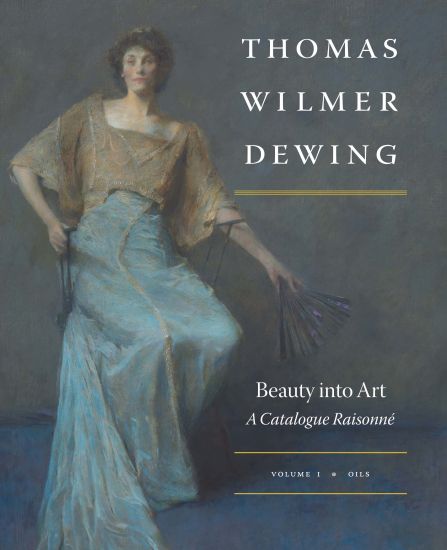
Thomas Wilmer Dewing: Beauty into Art

Thomas Wilmer Dewing: Beauty into Art

Susan A. Hobbs; Shoshanna Abeles

Yale University Press
2018
sidottu
Best known for his interiors and landscapes featuring beautiful women in artful poses and subtly related color harmonies, Thomas Wilmer Dewing (1851–1938) lived and worked at the forefront of developments in modern American art. His paintings, which navigate a course between the bravura of John Singer Sargent and the attenuated aestheticism of James McNeill Whistler, convey a sensuous beauty that remains uniquely his and that represents an exceptional phase in American painting. Featuring a comprehensive biography and engaging, narrative commentaries, this elegant, 2-volume catalogue raisonné is an essential and much-needed reference. Included here are more than 550 works of art as well as previously unpublished photographs from the artist’s own albums; each work is accompanied by a full provenance, exhibition histories, and literature—both published and archival.
The Essential Works of Thomas More

The Essential Works of Thomas More

Thomas More

Yale University Press
2020
sidottu
The first comprehensive one-volume collection of St. Thomas More’s writing “[A] tremendous scholarly undertaking. . . . Accessible and transparent to both scholars and the general audience.”—Renaissance and Reformation In this book, Gerard B. Wegemer and Stephen W. Smith assemble, for the first time in a single volume, the most important English and Latin works of Thomas More (1478–1535). This collection reveals the breadth of More’s writing—key works on theology, political philosophy, and law, as well as his poetry and prose—and includes a rich selection of illustrations and artwork. The book provides the most complete picture of More’s work available, serving as a major resource for early modern scholars, teachers, students, and the general reader.
Thomas Cranmer

Thomas Cranmer

Diarmaid MacCulloch

Yale University Press
2016
pokkari
Thomas Cranmer, the architect of the Anglican Book of Common Prayer, was the archbishop of Canterbury who guided England through the early Reformation—and Henry VIII through the minefields of divorce. This is the first major biography of him for more than three decades, and the first for a century to exploit rich new manuscript sources in Britain and elsewhere.Diarmaid MacCulloch, one of the foremost scholars of the English Reformation, traces Cranmer from his east-Midland roots through his twenty-year career as a conventionally conservative Cambridge don. He shows how Cranmer was recruited to the coterie around Henry VIII that was trying to annul the royal marriage to Catherine, and how new connections led him to embrace the evangelical faith of the European Reformation and, ultimately, to become archbishop of Canterbury. By then a major English statesman, living the life of a medieval prince-bishop, Cranmer guided the church through the king's vacillations and finalized two successive versions of the English prayer book.MacCulloch skillfully reconstructs the crises Cranmer negotiated, from his compromising association with three of Henry's divorces, the plot by religious conservatives to oust him, and his role in the attempt to establish Lady Jane Grey as queen to the vengeance of the Catholic Mary Tudor. In jail after Mary's accession, Cranmer nearly repudiated his achievements, but he found the courage to turn the day of his death into a dramatic demonstration of his Protestant faith.From this vivid account Cranmer emerges a more sharply focused figure than before, more conservative early in his career than admirers have allowed, more evangelical than Anglicanism would later find comfortable. A hesitant hero with a tangled life story, his imperishable legacy is his contribution in the prayer book to the shape and structure of English speech and through this to the molding of an international language and the theology it expressed.
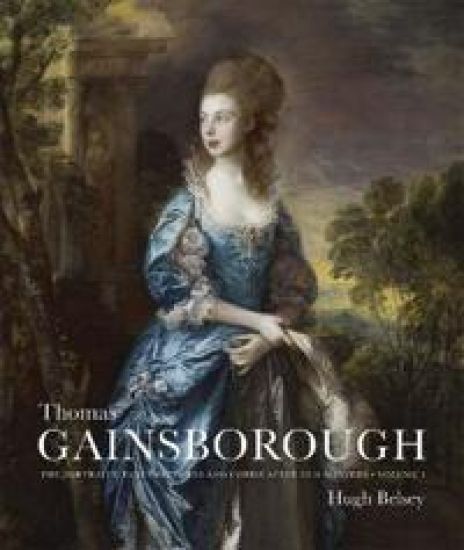
Thomas Gainsborough

Thomas Gainsborough

Hugh Belsey

Yale University Press
2019
sidottu
Scholars and enthusiasts alike will revel in this ambitious two-volume catalogue raisonné of Thomas Gainsborough’s portraits and copies of Old Master works. The catalogue contains approximately 1,100 paintings, including nearly 200 works newly attributed to the British master, as well as updated information about his subjects and specially commissioned photography. Each portrait entry includes the biography of the sitter—including several newly identified—the painting’s provenance, and exhibitions in which each work was shown. Gainsborough’s copies after Old Masters, painted in admiration and used to assimilate their style of painting into his own work, are documented here as well. Research includes in-depth analysis of newspaper archives and other printed material to establish the date of a painting’s production, chart the development of the artist’s style, and assess the impression the work made within the context of its time.Published in association with the Paul Mellon Centre for Studies in British Art
Thomas Jefferson

Thomas Jefferson

Thomas S. Kidd

YALE UNIVERSITY PRESS
2023
pokkari
A revelatory new biography of Thomas Jefferson, focusing on his ethical and spiritual life “Kidd’s biography may well be the best treatment of Jefferson’s religious and moral life available, and certainly it is among the few to take those two subjects seriously while carefully avoiding hagiography or anachronism. It deserves a wide readership.”—Miles Smith, National Review “Set aside everything you think you know about Thomas Jefferson and religion, and read this book. This is the definitive account. It is well written, well researched, judicious, and entirely convincing.”—Timothy Larsen, Wheaton College Thomas Jefferson was arguably the most brilliant and inspiring political writer in American history. But the ethical realities of his personal life and political career did not live up to his soaring rhetoric. Indeed, three tensions defined Jefferson’s moral life: democracy versus slavery, republican virtue versus dissolute consumption, and veneration for Jesus versus skepticism about Christianity. In this book Thomas S. Kidd tells the story of Jefferson’s ethical life through the lens of these tensions, including an unapologetic focus on the issue where Jefferson’s idealistic philosophy and lived reality clashed most obviously: his sexual relationship with his enslaved woman Sally Hemings. In doing so, he offers a unique perspective on one of American history’s most studied figures.
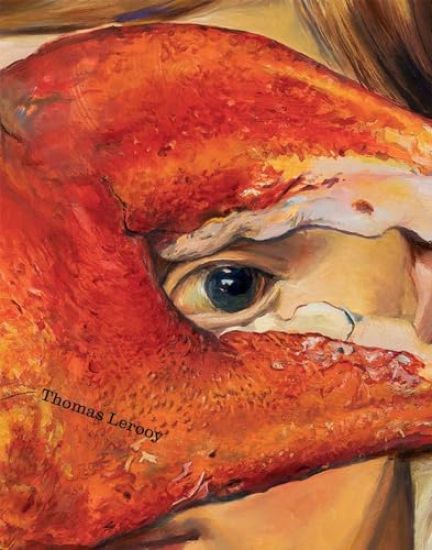
Thomas Lerooy

Thomas Lerooy

Tatjana Bacal; Suzanne Hudson

YALE UNIVERSITY PRESS
2024
sidottu
This monograph of Lerooy’s drawings, paintings, and sculptures surveys nearly 100 works from the vital years of his career. Thomas Lerooy Field Guide is an important monographic publication that brings together key works by the Belgian artist from 2006 until today. Rather than being a classic catalogue raisonné, the book is a field guide into the artist’s practice, that establishes formal and conceptual links between works from different periods and in different media. The authors, Tatjana Bacal, Suzanne Hudson and Jean-Philippe Antoine, all renowned writers in the domains of anthropology, contemporary painting, and art history, each shed a light on Thomas Lerooy’s work from their unique perspective. Distributed for MercatorfondsExhibition Schedule:TANK Shanghai Art Center (September 2024)
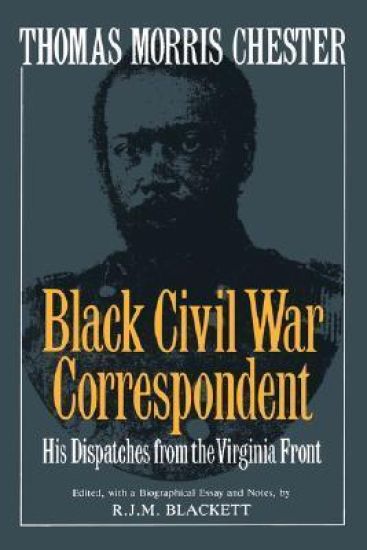
Thomas Morris Chester, Black Civil War Correspondent
In 1864 the Philadelphia Press commissioned Thomas Morris Chester, son of an ex-slave to cover the activities of black troops on the Virginia front. The only black correspondent for a major daily during the Civil War, Chester covered the crucial final year of the war around Richmond. His dispatches constitute the most sustained and extensive first-hand account of black soldiers in existence. As the war came to a close, Chester richly described the responses of Confederate troops and civilians to encounters with black soldiers, as he joined the black troops of the 25th Army Corps as they led the victorious Union forces into Richmond. In this volume, R.J.M. Blackett provides a concise biography of Chester and reproduces in annotated form his Civil War dispatches, which are remarkable for their detail and their graphic accounts of the destruction, the excitement and the liberation of theCivil War experience.
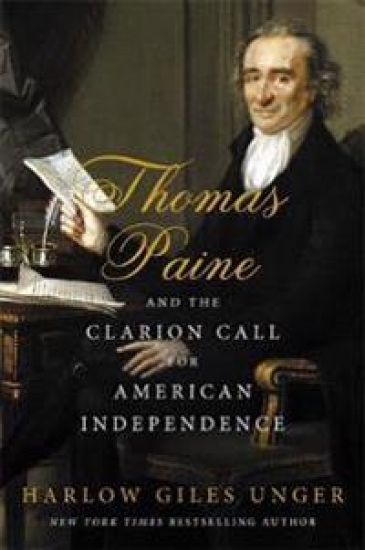
Thomas Paine and the Clarion Call for American Independence
Thomas Paine's words were like no others in history: they leaped off the page, inspiring readers to change their lives, their governments, their kings, and even their gods. In an age when spoken and written words were the only forms of communication, Paine's aroused men to action like no one else. The most widely read political writer of his generation, he proved to be more than a century ahead of his time, conceiving and demanding unheard-of social reforms that are now integral elements of modern republican societies. Among them were government subsidies for the poor, universal housing and education, pre- and post-natal care for women, and universal social security. An Englishman who emigrated to the American colonies, he formed close friendships with Benjamin Franklin, Thomas Jefferson, and James Madison, and his ideas helped shape the Declaration of Independence and the Bill of Rights.However, the world turned against Paine in his later years. While his earlier works, Common Sense and Rights of Man, attacked the political and social status quo here on earth, The Age of Reason attacked the status quo of the hereafter. Former friends shunned him, and the man America had hailed as the muse of the American Revolution died alone and forgotten.Packed with action and intrigue, soldiers and spies, politics and perfidy, Unger's Thomas Paine is a much-needed new look at a defining figure.
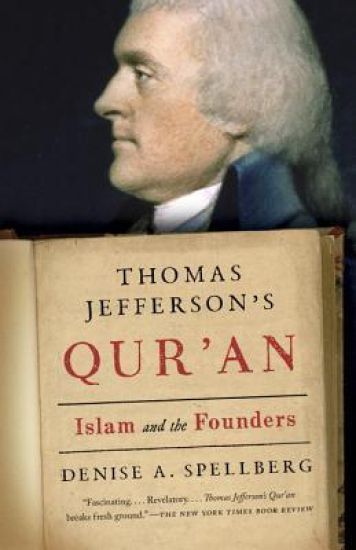
Thomas Jefferson's Qur'an

Thomas Jefferson's Qur'an

Denise Spellberg

Random House Inc
2014
pokkari
In this original and illuminating book, Denise A. Spellberg reveals a little-known but crucial dimension of the story of American religious freedom--a drama in which Islam played a surprising role. In 1765, eleven years before composing the Declaration of Independence, Thomas Jefferson bought a Qur'an. This marked only the beginning of his lifelong interest in Islam, and he would go on to acquire numerous books on Middle Eastern languages, history, and travel, taking extensive notes on Islam as it relates to English common law. Jefferson sought to understand Islam notwithstanding his personal disdain for the faith, a sentiment prevalent among his Protestant contemporaries in England and America. But unlike most of them, by 1776 Jefferson could imagine Muslims as future citizens of his new country. Based on groundbreaking research, Spellberg compellingly recounts how a handful of the Founders, Jefferson foremost among them, drew upon Enlightenment ideas about the toleration of Muslims (then deemed the ultimate outsiders in Western society) to fashion out of what had been a purely speculative debate a practical foundation for governance in America. In this way, Muslims, who were not even known to exist in the colonies, became the imaginary outer limit for an unprecedented, uniquely American religious pluralism that would also encompass the actual despised minorities of Jews and Catholics. The rancorous public dispute concerning the inclusion of Muslims, for which principle Jefferson's political foes would vilify him to the end of his life, thus became decisive in the Founders' ultimate judgment not to establish a Protestant nation, as they might well have done. As popular suspicions about Islam persist and the numbers of American Muslim citizenry grow into the millions, Spellberg's revelatory understanding of this radical notion of the Founders is more urgent than ever. "Thomas Jefferson's Qur'an" is a timely look at the ideals that existed at our country's creation, and their fundamental implications for our present and future.