Kirjojen hintavertailu. Mukana 12 390 323 kirjaa ja 12 kauppaa.

Kirjahaku

Etsi kirjoja tekijän nimen, kirjan nimen tai ISBN:n perusteella.

1000 tulosta hakusanalla Virginia Woolf

Virginia Woolf, Jean Rhys, and the Aesthetics of Trauma
This is a study of modernism, sexuality, and subjectivity in the work of two leading women modernists. Each confronted the aspects of her culture and personal history that resulted in a degraded sense of female sexuality and explored how traumatic childhood sexual experiences informed their relationship to female corporeality and fiction-writing.
Virginia Woolf’s Influential Forebears

Virginia Woolf’s Influential Forebears

Marion Dell

PALGRAVE MACMILLAN
2022
nidottu
Virginia Woolf's Influential Forebears reveals under-acknowledged nineteenth-century legacies which shaped Woolf as a writing woman. Marion Dell identifies significant lines of descent from the lives and works of Woolf's great-aunt Julia Margaret Cameron, the writer she called aunt, Anny Thackeray Ritchie, and her mother, Julia Prinsep Stephen.
Virginia Woolf and the Modern Sublime

Virginia Woolf and the Modern Sublime

Daniel T. O'Hara

Palgrave Macmillan
2017
nidottu
Sublime Woolf was written in a burst of enthusiasm after the author, Daniel T. O'Hara was finally able to teach Virginia Woolf's modernist classics again. This book focuses on those uncanny visionary passages when in elaborating 'a moment of being,' as Woolf terms it, supplements creatively the imaginative resonance of the scene.
Virginia Woolf and the Ethics of Intimacy

Virginia Woolf and the Ethics of Intimacy

Elsa Högberg

Bloomsbury Academic
2020
sidottu
Revisiting Virginia Woolf’s most experimental novels, Elsa Högberg explores how Woolf’s writing prompts us to re-examine the meaning of intimacy. In Högberg’s readings of Jacob's Room, Mrs Dalloway, To the Lighthouse and The Waves, intimacy is revealed to inhere not just in close relations with the ones we know and love, but primarily within those unsettling encounters which suspend our comfortable sense of ourselves as separate from others and the world around us. Virginia Woolf and the Ethics of Intimacy locates this radical notion of intimacy at the heart of Woolf’s introspective, modernist poetics as well as her ethical and political resistance to violence, aggressive nationalism and fascism. Engaging contemporary theory – particularly the more recent works of Judith Butler, Luce Irigaray and Julia Kristeva – it reads Woolf as a writer and ethical thinker whose vital contribution to the modernist scene of inter-war Britain is strikingly relevant to critical debates around intimacy, affect, violence and vulnerability in our own time.
Virginia Woolf's Greek Tragedy

Virginia Woolf's Greek Tragedy

Nancy Worman

Bloomsbury Academic
2020
nidottu
In Woolf's writings Greece and Greek tragedy in particular shape an exoticized aesthetic space that both emerges from and enables critique of the cosy settings and colonialist conceits of elite (and largely male) British attitudes toward culture and politics. Rather than highlighting Woolf's exclusion from male intellectual purviews, as so many scholars have emphasized, this book urges attention on how her engagements with Greek tragedy both collude with and challenge modernist aesthetics and contemporary politics.Woolf's encounters with and uses of Greek tragedy fantasize an alternative perceptual capacity that correlates to feminine (and feminist) modes, which are depicted in her writings as alternately defiant and choral. In this scheme, Greek tragedy is something of a dreamland, the mysterious dynamics of which Woolf treats as transcending cultural attitudes that hinge upon imperialist adventuring and violence. As scholars have recognized, especially in recent decades, the exoticizing gestures central to the work of so many modernists have uncomfortable political underpinnings, since they frequently inhabit imperialist and colonialist perspectives while appearing to critique them. Unlike most scholars, Nancy Worman argues that Woolf is no exception, although the feminism and humour that inflects so many "Greek" elements in her work saves it from the worst offenses.
Virginia Woolf and the Ethics of Intimacy

Virginia Woolf and the Ethics of Intimacy

Elsa Högberg

Bloomsbury Academic
2021
nidottu
Revisiting Virginia Woolf’s most experimental novels, Elsa Högberg explores how Woolf’s writing prompts us to re-examine the meaning of intimacy. In Högberg’s readings of Jacob's Room, Mrs Dalloway, To the Lighthouse and The Waves, intimacy is revealed to inhere not just in close relations with the ones we know and love, but primarily within those unsettling encounters which suspend our comfortable sense of ourselves as separate from others and the world around us. Virginia Woolf and the Ethics of Intimacy locates this radical notion of intimacy at the heart of Woolf’s introspective, modernist poetics as well as her ethical and political resistance to violence, aggressive nationalism and fascism. Engaging contemporary theory – particularly the more recent works of Judith Butler, Luce Irigaray and Julia Kristeva – it reads Woolf as a writer and ethical thinker whose vital contribution to the modernist scene of inter-war Britain is strikingly relevant to critical debates around intimacy, affect, violence and vulnerability in our own time.
Virginia Woolf's Apprenticeship

Virginia Woolf's Apprenticeship

Beth Daugherty

EDINBURGH UNIVERSITY PRESS
2022
sidottu
This study takes up Woolf's challenge to probe the relationship between education and work, specifically her education and her work as an essayist. It expands her education beyond her father's library to include not only a broader examination of her homeschooling but also her teaching at Morley College and her early book reviewing. It places Virginia Stephen's learning in the historical and cultural contexts of education for women, the working classes and writers in the late nineteenth and early twentieth century. Weaving together Virginia Stephen's homeschooling, her teaching and her writing for the newspapers, Beth Rigel Daugherty demonstrates how these three strands shape Virginia Woolf's essay persona, her essays and her relationship with her readers. She also shows why Virginia Stephen's apprenticeship compels Virginia Woolf to become a pedagogical essayist. The volume publishes two holograph draft lectures by Virginia Stephen for the first time and mines rarely used archival materials. It also includes five appendices, one detailing Virginia Stephen's library and another her apprenticeship essays.This is the first in a two-volume study of Virginia Woolf's essays that analyses Virginia Stephen's development and Virginia Woolf's achievements as an essay writer.
Virginia Woolf's Apprenticeship

Virginia Woolf's Apprenticeship

Rigel Beth Daugherty

EDINBURGH UNIVERSITY PRESS
2024
nidottu
This study takes up Woolf's challenge to probe the relationship between education and work, specifically her education and her work as an essayist. It expands her education beyond her father's library to include not only a broader examination of her homeschooling but also her teaching at Morley College and her early book reviewing. It places Virginia Stephen's learning in the historical and cultural contexts of education for women, the working classes and writers in the late nineteenth and early twentieth century. Weaving together Virginia Stephen's homeschooling, her teaching and her writing for the newspapers, Beth Rigel Daugherty demonstrates how these three strands shape Virginia Woolf's essay persona, her essays and her relationship with her readers. She also shows why Virginia Stephen's apprenticeship compels Virginia Woolf to become a pedagogical essayist. The volume publishes two holograph draft lectures by Virginia Stephen for the first time and mines rarely used archival materials. It also includes five appendices, one detailing Virginia Stephen's library and another her apprenticeship essays.This is the first in a two-volume study of Virginia Woolf's essays that analyses Virginia Stephen's development and Virginia Woolf's achievements as an essay writer.
Virginia Woolf and Capitalism

Virginia Woolf and Capitalism

EDINBURGH UNIVERSITY PRESS
2024
sidottu
Virginia Woolf and Capitalism explores Woolf's engagement with and critiques of capitalism throughout her life, arguing for its central importance in our understanding of her as an author, activist and publisher. Galvanised by existing scholarship on the place of economics, class, gender and empire in Woolf's writing, this collection draws attention to her thinking about history, labour and economics and gives space for understandings of Woolf in the context of our own late-capitalist moment. Chapters by leading and emerging scholars range across Woolf's oeuvre in all its generic diversity, from her earliest short fiction and Night and Day to Three Guineas and Between the Acts, showcasing a range of critical approaches from the archival to the creative to the pedagogical. This collection demonstrates how productive and provocative thinking about Woolf's fiction and non-fiction through the lens of capitalism can be for Woolf scholars.
Virginia Woolf and the Anthropocene

Virginia Woolf and the Anthropocene

EDINBURGH UNIVERSITY PRESS
2024
sidottu
The first half of the twentieth century was a period of accelerated resource extraction, industrial intensification and tipping points in pollution levels, hastening the emergence of an epoch in which humans are the key drivers of planetary change. Virginia Woolf and the Anthropocene situates Woolf's oeuvre as an important body of work within the literary history of our new planetary period, showing how her fiction and non-fiction engages with questions around climate change, environmental politics, imperial extractivism, eco-philosophy, species difference, natural history and extinction. Bringing together leading and emergent scholars, this collection recognises Woolf as a writer who was profoundly influenced by ecological and environmental questions throughout her life. It brings to light how Woolf responded to the environmental changes of her time and illuminates how her literary innovations continue to offer compelling ways of imagining the nonhuman and the planetary in our present moment.
Virginia Woolf and the Anthropocene

Virginia Woolf and the Anthropocene

EDINBURGH UNIVERSITY PRESS
2026
nidottu
The first half of the twentieth century was a period of accelerated resource extraction, industrial intensification and tipping points in pollution levels, hastening the emergence of an epoch in which humans are the key drivers of planetary change. Virginia Woolf and the Anthropocene situates Woolf's oeuvre as an important body of work within the literary history of our new planetary period, showing how her fiction and non-fiction engages with questions around climate change, environmental politics, imperial extractivism, eco-philosophy, species difference, natural history and extinction. Bringing together leading and emergent scholars, this collection recognises Woolf as a writer who was profoundly influenced by ecological and environmental questions throughout her life. It brings to light how Woolf responded to the environmental changes of her time and illuminates how her literary innovations continue to offer compelling ways of imagining the nonhuman and the planetary in our present moment.
Virginia Woolf  Objects, Things, Matter

Virginia Woolf Objects, Things, Matter

EDINBURGH UNIVERSITY PRESS
2025
sidottu
Virginia Woolf's deep and creative interest in materiality is not only illuminated by but precedes current theorisations of objects, things and matter among them, new materialism, object-oriented ontology and thing theory. Through both critical and creative engagements, contributors explore the possibilities and limitations of these theoretical accounts: what new readings they afford; what they say that Woolf has already shown us; and how Woolf goes beyond or can't be fully captured by these ideas. This volume thus gathers various, sometimes even contradictory, approaches on the topic; in turn, it emphasises congruences and tensions in theoretical, literary and cultural interpretations of Woolf's material investments. What emerges in Virginia Woolf Objects, Things, Matter is an account of how Woolf reveals things to be vital, active and strange by refiguring the relationship between subject and object and, at times, even inverting, subverting or redefining those very terms.
Virginia Woolf and Motherhood

Virginia Woolf and Motherhood

Charlotte Taylor Suppe

EDINBURGH UNIVERSITY PRESS
2024
sidottu
Motherhood is a recurrent theme in Virginia Woolf's writing yet Woolf scholarship has often overlooked this dynamic subject. Exploring how Woolf engaged with themes of motherhood as a socially and politically motivated writer and a woman, this book grounds her work in the maternal discourses of her time. By reading Woolf's texts in dialogue with contemporary writing, socio-political events and medical and scientific advances, Virginia Woolf and Motherhood establishes the significance of maternity across Woolf's oeuvre and exposes how public and personal matters of motherhood informed the links she drew between maternity, femininity, self-worth and artistry. With novel analysis of Woolf's writing on war, eugenics, food and psychoanalysis, Charlotte Taylor Suppe demonstrates the substantive influence maternal discourses had on shaping Woolf's feminism, political beliefs and creative practices.
Virginia Woolf: Public and Private Negotiations
In Virginia Woolf: Public and Private Negotiations , Anna Snaith explores the centrality of ideas of public and private in Woolf's life and writing. The book offers a fresh understanding of Woolf's feminism, her narrative techniques, her attitudes to publication, and her role in public debate. It draws on new manuscript material and previously unexplored letters to Woolf from her reading public.
Virginia Woolf, Jean Rhys, and the Aesthetics of Trauma
This is a study of modernism, sexuality, and subjectivity in the work of two leading women modernists. Each confronted the aspects of her culture and personal history that resulted in a degraded sense of female sexuality and explored how traumatic childhood sexual experiences informed their relationship to female corporeality and fiction-writing.
Virginia Woolf's Late Cultural Criticism

Virginia Woolf's Late Cultural Criticism

Alice Wood

Bloomsbury Academic USA
2013
sidottu
After the Modernist literary experiments of her earlier work, Virginia Woolf became increasingly concerned with overt social and political commentary in her later writings, which are preoccupied with dissecting the links between patriarchy, patriotism, imperialism and war. This book unravels the complex textual histories of The Years (1937), Three Guineas (1938) and Between the Acts (1941) to expose the genesis and evolution of Virginia Woolf’s late cultural criticism. Fusing a feminist-historicist approach with the practices and principles of genetic criticism, this innovative study scrutinizes a range of holograph, typescript and proof documents within their historical context to uncover the writing and thinking processes that produced Woolf’s cultural analysis during 1931-1941. By demonstrating that Woolf’s late cultural criticism developed through her literary experimentalism as well as in response to contemporary social, political and economic upheavals, this book offers a fresh perspective on her emergence as a cultural commentator in her final decade and paves the way for further genetic enquiries in the field.
Virginia Woolf's Late Cultural Criticism

Virginia Woolf's Late Cultural Criticism

Alice Wood

Bloomsbury Academic
2015
nidottu
After the Modernist literary experiments of her earlier work, Virginia Woolf became increasingly concerned with overt social and political commentary in her later writings, which are preoccupied with dissecting the links between patriarchy, patriotism, imperialism and war. This book unravels the complex textual histories of The Years (1937), Three Guineas (1938) and Between the Acts (1941) to expose the genesis and evolution of Virginia Woolf’s late cultural criticism. Fusing a feminist-historicist approach with the practices and principles of genetic criticism, this innovative study scrutinizes a range of holograph, typescript and proof documents within their historical context to uncover the writing and thinking processes that produced Woolf’s cultural analysis during 1931-1941. By demonstrating that Woolf’s late cultural criticism developed through her literary experimentalism as well as in response to contemporary social, political and economic upheavals, this book offers a fresh perspective on her emergence as a cultural commentator in her final decade and paves the way for further genetic enquiries in the field.
Virginia Woolf's Greek Tragedy

Virginia Woolf's Greek Tragedy

Nancy Worman

Bloomsbury Academic
2018
sidottu
In Woolf's writings Greece and Greek tragedy in particular shape an exoticized aesthetic space that both emerges from and enables critique of the cosy settings and colonialist conceits of elite (and largely male) British attitudes toward culture and politics. Rather than highlighting Woolf's exclusion from male intellectual purviews, as so many scholars have emphasized, this book urges attention on how her engagements with Greek tragedy both collude with and challenge modernist aesthetics and contemporary politics.Woolf's encounters with and uses of Greek tragedy fantasize an alternative perceptual capacity that correlates to feminine (and feminist) modes, which are depicted in her writings as alternately defiant and choral. In this scheme, Greek tragedy is something of a dreamland, the mysterious dynamics of which Woolf treats as transcending cultural attitudes that hinge upon imperialist adventuring and violence. As scholars have recognized, especially in recent decades, the exoticizing gestures central to the work of so many modernists have uncomfortable political underpinnings, since they frequently inhabit imperialist and colonialist perspectives while appearing to critique them. Unlike most scholars, Nancy Worman argues that Woolf is no exception, although the feminism and humour that inflects so many "Greek" elements in her work saves it from the worst offenses.
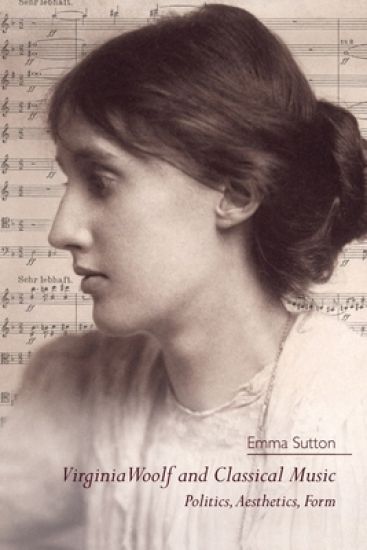
Virginia Woolf and Classical Music

Virginia Woolf and Classical Music

Emma Sutton

Edinburgh University Press
2015
nidottu
This study is a groundbreaking investigation into the formative influence of music on Virginia Woolf's writing. In this unique study Emma Sutton discusses all of Woolf's novels as well as selected essays and short fiction, offering detailed commentaries on Woolf's numerous allusions to classical repertoire and to composers including Bach, Mozart, Beethoven and Wagner. Sutton explores Woolf's interest in the contested relationship between politics and music, placing her work in a matrix of ideas about music and national identity, class, anti Semitism, pacifism, sexuality and gender. The study also considers the formal influence of music - from fugue to Romantic opera - on Woolf's prose and narrative techniques. The analysis of music's role in Woolf's aesthetics and fiction is contextualized in accounts of her musical education, activities as a listener, and friendships with musicians; and the study outlines the relationship between her 'musicalized' work and that of contemporaries including Joyce, Lawrence, Forster, Mansfield and Eliot. It analysis of music, national identity and war in The Voyage Out, Jacobs Room and Mrs Dalloway. It offers a close reading of Wagner's influence on the plot and narrative techniques of The Voyage Out. It analysis of music and philo and anti Semitism in The Years. It offers innovative reading of the 'fugal' structure of Mrs Dalloway.
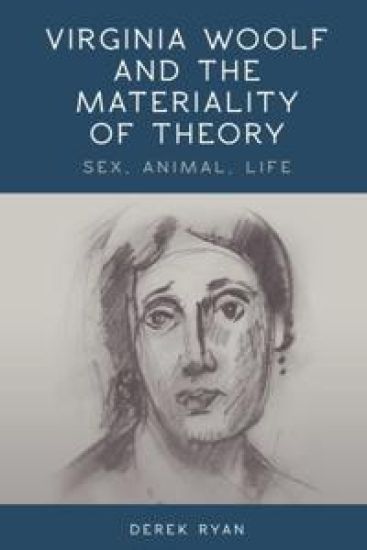
Virginia Woolf and the Materiality of Theory

Virginia Woolf and the Materiality of Theory

Derek Ryan

Edinburgh University Press
2015
nidottu
This book explores Woolf's writing alongside Deleuzian philosophy and new materialist theories of sexuality, animality, and posthuman life. How does Virginia Woolf conceptualise the material world? In what ways has Woolf's modernism affected understandings of materiality, and what new perspectives does she offer contemporary theoretical debates? Derek Ryan demonstrates how materiality is theorised in Woolf's writings by focusing on the connections she makes between culture and nature, embodiment and environment, human and nonhuman, life and matter. Through close readings of texts including To the Lighthouse, Orlando, A Room of One's Own, The Waves, Flush, and 'Sketch of the Past', he details the fresh insights Woolf provides into issues concerning the natural world, sexual difference, sexuality, animality, and life itself. Ryan opens up Woolf studies to new theoretical paradigms by placing Woolf in dialogue with Gilles Deleuze - who cites her modernist aesthetics as exemplary of some of his most important philosophical concepts - as well as eminent contemporary theorists including Rosi Braidotti, Donna Haraway, Karen Barad, and Jane Bennett, all of whom have influenced the recent critical turn towards new materialisms. Locating theory within Woolf's writing as well as locating Woolf within theory, Virginia Woolf and the Materiality of Theory: Sex, Animal, Life brings her modernism firmly into to the foreground of current debates in literary studies, feminist philosophy, queer theory, animal studies and posthumanities.