Kirjojen hintavertailu. Mukana 12 489 621 kirjaa ja 12 kauppaa.

Kirjahaku

Etsi kirjoja tekijän nimen, kirjan nimen tai ISBN:n perusteella.

1000 tulosta hakusanalla Vladimir Simosko

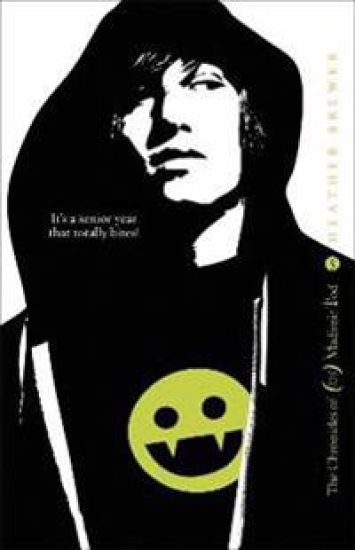
The Chronicles of Vladimir Tod: Ninth Grade Slays
If middle school sucked for Vladimir Tod, high school is a real drain.Besides being a punch bag for bullies, he's still going nowhere fast with dream girl Meredith. Needless to say, practicing his vampire skills hasn't exactly been a priority for Vlad ­- until now. A monumental trip to Siberia with Uncle Otis, training alongside the most gifted vampires, is exactly what Vlad needs.And he'd better get it right, because the battle brewing back home with the vampire who's been stalking him . . . could be Vlad's last.
The Chronicles of Vladimir Tod: Twelfth Grade Kills
Vlad's running out of time. The Elysian Council has given him weeks to live, and that's if the Slayer Society doesn't kill him first. Then there's the issue of Vlad's father, who may or may not still be alive after all these years, and oh yeah, that tiny little detail in the Pravus prophecy about Vlad enslaving Vampirekind and the human race. So much for college applications . . . Dark secrets will be revealed, old friends will become enemies, and warm blood will run cold in this thrilling final instalment in the tales of Vladimir Tod.
The Chronicles of Vladimir Tod Boxed Set
The New York Times bestselling series from Heather Brewer is now available in one box set Eighth Grade Bites Thirteen-year-old Vladimir Tod really hates junior high. Bullies harass him, the principal is dogging him, and the girl he likes prefers his best friend. Oh, and Vlad has a secret: His mother was human, but his father was a vampire. With no idea of the extent of his powers, Vlad struggles daily with his blood cravings and his enlarged fangs. When a substitute teacher begins to question him a little too closely, Vlad worries his cover is about to be blown. Then he faces a much bigger problem: He's being hunted by a vampire killer. Ninth Grade Slays Freshman year stinks for Vlad. Bullies still harass him. The photographer from the school newspaper is tailing him. And failing his studies could be deadly. A trip to Siberia gives "study abroad" a whole new meaning as Vlad connects with other vampires and advances his mind-control abilities, but will he return home with the skills to recognize a vampire slayer when he sees one? Tenth Grade Bleeds It's another awful year at Bathory High for Vlad. The evil vampire D'Ablo is hunting for the ritual that could steal Vlad's powers. His best friend doesn't want to be his drudge anymore. And it's getting harder for Vlad to resist feeding on the people around him. When months go by with no word from Uncle Otis, and D'Ablo shows up demanding Vlad's father's journal, Vlad realizes having a normal high school year is the least of his concerns. Vlad needs to act fast, and even his status as the Pravus won't save him this time. Eleventh Grade Burns Eleventh grade at Bathory High is draining Vlad. Joss, a professional vampire slayer and Vlad's former friend, has moved back to town. The powerful vampire Dorian has an overwhelming desire to drink Vlad's blood. And his archenemy, D'Ablo, has brought Vlad's uncle Otis to trial for crimes against vampires. So much for dating. When the tables turn on Vlad, he has just enough time to return to Bathory for his final good-byes.
The Religious Philosophy of Vladimir Solovyov

The Religious Philosophy of Vladimir Solovyov

Jonathan Sutton

Palgrave Macmillan
1988
sidottu
The philosopher and poet Vladimir Solovyov (1853-1900) is largely unknown to English readers, though translations of his works do exist. This book presents his central teachings and analyses his treatment of the non-Christian religions, Buddhism and Taosim in particular. This now makes it more possible to reassess his religious philosophy as a whole. The book will be of interest to students of comparative religion, theology, philosophy and Russian intellectual history.
The Garland Companion to Vladimir Nabokov
First published in 1995. This companion constitutes a virtual encyclopaedia of Nabokov, and occupies a unique niche in scholarship about him. Articles on individual works by Nabokov, including his short stories and poetry, provide a brief survey of critical reactions and detailed analyses from diverse vantage points. For anyone interested in Nabokov, from scholars to readers who love his works, this is an ideal guide. Its chronology of Nabokov's life and works, bibliographies of primary and secondary works, and a detailed index make it easy to find reliable information any aspect of Nabokov's rich legacy.
Routledge Library Editions: Vladimir Lenin
Originally published between 1926 and 1984, the 6 volumes in this set: Discuss the problems of Leninism and socialist construction, as well as the October Revolution and the relationship of the USSR and the West in the years following the First World War. Give an invaluable picture of what the Russian leader Joseph Stalin understood by Leninism. Provide illuminating study of the political thought and action of the Russian intelligentsia, in the decade up to and including the Revolution of 1905-6. Include the first biography of Lenin which tied together extensive material unearthed in WWII, explaining the complex personality and riddle of Lenin's seemingly impossible rise to power. Critique certain phases of revolutionary dictatorship in Russia. Reconsider the effect of Lenin on the politics and culture of the 20th Century.
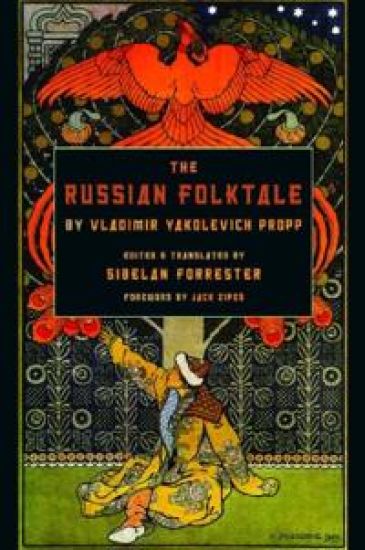
The Russian Folktale by Vladimir Yakovlevich Propp

The Russian Folktale by Vladimir Yakovlevich Propp

Jack Zipes

Wayne State University Press
2012
nidottu
Vladimir Propp is the Russian folklore specialist most widely known outside Russia thanks to the impact of his 1928 book Morphology of the Folktale—but Morphology is only the first of Propp’s contributions to scholarship. This volume translates into English for the first time his book The Russian Folktale, which was based on a seminar on Russian folktales that Propp taught at Leningrad State University late in his life. Edited and translated by Sibelan Forrester, this English edition contains Propp’s own text and is supplemented by notes from his students. The Russian Folktale begins with Propp’s description of the folktale’s aesthetic qualities and the history of the term; the history of folklore studies, first in Western Europe and then in Russia and the USSR; and the place of the folktale in the matrix of folk culture and folk oral creativity. The book presents Propp’s key insight into the formulaic structure of Russian wonder tales (and less schematically than in Morphology, though in abbreviated form), and it devotes one chapter to each of the main types of Russian folktales: the wonder tale, the “novellistic” or everyday tale, the animal tale, and the cumulative tale. Even Propp’s bibliography, included here, gives useful insight into the sources accessible to and used by Soviet scholars in the third quarter of the twentieth century. Propp’s scholarly authority and his human warmth both emerge from this well-balanced and carefully structured series of lectures. An accessible introduction to the Russian folktale, it will serve readers interested in folklore and fairy-tale studies in addition to Russian history and cultural studies.
The Garland Companion to Vladimir Nabokov
First published in 1995. This companion constitutes a virtual encyclopaedia of Nabokov, and occupies a unique niche in scholarship about him. Articles on individual works by Nabokov, including his short stories and poetry, provide a brief survey of critical reactions and detailed analyses from diverse vantage points. For anyone interested in Nabokov, from scholars to readers who love his works, this is an ideal guide. Its chronology of Nabokov's life and works, bibliographies of primary and secondary works, and a detailed index make it easy to find reliable information any aspect of Nabokov's rich legacy.
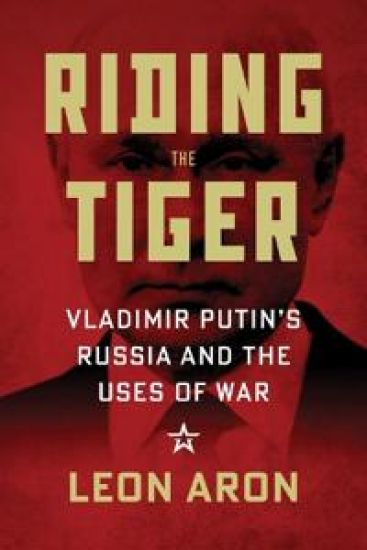
Riding the Tiger: Vladimir Putin's Russia and the Uses of War
"Having saddled the tiger of militarized patriotism, Putin expertly made it trot in the right direction. But the animal required more and more meat; as it grew, it became harder to dismount." In this gripping tale, Leon Aron, the author of the acclaimed biography Yeltsin: A Revolutionary Life, shows how Vladimir Putin has refashioned Russian society in his own image, placing militarized patriotism front and center. Through hundreds of Russian-language sources and arresting images, Aron chronicles the emergence of the new Russia. Riding the Tiger challenges the conventional idea of Putin's regime as a traditional autocracy, bolstered by propaganda, political manipulation, and repression. The book tells the story of how Putin shaped ordinary Russians' views of their country, their history, and their own selves. The fast-paced narrative is a crash course in the political and cultural history of Russia according to Putin, his vision of Russia's manifest destiny, and his role in fulfilling it. In exploring Russia's recent past, Aron offers insights into Russia's future. He argues that Putin's actions, including the invasion of Ukraine, are driven by the Russian president's need to ensure his regime's survival, avenge the fall of the Soviet Union, combat the America-led West, and make Russia a superpower again. Thus, regardless of the outcome of the war in Ukraine, war-or the threat of war-will remain his preferred means of holding on to power and recovering national glory. Could Putin bring the world to the brink of nuclear Armageddon in pursuit of those ends? At the close of the book, Aron offers a chillingly detailed scenario of how such a crisis might play out.
Riding the Tiger: Vladimir Putin's Russia and the Uses of War
In Riding the Tiger, Leon Aron, an acclaimed Russian studies scholar and a Moscow native who was sanctioned by President Vladimir Putin's regime, chronicles the transformation of Russian politics and society under Putin. Through hundreds of Russian-language sources, Dr. Aron shows how Putin uses militarist propaganda and sanitized revisionist images of World War II, Stalin, and the Soviet Union to forge a nationalist and loyal core of his regime's support. And the "new Russia" suddenly looks a lot like the old USSR.Dr. Aron's bold, expert analysis of Russian political culture under Putin helps us better understand Russia's revanchist tendencies, its invasion of Ukraine, and the perilous road ahead.
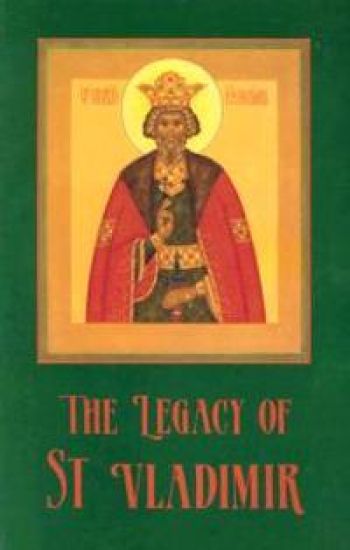
Legacy of St Vladimir  The

Legacy of St Vladimir The

M John

St Vladimir's Seminary Press,U.S.
2003
nidottu
Twenty essays by a diverse group of theologians, musicians, historians and musicologists, on the historical, theological, social and spiritual developments which brought Orthodoxy from Byzantium to the modern world.
The Christian Philosophy of Vladimir Solovyov

The Christian Philosophy of Vladimir Solovyov

Ellen Mayne

Hassell Street Press
2021
sidottu
This work has been selected by scholars as being culturally important and is part of the knowledge base of civilization as we know it.This work is in the public domain in the United States of America, and possibly other nations. Within the United States, you may freely copy and distribute this work, as no entity (individual or corporate) has a copyright on the body of the work.Scholars believe, and we concur, that this work is important enough to be preserved, reproduced, and made generally available to the public. To ensure a quality reading experience, this work has been proofread and republished using a format that seamlessly blends the original graphical elements with text in an easy-to-read typeface.We appreciate your support of the preservation process, and thank you for being an important part of keeping this knowledge alive and relevant.
The Christian Philosophy of Vladimir Solovyov

The Christian Philosophy of Vladimir Solovyov

Ellen Mayne

Hassell Street Press
2021
nidottu
This work has been selected by scholars as being culturally important and is part of the knowledge base of civilization as we know it.This work is in the public domain in the United States of America, and possibly other nations. Within the United States, you may freely copy and distribute this work, as no entity (individual or corporate) has a copyright on the body of the work.Scholars believe, and we concur, that this work is important enough to be preserved, reproduced, and made generally available to the public. To ensure a quality reading experience, this work has been proofread and republished using a format that seamlessly blends the original graphical elements with text in an easy-to-read typeface.We appreciate your support of the preservation process, and thank you for being an important part of keeping this knowledge alive and relevant.
Psychoanalytic Reflections on Vladimir Putin
Psychoanalytic Reflections on Vladimir Putin: The Cost of Malignant Leadership attempts to explore the core psychodynamics that appear to characterize Vladimir Putin’s presidency.Its contributors examine the nature of the leader-follower relationship, the costs of malignant leadership, and the larger historical context in which Putin’s presidency is unfolding. The sobering threat of nuclear war is considered. Finally, the viability and ethics of distance assessment are discussed.This book will be of great interest to psychoanalysts and to readers seeking to understand the complex dynamics of populist leadership.
Psychoanalytic Reflections on Vladimir Putin
Psychoanalytic Reflections on Vladimir Putin: The Cost of Malignant Leadership attempts to explore the core psychodynamics that appear to characterize Vladimir Putin’s presidency.Its contributors examine the nature of the leader-follower relationship, the costs of malignant leadership, and the larger historical context in which Putin’s presidency is unfolding. The sobering threat of nuclear war is considered. Finally, the viability and ethics of distance assessment are discussed.This book will be of great interest to psychoanalysts and to readers seeking to understand the complex dynamics of populist leadership.
A Study of Vladimir Nabokov’s Cosmopolitan Literary Thoughts
This book explores Vladimir Nabokov's literary thoughts, which blend Russian traditions, American values, European heritage, and multiculturalism, manifesting the cosmopolitan character of his writings and aesthetic ideas.Nabokov’s literary thoughts and writings inherit the legacies of various cultural traditions. This book explores four major facets of Nabokov’s intellectual and artistic origins: “Russianness,” “Americanness,” “Europeanness,” and multiculturalism. It discusses his affinity with major trends in twentieth-century literary theory, including Russian formalism, Bakhtinian poetics, New Criticism, aestheticism, psychoanalysis, feminism, postcolonialism, and cultural identity. It also shows how Nabokov developed these ideas in his own unique way. In addition, this study provides a cross-cultural overview of his reception and influence in China, comparing his works and thoughts with several Chinese authors. This further illustrates the “cosmopolitanism” of his literary thought and the inclusiveness of his concept of world literature. This study helps to better understand Nabokov’s ideas and writings in a broader context and also to discover innovative approaches to the communication, integration, and complementarity of Western and Eastern literatures and cultures.This book will appeal to literature scholars, students, and anyone interested in Nabokov studies, literary theory, American literature, world literature, and comparative literature.
The Religious Philosophy of Vladimir Solovyev

The Religious Philosophy of Vladimir Solovyev

William Henry Dunphy

Literary Licensing, LLC
2011
sidottu
The book ""The Religious Philosophy Of Vladimir Solovyev"" by William Henry Dunphy is a comprehensive exploration of the religious and philosophical ideas of the prominent Russian thinker Vladimir Solovyev. The book delves into Solovyev's worldview, which was grounded in his deep Christian faith and his belief in the unity of all things. Dunphy examines Solovyev's ideas about the nature of God, the relationship between humanity and divinity, and the role of love and compassion in human life. The book also explores Solovyev's views on ethics, politics, and the meaning of human existence. Throughout the book, Dunphy provides insightful analysis and commentary on Solovyev's ideas, placing them in their historical and cultural context and examining their relevance to contemporary debates and discussions. Overall, ""The Religious Philosophy Of Vladimir Solovyev"" is an engaging and thought-provoking exploration of the ideas of one of the most important thinkers of the modern era.This scarce antiquarian book is a facsimile reprint of the old original and may contain some imperfections such as library marks and notations. Because we believe this work is culturally important, we have made it available as part of our commitment for protecting, preserving, and promoting the world's literature in affordable, high quality, modern editions, that are true to their original work.