Kirjojen hintavertailu. Mukana 11 717 486 kirjaa ja 12 kauppaa.

Kirjahaku

Etsi kirjoja tekijän nimen, kirjan nimen tai ISBN:n perusteella.

1000 tulosta hakusanalla Wauter Mannaert

Water Pricing and Public-Private Partnership
There is no question that water pricing and public-private partnership can improve water management practices in the future. However, this concept is neither the cure-all many proponents argue, nor the disaster its opponents forecast. Providing a comprehensive and objective assessment of what does and does not work, where, why and under what circumstances, this informative collection assesses the social, economic, equity and institutional implications. This cohesive set of carefully selected essays, the result of The Third World Centre for Water Management and the Inter-American Development Bank's decision to objectively and critically assess the experiences in these areas, transcends the current dogmatic debate on these complex issues. Providing an in-depth analysis and assessment of the main issues and constraints of water pricing, private sector participation and their affect on water supply, the collection draws on illustrative case studies from Argentina, Brazil, the USA and Western European countries amongst others. This is a special issue of the Journal of Water Resource Development.
Water Management in Megacities
Efficient and equitable water, wastewater and stormwater management for the megacities is becoming an increasingly complex task. The special issue will focus on water management in its totality for megacities, including their technical, social, economic, legal, institutional and environmental dimensions through a series of specially invited case studies from different megacities of the world.At present, around one out of two of the earth’s 6.3 billion people live in urban areas. Each year, the world population grows by around 80 millions. Practically all of this growth is urban, primarily due to migration. World’s urban population is expected to reach 5 billion by 2030, which is nearly 2/3rd more than in 2000, and would mean that 60% of world’s population will live in urban areas.The case studies analysed include some of the most interesting and challenging megacities of this planet, Dhaka, Istanbul, Jakarta, Johannesburg, México City, Riyadh and São Paulo. They assess different aspects of how water is intermingled in the overall development milleau. The special issue will considers the magnitudes, nature and extent of the present and future challenges and how these could be meet in socially acceptable and cost-effective ways. The contributors are all acknowledged water experts from different parts of the world. This book was previously published as a special issue of the International Journal of Water Resource s Development.
Water Conflicts in India
Water conflicts in India have now percolated to every level. They are aggravated by the relative paucity of frameworks, policies and mechanisms to govern the use of water resources. Based on the premise that understanding and documenting different types of water conflict cases in all their complexity would contribute to informed public debate and facilitate their resolution, Forum for Policy Dialogue on Water Conflicts in India, a collaborative initiative of the WWF project ‘Dialogue on Water, Food and Environment’, documented a number of such case studies. One of its kind in India, this book brings together an impressive sixty-three case studies – summarized status of the conflicts, the issues involved and their current position – and gives us a glimpse into ‘the million revolts’ that are brewing around water. While recognizing that each conflict is a microcosm of wider conflicts, the editors have classified these cases into eight broad themes that try to capture the dominant aspect of the conflict. These are: contending water uses; dams and displacement; equity-access-allocations; micro-level conflicts; water quality; trans-boundary conflicts; privatization; sand excavation and mining. With a mix of academics and activists as contributors, the book makes an important contribution to a new discourse on water in general, and water conflicts and conflict resolution in particular.
Water Pricing and Public-Private Partnership
There is no question that water pricing and public-private partnership can improve water management practices in the future. However, this concept is neither the cure-all many proponents argue, nor the disaster its opponents forecast. Providing a comprehensive and objective assessment of what does and does not work, where, why and under what circumstances, this informative collection assesses the social, economic, equity and institutional implications. This cohesive set of carefully selected essays, the result of The Third World Centre for Water Management and the Inter-American Development Bank's decision to objectively and critically assess the experiences in these areas, transcends the current dogmatic debate on these complex issues. Providing an in-depth analysis and assessment of the main issues and constraints of water pricing, private sector participation and their affect on water supply, the collection draws on illustrative case studies from Argentina, Brazil, the USA and Western European countries amongst others. This is a special issue of the Journal of Water Resource Development.
Water, Sovereignty and Borders in Asia and Oceania
This book restores water, both fresh and salt, to its central position in human endeavour, ecology and environment. Water access and the environmental and social problems of development are major issues of concern in this century. Drawing on water's many formations in debating human relationship with a major source of life and a major factor in contemporary politics, this book covers oceans and rivers to lagoons, billabongs and estuaries in Asia, Oceania and the West Pacific. In an interdisciplinary and cross-disciplinary analysis of the water problem, the contributors address the physical descriptors of water and water flow, and they interrogate the politicised administrations of water in closely corresponding regions. Water, Sovereignty and Borders in Asia and Oceania identifies new discursive possibilities for thinking about water in theory and in practice. It presents those discourses that seem most useful in addressing the multiple crises the region is facing and thus should be of interest to scholars of Asian Studies, Geography, Environmental and Cultural Studies.
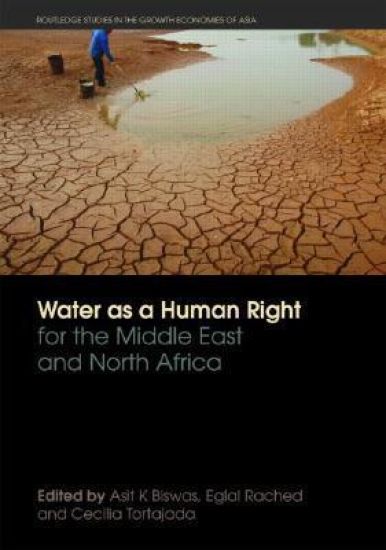
Water as a Human Right for the Middle East and North Africa
Access to safe drinking water and proper sanitation is essential for human survival and for maintenance of a decent quality of life. Currently, more than a billion people do not have access to safe drinking water and more than two billion people lack proper sanitation. In 1992, the United Nations proclaimed that water should be considered to be a human right. This position, however, has not been accepted by many developed and developing countries. This book systematically and comprehensively analyzes the legal development of the concept of water as a human right; implications for the national governments, and international and national organizations for the implementation of this concept; progress made in different Middle East and North African countries to provide every individual access to clean water and sanitation, constraints faced to assure universal access to water-related services and how these constraints can be overcome, and an overall research agenda in areas where more knowledge is necessary.
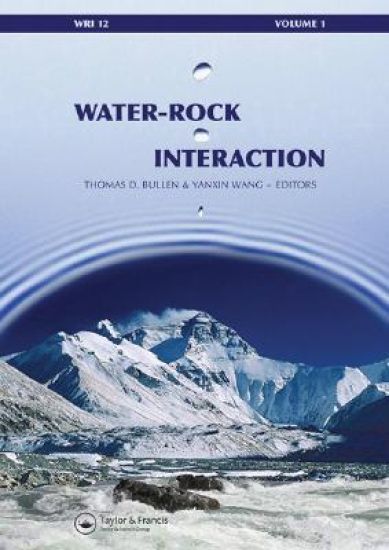
Water-Rock Interaction, Two Volume Set
The hydrosphere and lithosphere intersect in a zone a few kilometres wide at the earth’s surface, resulting in the formation of magmas, metamorphic rocks and mineral deposits, and placing important controls on the evolution of landscapes. This interaction imparts chemistry to waters and provides the essential environment for ecosystems to flourish. It affects the transport and fate of pollutants in groundwater and surface water systems, influences the stability of landscapes and sub-surface structures and provides an important feedback mechanism for controlling carbon dioxide levels in the atmosphere. New analytical instrumentation and methods have allowed unprecedented characterization of the sources of, and processes affecting, the chemical constituents of water. Novel field and laboratory-based approaches have revealed the atomic level of the mineral-water interface and the critical role that microbes play in many water-rock interactions, including the toxification and detoxification of the environment. Our window into the higher temperature and pressure world of geothermal waters increasingly widens as new theoretical and experimental approaches are perfected. The need to confront society’s impact on the environment has led to innovative field-based and theoretical studies of our ability to sequester waste products effectively and safely within the earth, to develop new methods to treat wastes before they are returned to the environment, and to greater understanding of the limits of sustainability of our water and mineral resources. In 2007, WRI-12 attracted more than 400 geoscientists from over 25 countries to Kunming, China. For this WRI symposium, approximately half of the 350 papers were from Chinese scientists, attesting to the increasing impact their science is having on the world stage.
Water Resources and Development

Water Resources and Development

Clive Agnew; Philip Woodhouse

Routledge
2010
sidottu
Since the start of the twenty-first century there has been an unprecedented focus upon water as a key factor in the future of both society and environment. Water management lies at the heart of strategies of development as does the added the hazard of climate change.Water Resources and Development provides a stimulating interdisciplinary introduction to the role of water resources in shaping opportunities and constraints for development. The book begins by charting the evolution of approaches to water management. It identifies an emerging polarization in the late twentieth century between ‘technical’ and ‘social’ strategies. In the past decade these two axes of policy debate have been further intersected by discussion of the scale at which management decisions should be made: the relative effectiveness of ‘global’ and ‘local’ governance of water. A variety of case studies elaborate this analytical framework, exemplifying four key development challenges: economic growth, poverty reduction, competition and conflict over water, and adaptation to climate change. Current ‘best practice’ for water management is examined, addressing strategies of water supply augmentation, the ecological implications of intensified use, and strategies of demand management guided by economic or political principles. It is argued defining ‘successful’ water management and best practice requires first the establishment of development goals and the implicit trade-offs between water consumption and conservation.This engaging and insightful text offers a unique interdisciplinary analysis by integrating scientific, engineering, social and political perspectives. This is an essential text for courses on development studies, geography, earth sciences and the environment.
Water Resources and Development

Water Resources and Development

Clive Agnew; Philip Woodhouse

Routledge
2010
nidottu
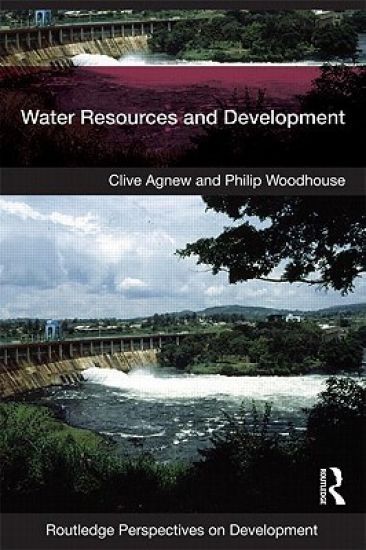
Since the start of the twenty-first century there has been an unprecedented focus upon water as a key factor in the future of both society and environment. Water management lies at the heart of strategies of development as does the added the hazard of climate change.Water Resources and Development provides a stimulating interdisciplinary introduction to the role of water resources in shaping opportunities and constraints for development. The book begins by charting the evolution of approaches to water management. It identifies an emerging polarization in the late twentieth century between ‘technical’ and ‘social’ strategies. In the past decade these two axes of policy debate have been further intersected by discussion of the scale at which management decisions should be made: the relative effectiveness of ‘global’ and ‘local’ governance of water. A variety of case studies elaborate this analytical framework, exemplifying four key development challenges: economic growth, poverty reduction, competition and conflict over water, and adaptation to climate change. Current ‘best practice’ for water management is examined, addressing strategies of water supply augmentation, the ecological implications of intensified use, and strategies of demand management guided by economic or political principles. It is argued defining ‘successful’ water management and best practice requires first the establishment of development goals and the implicit trade-offs between water consumption and conservation.This engaging and insightful text offers a unique interdisciplinary analysis by integrating scientific, engineering, social and political perspectives. This is an essential text for courses on development studies, geography, earth sciences and the environment.
Water Management Challenges in Global Change
Water Management Challenges in Global Change contains the proceedings of the 9th Computing and Control for the Water Industry (CCWI2007) and the Sustainable Urban Water Management (SUWM2007) conferences. The rationale behind these conferences is to improve the management of urban water systems through the development of computerbased methods. Issues such as economic globalisation, climate changes and water shortages call for a new approach to water systems management, which addresses the relevant technical, social and economic aspects. This collection represents the views of academic and industrial experts from a number of countries, who provide technical solutions to current water management problems and present a vision for addressing the global questions. The themes underlying many of the contributions include energy and material savings, water savings and the integration of different aspects of water management. The papers are grouped into three themes covering water distribution systems, sustainable urban water management and modelling of wastewater treatmentplants.The water distribution topics cover asset and information management, planning, monitoring and control, hydraulic modelling of steady state and transients, water quality and treatment, demand and leakage management, optimisation, design and decision support systems, as well as reliability and security of water distribution systems. The sustainable urban water management topics include urban drainage systems, water reuse, social aspects of water management and also selected facets of water resources and irrigation. Computer control of wastewater treatment plants has been seen as less advanced than that of clean water systems. To address this imbalance, this book presents a number of modelling techniques developed specifically for these plants.Water Management Challenges in Global Change will prove to be invaluable to water and environmental engineering researchers and academics; managers, engineers and planners; and postgraduate students.
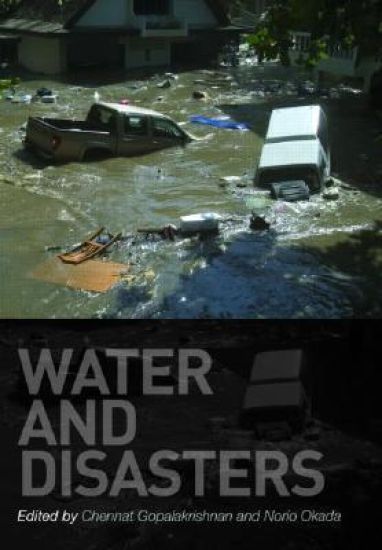
Water and Disasters
This book is the first major attempt to address, comprehensively and in-depth, the many issues associated with water and disasters. It is particularly relevant and topical in view of the increasing frequency and intensity of water-triggered disasters that have afflicted the world in recent years, among them the Indian Ocean Tsunami and Hurricane Katrina.Water and Disasters is a global survey - and assessment of the causes, consequences and post-recovery policies - concerning water disasters. The chapters include empirical studies, case histories, conceptual-theoretical investigations, policy perspectives, institutional analysis, and risk analysis, among others. The book features a comprehensive discussion of the 2004 Indian Ocean Tsunami, as well as major floods and droughts in England, Wales, China and the western United States. It also includes chapters on advances in decision support systems for flood disaster management and rainfall insurance. This volume should be of special interest to disaster management planners and practitioners globally, primarily in the domain of water, in crafting creative solutions for tackling the disasters effectively, efficiently and rapidly. This book was previously published as a special issue of International Journal of Water Resources Development.
Water Quality & Pollution Set
This book provides information on the U. S. government's Occupational Safety and Health Administration's safety programs. It details how to start and maintain a safety program in a municipal or industry-based water or wastewater plant with special emphasis on the practical elements of implementation. Revisions include the changing OSHA regulations and recommendations, and new sections on ergonomics, hypochlorites and bisulfites, and confined space entry techniques, and new information on health hazards. Highlights include: safety programs, recordkeeping, safety training, safety equipment, and safe work practices for wastewater treatment facilities.
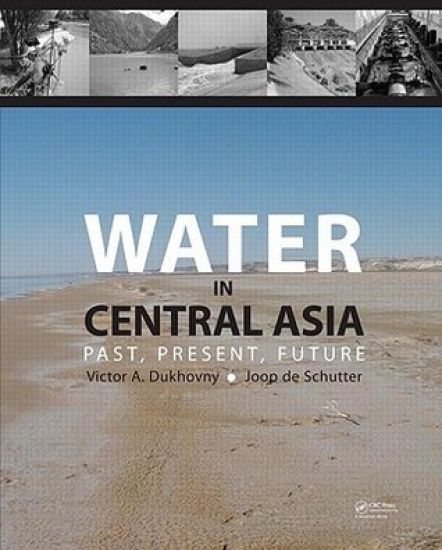
Water in Central Asia

Water in Central Asia

Victor A. Dukhovny; Joop de Schutter

CRC Press
2011
sidottu
Central Asia is the cluster of countries located in the basin of the "Great Aral Sea". It originates from the ancient civilizations of the IV-III millennium B.C. known as “Ariana” and is an important geopolitical centre today, where the USA, Russia, China, EU, Iran and India participate in the regional water game. The Aral Sea Basin has always been a subject of interest to outside powers as a target of travel or political blame. At the same time it was a source of prosperity and a place of work, love, history and strong cultural traditions for almost 100 million people. At present the Aral Sea Basin is shared by independent states with different interests but at the same time in need of close collaboration for their survival. Much has been written about this region but few writers have discovered the deeper roots of the historical transformations that have caused the present situation of environmental degradation. The extremely arid character of the region is a cause of very sensitive natural and social conditions; a very fragile balance that is easily disturbed by any important impact from the outside or innovations from the inside. Only a thorough analysis of both the positive ambitions of the region and their possible negative consequences can provide the necessary understanding of why important development initiatives of the recent past have always produced the negative consequences as they did.
Water as a Human Right for the Middle East and North Africa
Access to safe drinking water and proper sanitation is essential for human survival and for maintenance of a decent quality of life. Currently, more than a billion people do not have access to safe drinking water and more than two billion people lack proper sanitation. In 1992, the United Nations proclaimed that water should be considered to be a human right. This position, however, has not been accepted by many developed and developing countries. This book systematically and comprehensively analyzes the legal development of the concept of water as a human right; implications for the national governments, and international and national organizations for the implementation of this concept; progress made in different Middle East and North African countries to provide every individual access to clean water and sanitation, constraints faced to assure universal access to water-related services and how these constraints can be overcome, and an overall research agenda in areas where more knowledge is necessary.
Water, Environmental Security and Sustainable Rural Development
This co-edited volume provides a unified scholarly treatment of intensifying debates on the relationship between water scarcity and environmental security in Central Eurasia. Using discussions of sustainable rural development as its conceptual backdrop, the chapters in this volume combine solid empirical investigation with critical analysis of key concepts such as ‘scarcity’, ‘expert knowledge’, and ‘efficiency’. The central theme emerging from the contributions emphasizes the need to reevaluate accepted wisdom in resource studies that considers distributional conflicts over water usage as inherently zero-sum outcomes in which one player’s gains inevitably correspond to another player’s losses. Instead, the empirical and critical analyses in this book demonstrate that effective management of water resources can be re-conceptualized as the basis for regional cooperation and sustainable rural development.
Water and Disasters
This book is the first major attempt to address, comprehensively and in-depth, the many issues associated with water and disasters. It is particularly relevant and topical in view of the increasing frequency and intensity of water-triggered disasters that have afflicted the world in recent years, among them the Indian Ocean Tsunami and Hurricane Katrina.Water and Disasters is a global survey - and assessment of the causes, consequences and post-recovery policies - concerning water disasters. The chapters include empirical studies, case histories, conceptual-theoretical investigations, policy perspectives, institutional analysis, and risk analysis, among others. The book features a comprehensive discussion of the 2004 Indian Ocean Tsunami, as well as major floods and droughts in England, Wales, China and the western United States. It also includes chapters on advances in decision support systems for flood disaster management and rainfall insurance. This volume should be of special interest to disaster management planners and practitioners globally, primarily in the domain of water, in crafting creative solutions for tackling the disasters effectively, efficiently and rapidly. This book was previously published as a special issue of International Journal of Water Resources Development.
Water Ethics

Water Ethics

CRC Press
2009
sidottu
In the context of the current financial crisis, and at a time of deep global change, growing attention is paid to the global norms and ethical values that could underpin future global policy. Water is a key global resource. At the 3rd Marcelino Botin Foundation Water Workshop, held in Santander, Spain, June 12-14, 2007, the role of ethics in the deep roots, values, and the potential commonalities of the global water policy were discussed. Experts from different cultural, geographic and religious backgrounds considered the different ethical points of view to enhance the debate on how ethical considerations can play a more significant and explicit role in water development and management.Common ground for all contributing authors was considered to be the UN Declaration of 1948, and more specifically the basic aspects related to water ethics: 1. the dignity of every human being and 2. the necessity of solidarity among all human beings.The book is divided in 8 sections which correspond to the papers presented at the Workshop:Some Cultural Traditional Approaches on Water EthicsSome Ethical Aspects of New Water ManagementWater as a Human Right and as an Economic ResourceWater and PovertyGroundwater Use and its Ethical AspectsEthics of Water Ownership and ManagementCorruption, Transparency and Participation in the Water SectorEthical Aspects of Unforeseen and Extreme Events Management such as Floods and Droughts
Water Law for the Twenty-First Century
In the face of growing freshwater scarcity, most countries of the world are taking steps to conserve their water and foster its sustainable use. Water crises range from concerns of drinking water availability and/or quality, the degradation or contamination of freshwater, and the allocation of water to different users. To meet the challenge, many countries are undergoing systemic changes to the use of freshwater and the provision of water services, thereby leading to greater commercialization of the resource as well as a restructuring of the legal, regulatory, technical and institutional frameworks for water.The contributions to this book critically analyse legal issues arising under international law, such as environment and human rights provisions, concerning the economic, environmental and social consequences of proposed water regulatory changes and their implementation at the national level. The book examines the situation in India which is currently in the midst of implementing several World Bank led water restructuring projects which will have significant impacts on the realisation of the right to water and all other aspects of water regulation for decades to come. In analysing the situation in India the volume is able to detail the interactions between international law and national law in the field of water, and to ask broader questions about the compliance with international law at the national level and the relevance of international law in national law and policy-making.
Water for a Changing World - Developing Local Knowledge and Capacity
This collection of papers represents the outcomes of the International Symposiumheld in Delft, The Netherlands, on June 13-15, 2007, at the occasion of the 50thanniversary of the UNESCO-IHE Institute for Water Education. The papers discusshow to contribute to the sustainability of effective international development andwater management with a digest of lessons learned on local knowledge and capacitydevelopment. Authors expose recent research, strategies and policy positions.Water for a Changing World starts with an introduction and overview of the waterresources and the water supply and sanitation sectors in developing countries andworldwide. Topics of these reviews are water security, environmental integrity, thenewest earth system science technologies, integrated urban water management, andthe global-local nexus of water governance. The second part presents positions oncatalyzing and disseminating knowledge and capacity development in response to thecurrent challenges and opportunities. It consists of a variety of papers on theory andanalysis of capacity development, methods and case studies, and policy positions.The authors represent a diverse and representative group of prominent actors,practitioners and academics within the water, sanitation and development sectors.
Water Engineering and Management through Time
Water Engineering and Management - Learning from History explores the pair technology / water use (an indivisible pair, since the first member of the binomial determines the second) which, in the light of the knowledge available in the 21st century and with a conception focused on the near future, goes beyond the limits set by nature itself. The history of water reviewed in the context of this Seminar will help understand the importance water has had in every possible context and civilization in the past, an understanding that will undoubtedly lead to appreciate the true value of the most highly prized among natural resources. For the ultimate goal of the Seminar and the resulting book is "to learn from history", approaching the problem from a pragmatic point of view, far from the political and social interests which, unfortunately, are usually linked to water.This work will be of particular interest to water managers, politicians, decision makers, and scientists and professionals working in the area of water sciences.