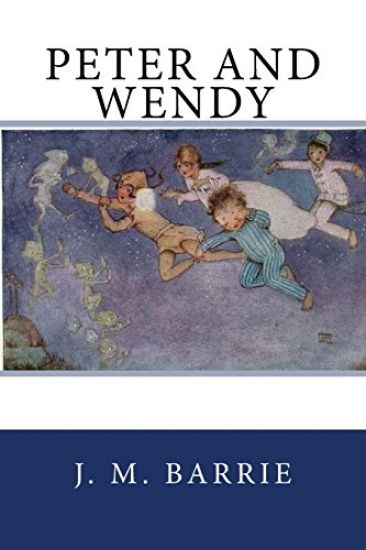
Peter Pan is the boy who never grows up and lives in a place called Neverland. After befriending Wendy and her brothers John and Michael, he takes them to Neverland where all kinds of amazing adventures happen. Peter Pan and Wendy is a wonderfully magical adventure that both children and adults will love. This is the original and classic story written by J M Barrie first published in 1911 adapted from his play of 1904. Since then many screen adaptions have been shown for the whole family to enjoy. Step into the world of make believe and enjoy this magical story written by a master story teller.
Voted Top 100 in Books for Children. Peter and Wendy. J. M. Barrie. Illustrated by F. D. Bedford. Peter Pan; or, the Boy Who Wouldn't Grow Up or Peter and Wendy is J. M. Barrie's most famous work, in the form of a 1904 play and a 1911 novel. Both versions tell the story of Peter Pan, a mischievous little boy who can fly, and his adventures on the island of Neverland with Wendy Darling and her brothers, the fairy Tinker Bell, the Lost Boys, the Indian princess Tiger Lily, and the pirate Captain Hook. The play and novel were inspired by Barrie's friendship with the Llewelyn Davies family. Barrie continued to revise the play for years after its debut; the novel reflects one version of the story. The play debuted in London on 27 December 1904 with Nina Boucicault, daughter of playwright Dion Boucicault, in the title role. A Broadway production was mounted in 1905 starring Maude Adams. It was later revived with such actresses as Marilyn Miller and Eva Le Gallienne. The play has since seen adaptation as a pantomime, stage musical, a television special, and several films, including a 1924 silent film, a 1953 animated Disney full-length feature, and a 2003 live action production. The play is now rarely performed in its original form on stage in the United Kingdom, whereas pantomime adaptations are frequently staged around Christmas. In the U.S., the original version has also been supplanted in popularity by the 1954 musical version, which became popular on television. The novel was first published in 1911 by Hodder & Stoughton in the United Kingdom and Charles Scribner's Sons in the United States. The original book contains a frontispiece and 11 half-tone plates by artist F. D. Bedford (whose illustrations are still in copyright in the EU). The novel was first abridged by May Byron in 1915, with Barrie's permission, and published under the title Peter Pan and Wendy, the first time this form was used. This version was later illustrated by Mabel Lucie Attwell in 1921. The novel is now usually published under that title or simply Peter Pan. The script of the play, which Barrie had continued to revise since its first performance, was published in 1928. In 1929, Barrie gave the copyright of the Peter Pan works to Great Ormond Street Hospital, a children's hospital in London.
This play, Barrie's most successful, is the story of the boy who wouldn't grow up. It will never grow old. Peter Pan drops in on the Darling children. In spite of the efforts of their nurse, the dog Nana, he teaches Wendy and her brothers to fly. They soar with him to Never-Never Land, where Wendy becomes the mother of the lost children who live underground and in the hollow trunks of trees. Adventures with Indians and pirates follow. The pirate chief, Captain Hook, is followed by a crocodile that, having devoured the Captain's hand, seeks the remainder of his meal; but the ticking of a clock the crocodile has swallowed always warns the Captain. There is desperate war between the children and the pirates. Peter's friend, the fairy Tinker Bell -- visible only as a dancing light -- swallows the poison Hook has prepared for Peter. To save her life, Peter appeals to the audience: Do you believe in fairies?, and as the audience applauds Tinker Bell's light grows bright again. Peter leads his forces onto the pirate ship, and the desperados walk the plank. Wendy goes home, promising always to return, for the spring cleaning, to Peter's house in the tree-top in Never-Never Land. When Barrie wrote Peter Pan in 1904, he took it to Beerbohm Tree, whom he visualized as Captain Hook. Tree at once warned Frohman: "Barrie has gone out of his mind. I am sorry to say it; but you ought to know it. He's just read me a play. He's going to read it to you, so I am warning you. I know I have not gone woozy in my mind, because I have tested myself since hearing the play. But Barrie must be mad. He has written four acts all about fairies, children, and Indians running through the most incoherent story you ever listened to; and what do you suppose? The last act is to be set on top of trees " Later, Tree said he'd probably be known to posterity as the man that had refused Peter Pan. Young and old alike respond to the appeal of Peter Pan. Those who maintain -- as many do -- that it is a children's play, the Boston Transcript chided ( May 8, 1929): "Fools and slow of heart It is middle age's own tragicomedy -- the faint, far memories of boyhood and girlhood blown back in the bright breeze of Barrie's imagination." Percy Hammond made the same point on November 7, 1927: "Peter Pan is as young as it was eighteen years ago -- but I am not." The New York Times ( January 2, 1916) made the point more precisely: "Peter Pan is not children at play, but an old man smiling -- and smiling a little sadly -- as he watches children at play." "And if there be anybody," said the reviewer of London's King ( January 14, 1905) "who can sit through the performance without an occasional tear, I can only wish for him that he may some day have children of his own, and will then understand why in the first and last scenes so many eyes around him were moist and so many throats felt in them the lump that a tender emotion brings."
Peter Pan; or, the Boy Who Wouldn't Grow Up or Peter and Wendy is J. M. Barrie's most famous work, in the form of a 1904 play and a 1911 novel. Both versions tell the story of Peter Pan, a mischievous little boy who can fly, and his adventures on the island of Neverland with Wendy Darling and her brothers, the fairy Tinker Bell, the Lost Boys, and the pirate Captain Hook.
This play, Barrie's most successful, is the story of the boy who wouldn't grow up. It will never grow old. Peter Pan drops in on the Darling children. In spite of the efforts of their nurse, the dog Nana, he teaches Wendy and her brothers to fly. They soar with him to Never-Never Land, where Wendy becomes the mother of the lost children who live underground and in the hollow trunks of trees. Adventures with Indians and pirates follow. The pirate chief, Captain Hook, is followed by a crocodile that, having devoured the Captain's hand, seeks the remainder of his meal; but the ticking of a clock the crocodile has swallowed always warns the Captain. There is desperate war between the children and the pirates. Peter's friend, the fairy Tinker Bell -- visible only as a dancing light -- swallows the poison Hook has prepared for Peter. To save her life, Peter appeals to the audience: Do you believe in fairies?, and as the audience applauds Tinker Bell's light grows bright again. Peter leads his forces onto the pirate ship, and the desperados walk the plank. Wendy goes home, promising always to return, for the spring cleaning, to Peter's house in the tree-top in Never-Never Land.
for english please scroll down - F r alle Freunde des klassischen Stils und edlen Vintage Designs. - Pers nlicher Begleiter, verwendbar u.a. als Notizbuch, Notizheft, Einschreibbuch, Tagebuch oder Anti-Stress Kritzelbuch. - Perfekter Ort zum Festhalten von Geistesblitzen, Action Items, Erlebnissen, Projekten, Pl nen, kreativen Ideen, Gedanken, ToDo-Listen, Kritzeleien u.v.m., einfach f r alles was man nicht vergessen will und darf - Im praktischen Pocketformat, liniert und mit gl nzendem Cover. - Super Geschenkidee - Mit einem au ergew hlichen stylischen Cover. Notebook for all friends of classy and noble vintage design Perfect as gift booklet to say thank you, or as present or for yourself. *** Notebook for fast and simple saving of instructions, prescriptions or for all things you do not want to forget *** Due to a handy format, the notebook can be comfortably used in any situation (e.g. on the way or at home or at work) *** Perfect for spontaneous collection of ideas or as a memorization tool *** Practical handling due to easy pocket format Further features: glossy cover, ruled paper, cover graphic in stylish vintage look
"Nichts war mehr da, nur mein neues Leben, das sich pl tzlich in einer seltsamen Bar und nicht mehr auf meiner gem tlichen Couch abspielte." Buddy Bud hing komplett durch und vers te sich die Zeit mit unz hligen Joints. Tagelang hatte er seine Wohnung nicht verlassen und sich vom Fernsehprogramm berieseln lassen - bis er v llig zugedr hnt einschlief. Als er aufwacht, klebt an seinem Fernseher eine Notiz, die ihn in eine verwahrloste Bar f hrt. Eine wundersch ne Frau sitzt auf dem Barhocker neben ihm und trinkt gelangweilt ihr Bier. Z gerlich kommen sie miteinander ins Gespr ch und es stellt sich heraus, dass sie dieselbe Notiz gefunden hat. Doch was hat es mit dieser Notiz auf sich und von wem kam sie?
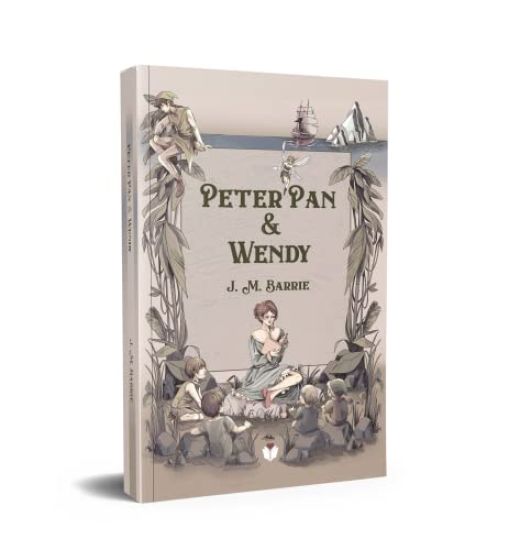
In J. M. Barrie's enchanting tale, "Peter and Wendy," the boundaries of childhood imagination are intricately entwined with reality. This seminal work, originally a stage play titled "Peter Pan," unravels the adventures of Peter, a mischievous boy who refuses to grow up, and Wendy, his steadfast companion. Through lyrical prose and vivid imagery, Barrie crafts a narrative filled with whimsy, yet underscored by poignant themes of innocence, responsibility, and the bittersweet passage of time. Set in the mystical realm of Neverland, the novel evokes the charm of early 20th-century literature, mirroring the era's fascination with childhood and the gradual societal shift towards modernity. J. M. Barrie, a Scottish novelist and playwright, has long been captivated by the themes of childhood and imagination, shaped by his own experiences as the youngest of ten siblings and his bond with the Llewelyn Davies boys, who inspired the character of Peter Pan. Barrie's rich creative background and his exploration of the fragility of childhood in a rapidly changing world are strikingly evident in this narrative, which anchors his legacy in both literary and cultural history. "Peter and Wendy" invites readers to cherish the fleeting nature of childhood while also contemplating the inevitable responsibilities of adulthood. This timeless classic resonates with audiences of all ages, making it a must-read for those who wish to explore the depth of human emotion interwoven with a fantastical narrative. Barrie's work not only entertains but also enlightens, reminding us of the magic that lies within our own imaginations.
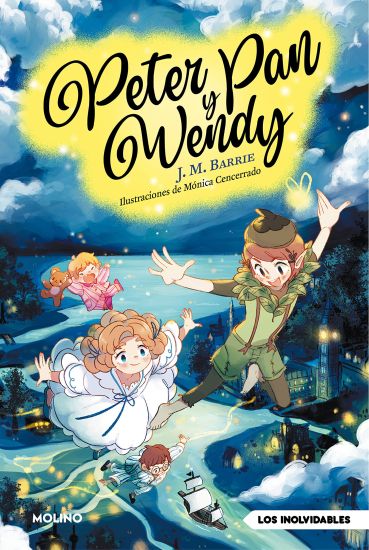
Uno de los grandes cl sicos de la literatura, en una nueva edici n adaptada y con ilustraciones de M nica Cencerrado. Wendy, John y Michael se embarcan en un viaje por el pa s de Nunca Jam s junto a Peter Pan, Campanilla y los ni os perdidos. All vivir n emocionantes aventuras: tratados con los Pieles Rojas, ba os con las sirenas y, por supuesto, batallas contra el malvado Garfio y su banda de piratas. ENGLISH DESCRIPTION J.M Barrie's classic tale of Peter Pan and Wendy and the lost boys of Neverland. Now illustrated by M nica Cencerrado. "All children, except one, grow up. They soon know that they will grow up, and the way Wendy knew was this. One day when she was two years old, she was playing in a garden, and she plucked another flower and ran with it to her mother. I suppose she must have looked rather delightful, for Mrs. Darling put her hand to her heart and cried, 'Oh, why can't you remain like this forever ' This was all that passed between them on the subject, but henceforth Wendy knew that she must grow up. You always know after you are two. Two is the beginning of the end."
This book provides an unusual look at cultural and political life in the United States over nearly three decades of change and stability. It combines the individual projects of photographers Frederick Baldwin and Wendy Watriss as well as their combined 13-year documentary collaboration on three different cultural frontiers in Texas. What connects all of these projects is the artists’ commitment to exploring social history beyond the clichés of class and race. In Wendy Watriss’s Vietnam work, the images emerge from a sense of outrage at the injustice perpetrated on U.S. veterans of the Vietnam War by their own government. In Frederick Baldwin’s Civil Rights work in Georgia and the lives of poor whites, the images provide an intimate glimpse of people’s survival in their struggle for dignity and justice. These works honor the strength and beauty of these struggles. The photographs shown in Looking at the U.S. reveal the human face of a complex and fascinating history that has particular relevance to the values and political philosophy of the momentous political changes in the U.S.
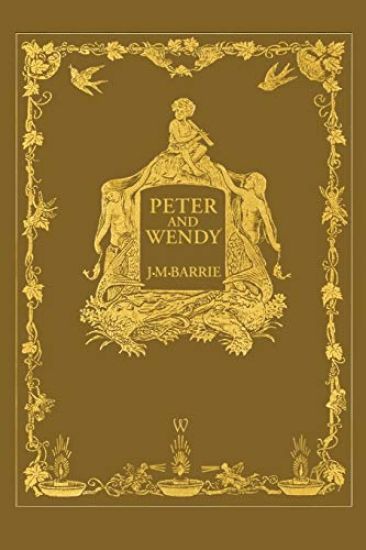
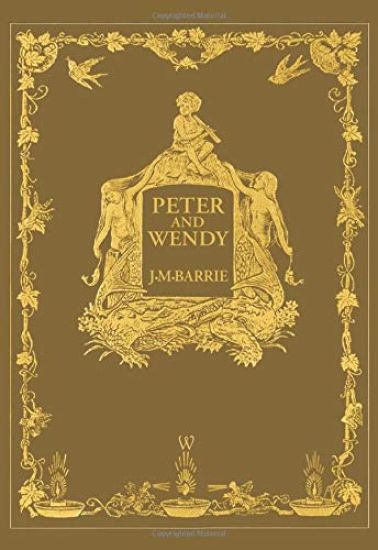
Now published by Wisehouse Classics, this is the unabridged Anniversary Edition of the original 1911 published novel "Peter and Wendy" (or "Peter Pan") with the original therteen illustrations by F. D. Bedford. "Peter and Wendy" or "Peter Pan" is J. M. Barrie's most famous work, in the form of a 1904 play and a 1911 novel.
Now published by Wisehouse Classics, this is the unabridged Anniversary Edition of the original 1911 published novel "Peter and Wendy" (or "Peter Pan") with the original therteen illustrations by F. D. Bedford. "Peter and Wendy" or "Peter Pan" is J. M. Barrie's most famous work, in the form of a 1904 play and a 1911 novel.
J.M. Barrie first released Peter Pan; or, the Boy Who Wouldn't Grow Up in the form of a play in 1904. He followed it up with the release in 1911 of the novel Peter and Wendy which recounts the same story. Peter Pan is a small boy away from his home in London who flies around the enchanted island of Neverland which is inhabited by mermaids, fairies, natives, and pirates. The tale has enshrined other characters in the common culture, including Tinker Bell, Wendy, the Lost Boys, and the pirate Captain Hook.