Kirjojen hintavertailu. Mukana 12 256 638 kirjaa ja 12 kauppaa.

Kirjahaku

Etsi kirjoja tekijän nimen, kirjan nimen tai ISBN:n perusteella.

1000 tulosta hakusanalla Alain Goetzmann

Figures of Invention

Figures of Invention

Alain Pottage; Brad Sherman

Oxford University Press
2010
sidottu
Taking the invention as its object of study, this book develops a radical new perspective on the making of modern patent law. It develops an extended historical and conceptual exploration of the invention in modern patent law. Focussing primarily on the figures that make inventions material, and on how to overcome the intangibility of ideas, this intellectual challenging book makes explicit a dimension of patent law that is not commonly found in traditional commentaries, treatises and cases. The story is told from the perspective of the material media in which the intangible form of the invention is made visible; namely, models, texts, drawings, and biological specimens. This approach brings to light for the first time some essential formative moments in the history of patent law. For example, Figures of Invention describes the central role that scale models played in the making of nineteenth-century patent jurisprudence, the largely mythical character of the nineteenth-century theory that patents texts should function as a means of disclosing inventions, and the profound conceptual changes that emerged from debates as to how to represent and disclose the first biological inventions. At the same time, this historical inquiry also reveals the basic conceptual architecture of modern patent law. The story of how inventions were represented is also the story of the formation of the modern concept of invention, or of the historical processes that shaped the terms in which patent lawyers still apprehend the intangible form of the invention. Although the analysis focuses on the history of patent law in the United States, it develops themes that illuminate the evolution of patent regimes in Europe. In combining close historical analysis with broad thematic reflection, Figures of Invention makes a distinctive contribution both to the field of patent law scholarship and to emerging interdisciplinary debates about the constitution of patent law and of intellectual property in general.
Muon Spin Rotation, Relaxation, and Resonance

Muon Spin Rotation, Relaxation, and Resonance

Alain Yaouanc; Pierre Dalmas de Réotier

Oxford University Press
2010
sidottu
Primarily intended for postgraduate students and researchers in the fields of condensed matter science, chemical physics and material science, who plan to use the muon spin rotation, relaxation amd resonance (µSR) techniques, this book combines for the first time a detailed discussion of the physical information contained in the measured polarisation functions with real-life examples taken from the literature. It is divided in three main parts. The first part presents some typical results of the application of µSR and explains the basic principles involved. The second part is the core of this book. It presents a comprehensive discussion of the measured polarisation functions. In the third part we analyse in four chapters selected examples taken from the following fields: diffusion properties of muon and muonium, magnetism, superconductivity, and muonium centres in materials. The book is completed by an epilogue and eight appendices.
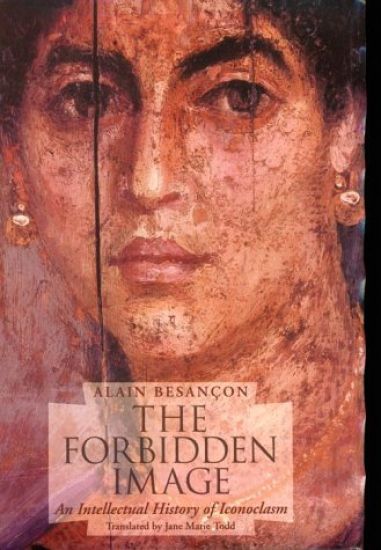
The Forbidden Image

The Forbidden Image

Alain Besancon

University of Chicago Press
2001
sidottu
Philosophers and theologians have long engaged in intense debate and introspection over the representation of the deity, its possibilities and its proscriptions. "The Forbidden Image" traces the dual strains of 'iconophilia' and iconoclasm, the privileging and prohibition of religious images, over a span of two-and-a-half millennia in the West. Alain Besancon's work begins with a comprehensive examination of the status of the image in Greek, Judaic, Islamic, and Christian thought. The author then addresses arguments regarding the moral authority of the image in European Christianity from the medieval through the early modern periods. Besancon completes "The Forbidden Image" with an examination of how iconophilia and iconoclasm have been debated in the modern period.
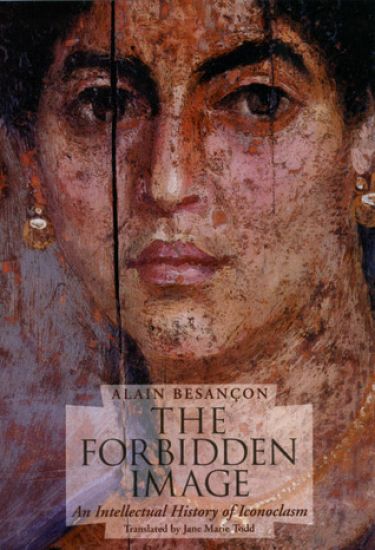
The Forbidden Image – An Intellectual History of Iconoclasm

The Forbidden Image – An Intellectual History of Iconoclasm

Alain Besancon

University of Chicago Press
2009
nidottu
Philosophers and theologians have long engaged in intense debate and introspection over the representation of the deity, its possibilities and its proscriptions. "The Forbidden Image" traces the dual strains of 'iconophilia' and iconoclasm, the privileging and prohibition of religious images, over a span of two-and-a-half millennia in the West. Alain Besancon's work begins with a comprehensive examination of the status of the image in Greek, Judaic, Islamic, and Christian thought. The author then addresses arguments regarding the moral authority of the image in European Christianity from the medieval through the early modern periods. Besancon completes "The Forbidden Image" with an examination of how iconophilia and iconoclasm have been debated in the modern period.
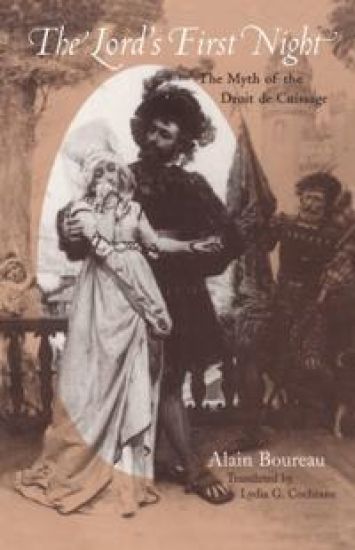
The Lord's First Night

The Lord's First Night

Alain Boureau

University of Chicago Press
1998
sidottu
The ultimate symbol of feudal barbarism has been the "droit de cuissage" or right of a feudal Lord to sleep with the bride of a vassal on her wedding night. This text demonstrates that it is a myth, under contextual examination nearly all the evidence for this custom melts away, yet belief in it has survived for seven hundred years. The text shows how each era turned the mythical custom to its own ends, in the late Middle Ages monarchists raised the custom to rally public opinion against local lords, and partisans of the French Revolution pointed to it as proof of the corruption of the Ancien Regime.
The Lord's First Night

The Lord's First Night

Alain Boureau

University of Chicago Press
1998
nidottu
The ultimate symbol of feudal barbarism has been the "droit de cuissage" or right of a feudal Lord to sleep with the bride of a vassal on her wedding night. This text demonstrates that it is a myth, under contextual examination nearly all the evidence for this custom melts away, yet belief in it has survived for seven hundred years. The text shows how each era turned the mythical custom to its own ends, in the late Middle Ages monarchists raised the custom to rally public opinion against local lords, and partisans of the French Revolution pointed to it as proof of the corruption of the Ancien Regime.
Political Philosophy

Political Philosophy

Alain Renaut; Luc Ferry

University of Chicago Press
1992
sidottu
What is the common element linking the right to health care and the right of free speech, the right to leisure and the right of free association, the right to work and the right to be protected? Debates on the rights of man abound in the media today, but all too often they remain confused and fail to recognize the fundamental political conceptions on which they hinge. Several French theorists have recently attempted a new account of rights, one that would replace the discredited Marxist view of rights as mere formalities concealing the realities of class domination. In this final volume of Political Philosophy, Luc Ferry and Alain Renaut summarize these efforts and put forward their own set of arguments.
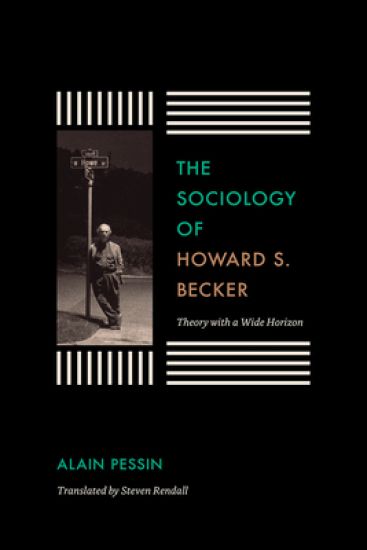
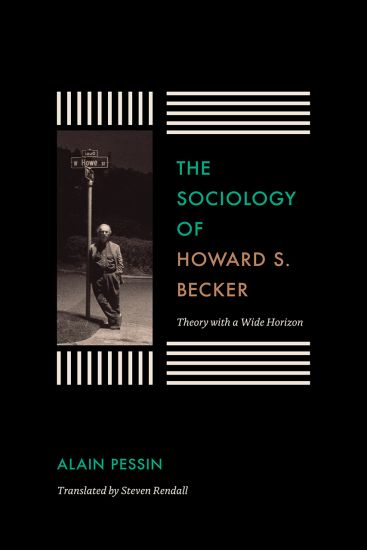
The Sociology of Howard S. Becker

The Sociology of Howard S. Becker

Alain Pessin

University of Chicago Press
2017
sidottu
Howard S. Becker is a name to conjure with on two continents in the United States and in France. He has enjoyed renown in France for his work in sociology, which in the United States goes back more than fifty years to pathbreaking studies of deviance, professions, sociology of the arts, and a steady stream of books and articles on method. Becker, who lives part of the year in Paris, is by now part of the French intellectual scene, a street-smart jazz pianist and sociologist who offers an answer to the stifling structuralism of Pierre Bourdieu. French fame has brought French analysis, including The Sociology of Howard S. Becker, written by Alain Pessin and translated into English by Steven Rendall. The book is an exploration of Becker's major works as expressions of the freedom of possibility within a world of collaborators. Pessin reads Becker's work as descriptions and ideas that show how society can embody the possibilities of change, of doing things differently, of taking advantage of opportunities for free action. The book is itself a kind of collaboration Pessin and Becker in dialogue. The Sociology of Howard S. Becker is a meeting of two cultures via two great sociological minds in conversation.
The Sociology of Howard S. Becker

The Sociology of Howard S. Becker

Alain Pessin

University of Chicago Press
2017
nidottu
Howard S. Becker is a name to conjure with on two continents in the United States and in France. He has enjoyed renown in France for his work in sociology, which in the United States goes back more than fifty years to pathbreaking studies of deviance, professions, sociology of the arts, and a steady stream of books and articles on method. Becker, who lives part of the year in Paris, is by now part of the French intellectual scene, a street-smart jazz pianist and sociologist who offers an answer to the stifling structuralism of Pierre Bourdieu. French fame has brought French analysis, including The Sociology of Howard S. Becker, written by Alain Pessin and translated into English by Steven Rendall. The book is an exploration of Becker's major works as expressions of the freedom of possibility within a world of collaborators. Pessin reads Becker's work as descriptions and ideas that show how society can embody the possibilities of change, of doing things differently, of taking advantage of opportunities for free action. The book is itself a kind of collaboration Pessin and Becker in dialogue. The Sociology of Howard S. Becker is a meeting of two cultures via two great sociological minds in conversation.
Einstein and the Quantum Revolutions

Einstein and the Quantum Revolutions

Alain Aspect; David Kaiser

THE UNIVERSITY OF CHICAGO PRESS
2024
sidottu
A Nobel laureate offers a brief lesson on physics’ biggest mystery, accessibly explaining the two quantum revolutions that changed our understanding of reality. At the start of the twentieth century, the first quantum revolution upset our vision of the world. New physics offered surprising realities, such as wave-particle duality, and led to major inventions: the transistor, the laser, and today’s computers. Less known is the second quantum revolution, arguably initiated in 1935 during a debate between giants Albert Einstein and Niels Bohr. This revolution is still unfolding. Its revolutionaries—including the author of this short accessible book, Nobel Prize–winning physicist Alain Aspect—explore the notion of entangled particles, able to interact at seemingly impossible distances. Aspect’s research has helped to show how entanglement may both upend existing technologies, like cryptography, and usher in entirely new ones, like quantum computing. Explaining this physics of the future, this work tells a story of how philosophical debates can shape new realities.
The Mechanics of Passion

The Mechanics of Passion

Alain Ehrenberg

McGill-Queen's University Press
2020
sidottu
Cognitive neuroscience, once a specialized area of psychology and biology, has enjoyed increased worldwide legitimacy in the last thirty years not only in psychiatry and mental health, but also in fields as diverse as education, economics, marketing, and law. How can this surge in popularity be explained? Has the new science of human behaviour now become the barometer of our conduct and our lives, taking the place previously occupied by psychoanalysis? Rather than asking if neuronal man will replace social man or how to surmount the opposition between the biological and the social, The Mechanics of Passions uncovers hidden relationships between global social ideals and specialized concepts of neuroscience and cognitive science. Proposing a historical sociology situated in the dual contexts of the history of sciences and the history of self-representation, Alain Ehrenberg describes the conditions through which cognitive neuroscience has developed and acquired a strong moral authority in our individualistic society permeated by ideas, values, and norms of autonomy. Cognitive neuroscience offers the promise of turning personal limitations into assets by exploring an individual's "hidden potential." The Mechanics of Passions identifies this as the echo of social ideals of autonomy, affirming that the moral authority of cognitive neuroscience stems as much from cultural norms as from any results of scientific or medical experimentation.
From the Heart to the Brain

From the Heart to the Brain

Alain L Fymat

Tellwell Talent
2019
pokkari
In the year following an unexpected coronary artery triple bypass grafts, Dr Fymat saw his medical and scientific productivity increase more than two-fold, largely contributing to the present collection of refereed articles of which he is the sole author. That productivity was also marked by highly provocative suggestions such as, for example, how to utilize nanomedicine as a precursor to precision medicine, disrupt cell mitoses to provoke cancer self-eradication, deliver theranostic drugs across the brain protective barriers to treat brain cancers (or glioblastomas), and positing that neurodegenerative disorders, Alzheimer disease in particular, are auto-immune diseases that may have gone rogue.
From the Heart to the Brain

From the Heart to the Brain

Alain L Fymat

Tellwell Talent
2019
sidottu
In the year following an unexpected coronary artery triple bypass grafts, Dr Fymat saw his medical and scientific productivity increase more than two-fold, largely contributing to the present collection of refereed articles of which he is the sole author. That productivity was also marked by highly provocative suggestions such as, for example, how to utilize nanomedicine as a precursor to precision medicine, disrupt cell mitoses to provoke cancer self-eradication, deliver theranostic drugs across the brain protective barriers to treat brain cancers (or glioblastomas), and positing that neurodegenerative disorders, Alzheimer disease in particular, are auto-immune diseases that may have gone rogue.
Alzhei... who?

Alzhei... who?

Alain L Fymat

Tellwell Talent
2019
pokkari
It is clear that our approach to identifying the root cause of Alzheimer's disease and curing it has not been successful so far despite decades of research, billions of dollars spent worldwide, 244 experimental drugs developed, and many clinical trials that have failed. What is happening? Have we got the cause of Alzheimer's all wrong? I believe so Instead of remaining focused on the primary endpoint of a cure, the emphasis had shifted to surrogate endpoints that had not been clinically demonstrated to correlate well with the disease. In this book, I identify the root cause of the disease and attempt to reorient our approach along a path that I am convinced will be more successful in leading us to a cure. I will provide the outlines of this new approach and even suggest the methodology to be followed. At the same time, I am also hoping to be able to co-opt the support I need from the general public, particularly those already afflicted by the disease or fearing they might succumb to it, as well as their families, friends, and caregivers. For them, I will also try to demystify the disease and describe ways they can do something about it in addition to seeking medical treatment.