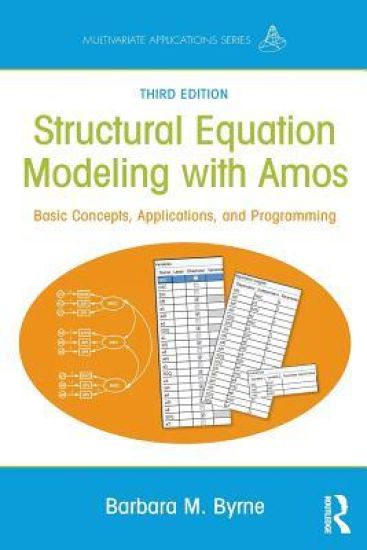
This bestselling text provides a practical guide to structural equation modeling (SEM) using the Amos Graphical approach. Using clear, everyday language, the text is ideal for those with little to no exposure to either SEM or Amos. The author reviews SEM applications based on actual data taken from her own research. Each chapter "walks" readers through the steps involved (specification, estimation, evaluation, and post hoc modification) in testing a variety of SEM models. Accompanying each application is: an explanation of the issues addressed and a schematic presentation of hypothesized model structure; Amos input and output with interpretations; use of the Amos toolbar icons and pull-down menus; and data upon which the model application was based, together with updated references pertinent to the SEM model tested.Thoroughly updated throughout, the new edition features: All new screen shots featuring Amos Version 23. Descriptions and illustrations of Amos’ new Tables View format which enables the specification of a structural model in spreadsheet form. Key concepts and/or techniques that introduce each chapter. Alternative approaches to model analyses when enabled by Amos thereby allowing users to determine the method best suited to their data. Provides analysis of the same model based on continuous and categorical data (Ch. 5) thereby enabling readers to observe two ways of specifying and testing the same model as well as compare results. All applications based on the Amos graphical mode interface accompanied by more "how to" coverage of graphical techniques unique to Amos. More explanation of key procedures and analyses that address questions posed by readers All application data files are available at www.routledge.com/9781138797031.The two introductory chapters in Section 1 review the fundamental concepts of SEM methodology and a general overview of the Amos program. Section 2 provides single-group analyses applications including two first-order confirmatory factor analytic (CFA) models, one second-order CFA model, and one full latent variable model. Section 3 presents multiple-group analyses applications with two rooted in the analysis of covariance structures and one in the analysis of mean and covariance structures. Two models that are increasingly popular with SEM practitioners, construct validity and testing change over time using the latent growth curve, are presented in Section 4. The book concludes with a review of the use of bootstrapping to address non-normal data and a review of missing (or incomplete) data in Section 5. An ideal supplement for graduate level courses in psychology, education, business, and social and health sciences that cover the fundamentals of SEM with a focus on Amos, this practical text continues to be a favorite of both researchers and practitioners. A prerequisite of basic statistics through regression analysis is recommended but no exposure to either SEM or Amos is required.
This bestselling text provides a practical guide to structural equation modeling (SEM) using the Amos Graphical approach. Using clear, everyday language, the text is ideal for those with little to no exposure to either SEM or Amos. The author reviews SEM applications based on actual data taken from her own research. Each chapter "walks" readers through the steps involved (specification, estimation, evaluation, and post hoc modification) in testing a variety of SEM models. Accompanying each application is: an explanation of the issues addressed and a schematic presentation of hypothesized model structure; Amos input and output with interpretations; use of the Amos toolbar icons and pull-down menus; and data upon which the model application was based, together with updated references pertinent to the SEM model tested.Thoroughly updated throughout, the new edition features: All new screen shots featuring Amos Version 23. Descriptions and illustrations of Amos’ new Tables View format which enables the specification of a structural model in spreadsheet form. Key concepts and/or techniques that introduce each chapter. Alternative approaches to model analyses when enabled by Amos thereby allowing users to determine the method best suited to their data. Provides analysis of the same model based on continuous and categorical data (Ch. 5) thereby enabling readers to observe two ways of specifying and testing the same model as well as compare results. All applications based on the Amos graphical mode interface accompanied by more "how to" coverage of graphical techniques unique to Amos. More explanation of key procedures and analyses that address questions posed by readers All application data files are available at www.routledge.com/9781138797031.The two introductory chapters in Section 1 review the fundamental concepts of SEM methodology and a general overview of the Amos program. Section 2 provides single-group analyses applications including two first-order confirmatory factor analytic (CFA) models, one second-order CFA model, and one full latent variable model. Section 3 presents multiple-group analyses applications with two rooted in the analysis of covariance structures and one in the analysis of mean and covariance structures. Two models that are increasingly popular with SEM practitioners, construct validity and testing change over time using the latent growth curve, are presented in Section 4. The book concludes with a review of the use of bootstrapping to address non-normal data and a review of missing (or incomplete) data in Section 5. An ideal supplement for graduate level courses in psychology, education, business, and social and health sciences that cover the fundamentals of SEM with a focus on Amos, this practical text continues to be a favorite of both researchers and practitioners. A prerequisite of basic statistics through regression analysis is recommended but no exposure to either SEM or Amos is required.
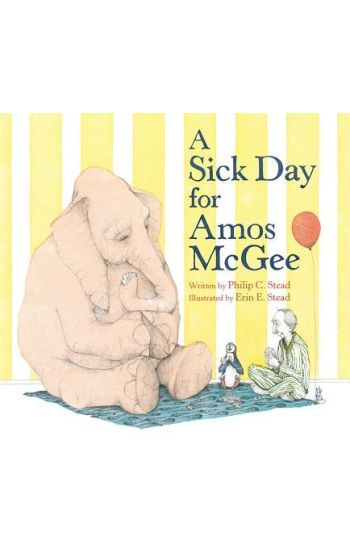
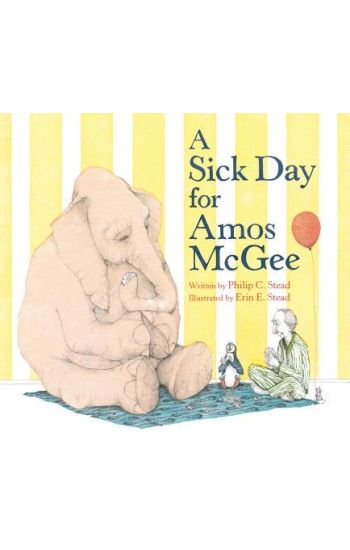
THE BEST SICK DAY EVER and the animals in the zoo feature in this striking picture book debut. Friends come in all sorts of shapes and sizes. In Amos McGee's case, all sorts of species, too Every day he spends a little bit of time with each of his friends at the zoo, running races with the tortoise, keeping the shy penguin company, and even reading bedtime stories to the owl. But when Amos is too sick to make it to the zoo, his animal friends decide it's time they returned the favor. A Sick Day for Amos McGee by Philip C. Stead and Erin E. Stead is a 2011 Bank Street - Best Children's Book of the Year and the winner of the 2011 Caldecott Medal. This title has Common Core connections.
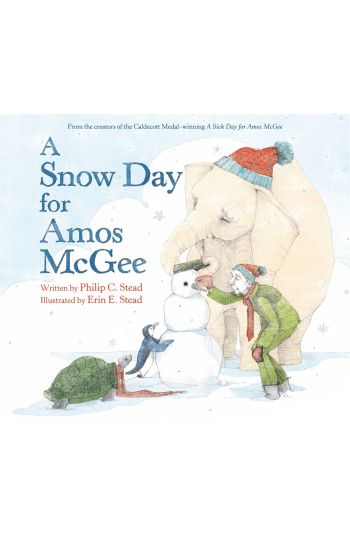
A cozy, inviting, and heartwarming wintry tale about friendship and playing in the snow, from Caldecott Medal-winning and NYT bestselling duo Philip and Erin Stead, perfect for fans of The Snowy Nap and The Mitten. Amos McGee, the friendly zookeeper, loves spending time with his good friends no matter the season. When snow in the forecast never arrives, he decides to head home and hope it comes another day. But when overnight a surprise snowfall blankets the town in fluffy white, what shall his lovable squad of animals do? Visit Amos and play in the snow, of course Amos and his familiar companions are back for this delightful tale of winter hope and joy--the latest follow-up to the Caldecott Medal winner A Sick Day for Amos McGee.
This work has been selected by scholars as being culturally important, and is part of the knowledge base of civilization as we know it. This work was reproduced from the original artifact, and remains as true to the original work as possible. Therefore, you will see the original copyright references, library stamps (as most of these works have been housed in our most important libraries around the world), and other notations in the work.This work is in the public domain in the United States of America, and possibly other nations. Within the United States, you may freely copy and distribute this work, as no entity (individual or corporate) has a copyright on the body of the work.As a reproduction of a historical artifact, this work may contain missing or blurred pages, poor pictures, errant marks, etc. Scholars believe, and we concur, that this work is important enough to be preserved, reproduced, and made generally available to the public. We appreciate your support of the preservation process, and thank you for being an important part of keeping this knowledge alive and relevant.
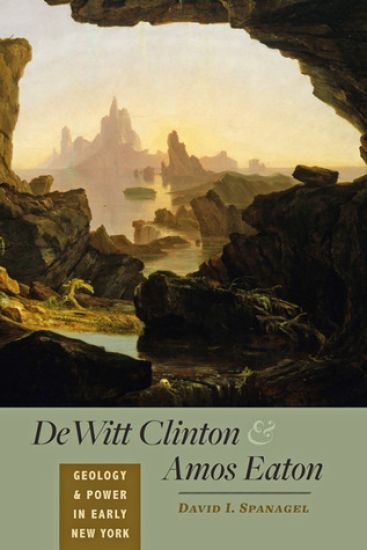
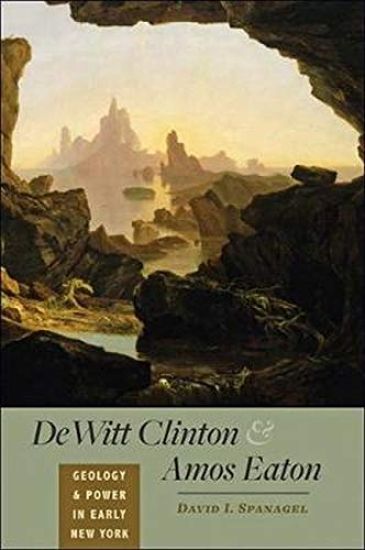
David I. Spanagel explores the origins of American geology and the culture that promoted it in nineteenth-century New York. Focusing on Amos Eaton, the educator and amateur scientist who founded the Rensselaer School, and DeWitt Clinton, the masterful politician who led the movement for the Erie Canal, Spanagel shows how a cluster of assumptions about the peculiar landscape and entrepreneurial spirit of New York came to define the Empire State. In so doing, he sheds light on a particularly innovative and fruitful period of interplay among science, politics, art, and literature in American history.
David I. Spanagel explores the origins of American geology and the culture that promoted it in nineteenth-century New York. Focusing on Amos Eaton, the educator and amateur scientist who founded the Rensselaer School, and DeWitt Clinton, the masterful politician who led the movement for the Erie Canal, Spanagel shows how a cluster of assumptions about the peculiar landscape and entrepreneurial spirit of New York came to define the Empire State. In so doing, he sheds light on a particularly innovative and fruitful period of interplay among science, politics, art, and literature in American history.