Rui Diogo; Josep M. Potau; Juan F. Pastor; Felix J. dePaz; Eva M. Ferrero; Gaelle Bello; Mercedes Barbosa; M. Ashraf Aziz; Anne M. Burrows; Julia Arias-Martorell; Bernard A. Wood
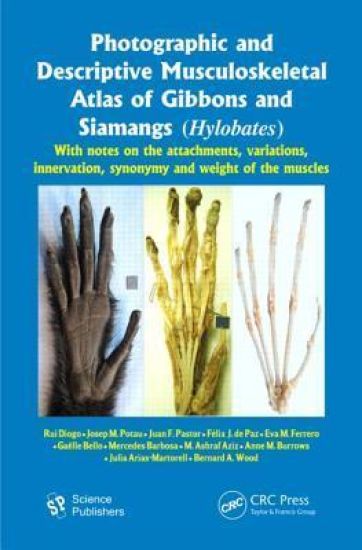
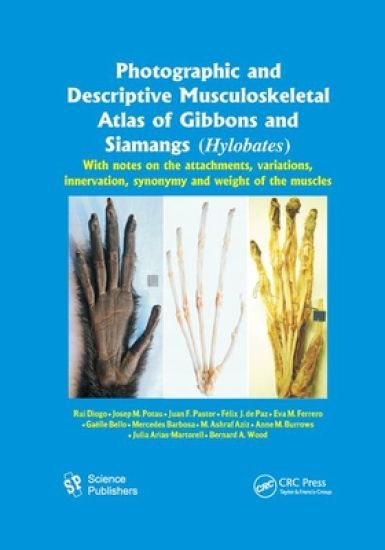
This book is the first photographic and descriptive musculoskeletal atlas of Hylobates, and adopts the same format as the photographic atlas of Gorilla published by the same authors in 2010. These two books are part of a series of monographs that will set out the comparative and phylogenetic context of the gross anatomy and evolutionary history of the soft tissue morphology of modern humans and their closest relatives. This atlas, which includes detailed high-quality photographs of musculoskeletal structures from most anatomical regions of the body as well as textual information about the attachments, innervation and weight of the respective muscles, is based on dissections and on an extensive review of the literature. It provides an updated review of the anatomical variations within hylobatids as well as an extensive list of the synonyms used in the literature to designate the structures we discuss. The atlas will be of interest to students, teachers and researchers studying primatology, comparative anatomy, functional morphology, zoology, and physical anthropology and to medical students, doctors and researchers who are curious about the origin, evolution, homology and variations of the musculoskeletal structures of modern humans.

Explore, hike, discover, be crafty and have fun with friends or alone, indoors or outside! Written for children in 1893, and valuable for both kids and adults today, here's a magical cornucopia of projects, devices, toys, gifts, dolls, recipes, decorations, perfumes, wax and clay modeling, oil and water-color painting and games, all with clear and practical directions for how to make and play them.Vintage Americana by the Beard sisters, two of the founders of the girls scouting movement (when they weren't campaigning for women’s rights). As Anne M. Boylan writes in her foreword, “Healthy and spirited, the American Girl thinks nothing of taking a ten-mile ‘romp’ through woods and fields with a group of friends, and collects flowers and leaves for preservation or presentation to friends and relations.Above all, however, the Beards’ girl is handy. She can make a hat rack, a screen, or a bookshelf; fashion a macrame hammock or a cornhusk doll; and draw, paint, sculpt, or decorate a room…By emphasizing what girls can do, The American Girl's Handy Book presents a portrait of girlhood that is vigorous, active, and full of possibilities.”
Written by authors with extensive experience in both the field and classroom, Introduction to Forensic Psychology: Research and Application, Seventh Edition equips students with the skills to analyze psychological knowledge and research findings, applying them effectively to both civil and criminal justice systems.
Do your students understand the job of a "criminal profiler"? Yes, they see them nightly on tv shows and in the news, but do they have a real understanding of how law enforcement can use empirical data to correctly assess behavior and help solve crimes, particularly serial crimes?Criminal and Behavioral Profiling, by well-established authors Curt and Anne Bartol, presents a realistic and empirically-based look at the theory, research, and practice of modern criminal profiling. Designed for use in a variety of criminal justice and psychology courses, the book delves into the process of identifying behavioral tendencies, geographical locations, demographic and biographical descriptors of an offender (or offenders), and sometimes personality traits based on characteristics of the crime. Timely literature and case studies from the rapidly growing international research in criminal profiling help students understand the best practices, major pitfalls, and psychological concepts that are key to this process.
A comprehensive update on parasitology for the small animal practitioner! Topics will include fleas and ticks; mites and lice; giardia and tritrichomonas; toxoplasma gondii and intestinal coccidia; babesia, cytoxzoan, and hepatozoan; heartworms; intestinal nematodes; flukes and tapeworms; lungworms and other extraintestinal nematodes, and much more!
"I like the use of research and citations throughout the text. It is more comprehensive than my current text and does a much better job of presenting the scientific evidence." —Kathy McGuire, Western Illinois University Written by authors with extensive experience in the field and in the classroom, Psychology and Law: Research and Practice, Second Edition, offers the definitive perspective on the practical application of psychological research to the law. Curt R. Bartol and Anne M. Bartol emphasize the various roles psychologists and other mental health professionals play in criminal and civil legal matters. Topics such as family law, mental health evaluations, police interrogation, jury selection and decision making, involuntary civil commitment, and various civil capacities are included. The authors also emphasize the major contributions psychological research has made to the law and encourage critical analysis through examples of court cases, high-profile current events, and research. This comprehensive book examines complex material in detail and explains it in an easy-to-read way. New to the Second Edition: The new edition has been significantly reorganized to more closely align with the progression through the court system. A new chapter on children, adolescents, and criminal law (Chapter 8) provides students with information on adjudicative competence, comprehension of constitutional rights, and eyewitness identification and courtroom testimony. New feature boxes include case studies, research projects, and contemporary topics with discussion questions for classroom debate. Additional court cases and statutes have been integrated into chapters to emphasize the important role psychology plays in the legal process. The content is applied to real cases such as the Masterpiece Cakeshop case and the Dassey confession (comprehending Miranda). Over 300 recent research findings on topics related to psychology and law highlight cutting-edge research studies that help students understand what research does and prompt them to discuss the methodology and results. New pedagogical tables clearly illustrate complex information around ethical issues, APA amicus briefs, strengths and weaknesses of simulation studies, insanity standards within the states, effects experienced by survivors of traumatic incidents, and more. Increased coverage of contemporary issues encourage critical thinking and active learning by promoting discussions around current issues such as telepsychology, neuropsychology, adversarial allegiance, and actuarial instruments used in bail and sentence decision-making.
Rui Diogo; Josep M. Potau; Juan F. Pastor; Felix J. dePaz; Eva M. Ferrero; Gaelle Bello; Mercedes Barbosa; M. Ashraf Aziz; Anne M. Burrows; Julia Arias-Martorell; Bernard A. Wood
This book is the first photographic and descriptive musculoskeletal atlas of Hylobates, and adopts the same format as the photographic atlas of Gorilla published by the same authors in 2010. These two books are part of a series of monographs that will set out the comparative and phylogenetic context of the gross anatomy and evolutionary history of the soft tissue morphology of modern humans and their closest relatives. This atlas, which includes detailed high-quality photographs of musculoskeletal structures from most anatomical regions of the body as well as textual information about the attachments, innervation and weight of the respective muscles, is based on dissections and on an extensive review of the literature. It provides an updated review of the anatomical variations within hylobatids as well as an extensive list of the synonyms used in the literature to designate the structures we discuss. The atlas will be of interest to students, teachers and researchers studying primatology, comparative anatomy, functional morphology, zoology, and physical anthropology and to medical students, doctors and researchers who are curious about the origin, evolution, homology and variations of the musculoskeletal structures of modern humans.

Renowned for its comprehensive coverage and engaging, storytelling approach, the bestselling Moore's Clinically Oriented Anatomy, 9th Edition, guides students from initial anatomy and foundational science courses through clinical training and practice. A popular resource for a variety of programs, this proven text serves as a complete reference, emphasizing anatomy that is important in physical diagnosis for primary care, interpretation of diagnostic imaging, and understanding the anatomical basis of emergency medicine and general surgery. The 9th Edition reflects the latest changes in the clinical application of anatomy as well as preparation for the USMLE while maintaining the highest standards for scientific and clinical accuracy. NEW Sex and gender content clarifies important gender considerations and reflects an equitable focus on female as well as male anatomy. Updated medical imaging and integrated surface anatomy within each chapter clearly demonstrates the relationship between anatomy, physical examination, and diagnosis. Extensively revised Clinical Blue Boxes highlight the practical applications of anatomy, accompanied by helpful icons, illustrations, and images that distinguish the type of clinical information covered. Updated introduction establishes the foundational understanding of systemic information and basic concepts essential to success from the classroom to the dissection lab. Revised comprehensive surface anatomy photographs ensure accurate, effective physical examination diagnoses with integrated natural views of unobstructed surface anatomy and illustrations superimposing anatomical structures with landmarks for more accurate physical examination. Insightfully rendered, anatomically accurate illustrations, combined with many photographs and medical images, strengthen comprehension of anatomical concepts and retention of "mental images" of anatomical structures. Bottom Line boxes provide detailed summaries at a glance and underscore the "big-picture" perspective. Illustrated tables clarify complex information about muscles, veins, arteries, nerves, and other structures for easy study and review. Chapter outlines help students find key information quickly and efficiently.
Renowned for its comprehensive coverage and engaging, storytelling approach, the bestsellingMoore's Clinically Oriented Anatomy, 9th Edition, guides students from initial anatomy and foundational science courses through clinical training and practice. A popular resource for a variety of programs, this proven text serves as a complete reference, emphasizing anatomy that is important in physical diagnosis for primary care, interpretation of diagnostic imaging, and understanding the anatomical basis of emergency medicine and general surgery. The 9th Edition reflects the latest changes in the clinical application of anatomy as well as preparation for the USMLE while maintaining the highest standards for scientific and clinical accuracy.
Bundled with Lippincott® Connect, Moore’s Clinically Oriented Anatomy, 9th Edition is more informative and approachable than ever. By using multimedia content and customizable assignments, this edition strengthens comprehension and prepares you for success in your course. Renowned for its comprehensive coverage and engaging, storytelling approach, the bestselling Moore’s Clinically Oriented Anatomy, 9th Edition, guides students from initial anatomy and foundational science courses through clinical training and practice. A popular resource for a variety of programs, this proven text serves as a complete reference, emphasizing anatomy that is important in physical diagnosis for primary care, interpretation of diagnostic imaging, and understanding the anatomical basis of emergency medicine and general surgery. The 9th Edition reflects the latest changes in the clinical application of anatomy as well as preparation for the USMLE while maintaining the highest standards for scientific and clinical accuracy.Lippincott® Connect enhances your student experience in an all-in-one learning solution combining an interactive eBook, multimedia content, and assessment. Instructors can customize the course, create assignments, and track your progress. Students maximize efficiency through valuable feedback and remediation. Key performance insights are reported in a user-friendly dashboard that allows you to tailor your learning experiences.
Dieses Buch bietet Ihnen kompakte Anleitungen und Tipps für die optimale Praxisführung. Patientenorientierung: patientengerechtes Leistungsspektrum, Patientenbindung, Patienten-Neuakquise. Kommunikations- und Marketingstrategien. Mitarbeiterführung und –motivation. PatientInnen kommen gerne (wieder), wenn sie sich fachlich gut aufgehoben und emotional wohl fühlen. Der/die heutige PatientIn ist dabei informierter, anspruchsvoller und fordernder denn je. Sie wollen:ein patientengerechtes Leistungsspektrumstimmige Praxisabläufe undeine patientenorientierte Kommunikation Ihre Zukunft:Wie reagieren Sie heute und in Zukunft am besten auf diese vielfältigen Herausforderungen?Patientenbindung:Wie stellen Sie - mithilfe Ihrer qualifizierten und freundlichen MitarbeiterInnen - Ihre PatientInnen zufrieden?Patienten-Neuakquisition:Wie machen Sie Ihre PatientInnen zu aktiven Botschaftern Ihrer Dienst-Leistungen?Mit Zusatzwissenfür Praxiseinsteiger und –neugründerzur Burnout-Prophylaxeum Ihre digitalen Praxisabläufe zu optimierenAll das zeigt Ihnen ganz konkret dieses Buch.Das Ergebnis: engagierte, treue MitarbeiterInnen, loyale PatientInnen und eine erfolgreiche Praxis, in der Ihre PatientInnen, Ihre MitarbeiterInnen und Sie sich wohl fühlen.Mit zahlreichen Praxis-Beispielen, Handlungstipps und Checklisten aus dem medizinischen Alltag.Für alle niedergelassenen ÄrztInnen und Klinikambulanzen. (Auch als Geschenk für Ihre Medizinischen Fachangestellten.)
¡El mejor texto de anatomía con enfoque clínico del mundo!Ha pasado un tercio de siglo desde que la primera edición de Anatomía con orientación clínica ocupara por primera vez los estantes de bibliotecas y librerías. Aunque la base de la anatomía humana se caracteriza por ser longeva y consistente, la evolución de esta obra desde su creación ha sido notable y refleja cambios en diferentes aspectos: aplicación clínica de la anatomía, evolución tecnológica, nuevas y mejores técnicas de diagnóstico por imagen y avances en la tecnología de edición e impresión que, en conjunto, permiten plasmar y transmitir la información anatómica con la mejor calidad y la máxima utilidad. Edición tras edición, los esfuerzos se han enfocado en hacer que la obra sea más amigable y útil para los estudiantes de las diferentes disciplinas dedicadas a la atención de la salud y en conservar la identidad que le ha valido su posición como una de las mejores y más valiosas obras para el estudio de la anatomía humana en el mundo.La 9.ª edición ha sido revisada en su totalidad por estudiantes, docentes, médicos especialistas y expertos anatomistas, quienes han validado la precisión, relevancia y utilidad de su contenido siguiendo en todo momento los estándares más rigurosos de precisión científica y clínica. La terminología empleada para esta edición en español ha sido revisada y validada por un destacado y valioso grupo de expertos anatomistas de Latinoamérica y España.
Known for its comprehensive coverage, engaging, storytelling approach, and clinical relevance, the bestselling Moore's Clinically Oriented Anatomy, 10th Edition, guides students from initial anatomy and foundational science through clinical training and practice. This popular resource, authored by Drs. Arthur F. Dalley II and Anne M. R. Agur, covers anatomy that is clinically important in physical examination for primary care, interpretation of diagnostic imaging, and the anatomical basis of practice in medical care, rehabilitation and allied health sciences. Reflects the latest changes in the clinical application of anatomy, preparing students for course and board exams, while maintaining the highest standards for scientific and clinical accuracy Contains even more anatomically accurate and diverse illustrations, combined with numerous photographs and medical images that strengthen comprehension of anatomical concepts and retention of "mental images" of anatomical structures Includes Clinical Boxes (popularly known as "blue boxes") that highlight the practical applications of anatomy with illustrations, images, and helpful icons that distinguish the type of clinical information covered
Written by the leading quality improvement experts and clinicians, The Common Sense Guide to Improving Palliative Care provides a quick and easy "how-to" introduction to quality improvement in palliative care. Each chapter features a case study that illustrates how successful quality improvement teams work and includes dozens of ideas for change that most groups can put into practice - now! In today's healthcare settings, too many patients and families suffer needlessly for dozens of reasons. Healthcare teams can and must take charge of reform. With equal measures of proven, practical advice and encouragement, The Common Sense Guide enables them to do just that in a wide array of settings.
When her husband's ill health forces them to move into an assisted living facility, Anne M. Wyatt-Brown suddenly finds herself surrounded by elderly residents. In this lively and provocative collection, other distinguished gerontologists reflect on Anne's moving account of her transition to becoming a member of a vibrant and sociable community that offers care-giving support, while encouraging her to pursue her own interests, including exercising, reviewing articles for scholarly journals, serving on committees, and singing. By redefining notions of care and community, undoing the stigmas of aging, and valuing the psychological factors involved in accepting assistance, this volume provides a bold new framework for thinking about aging, continuing care, making the big move to a retirement community, and living with vitality in the new environment.
Pediatric Nutrition Support is a complete resource for all dietitians, nurses, physicians, and pharmacists involved in pediatric care. This reference provides thorough coverage of the latest developments and techniques in enteral and parenteral feeding and evaluation methods. Cases detailing specific pediatric disease conditions offer concrete examples of nutrition support processes.
Collins-Bride amp Saxe's Clinical Guidelines for Advanced Practice Nursing, Fourth Edition is an accessible and practical reference designed to support nurses and students in daily clinical decision making. Written by an interdisciplinary team of APRNs, it emphasizes collaboration for optimal patient-centered care and follows a lifespan approach with content divided into four clinical areas-Pediatrics, Sexual amp Reproductive Health, Obstetrics, and Adult-Gerontology. To support varying advanced practice roles, the authors utilize the S-O-A-P (Subjective-Objective-Assessment-Plan) format for an organized and accessible teaching and learning experience.The updated and revised Fourth Edition emphasizes diversity, equity and inclusion (DEI) and the importance of understanding the unique needs of diverse patient populations. This text considers the ways that racism, homophobia/transphobia, xenophobia, sexism, ageism, and other forms of discrimination impact our patient populations and how nurses can work as allies to ensure quality patient-centered care.