This second volume of Seismic Imaging and Inversion supersedes the first with direct nonlinear inverse theory – where all the assumptions and shortcomings of the linear theory are removed. Chapters follow the processing sequence, including predicting the reference and scattered wavefields; de-ghosting; removing multiples; Q compensation; depth imaging; and direct non-linear inversion of target mechanical properties. Every step in the processing chain is achieved directly without knowing, estimating, or determining any subsurface information, including a velocity model. No other seismic concept or methodology has that capability. Taken together, the two volumes provide researchers and industry practitioners with a solid understanding of current mainstream methods as well as a new and more capable methodology that reduces to conventional methods when the prerequisites and assumptions within those are satisfied. This provides new options in the seismic toolbox that facilitate target identification across a broader set of seismic offshore and onshore plays.
Industrial Conflict by Arthur W. Kornhauser is a comprehensive study of the causes, types, and resolution of industrial conflicts in the United States during the mid-twentieth century. This book examines the various factors that contribute to workplace disputes, including economic conditions, labor-management relations, and political influences. Kornhauser also analyzes the different forms of industrial conflict, such as strikes, lockouts, and boycotts, and explores the strategies that workers and employers use to resolve these conflicts. Additionally, the author provides a historical overview of labor relations in the United States, including the role of unions and government intervention in labor disputes. This book is a valuable resource for scholars, policymakers, and anyone interested in understanding the complex dynamics of industrial conflict in America.This scarce antiquarian book is a facsimile reprint of the old original and may contain some imperfections such as library marks and notations. Because we believe this work is culturally important, we have made it available as part of our commitment for protecting, preserving, and promoting the world's literature in affordable, high quality, modern editions, that are true to their original work.
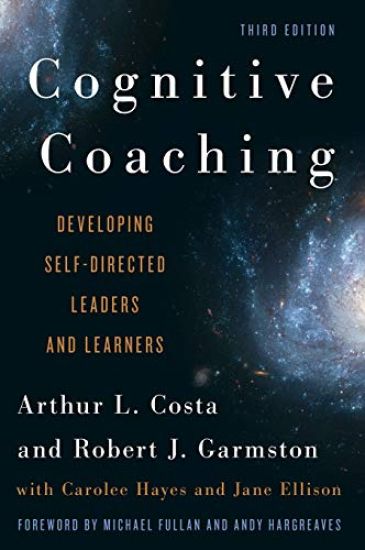
In this greatly expanded and extensively updated edition of a widely popular resource you see how teachers' individual and collective capacities for continuing self-improvement are strengthened over time through Cognitive Coaching. You gain essential skills, protocols, guidance, research and resources to use when implementing Cognitive Coaching principles and values in your own school setting. Working toward the goals of making school better places where more students succeed and satisfaction in learning and teaching prevail, Costa and Garmston let you know about their own learning, and how new research and practice can support individuals and schools in reaching higher, more satisfying, and more holistic performance. Organized into four sections, the book clearly and effectively presents these concepts: the meanings of cognitive coaching; the basics of teaching excellence; strategies and tactics for engaging in coaching; and how to integrate Cognitive Coaching throughout the system.
In April 1982, an infant boy was born in Bloomington, Indiana, with Down syndrome and a defective, but surgically correctable, esophagus. His parents refused to consent to surgery or intravenous feeding. The hospital unsuccessfully sought a court order to force treatment, and appeals to higher courts also failed. The child, identified as Baby Doe by the news media, subsequently died. The events in Bloomington became the catalyst for action by the Reagan administration, the courts, and Congress that culminated in a federal policy that makes failure to treat newborns with disabilities a form of child neglect. This book centers on the public policy aspects of withholding treatment from critically ill newborns who are disabled. Specifically, it deals with why the policy was enacted and what impact it has had on health care workers, families, and infants. Some of the contributors to this book spearheaded the early debate on withholding treatment. Anthony Shaw's New York Times Magazine article in 1972 was the first to address these issues in the popular press. The following year, he published a related article in the New England Journal of Medicine. Also appearing in this same issue of NEJM, was the pathbreaking study, coauthored by A. G. M. Campbell, on withholding treatment in the special care nursery at Yale-New Haven Hospital. Each of these articles promoted much public and professional discussion.
Over the past twenty five years the Commission on Equilibrium Data of the Analytical Division of the International Union of Pure and Applied Chemistry has been sponsoring a noncritical compilation of metal complex formation constants and related equilibrium constants. This work was extensive in scope and resulted in publication of two large volumes of Stability Constants by the Chemical Society (London). The first volume, edited by L. G. Sillen (for inorganic ligands) and by A. E. Martell (for organic ligands), was published in 1964 and covered the literature through 1962. The second volume, subtitled Supplement No. 1, edited by L. G. Sillen and E. Hogfeldt (for inorganic ligands), and A. E. Martell and R. M. Smith (for organic ligands), was published in 1971 and covered the literature up to 1969. These two large compilations attempted to cover all papers in the field related to metal complex equilibria (heats, entropies, and free energies). Most recently a noncritical compilation of organic ligands by D. D. Perrin (Pergamon Press) extended coverage of the literature through 1973 and a similar volume for inorganic ligands by E. Hogfeldt covered through 1974. Since it was the policy of the Commission during that period to avoid decisions concerning the quality and reliability of the published work, th~ compilation would frequently contain from ten to twenty values for a single equilibrium constant.
Stability constants are fundamental to understanding the behavior of metal ions in aqueous solution. Such understanding is important in a wide variety of areas, such as metal ions in biology, biomedical applications, metal ions in the environment, extraction metallurgy, food chemistry, and metal ions in many industrial processes. In spite of this importance, it appears that many inorganic chemists have lost an appreciation for the importance of stability constants, and the thermodynamic aspects of complex formation, with attention focused over the last thirty years on newer areas, such as organometallic chemistry. This book is an attempt to show the richness of chemistry that can be revealed by stability constants, when measured as part of an overall strategy aimed at understanding the complexing properties of a particular ligand or metal ion. Thus, for example, there are numerous crystal structures of the Li+ ion with crown ethers. What do these indicate to us about the chemistry of Li+ with crown ethers? In fact, most of these crystal structures are in a sense misleading, in that the Li+ ion forms no complexes, or at best very weak complexes, with familiar crown ethers such as l2-crown-4, in any known solvent. Thus, without the stability constants, our understanding of the chemistry of a metal ion with any particular ligand must be regarded as incomplete. In this book we attempt to show how stability constants can reveal factors in ligand design which could not readily be deduced from any other physical technique.
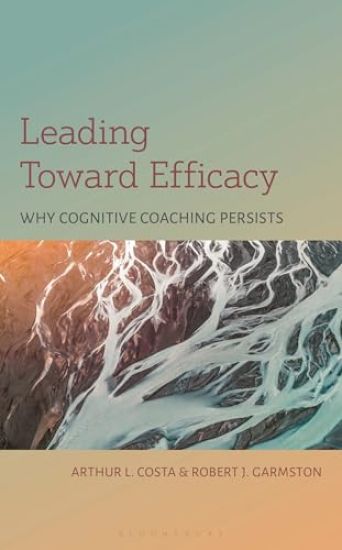
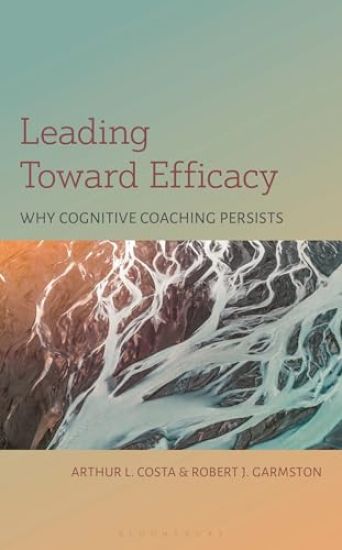
This is a book about leadership, not as a position but rather as a set of behaviors. This is essential in our rapidly emerging technological, political, social and education operations. The behaviors are important for personal performance, individual and collective efficacy, the recognition of those behaviors in others, and advocating their inclusion in educational programs and workplace cultures. Readers will read the book for personal efficacy and influence, efficacy of others and making organization increasingly effective in regard to their mission. The information contained in this book will help the reader be on the forefront of developments in the neurosciences related to Cognitive Coaching. The subject matter will address the current status of education, with issues surrounding parent involvement, political influence, teacher fatigue, and the digital landscape faced by students and educators alike in the time since the ideas of Cognitive Coaching were first introduced including the myriad points of information accessible to students, possibilities for distraction, and the fast-moving onset of artificial intelligence. The book will also present an emerging view of what educational leadership is about in the modern world, including a greater emphasis than ever before on proficiency, vulnerability, psychological safety, empathy, and a sense of community/belonging. After enduring an era of COVID-19, followed by many unanticipated results in personal lives, education, workplaces, and global relationships, many are experiencing physical, emotional and psychological stress. This book considers the classic concepts of Cognitive Coaching, with a fresh modern perspective that will help inspire a new generation of leaders while also reinvigorating those who have been in the field for decades. This book will give the reader tools they need to work with greater efficacy in their careers, education, and lives as a whole. Research shows that people with greater efficacy believe that they can work through problems that are presented, typically work harder, are more successful, and are less stressed than their counterparts.
This is a book about leadership, not as a position but rather as a set of behaviors. This is essential in our rapidly emerging technological, political, social and education operations. The behaviors are important for personal performance, individual and collective efficacy, the recognition of those behaviors in others, and advocating their inclusion in educational programs and workplace cultures. Readers will read the book for personal efficacy and influence, efficacy of others and making organization increasingly effective in regard to their mission. The information contained in this book will help the reader be on the forefront of developments in the neurosciences related to Cognitive Coaching. The subject matter will address the current status of education, with issues surrounding parent involvement, political influence, teacher fatigue, and the digital landscape faced by students and educators alike in the time since the ideas of Cognitive Coaching were first introduced including the myriad points of information accessible to students, possibilities for distraction, and the fast-moving onset of artificial intelligence. The book will also present an emerging view of what educational leadership is about in the modern world, including a greater emphasis than ever before on proficiency, vulnerability, psychological safety, empathy, and a sense of community/belonging. After enduring an era of COVID-19, followed by many unanticipated results in personal lives, education, workplaces, and global relationships, many are experiencing physical, emotional and psychological stress. This book considers the classic concepts of Cognitive Coaching, with a fresh modern perspective that will help inspire a new generation of leaders while also reinvigorating those who have been in the field for decades. This book will give the reader tools they need to work with greater efficacy in their careers, education, and lives as a whole. Research shows that people with greater efficacy believe that they can work through problems that are presented, typically work harder, are more successful, and are less stressed than their counterparts.
An essential resource for the analytical study of the gospels, The Complete Gospel Parallels goes beyond the standard parallels. This book gives those who study the gospels in English a one-volume compendium of synopses not only for the Gospels of Matthew, Mark, Luke, and John, but also for the Gospels of Thomas and Peter, as well as for a few gospel fragments (the Egerton Gospel, Gospel Oxyrhynchus 1224, as well as the Jewish-Christian Gospels of the Hebrews and the Nazoreans). The Complete Gospel Parallels also includes a synopsis for the reconstructed Q Gospel, which enables the reader both to discern how the text of Q can be derived and how Q was adopted and adapted by Matthew and Luke. The Complete Gospel Parallels features the fresh and vibrant Scholars Version translation, which has been thoroughly revised and fine-tuned to facilitate the precise comparison of parallel passages, using consistent English for the same Greek and different English where the originals vary. The Complete Gospel Parallels lucid translation, its easy-to-use format, and its broad range of gospel materials will enhance and deepen the serious reader s appreciation of early Christian tradition and literature.
A detailed look at the worst M&A deals ever and the lessons learned from them It's common knowledge that about half of all merger and acquisition (M&A) transactions destroy value for the buyer's shareholders, and about three-quarters fall short of the expectations prevailing at the time the deal is announced. In Deals from Hell, Robert Bruner, one of the foremost thinkers and educators in this field, uncovers the real reasons for these mishaps by taking a closer look at twelve specific instances of M&A failure. Through these real-world examples, he shows readers what went wrong and why, and converts these examples into cautionary tales for executives who need to know how they can successfully navigate their own M&A deals. These page-turning business narratives in M&A failure provide much-needed guidance in this area of business. By addressing the key factors to M&A success and failure, this comprehensive guide illustrates the best ways to analyze, design, and implement M&A deals. Filled with in-depth insights, expert advice, and valuable lessons gleaned from other M&A transactions, Deals from Hell helps readers avoid the common pitfalls associated with this field and presents them with a clear framework for thinking about how to make any M&A transaction a success.
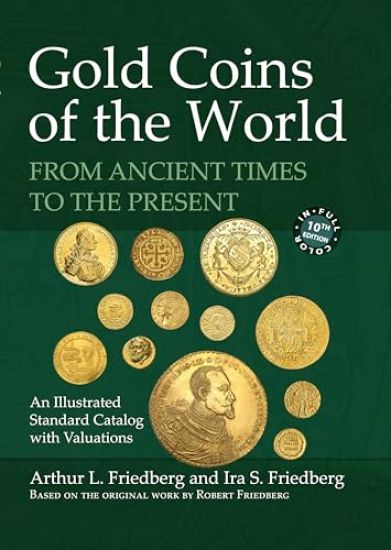
The tenth edition of Gold Coins of the World, the world's standard reference on gold coins from ancient times to the present, expands on its predecessor, digging more deeply into new areas of collector interest, expanding many sections, and adding new discoveries for dozens of countries. Completely revised and updated. Market valuations are extensively revised to reflect both the higher price of gold as well as the skyrocketing demand for numismatic rarities. Inside you'll find: More than 22,000 coin types, hundreds of new listings Valuations in up to three states of preservation 8,500+ color photos in actual size Universally-used Friedberg Numbering System, the world's standard method of cataloging, describing, buying and selling gold coins Each country's section includes tables of weight and fineness Useful directory of the world's leading gold-coin dealers and auction houses Many of the prices, especially for great rarities and coins in higher grades, have at least doubled. In fact, as collectors recognize the scarcity of coins in the highest states of preservation, the premium for such coins relative to lower-graded ones is escalating beyond traditional proportions. The coinage of India and the Islamic world, long dismissed by western collectors as difficult to decipher, unimportant, and lacking in value, is now the subject of intense interest, and has shown some of the most dramatic increases of all. This edition and each one before are derived from the original, groundbreaking 1958 work by Robert Friedberg, whose cataloging and numbering system revolutionized the way gold coins are collected. It changed the face of world-gold collecting at that time, and it remains unparalleled in its scope and universal usage today, six decades later. Three years in the making, the newest edition calls on the expertise of a numismatic who's-who of more than one hundred expert contributors and consultants from across the globe. The popularity of gold coins, however, is due to a whole host of factors. It is not an overstatement to say that the history of gold coinage parallels, and has helped define, the trajectory of civilization. For the numismatist, banker, economist, historian, or institution of higher learning, the tenth edition of Gold Coins of the World is a book for every library, public and private.
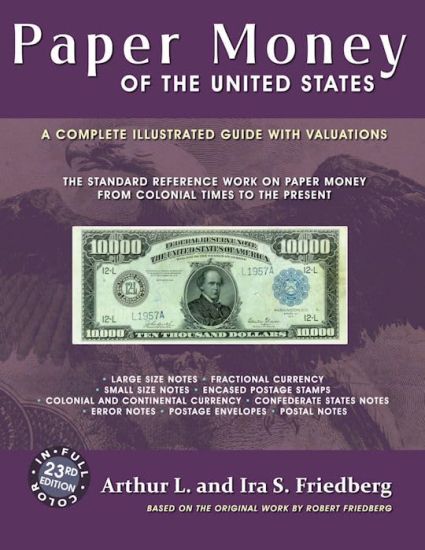
71 years after its introduction, the 23rd edition of Paper Money of the United States remains the standard reference book on American currency. In 1953, Robert Friedberg (1912-1963) broke new ground when the Treasury Department granted permission for photographs of American paper money to be printed for the first time. The current edition's 336 pages feature nearly 1,000 color photos of banknotes from America's greatest currency collections, as well as most of the greatest rarities, from the first year of paper money to the present. Completely revised and updated.23rd edition includes: Large Size Notes, Fractional Currency, Small Size Notes, Encased Postage Stamps, Confederate States, Colonial and Continental Currency, Treasury Notes from 1812 to 1861, United States paper money error notes, Postage Envelopes, Postal Notes, and Uncut Sheets Market valuations in up to seven states of preservation 990+ color photos Universally-used Friedberg Numbering System(TM), the standard method for cataloging, describing, buying and selling U.S. currency Full listing of note-issuing National Banks with number of notes known Complete signature listings for U.S. currency Softcover 11 x 8.5 inches Hardcover 12 x 8.5 inches 336 pages Paper Money of the United States introduced innovations never before attempted. Robert Friedberg was the first to standardize this subject and gave this book a permanent place on reference shelves. For the past forty years, it has been completely revised and edited by Arthur Friedberg, the Honorary President of the International Association of Professional Numismatists and one of Coin World magazine's "Most Influential People in Numismatics, 1960-2020"; and Ira Friedberg.
71 years after its introduction, the 23rd edition of Paper Money of the United States remains the standard reference book on American currency. In 1953, Robert Friedberg (1912-1963) broke new ground when the Treasury Department granted permission for photographs of American paper money to be printed for the first time. The current edition's 336 pages feature nearly 1,000 color photos of banknotes from America's greatest currency collections, as well as most of the greatest rarities, from the first year of paper money to the present. Completely revised and updated.23rd edition includes: Large Size Notes, Fractional Currency, Small Size Notes, Encased Postage Stamps, Confederate States, Colonial and Continental Currency, Treasury Notes from 1812 to 1861, United States paper money error notes, Postage Envelopes, Postal Notes, and Uncut Sheets Market valuations in up to seven states of preservation 990+ color photos Universally-used Friedberg Numbering System(TM), the standard method for cataloging, describing, buying and selling U.S. currency Full listing of note-issuing National Banks with number of notes known Complete signature listings for U.S. currency Softcover 11 x 8.5 inches Hardcover 12 x 8.5 inches 336 pages Paper Money of the United States introduced innovations never before attempted. Robert Friedberg was the first to standardize this subject and gave this book a permanent place on reference shelves. For the past forty years, it has been completely revised and edited by Arthur Friedberg, the Honorary President of the International Association of Professional Numismatists and one of Coin World magazine's "Most Influential People in Numismatics, 1960-2020"; and Ira Friedberg.